Showing posts with label Victorian. Show all posts

Wednesday, May 28, 2014

From my grave to yours: PENNY DREADFUL (Showtime), FROM DUSK TIL DAWN (El Rey)


Two new horror series are worth checking out, presuming you have the patience, the cajones, and the channels on your cable. The Robert Rodriguez-backed channel El Rey (read my shuddering praise here) launched a month or so ago with the From Dusk til Dawn series, a ten episode-long elaboration of the RR-QT 1999 film, adding the full measure of hallucinations and Tex-Mex flavor and replacing Tarantino in the part of psycho brother Richie Gecko with a much more mesmerizing low key lad named Zane Holz. As Richie's brother and fellow bank robber Seth, D.J. Cotrana diffuses Clooney's terminal charm with hothead overreactions, so now the two feel like real brothers who actually grew up together, rather than the charismatically mismatched Quentin and Clooney, and each has problems the other helps correct, like real siblings. And the queen Mayan reptilian hottie Santanico Pandimonium (Selma Hayek in the original) has a much more integral part with lots of dialogue and empowering femme fatale inscrutability, embodied by Mexican TV actress/pop singing star (and staggering beauty) Eiza Gonzalez. Robert Patrick is the disillusioned preacher, Don Johnson the sheriff, and a cast of handsome Mexican-Americans with either admirable swagger or furrowed brow intensity. The ten part series all occurs over the course of one 24-hour period, from dusk to dawn more or less, which slows things way down with that old tick-tockality and a novelistic attention to detail.

Eiza on the street! 
It all works because it's not that the performances are great, but that they are all of a piece; as is so essential for a good horror, they play it deadpan straight while never overdoing it and driving their ordeals into bummer territory (I mean, there's a way to act pained and ennui-ridden without causing viewers to get depressed or upset). I mention all that because, in Showtime's new horror series Penny Dreadful, that level of solid team player dynamics vanishes to be replaced with a bunch of breathing exercise-prepared actors all fighting over every syllable like it's their last chance at an Emmy. Only dimly aware there's other actors across the dark expanses of the cavernous Victorian era sets, they rant and rave and hope... hope....


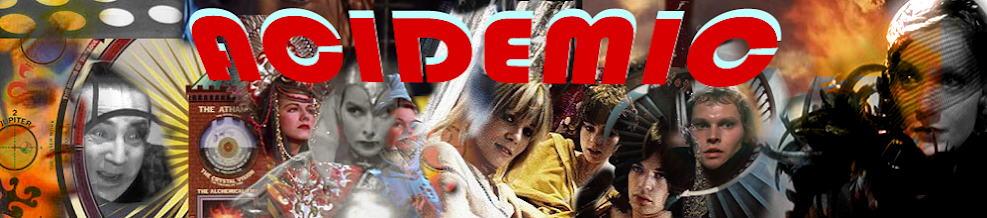
I'll confess I desperately wanted to love Penny Dreadful. I am a chronic disciple of Eva Green. But the show simultaneously tries too hard and not hard enough, cramming in all the famous literary characters from the Victorian era's (and earlier) literary mythology it can remember from its year at Cambridge. It never seems to know what to do with all these public domain easily-recognized monsters, though, other then send them walking in ornately-stressed Victorian garments through long tracking shots or into bed for joylessly graphic sex scenes. I'm hoping they rectify the absence of any characters or monsters actually from the real penny dreadfuls (such as seen above in my hand-made collage), instead of the same old Dracula (here a Drac-mummy hybrid) or Jack the Ripper (and no doubt Burke and Hare are soon to follow), or Frankenstein. Where's Spring-Heeled Jack? Wither Varney the VampireJust because Dorian Gray's an immortal bunburying Sadean doesn't make him a monster, just an aesthete.


On the other hand, as far as I'm concerned this young fellow playing him, Reeve Carney (left), has the whole show sowed up in his pocket. While the other characters rant and rave and underplay, Carney's Gray seems genuinely entranced, not in any effusive way but in a delicate, eerily jaded way, and graced with an in-the-moment openness that makes him seem to me one of the few young actors around who seems to understand the importance of seeing as much as being seen and who seems to fully inhale the atmosphere. (the only other one I can think of offhand is Kristen Stewart). Trying to figure out who Carney reminds me of, then it hits me --he could be the son of old Brian Deacon, the young man in the trailer outside the castle in VAMPYRES (1974).


Meanwhile the murky dim brown Victorian London craftsmaship often runs the risk of choking the life out of things (though the darkness can be very very dark, almost 3-D and it seems thrillingly real, like life before electricity was one long SILENCE OF THE LAMBS climax) and the writers are so busy paraphrasing the eloquent flights of 19th century authors that the British thesps run unsupervised over actorly monologues until every line sings with resonant oratory. In other words, it's very gay, in its way, though not in a giddy, delightful Tim Curry or Udo Kier way, more a Sal from Mad Men kind of humorless straight burlesque. And each of these unsmiling characters must play many parts: Eva Green is a vampire hunter who is also a trance medium easily possessed by demons and departed angry daughters; Timothy Dalton is the Qatermain / Dr. Ven Helsing / Seward who just wants his daughter back (Mina, the daughter who's already gone to Dracula arms); Josh Harntett is a Wild Bill Hicocky dead shot who may also be Jack the Ripper; a brilliant young Frankenstein is probably going to have to be Jekyll and Hyde later on (his monster doubles as the Phantom of the Opera, Quasimodo, and The Crow). I have no doubt Drac will turn out to be another hunky British monologuist impeccably attired in elegantly distressed Victorian fashion who says things like "the burden of eternal life wears me down like a slow watch, like the taste of withered dying opium addicts, their narcotic blood crawling time to a standstill...."

Second Episode is a big improvement - it gets more down to a set of reversals and twists and seems less about getting its lighting as painterly and haunted. The purplish blue mist of London coal fog in gorgeous compositions of ships in harbor and snug waterfronts is impressive, but the centerpiece Eva Green possession monologue, while a brilliant showcase for a brilliant, nervy performer (her voice sails up and down octaves while her body writhes and contorts and eyes glare with unholy fire) goes on long past our patience or its own effectiveness. By contrast, FX's AMERICAN HORROR STORY might pick up and abandon story threads like an impatient schoolkid but it understands momentum as key, and transgression as a locomotive, and above all it doesn't take itself a tenth as seriously. PENNY is so busy covering the period and its famous characters that it doesn't notice a real person squeezed through. Played by Billie Piper as a de facto heroine streetwalker, she's coughing up blood like a Poe heroine or Doc Holiday, but doesn't complain and not only that, has large measures of bar whiskey for breakfast (Doc, is it you?) with Josh Hartnett's Earp, whose staying at her same inn? They lounge with ease in the saloon window they're written by Eugene Goddamned O'Neill waiting for Hickey and for just a minute there, the show is awesome. It's not trying to be eight ways of macabre at once and winding up paralyzed, waiting on the x while the art director fiddles with the sun-dappled coal dust streaks. These two are in a real scene and it's lovely and vivid and not overwrought or trembling with import.


These kind of character-based critiques don't concern FROM DUSK TIL DAWN.  As Santinico, Eiza Gonzalez is no Eva Green she's got a certain cold allure, even naked but for a golden bronze tan, brown bikini and Aztec shaman blood queen headdress she's always capably holding her own, in charge, using her body to seduce and ensnare men, to believably conjure ancient Mayan deities, to pit brothers against each other, not to be objectified but worshipped, and she's no ham. In DAWN, even big tearful farewells or life and death anxieties are--in the American Carpenter-Hawks tradition-- nicely underplayed (rather than being overly underplayed in the British style of PENNY). If only PENNY's writers were up to the challenge. DAWN goes for the jugular with a laid-back shrug, while DREADFUL, like so many other pieces of 'mature audience' horror hackwork, confuse graphic sex and violence with what being truly dreadful really entails.


POST SCRIPT (6/2/14) - Just saw the fourth Penny Dreadful episode and things are picking up, with a detailed evening at La Grand Guignol that managed to weave together nearly all the disparate threads, as well as a climactic absinthe scene that allows the series' hitherto locked closet door to finally burst open. Can't spoil it of course... 

Wednesday, December 11, 2013

Sweetheart of the Somnambulist: SVENGALI (1931)


Perhaps its forgotten status is due to the one spliced-up source print being used on public domain DVDs, or it's the stodgy pacing and oversize performances or the highly unusual mixture of comic and dramatic/horror elements, but this Archie Mayo joint from 1931 seems right at home alongside similar early sound horror classics like FRANKENSTEIN, DRACULA and THE BAT WHISPERS.  The plot involves hand-out hungry beard-so-pointy uber-manipulative music teacher Svengali (John Barrymore) discovering a “mouth with a roof like the dome of the Parthenon” in Trilby (Marian Marsh). She's an artist's model who poses at the expressionistic garret of artists Taffy (Lumsden Hare), the Laird (Donald Crisp) and naïve young Billie (Bramwell Fletcher), where Sven's been known to mooch. Finding out his would-be protégé suffers from headaches, he “cures” her using hypnotism, ensnaring her to his will in the process. Billie thinks he'd rather have her suffer the headaches than be cured that way --what a patriarchal little jackass! It's not up to him whether or not Trilby should suffer from headaches or be permitted respite. No sooner has he fallen in love with her than he feels dashed to despair by realizing she poses in the nude. It's implied she's slept with nearly every artist she posed for but that shouldn't bother Billie, if he knows what's good for him. He needs an experienced woman to usher him past the breakers of uptight morality. I mean it's Paris, not Puritan New England! No wonder he couldn't handle more than a few scenes in THE MUMMY (1932) before turning into a blubbering mess.

Based on 1894 George L. Dumaurier novel, Trilby, the film holds a shallow-buried vein of anti-semitism: Barrymore is in his “dirty Jew” makeup, greasepaint-slicked beard and bedecked at times in soothsayer rags; he avoids water and never bathes to the point Taffy and company feel it necessary to force him, fully clothed, into a bath. They lock him in the room, and sneak away, leaving him to find Paddy's wallet and clothes and artist's model He answers the door in Taffy's finest duds, falling for her instantly. Who could resist? She's wearing a man's army coat, with epaulets, rocking blonde bangs and looking like she just snuck out of bed with one of Sgt. Pepper's Lonely Hearts club band and stole his jacket before wafting out the door, just as Svengali has stolen Taffy's. Her look is so preternaturally mod it seems the source for all the Marianne Faithfuls, Nicos, and Francoise Hardys of the mod world to come. Their rapport is great because there's more than just hypnotist and subject, lecher and sweet young thing (Marsh was 17 at the time): an undercurrent of otherworldly sympathy, the sort Veronica Lake shared with Alan Ladd, puts them no small ways beyond the wooden and/or one-dimensional characters that surround them. Their characters are united in being set apart from the others, having to live by their wits and charms, to use and be used by art students and rich society matrons the city over.


The real show-stealer here, however, is not Barrymore or Marsh, but art director Anton Grot, whose expressionistic sets and impossibly wide doors linger in the mind like a dream. The big horror highlight of the film is all his, an incredible tracking shot that starts with the white glow of Svengali’s eyes and then backs out over the roofs of a crazy miniature Paris and slowly makes its way across the rooftops and into Trilby’s boudoir. Occurring about halfway through the film, it signifies a drastic dip from the relatively innocuous stuff that has gone on before. Hypnotism is one thing but this is remote viewing, telepathy, a whole new ballgame, and there's not another shot like it anywhere.... even now.


From then on things pick up for this rough and tumble pair. Trilby heads to the Seine to throw herself in as was the style of the time for fallen, broke women, all because of Billie and his prudish rejection. Svengali rescues her but fakes her Seine jump (the way he didn't with his previous "student") and the next time we see them she's adorned in furs and jewels and he's got a dandy white tux. But she's a zombie so all his seductions end up being just "old Svengali talking to himself again." It's sad, it's the crushing reality at the core of May-December relationships. For the older person, every new day brings a wider gulf of separation from their beloved: death, impotence, and a lifetime of indulgence roar up like a Forbidden Planet monster to claim you and young bucks skulk around in the periphery of your territory, sizing you up and waiting for their chance to steal yo girl if she's hot, and if she's not, more's the pity. Top of the Parthenon indeed! But now nowhere to go but up... in smoke.

-------------------

As I say, there seems to be only one existing print of this film. The best transfer I've seen so far is the old Roan DVD, with deep blacks, and more detail visible in the sets than I saw in my old VHS dupe, but also a fine layer of grain, and lots of film blemishes, lines, acid marks visible throughout, which to me is part of the charm. It's a constant companion in my little go bag of emergency DVDs, all that great Anton Grot expressionism, the unusual tone. Marsh's mod look...

So is Svengali a monster ala Dracula, a sad clown ala Lon Chaney or comic relief ala Barrymore in TWENTIETH CENTURY? He's all that and more but we still get no answer, only the lovely hiss of the film going through the sprockets and the gorgeous playful innocence--and occasionally lustful knowingnes--of Marian Marsh adding an ephemeral ache we wouldn't really experience for another actress until maybe... Heather Graham?


(this is expanded from an old review I wrote for Scarlet Street magazine in 2002)

Tuesday, November 22, 2011

Twilo When I was Young: TWILIGHT: BREAKING DAWN Part I

"Sexuality is a murky realm of contradiction and ambivalence. It cannot always be understood by social models, which feminism, as an heir of nineteenth-century utilitarianism, insists on imposing on it... It cannot be "fixed" by codes of social or moral convenience, whether from the political left or right. For nature's fascism is greater than that of any society." - Camille Paglia, Sexual Personae
"I can't help it / if you might think I am odd
If I say I'm not loving you for what you are
but for what you're not." -- Bob Dylan, "I'll Keep it with Mine"
 Haters love to dismiss the Twilight films, sight unseen, but they do so at their own peril. The New Sincerity, you can't escape it, any more than my parents' collective rattletrap beachfront condo can escape the wrath of 2012's rising tides. Will you be drowned in the pool of tweenage tears, or stand up and be counted, neck seared by the puncturing flames of angst along the water's edge? I have my answer. I am walking on air.

When I flew down to visit my mom and grieve my late father this weekend, pictures of all white jogging outfit-clad Kristen Stewart rubbing her flat white belly were all over the USA Todays and NY Times papers floating around the airport. In the rush of pressurized cabins and the endless boarding calls, these pictures took on an unheimliche aura that I found irresistible.  Then, watching ECLIPSE and NEW MOON on my mom's huge flat screen in our off-hours, I could appreciate the films' sublime mix of gorgeous scenery, operatic brooding, and mythic family dynamics. The latter in particular is so strong --the sense of belonging or wanting to be belong, or about to be initiated into a pack of cool older kids--and so central to any alienated youth fantasy's success you'd think it would be a regular feature of teen movies, but you'd be wrong, and that in itself shows what idiots most filmmakers are. Like overpaid hack Joe Ezterhaz's Catherine Trammel, who is given Lecter-like powers of manipulation thanks to her 'Bachelor's in Psychology', Mormon author Stephanie Meyers wins by default, because her fantasy world is genuinely Jungian, not Freudian, not smarmian, not dickheadian. It never snickers or leers, and even when confronted with a bunch of muscled Native American males, there's never a wolf call. Just as the douche bags and dillweeds never make it past the chicken wire fence of our psyches, so too is the Pacific Northwest of Meyers' imagination a perfect mirror of a genuine dreamworld. That it's a 15 year old girl's dreamworld and not mine matters not. In dreams we are all ageless, and gender is as flexible as set and setting, we all dream Tiresias. All that matters for true myth to function is that the chivalry of Camelot meet the wild woods of Hans Christen Andersen; that the nightmare projections of lonely girls making out with their tear-stained pillows in the dead of night sometimes come to life in white-as-a-sheet complexioned animae; that cool music by Bon Iver and Mazzy Star-studded chanteuses find ultimate visuals in the misty mountain hops of the Pacific NW.


As an older viewer I identify neither with the Edwards nor the Jacobs, but with the moldy old-growth forest bearing witness to their duels; the Merlin-Green Man bearing fathomlessly patient witness to the unfurling events from the vantage point of the fern camera. And since most straight guys in their 40s like me wouldn't give the Twilight films a viewing even if they were forced to on a plane, I take it as a duty to flaunt my championing, even as I question the 'rightness' of it. I'm not sure I'll ever actually pay to go see Breaking Dawn in the theater, but I salute its existence eventually on DVD rental. And when I'm old and enfeebled like T.S. Eliot I'll probably buy the complete set on blu-ray to watch all alone in long sittings when I'm emotionally disturbed and afraid to leave the house. But until then, come with me into my past writings on this great series. First, ECLIPSE:
"...the realization of modern myth requires teenagers to resonate, as all fairy tales involve the very young. Never forget that in the days of King Arthur, the oldest person–Merlin–was probably in his early 30s...  Considering the sexist neoconservative consumerism-product placed orgasm-oriented flicks that predominate so-called ‘women’s pictures’ or rom-coms, TWILIGHT alone understands the supernatural power that can be had in rejecting bland hand-me-down values. The pro-virginity aspect is the 21st century Antigone move, the way not being a virgin was in the 1920s. I know very well the way a woman you haven’t had sex with can inspire like no other muse, and the way a 100-year old lecher in a teen idol’s body can wreak merry havoc on pouty-lipped teenager brain stems, and I know these things to be true, and that as an artist or writer, that kind of inspiration should always trump the pitiful and misleading call of the proprietary orgasm. Edward knows it too…. sigh (Bright Lights, 1/11)
Then, on the first two films and the general 'concerned mom' backlash over the second film I wrote the feature length (for Bright Lights Film Journal)

"Eternal virginity via sacrifice in the Twilight-verse thus equals the preservation of youth, of sparing a beautiful creature the passage into the world of cruel, devouring nature. This is essentially what Edward works towards in refusing to punk Bella out to the vampire way of life, to prevent her from having any traumatic or otherwise significant experiences, to keep her isolated from "the real." Yet the imaginary level he exists in hinges on promises of danger, sex, and being turned into a vampire for it to hold any interest at all. For Edward to, in a sense, "exist" in Bella's life, she must stay virginal; the blood he drinks is supposedly from animals or something, but it's clear his spiritual power is derived from keeping Bella sustained in perpetual adolescence." - "Someone to Fight Over Me." (Bright Lights #68, May 2010)


I bring in this Neil Diamond song as 'Shilo' is an excellent anima example, Shilo as the Edward to Neil Diamond's Bella: "When no one else would come / Shilo, you always came."And of course, Twilo (left) was a once very popular, now closed, mostly gay but extremely hetero friendly all-night dance club - the place to go when the rest of New York was finally closed, and the pink dawn was breaking, and you were still too high on ecstasy and/or cocaine and/or acid and/or shrooms to consider going to sleep.

That breaking dawn vibe of your heart beating like mad at the thought of bedding one of the three girls still up with you and how to sneak away from the others, and where the hell your keys are but you're so high you don't care, that's what the Twilight films conjure up for me, that and the aching soul vibe that my mom's LP of Neil Diamond's 12 Greatest Hits gave me as a six year old in the 1970s, where Kate Jackson was my Shiloh, and she always came, after I had to go to sleep though (Charlie's Angels came on past my bedtime)

And, from 1/7/08 (The Beautiful and the Darned) after the first film came out:
"TWILIGHT it must be remembered, has nothing to do with "real" high school or "real" horror films - it's a fantasia of maturity deferment; a snapshot of how pregnant with dangerous, giddy possibility the world seems before one gets their first "bite." It's permanently frozen at the moment of rapture/rupture, right before the disillusionment of the first sexual experience (see also: THE VIRGIN SUICIDES) with a guy who promises you the world, then splits. The idea of an ageless vampire here becomes an excuse for the eternal virgin prepubescence; an eternity dwelling at the edge of the cliff that all your friends are now beginning to dive off of (and looking kind of busted when they resurface, if they ever do).

"Aren't movies primarily vehicles for escape? In the case of TWILIGHT, what the girl demographic is escaping from is their own wooden stake penetration, the pink dawn of the mighty crowing cock. Who can blame them? I remember my revulsion at seeing hairy 1970s nudist magazines being circulated in elementary school. Could people really be doing these things with their... ? It seemed unsanitary, violent and most of all, painfully humiliating. The giddy night of the prom starts out flowers and anticipation, it ends up pig's blood and Trip Fontaine splitting before you wake up in the wet grass of the football field.

"What eased the fear of this sullied maturation when I was of TWILIGHT age? Pamela Sue Martin as TV's NANCY DREW, Kate Jackson in CHARLIE'S ANGELS...much of TV at the time fostered a dependable sexlessness, the promise of an eternity of hand-holding and chaste confessions of love and adoration, as opposed to a humiliating orifice merger."
  Finally, from 1/20/09, Tortured Longing is the New Coke:
"TWILIGHT fuels the fire of sadomasochistic alchemy wherein torture becomes pleasure, denial becomes acceptance, submission becomes freedom. Through recognition and release of the associated fear, not having becomes having it all. The girls of TWILIGHT ween themselves off desire through recognition of its impossibility. They’ve been set free, like Jonathan Pryce at the end of BRAZIL, looking out at the clouds while one of his torturers (Michael Palin) sadly realizes, “he’s gotten away from us, Jack!” These TWILIGHT girls have gotten away from us, Jack. They’ve found a streak of neo-Victorian repression that leads them clear away from Big Brother and his sublimation dream wheel."

And PS - there's nothing gay about... THE IMMORTALS!

Related Posts Plugin for WordPress, Blogger...