Showing posts with label African American. Show all posts

Monday, December 02, 2013

CinemArchetype #26: The Stoner


A sub-phyla of both the Hanged Man and the Holy Fool, the Stoner is both wasting their life and found nirvana. As holy as the Dali Lama, as singular of purpose in their mission as the Pope, and as frozen at the yellow wood road's fork as Travis Bickle or the Scarecrow, cometh, in his fashion, the Stoner. As lost as their or any generation will allow, if we liberal arts undergraduated within the prescribed four years at college, we weren't one of them. Somehow that's the only marker I can find to determine the stoner vs. the merely stoned, because I of course made it out in four.

The stoner in Cabin in the Woods was our confirmation that this character was ready to step into the fray, to get a spotlight of his or her own, inspiring my 2012 thesis "A Stoner Shall Rise."

1. Shaggy-- Dude in Cabin in The Woods (2010)

The signifiers and signs of horror (masks, knives, corridors, POV steadicams, phone calls, Martin Balsam in PSYCHO-style unmaskings) are now so beyond cliche they don't even need to be tied to anything substantial having a stoned hipster gesture towards them with his thumb is enough. The hipster's thumb is the new black. CABIN IN THE WOODS (2012) has taken this idea farther than anyone yet this year, metatexually refracting the cliche of attractive high school seniors heading off to the woods for the weekend into Lovecraftian abstraction. And stoners are the inevitable fifth or seventh wheel in such youthful crews, and have been since obnoxious brother in the wheelchair in TEXAS CHAINSAW MASSACRE (1977) first appeared. But he was a goner, always a periphery, but now one shall rise among them. A stoner... shall rise... man and survive, or the past tense, survave, man. And instead of a fifth wheel, lo! The unicyclist.

Yes, horror has recognized in its target audience a common thread that runs counter to general programming, the insider realization that pot protects you from evil. All along we were right to be paranoid, man, and we need Mary Jane's plant power on our side. And as so often happens, this concept is literally true as recent studies show.

What is even more troubling is that the United States Government actually did a secret follow up-study on the Virginia findings, in the mid '90's. When it only served to confirm the results of the 1974 research, and showed that THC (one of the main active ingredient in cannabis – and the one the government loves to hate), when administered to mice, protected them against malignancy, true to form, our government attempted to bury the results. Fortunately, a draft copy of the study was leaked to the journal, AIDS Treatment News, and the media covered the story. An excellent article by Paul Armentano, Deputy Director of NORML, covers this part of our shameful history. (more)

I can't really reveal what happens in THE CABIN IN THE WOODS since 'holy shit! no way! Really? O man!' reactions are so essential, but I will quote Gregory Cwik's article on it in the current issue ofAcidemic's Journal of Film and Media: "..after Halloween was labeled a morality play, its character's seemingly punished for acting immorally, smoking became a death sentence for horror characters. Instead, Whedon's pothead uses his bong as a weapon against the enemy. Maybe its a sign of changes to come." Maybe it is, if we kill enough old people first. You know the types: maybe the pot ban is good for that as so many of them die from being unable to keep food down after chemo. They refuse to smoke the pot that might help with that since it's 'the devil's weed' when all along it was their only true cure. Who's the real devil here, pops? Part of growing up should be the realization you can't believe a word Uncle Sam tells you. If you refused to read that memo, well, Darwinian nature shall take its course. Win-win. If you can't agree maybe you could stand to be higher.

2. Brigitte Fonda - Jackie Brown (1997)
When Sam Jackson's indelible character Ordell Robie in JACKIE BROWN critiques his little surfer girl's habit of being high, he says that shit fucks with your ambition, sitting around smoking pot and watching TV weakens your ambition, she says "Not if your ambition is to smoke pot and watch TV" absolutely goddamn right, sister. I sympathize with a poor recently paroled ex-con Robert De Niro in the film, caught up in her surfer girl stoner orbit, languidly staying super baked, unable to think clearly through a golden calf and green herb combo. I say this because I too have been caught up in such orbits, and Ordell too reminds me of her boyfriend (the chick I'm referring to). Damn man, writing sloppy, it's soo nice, and I can because, dig, you know, the topic.

3. Cheech and Chong, of course
I've never been a big fan, for their humor is way too dumb for me, but it is of its era. They are the groundbreakers, for the likes of Harold and Kumar, films like Half-Baked and How High? And on and on. I'm trying to remember where I know the girl above on the far right from, what other movie where I totally fell in love with her, back in the 70s. Man, brain cells, am I right?

4. Reincarnated (2012) Snoop Lion
(top 3 pictures are also from this film)
A mind that is at once endearingly straight-forward and fathomlessly guiling, it takes a certain forceful naivete to decide to convert to Rastafarianism and drop the dog in your name, switching whole phyla of the kingdom, dig, from a dog to a cat, the sphynx, the smiling sphynx. He hard a childhood, and it's toughened him like teflon; he's split the atomic difference between the clown/serious guy dichotomoy; he's both Chuck D. and Flava, if you will (I'm old school to the point I stopped listening to rap when Dre's "Chronic" dropped. Course by then I'd even graduated from boomerang academy, if you feel me, "fam.'") The funniest part is that during his holy pilgrimage he goes to record in Jamaica's legendary Trojan studios and it's all white hipsters!

5. James Franco as Saul Silver in Pineapple Express
Right?

Saul: I wish I had a job like that. Where I could just sit around and smoke weed all day
Dale Denton: Hey you do have that job. You do sit around and smoke weed all day.
Saul: Hey you're right. Hey thanks man.

He is my favorite of all the stoners on this list, for Franco captures what I can only call the John-ism of the full-time weedbro - not dumb so much as innocent, as if born anew each inhale in the healing reset button of the weed. His friendships in with Saul and Danny McBride reflect the traditional arc of the middle man weed guy - the otherwise normal upstanding broheims and the slightly townier main supplier who is the buffer in turn-usually-with the grower and/or criminal organization who supplies him. He'd be a fool to grow it himself with any frequency, and his pride in having made a new friend, his emotions-on-a-sleeve purity keep him a kind of perennial magic Christian.

6. Alan Alda and Lily Tomlin - Flirting with Disaster
So much...

Mel: You made LSD? Is that what you're saying?
Richard Schlichting: We made LSD.
Mary Schlichting: Yes, yes. We made acid.
Richard Schlichting: And we gave it out to people who needed it. You know that there are hundreds of pharmaceutical executives in this country... that are selling drugs, FDA approved drugs.
Mary Schlichting: On the open market.
Richard Schlichting: Over the counter with incredible side...
Mary Schlichting: Horrible side effects.
Richard Schlichting: Terrible side effects. And these people are not in jail.
Mary Schlichting: They're not in prison anywhere.
Richard Schlichting: They're, they're, they're in country clubs or playing golf. They're having drinks.
Mary Schlichting: They're running the country, Mel.

7. Jim Breuer, everyone - Half Baked (1998)
Course, man! Everyone but the character played by Dave Chapelle, who gives up weed for some animus-dominated straight edge girl who don't understand the value!

Gregory Hines, who understands the value: History of the World Part 1
---

8. Rory Cochrane in Dazed and Confused (1993)
"Behind every good man there is a woman, and that woman was Martha Washington, man, and everyday George would come home, she would have a big fat bowl waiting for him, man, when he come in the door, man, she was a hip, hip, hip lady, man."

9. Michael Caine - Children of Men (2006)
I love so much about this movie, including the careful and accurate attention to proper use of a flask (and why Clive Owen reminds me of me), but the whole "oh man, like no children are being born anymore, so why not kill ourselves." And meanwhile there's immigrant problems and overpopulation all at once? That seems foolish, and very very Catholic, having your "holy mother of God whom I adore I am so unworthy of your breast milk, ai Maria" nonsense, positing Catholicism against itself, as in we all live only for the mother and the child so if we can't have them, then surely it must be not a sin to suicide. But Michael Caine sees through it all as a very believable weed grower with a dying, crazy wife for whom he buys a suicide kit and later goes out in a literal and figurative blaze of glory -- pull my finga!

10. Jeff Bridges - The Big Lebowski (1998)
"Take 'er easy, dude. I know you will, too."

11. Brad Pitt - True Romance (1993)
Here the stoner is again in the Tarantino-scripted Tony Scott directed putter on the mapper and way to Pulp Fiction layer. Dig, but is there such a character in Pulp Fiction? No, man, by then the guy was onto harder stuff. That's that Roger Avery shit, the coke and heroin mix-up guy. Shit that movie was dope, though.
Wait, so Brad Pitt in True Romance, a pretty easy role to pull off -- he don't even stand, yo!
 "Get some cleaning products?"
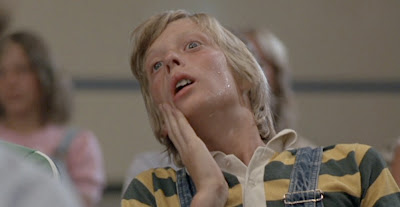
12. Claude - Over the Edge (1979)
"... Give the darkness to Claude, let him smoke it and peer unafraid into Bosch folios; let Matt Dillon create modern indie junkie comovage cinema with Gus Van and Francis Ford; Motorcycle Boy, YOU Live! We... we belong dead. We who have burned so very brightly, Roy, but not to last, we will go now, into the beyond. And never before or since will the bus ride to juvenile hall seem like such a triumph, a march into Valhalla on the rays of a beautiful sun. One day, when the world is much righter."
Dude, what the hell was I on when I wrote that, man? Optimism.

How am I going to pull this all together? Do I need to? Even if you never tried it you have to admit that this list reflects a pretty peaceful bunch. Sure they throw slushies and cavort in the flames but they don't shoot unless first shot at, and in general they prefer to sit around and watch cartoons, which leaves them safely off the streets and out of the way of the hustle and bustle. Which is good, because there's no room at the top anymore -- too many damned people, climbing over each other like those zombies in World War Z. So forget it, man, forget it. Weed, man. It's the dead end on the road through life, but just how far do you need to drive man, before you realize you're still in the goddamned driveway? 

Tuesday, October 25, 2011

White as a Sheet: BLACK MOON (1934) and PARANORMAL ACTIVITY 2 (2010)


Voodoo and witchcraft-related horror films often simmer with a whole gris-gris bag of subtext: gender, race, and psychology all percolating under a boilerplate plot and how much of it we detect depending on our own cultural and educational situation. As our nation/world gets collectively more sensitized, not noticing the drip over spilling out of that pot seems hard. We can't not roll our eyes as yet again a white man lands on a voodoo island for gold or research or to investigate shipwreck and a cute young half-caste (or white, but made up in bronzer to look dimly ethnic) woman from the village betrays the gods to be with him; they escape in a boat as the island erupts in flames and all the black monsters die except the grinning ferryman who is innocent in his naivete, who spirits them away where they can breed and uphold the status quo and in later years, the now retired white dude can go "Voodoo? Harumph!" when the kids ask him about it.

As for the woman, it's tricky but with a recipe set in Hollywood stone: if she's actually white (usually her parents were missionaries or crashed in a plane) they're happy ever after (though maybe she still uses some voodoo in the kitchen, ala Burn Witch Burn). If she's not 100% white, she must die to save him, and thus appease the gods/censors). If she does live, you must imagine Carl Denham lecturing at a feminist studies group: "She was a queen in her jungle world, but she threw it all away to follow a handsome stranger home to to his own lands, and here she is, barefoot and pregnant, for your own amusement!"

In a very few films however, someone clearly takes a stand against these tired/true rules, such as in the consciously progressive, often forgotten voodoo film from Columbia, BLACK MOON (1934). With its mix of horror-action and white man's burden-coded proto-feminism it just may be the least racist and sexist of all 1930s racist-sexist zombie movies --a kind of pre-Lewton Lewton where women understand the supernatural realms instinctively while the half asleep men try to keep it all buried via tactics like condescension, humiliation, beatings, and threats --none of which work a damn-- until the status quo boundaries have shrunk to noose size.


Keeping with the subjugation motif, Fay Wray gets second billing in MOON but is the most recognized name, having tangled with Kong on Skull Island the year before. However, on this particular forgotten island the white power over the ebony denizens is long established, thanks to a racist French sugar cane plantation owner (Arnold Korff). His young niece (Dorothy Burgess) left the island years ago for New York City and now wants to come visit. He doesn't want her to, lest it excite the natives. Living there as a kid, she apparently did some serious mystic bonding with the locals and now the drums are calling her to return, return, with her own young daughter in tow.

The voodoo scenes turn out to be surprisingly respectful of the tradition - and the drumming and singing is awesome, with day-for-night shots of glistening black bodies drumming and dancing, old wizened faces staring off into the distance, and lots of white plantation garb that may be more true to the mileu but lacks the exoticism wer'e hoping for. There's no 'real' night in these scenes, no Anton Grot or William Menzies-type set design to bring it all into a rarefied realm. And it's slow going in spots, and very odd. It never seems sure where it wants to go, only where it doesn't. They even bring in the under-sung Clarence Muse (see my ode to him here) as the charter boat captain who takes old Jack Holt to the island (he wants to make sure his girl is all right). Muse is worried about his own girl, a local who's become much too mixed up with the voodoo scene. The form a kind of interesting bond of equals, not unlike Paul Newman and Sidney Poitier in Paris Blues, just two normal American guys wondering what's got into their women. There's no nonsense like there would be if their characters were played by Willie Best and Bob Hope, for example, though they werent' too bad in and of itself compared to other teams.


But while it's applaudable on these levels, and it is spooky right from the opening with servants in the voodoo lady's New York City apartment, shuddering at the sound of Dorothy Burgess teaching her infant daughter to play voodoo drums, it never lasts: a strange man who works for the colonialist uncle shows up with the message he doesn't want Burgess to go to the island--the natives are too agitated. She says buzz off, and then he's killed on his way to see the husband to try and get him to nail her fins to de floor, so to speak. What's cool is we want her to go to the island, so the native skulkers are killing the messenger for our benefit. Thus, the natives are clearly the good guys up to a point, as we bristle at the idea these scowling white dudes are going to decide where Dorothy Burgess can and can't go.

But in the end of course they are right.

Aren't they always?


Lacking any kind of central figure to care about, aside from Wray and Muse (both minor figures in the film) makes the film a little too reliant on atmosphere and expectation. The ominousness builds up for the big ceremony but it's so 'respectful' when it comes it's a bit of an anticlimax. The kid's maid is killed early on when she keeps objecting to the child being given things like knives and voodoo dolls to play with, but we don't see the murder or even the body. Why? This is a horror movie, after all. Wray wires for Holt to come and take them home but the wire operator is killed before he can send it. At least we get to see the explosion.

Even so, we side with the voodoo crowd because we're waiting for something genuinely 'bad' to happen. They keep talking it up, until it can't possibly match our expectation. But we do like Holt's relationship with his little daughter. They have a genuine bond and he's not a simpering sort like dads in films today, but a rough and ready 70s dad type and she loves him for it.


PARANORMAL ACTIVITY 2 shares a lot of BLACK MOON's deep subtextual feminism. Here the dad is a self-satisfied liberal authoritarian pretending to be fun, hip, gentle family man but he scoffs at the supernatural while his wife and maid know better, which only makes him resentful and furious, forbidding any mention of supernatural goings-on in his presence, even firing the maid for daring to light incense in the house. What a dick!


Like its forerunner, PA2 was a huge hit in theaters, and like BLACK MOON has a great, prolonged set-up with only mild yield: the initial ghost attack looks enough like an ordinary break-in that it compels dad to install security cameras and as our subjects sleep through the night these security cam images--a ghostly lit pool with the cleaner snake slithering around the surface; the crib room with the German shepherd guardian (the dog's not much for supernatural detection, surprisingly; the big petit bourgeois living room--take on a creepy life of their own as our eyes nervously scour the banality in search of some uncanny element or movement. Andre Bazin would surely approve!
 

One reason the PARANORMAL ACTIVITY films work as instant pop culture artifacts is their William Castle-ish utilitarianism - they are here to provide bonding moments of shock in the cinema on Saturday night, or to creep out couples on their couches, couples similar to the couples depicted. And that is all - they are obviously super cheap to make, and make far more than their more expensive competitors. But what they show is something new--the modern American family to itself as it really is, revealing the awful difference between how 'scary' we look on video vs. the pretty people we see in the mirror. The dad thinks he's a hilarious righteous sex machine but we see he's an asshole, etc. and then, watching himself on screen, so does he. These people are the American family that the sitcoms and TV want to portray, but don't have enough time. All the corpses the screenwriters can dredge up in the family garden pale in comparison to the unstoppable demonic ghost possession in the real time found footage usually edited out of TV shows. For eight hours or so every night most of us are in a sate of total unconsciousness. Who knows what's going on while we're asleep? It's creepy. That's what got us hooked in the first place with the first PA - a possessed sleeping girl standing motionless over her sleeping husband... hour after hour.

It's important in each example here that the endangered family be upper-middle class as success makes the dad 'dependent' on the prevailing reality and culture. He's got something to lose. He knows hungry young bucks are eyeing his spot. A white trash redneck sleeping in his pick-up truck has nothing to lose by embracing new paradigms and is thus way more likely to be down with the supernatural. But in the American upper middle class' unconscious, the uncanny is ghettoized so deep that when dad finally sees the tape and learns the truth he becomes a fractured, incoherent mess, worse than useless and ripe for possession. If such a possession was offered he'd snap at it, a chance to switch sides and affix his star to whatever's currently in charge, whatever overpowering force wants to supply the new paradigm, no matter, as long as he can still feel smug.

Just as BLACK MOON is not just about race oppression but gender oppression, each one a metaphor for the other, so too the PARANORMAL films are about superstition and rational thinking kicking each other into oblivion. When the rational left-brained know-it-all douche bag dad types are forced to confront the truth, forced to realize via the very rationalist tools of the skeptic-- security cameras-- that they can never completely protect their children, even in their own house--that their kids will always be exposed to danger, then not even the TV set can provide a respite, then dad is drained of all his false entitlement. And if he denies he ever even had any, his double negative shoots him in his own foot through his mouth.

Such a realization of complete powerlessness is the apocalypse of the American family and its one salvation. One thinks back to the "they're here" moment in POLTERGEIST, and if you compare the downward spiral from level-headedness to powerless tired mess of Craig T. Nelson as the dad in that film vs. the gone-to-pieces dad in PA2, all you can do is weep for the incredible dissolving father. The ghosts came through the TV static in that 1980 pre-cable film (when white noise static and station sign-offs still existed), but the PA films are made on and with digital --there is no more four AM shot of an American flag to signal the end of another broadcast day, no chance for static to sneak through and speak to us in its crackly 'popcorn' white noise languge. We have 900 channels of cable and it never, ever sleeps. It's not just ghosts we shut out, it's everything. All hail Shark Vacuum

Tuesday, June 28, 2011

Monster Capsules: GHIDORAH, PHANTASM II, KINGDOM OF THE SPIDERS

GHIDORAH, THE THREE-HEADED MONSTER
1964 - dir. Ishiro Honda
***1/2
I'd seen a lot of Godzilla movies as a kid but I never... until lately. Man, GHIDORAH is the best one! Maybe it's Akira Ifukube's great, blowsy ominous-cool bassoon jazz score, which imbues the heaviness of the monsters with Falstaffian hep grandeur as they stagger around and down volcanoes and bump into matchstick apartment complexes. Ifukube's cues repeat over and over but that's fine, they hold up. Maybe too its the crazy 17th century 'ruff'-style collars the citizens of the strange 'small' country of Sergina still wear, even the gangster villains out to kill their princess: the more they try to look tough, the more those clown collars make them ridiculous. Only in Japan! Only in Godzilla movies do big budget large cast conglomerates of heavy duty Japanese actors wringing their hands intermix with ridiculous close-ups of puppet heads: Rodan and Godzilla each with fixed eyes and only one moving part on their head, a separate jaw which can move up and down giving them a kind of marionette shop crudity that, taken with all the gravitas in both the acting (Kurosawa regular Takashi Shimura even has a bit part as a doctor) and the incredible music, makes for some jovial grins on the part of hip gaijin audiences, as well as squeals of delight for all ages of all nations.

So it seems a bunch of scientists have been having nightly meetings with UFOs, so they invite a lady reporter to come check out how cool they are. When the UFOs don't come the night she's there, they accuse her of sending skeptical brainwaves out into the atmosphere and scaring the aliens off! Skeptical brainwaves! When the reporter dismisses the idea that brainwaves even exist, the scientists smile patronizingly. That's cool despite being sexist because it shows the easy way science can flip-flop on issues, condemning non-believers with an array of defense mechanisms, from witch burning to shows like Fact or Faked and Myth-busters. One day they sneer at the 'nuts' who believe UFOs exist; the next day they sneer at the 'cranks' who believe they don't. Look at the scientist's desk above and you see the way science might have matured had not events like Roswell been so effectively hushed up.The dubbing is solid. The framing and colors are comic book perfection. GHIDORAH: Number One!


Anyway, later that bad brainwave night, the princess of Sergina (Akiko Wakabayashi) is abducted mid-flight from her private plane, by a UFO that telekinetacally steers her out the passenger door in mid-flight-- he instant before a terrorist bomb blows the plane to bits. The next day, scientists investigate a meteor that crashed in the mountains and left a huge Ghidorah egg. The princess appears at the dock, dressed in the clothes of an old fisherman and possessed by a Martian (below) for a dockside press conference: "I come from the planet you call Mars! (Ed note: Venus in the Japanese version). The Earth--your planet-- is on the brink of destruction, and you refuse to take it seriously." They laugh. She doesn't. And the hatching egg is their reward. Look who's come all the way from space to show you that three heads are better than one and that killing dolphins in your tuna nets is punishable by monster attack! Ghidorah functions here as a kind of anti-global terrorist bomb, sent to wipe out violent civilizations before they can become a threat to the Galactic Federation (which is a real thing, according to my in-the-know informants!) So stop sending bad vibes!

Of course, the glee with which Japan is wiped out time and again has become dampened by recent cataclysms, but I still got to go with Ghidorah on this one, even if those cute singing Mothra handler sisters are around to sing their little songs to get Godzilla, Rodan and Mothra to unite against him. It takes a lot of singing on their part and cajoling on Mothra's (and she's still just in her larval state), but then that Ifukube drunken bassoon score really stumbles into low, low gear, and the rumble atop the volcanic jungle is on, reminding me that, as a kid watching Speed Racer, I used to root for the bad guys who I thought were super cool, all dressed in black and with dark glasses. Being a tot and inexperienced, I kept thinking "This time... this time they'll finally win." They never won. I eventually got really despondent and I remember my mom finally telling me the facts of life. The bad guys would never win. The race was fixed.

Ghidorah, I want Speed's Mach-5 racer crushed underfoot!

PHANTASM II 
1988 - dir. Don Coscarelli
***
Who knows where we go after we die? Coscarelli knows, or at least he dares to look in the same trans-dimensional direction as fringe theorists like David Icke and Nick Redfern. Like its predecessor, PHANTASM II involves the adventures of an unlucky orphan lad (here James Le Gros) with mental problems and an ice cream vending buddy (Reggie Bannister) pursuing the Tall Man (Angus Scrimm) as he loots the graveyards of the western states for his neighboring dimension's slave army. A very bizarre but consistent mythos deconstructs down to reveal what it's like to see the warped mysteries of humanity's archaic funeral rituals through the eyes of a young terrified child wandering the mausoleum while the adults console each other, and being freaked out by the glint of the fading afternoon sun on the shiny marble walls. Suddenly a flying metal ball comes whipping around the corner looking for him, to drill out his pineal gland (the home of the soul) for use in bizarre fourth dimensional enslavement rites. The resulting slaves, crushed down to dwarf size (for the high gravity of his home world) dress like jawas. The bad guys bleed yellow embalming fluid. Paula Irvine plays the grown-up love interest (the granddaughter of the weird old psychic lady in the first film) and even Reggie gets a girl in the form of a groovy young hitchhiker they pick up named Alchemy (Samantha Phillips). The scene where the two couple link up while crashing in a boarded-up house in one of the decimated towns stands as one of the creepier and more desolate of the series, laden with termite psychometric details that feel like what life on the road in upstate NY really feels like.


As in the first, the creepy Carpenter-esque music and ever-immanent nightfall enhances the sense of suburban ghost town desolation. And then there's the underlying mythos.... considering all the bizarre accoutrements of the funeral trade, you can really imagine there being a hidden white room in each mortuary where corpses are compacted for rebirth in a dimension that eerily resembles near-death experiences of the unlucky ones who miss the white light (as thousands of youtube videos will make clear). Such people report their astral body/soul floating up to the white light and then being snatched by hands emerging from the dark shadows along the tunnel's sides, yanked into this prison of Hell as they march along a long trail through a desert-like plain led in front by a flying saucer that seems to be harvesting elements of their souls! Part Moses leading the Israelites through the wasteland for 40 years, part literal hell. Which is which?

Whoa, hey! Too much? Then just enjoy this low key TERMINATOR-meets-EVIL DEAD thrill-chill ride movie which comes with periodic in-jokes (the name on one bag of cremation ashes is "Sam Raimi") and pretend you're in a car at a crumbling, empty drive-in in the early 1990s, remembering when the parking lot around you was alive with youth, health, and bravado... all now dust scattered to the wind at a sterile ceremony attended only by an evil dwarf in a brown robe, texting furiously and all but ignoring the sympathy offered by your grieving friends. A poor thing but thine own. We named that brat Ghidorah!

Tiffany and friend
KINGDOM THE SPIDERS
1977 - dir. John "Bud" Cardos
***

This loose remake of THE BIRDS, this spawn of the post-JAWS hell (replete with that old 'you can't cancel the such-and-such festival --the town needs those tourists!' bit), this environ-amok (DDT's the devil!) whirligig of desert sand and webbing, stars the always underrated William Shatner as a small town Arizona veterinarian, and the awesome Tiffany Bolling as a big town arachnologist sent out to help when the toxicology report on a dead calf reveals an inordinate amount spider venom. A sly feminist update of Melanie Daniels (she even has a convertible and driving gloves), Bolling even has a worthy Annie Hayworth in the form of Marcy Lafferty (Shatner's real-life wife at the time). The Bolling-Shatner meet cute is at a gas station instead of a pet store, and the genders are reversed, but a lot of the other BIRDS boxes are ticked off: there's the holing up at the local bar (this one adjunct to a set of cozy rustic cabins instead of a hotel) to hash out motives and options; an crashed plane takes the place of gas pumps for the fireball (though I guess they ran out of money for that one). The big attack with people running around in panic with little creatures on them is adorable, and the Arizona scenery is beautiful with mesas like the ones in STAGECOACH, or rather the same exact ones... as STAGECOACH.

The first to get it eaten is, wouldn't you know it, a black rancher (Woody Strode) fearful of losing his livestock in a quarantine ("he worked for seven years to get that bull!") He's allowed much dignity and concern, so we're slowly climbing up the stereotypes from Best's cowardice to this over-serious humble sobriety... still a cliche, though, since his wife's so dumb she blows holes in her own floor and shoots her own hand rather than just getting a broom and sweeping the spiders out the door. That's a real self-reliant homesteader you got there, Woody. God knows what she'd do if she so a mouse.

It's also pretty dumb that the white folks decide to go on a picnic after finding the dead black couple lying in the grass covered with arachnid bites. Dumb... but typical.


But hey, tropes stop with Tiff: when a tarantula--with scary library music cues filling the soundtrack--slowly climbs up onto Bolling's desk and into an open desk drawer while she's in the shower, KINGDOM comes into a greatness all its own, because when she sits down at her desk and sees it she doesn't freak out. She just smiles like she's found a kitten, picks it up, strokes its hair, then releases it gently outside. She's like if Jill Banner in SPIDER BABY survived, nd went on to get a doctorate in arachnology. I love the way she towers over little Bill Shatner in their scenes together, and the way she gently mocks him when he tries to seduce her, while still letting him continue to try. showing his mammalian fumbling the same calm loving detachment she showed the spider. Her reputation amongst the Psychotronic set is well-deserved! I'd never really caught the fever before this, but I instantly ordered BONNIE'S KIDS and rented TRIANGLE (1970) after watching (See my review of both: Bolling Straight).


Bill Shatner earns his cult, too, especially when he does an awesome high-stepping dance while running around the yard, trying to not step on any of the spiders. He sometimes does step on one, of course. Can't be helped. But no hairpieces were harmed during the making of this movie.

Monday, February 14, 2011

Darker than Blood: GANJA AND HESS (1973)

Photobucket
Valentines Day means red hearts and flowers, dinners by candlelight, hands reaching across the table. Like this dubious 'holiday,' horror films are defined by their cliches: damsels in nightgowns holding chandeliers; undead hands reaching from a mound of dirt; stock footage full moons hitting your eye as a distant howl hits your ear; frightened horses..."easy... steady... steady, girl." Such a well trod path ensures we don't get lost. It's as easy as falling off a bike... into a cozy, well-defined abyss.

But if you are an African-American artist making a designated 'black' horror film, your cliche palette is doubly restricted. There is no 'in-between' for a black character in a Hollywood movie, no matter the genre: either shiftless craps-shooting loafers or violent super-sexual pimps on the one side, devout churchgoing disciplined members of the community, judges and police captains, on the other (or oscillating in-between, like Little Joe in Cabin in the Sky). The black man embodies only these extremes. Come the 70s, the split remains, albeit the churchgoing habit altered by a less passively idealist dogma. In black horror, for every rainbow-feathered pimp Blacula bites, you need a monologue by an idealistic young self-educated activist; for every jive-talking voodoo priest you need a noble cop fighting white corruption; for every pusher, a guy handing out outreach pamphlets bemoaning cop complacency. But it's got to be freaky to count as blaxploitation, but it's got to be cognizant of a social message too.

But what about black characters who range far and wide afield from these extremes, who dwell beyond good and evil; who are educated, affluent intellectuals who aren't really interested in wading down in the poverty, except maybe to cull easy prey; who are natural aristocrats that send their sons to Parisian schools to escape America's backwards racism altogether. These characters are perhaps too complicated not to confound knee-jerk bipoloar expectations for a 'black' horror film. To see what it's like when a black character isn't weighed down with this either/or albatross anchor you have to go to abroad.

February is Black History Month, which means on all the news channels the 'message' flows, occasionally, albeit diluted by 'safe' social commentary (i.e. George Washington Carver rather than Angela Davis; Dr. King rather than Malcolm X), which helps at least posit the problem of getting beyond the vibrant strutting stud vs. progressive agitprop paradigm. Nowhere in the mainstream TV's little digressions lurks the question of whether the African-American experience might be represented in a risky, artistic, dangerous, even abstracted manner, or if 'intelligent' blackness need be rendered only through either dignified bourgeois Ms. Daisy blandness or Spike Lee politically astute anger. The question might be asked and answered by black filmmakers, but their more dangerous films are already ignored by a wary white bourgeois public afraid of being harangued and bummed out, who give 12 Years a Slave and Moonlight Best Picture without seeing actually seeing them, yet ignore or decry black films that presume to tell 'other' black tales, where the blackness comes alive in ways white critics aren't comfortable with. In other words, if we (the white audience) are not able to get 'self-back-patting' liberal guilt assuagement through seeing your film, either crying in solidarity or squirming with awareness, we don't know what you want from us. As your movie plays on, we start to get nervous in a way that has nothing to do with education and expansion of horizons. Only a few white critics, the brave and feckless, are turned on rather than scared by seeing blackness truly freed, not just from its centuries of shackles, and economic woes, but its mortality, nationality, and even identity, until we both merge in either flames of a burning city or flames of a unifying field of pure being.

Photobucket
One case in point: GANJA AND HESS (1973) a weird one-off kind of genre-unto-itself horror film that refuses the bipolar limits of the cinematic 'black experience,' refuses even the tropes of casual art or surrealism, instead delving into them all with the tasteful restraint of someone building a whole cinematic language without resorting to ponderousness or didacticism in the process. Its creator, African American playwright/actor Bill Gunn, was given money to make a black horror film modeled after AIP's BLACULA (1972). That film had proven a surprise hit, especially among black audiences. But Blacula was directed by a white man. Producers figured that if they got a black man to make a black vampire movie they'd clean up, and have a truer, grittier, or at least cheaper, film.

But instead of a blacker Blacula, Gunn made a nouvelle vague semi-experimental horror love story that seemed, on casual viewing, to be a choppy, fragmented mess; deceptively framed, with strange sound mixing, and an impossible to follow storyline. BLACULA's appeal of course was in the name. The name was all you needed. Seeing it on a marquee, you knew just what to expect, and it delivered. But no one could possibly expect GANJA AND HESS, for there'd never been anything remotely like it. If you sunk some of your own $$ as a producer into it you might be pretty pissed...

BUT if you stuck with it, watch the whole thing without judgment, you suddenly realize the film is delivering something brand new and unique, beyond any duality of white or black filmmaking. The effect is profound, startling, new, unforgettable...

Most of all it resonates as a true love story, with all the heady rushes and disastrous fall-outs that implies.

Not least of its assets are the title characters: the rich, isolated doctor Hess (Duane Jones) and Ganja (Marlene Clark), the latter very unusual type of strong black woman who manages to assert herself very strongly, without rustling feathers, without being bitchy or unsexy, or moralistic, or judgmental. Watching her move in on Dr. Hess you are seeing a character you've never really seen before in a film (at least I haven't). She and Hess are fully complex, morally ambiguous adults, antithetical and ambivalent. As in the best tragic figures of Shakespeare, they have the guts to admit they don't really care if other people die. They are characters dealing with blackness, as opposed to being representations of blackness

I love Nick Pinkerton's description:
Hired to crank out a Blacula knock-off (with a drug-joke title), Gunn instead wrote a surreal love triangle among black sophisticates, devoid of sex-machine phoniness, and directed it in a muttered, disorienting style, with a strange brew of Afro-Euro symbolism. Duane Jones is Dr. Hess, a gentleman scholar studying a pre-Christian African blood cult; Stop's gorgeous, sloe-eyed Marlene Clark is Ganja, as lively and droll as Hess is lethargic. Gunn himself plays the turbulent artist who infects the doctor. He had a genius for writing monologues, and delivers them with absorbing intensity, especially in his character's schizo suicide dream of playing both murderer and victim, showing Gunn's fascination with the divided self.
When seeking a way to wrap your narrative-expectations around Gunn's "muttered, disorienting style," it helps to have a bit of a grasp of black cinema history. The films, for example, of African American pioneer filmmaker Oscar Micheux were notoriously mismatched and fragmented, as if the audience was handed a stack of coupons, leaflets, half-finished letters, and chapbooks and told to read through them at random and let the complete novel form in their brains. That occasionally it would was either evidence of genius or a viewer's paranoia. For sure, there's that feeling with Gunn's film too; you feel that some shots must be missing. Seemingly disconnected scenes (are whole pages of exposition and explanation in GANJA missing? Was the DVD I saw incomplete?) come together in your mind as you watch it, creating a delayed sink pull drag effect, as if by the time you figure out that something's chasing after you, it's too late to escape. Soon you're dead... but... why, are you still running? Was death waiting for you to catch up to it, or has it already moved on?

Photobucket

George Romero showed brave social put-your-money-where-your-mouth-is casting by having Jones in the lead of NIGHT OF THE LIVING DEAD (1968) and it's perhaps no coincidence that Jones plays the lead in GANJA AND HESS. Like his character in DEAD, Jones' Hess is an intelligent black man with no time or interest in proving it to white people, or hiding it or being subservient for white acceptance, etc. We see Hess's intellectual strength, fatherly tenderness and icy reserve, for example, when he visits his son at boarding school, and the pair have conversation in fluent French, a reminder of the way so many black artists expatriated to Paris in order to escape racism. Even so Hess remains closed-off, aloof, abstracted, not a bad father or a good one, but something like how a genuine intellectual thinker (not a cliche'd dotty Einstein hobbit or megalomaniac, but a reserved, distracted yet immensely perceptive full-grown man) would be, even to himself, even if he tried not to be (and smart enough not to let it get him down). And that may not sound like much, until you realize every black dad in movies is always either a strong perfect lion of a dad like Larry Fishburne in BOYZ IN THE HOOD or a drug-dealing thug like Samuel Jackson in MENACE II SOCIETY. Jones is neither, yet with elements of both-- he is not trying to be 'a dad' or not to be one.

Examples of the still-flowing racism a character like Hess (or artist like Gunn) would endure were all over the papers when GANJA AND HESS opened. It got a lot of aghast walk-outs from both audiences expecting BLACULA 2 and snooty festival curators, at least here in the States. When it was the only American film selected to represent America in the 1973 Cannes Critic's week, Gunn wrote the following letter (excerpted) to the NY Times on May 13, 1973 (following the tepid reviews of his film, including outright admissions by critics of walking out):
Photobucket"If I were white, I would probably be called "fresh and different." If I were European, "Ganja and Hess" might be that little film you must see." Because I am black, I do not even deserve the pride that one American feels for another when he discovers that a fellow countryman's film has been selected as the only American film to be shown during "Critic's Week" at the Cannes Film Festival, May, 1973. Not one white critic from any of the major American newspapers even mentioned it."
Indeed one wonders, would this film be recognized if it were released for the first time even today? Probably not. Now that our culture has grown further distracted by CGI and MTV whiplash editing, it would be impossible for teenagers to stick with the disorienting jaggedness long enough for the hypnotic effect to kick in.  I confess I spent the first ten minutes kind of puttering the living room, keeping an eye on the image to see if the shot ever changed, but not really tuned into it at all. It might actually have been beneficial to do that, it turns out, as my unconscious was tuning in while I was distracted with laundry or whatever I was doing. But would I have lasted that long if I was a film critic seeing this in a screening room on a busy day of deadlines?

On the other hand, Gunn is right: if the film was French, these Times critics would have pissed all over themselves trying to 'discover' it first. I often wonder what Godard movies would play like in France, without subtitles, as subtitles fit so well his post-structural imagery, and so much of his dialogue overlaps or is mixed low making full comprehension impossible without them. They seen sloppy and haphazard anyway, but the subtitles and foreign language give them enough cultural cachet/distance that, as Americans, we don't feel ashamed by him. Gunn's film basically answers my question, and the answer is yes. If GANJA had subtitles and everyone spoke French throughout (instead of only in the boarding school sequence), it would have become a new wave classic. (And that letter proves Gunn himself knew that. too).

But there's a trick to appreciate this film, as I say- you have to let go of having everything spelled out, you have to trust that your unconscious understands the background whispering, the disjointed meanings, even as you scratch your head and think about doing the dishes. Stick with it, let the trance overtake you (the way it might for Jess Franco or Antonioni), and your unconscious will reward you.

Photobucket

The main thing that kept me rooted to the film even during the first 1/4 was the incredible electronically-warped soundtrack: African chants and spirit calls echo throughout the film like an ancient tribe stumbled upon a flanger and a feedback amp and managed to send their chants forward through time. In Gunn's world, the distant past and the future are both relatively unfixed: the past can roar up to grab you and the future is already biting you and draining your blood so it can survive into another day. Gunn uses a growing feedback squall to indicate when our vampire hero starts to jones for a sanguinary hit, making us aware of the link between vampirism and heroin addiction, or alcohol, the way a person who's been waiting for 4PM cocktail hour since he woke up will snap the head off anyone who suggests, at 3:30, they go see a movie instead.

Photobucket

The droning demand for blood and the ghostly presence of African drum on the soundtrack make the ethereal score an audio-mimetic equivalent of the ghosts that haunt Brutus Jones in Eugene O'Neill's play, The Emperor Jones. An early suicide in the film is set to music that gradually echoes into abstract noise as the camera circles around the self-inflicted carnage, creating a dizzying POV sense of a soul suddenly freed of its body, no ears to translate the dissonant sound waves into music.

Is this surreal echoing booming what a tree sounds like if it falls in the woods and there's no one around to hear it? I got a panic attack when a similar effect was done on the song "I can't live (If living is without you)" in Roger Avery's RULES OF ATTRACTION. Watching this scene it was like that panic attack finally blow its own brains out, like a rose from the tip of the crown chakra had been plucked. More than any other 'vampire' film, 'black' film, or even 'white' film, GANJA AND HESS dares to examine sound and vision that lie past the point where there are eyes and ears left to see and hear them. It re-imagines the Bluebeard legend as a chance for forgiveness and admission of true and refreshing ambivalence about life.

Photobucket

What's missing in the film is a serious line of continuity, and that's where Gunn relies on cliche, as we "know" the missing scenes (such as continuity and establishing shots) the way Coltrane assumes we know the melody of "My Favorite Things." Clearly, a mix of budget constraints and artistic control necessitated some of these choices, but they work because they force us to fill in the blanks, like watching a foreign language film without subtitles forces us to notice mise en scene in an abstract composition sense. And then, when Ganja shows up, she's so warmly human and yet so strong that the film kicks into gear; the sound evens out, the roses all but bloom in our heart chakra. We've been straining to get past Hess's alienating persona, so we're sensitized and ready for her sensual assault. I wont spoil it, but about halfway through the film she delivers a long, tearful monologue, lit only by firelight, and the subsequent eruption of happiness and music afterwards is one of the most powerfully cathartic cinematic moments I've had in awhile, and the long single take monologue in dark lighting is what helps catapult it. In short, Gunn uses his limitations and long takes for powerful effect, mixing the agonizing real-time emotional build-ups with ecstatic release.

All the strain pays off.

Photobucket

Looking at this truly unique film as a whole is to return to the question: How can a black artist be true to himself, relevant to the pop cultural landscape, and embrace the darker recesses of his black ancestry all while investigating topics like the difference between our physical senses and dreams, or the way ancestral ghosts chant to us as they travel in the blood rushing through our ear drums. If a black artist be continually burdened with conveying the 'entire' black experience like a fractal in all aspects of his work, then GANJA is a way that this fractal is both circumvented and transfigured into a whole new form. Gunn also addressed this in his response to criticism in the Times:
Photobucket"Another critic wrote - where is the race problem? If he looks closely, he will find it in his own review."
This innate 'extra' requirement for black art is like a lead albatross affixed to every struggling black author or artist, especially when it comes to knee-jerk bourgeois liberal dogma. Interestingly, it's also a problem faced by Dr. Hess in the film, leading him eventually to accept his own disintegration. Knowing the only thing that can hurt him is the shadow of a cross over his heart, Hess decides to get born again down at the local church. Well, sometimes, merely climbing out of a swimming pool can be a true baptism, just like sometimes raggedy scraps of African-American film can come together as galvanizing art, and sometimes that art can be recognized.... by the French. Amen.

 (Special thanks to poet/performance artist Tracie Morris for turning me onto this film and informing sections of this review, and, for being the place I found that cool quote, The Temple of Schlock.')

Thursday, February 21, 2008

Celebrating Dr. Clarence Muse


For Black History Month this year I'd like to talk a bit about the great Clarence Muse. You can read on Wikipedia about his life and work in theater and TV and in films such as BROKEN EARTH and WAY DOWN SOUTH.

However, I don't know Muse from those films. At the risk of stepping into deep waters, I'd like to talk more about the films I know Muse from, which tend to be hoary old UHF monster movies, in several of which he played a butler, coachman, porter and preacher. From a historical standpoint as well as to do justice to the efforts of these early actors, I think it's important to make the effort to peer past the broad caricatures these sorts of roles sometimes are pigeonholed as, and see the finer shadings. To dismiss all butler roles as racist is to fall victim to an easy sort of reverse prejudice. The fact is, Clarence Muse brought a lot to each of these potentially demeaning roles. Even in such hoary stuff as Monogram's THE INVISIBLE GHOST (1940) or the Halpern Brothers' WHITE ZOMBIE (1932), Muse lent his stock parts such dignity and quiet strength that the entire film benefits. Muse doesn't kill the "fun" or "make a statement" - he simply does his work with a level of grace and intellect that anchors the sketchy hamming around him. No matter how bad the rest of the film is, when Muse is onscreen, you believe .


So this February, as we rightly celebrate African American artists of the past and present, let's not forget thespians like Dr. Clarence Muse, pioneers who slowly, quietly, steadily chipped away at Hollywood's racist stereotype machinery from within, weakening the structure so it might one day topple in a glorious explosion of Poitier and Cosby-style intellectual energy.

Wednesday, July 11, 2007

CABIN IN THE SKY: Ethel Waters, Co-Dependency and The Lord

Preface: Popular African American success stories since the dawn of American pop culture usually involve some strong parent or grandparent with strict ideas about child-rearing (think of Jamie Foxx’s Oscar speech about how his grandma used to beat him to get him to listen and otherwise he'd be just a street kid, etc). Multi-generational and community strength seems to be needed (vs. the more self-contained independence of the nuclear family in white neighborhoods). Again, looking at this just from the movies and my own (white) reading of (white mainstream) portrayal of black culture, i.e. through a thick blur of my unconsciously prejudicial upbringing and liberal arts 80s college education, etc., that's the most glaring thing I find when revisiting Cabin after so many years, on my new spiffy DVD (each front-loaded with racism-apologies as is this post with my own);

An interesting subtextual window into the popular conception of African American temperament can be found in CABIN IN THE SKY (1943), released on DVD last February (and a must). What's set up in the allegorical story is the polarity of opposites between temptation (represented by craps, booze, sex and other "black" vices) and goodness (the church!). Though one can read this largely in terms of musical style (the lascivious dances and shimmies in the club scene climax, the --sadly mostly excised--hell-set number) vs. the church, heaven and Waters' backyard, the subtextual implication is that the African American subject needs more control/discipline than a white one due to a surplus of energy/life force (or what the Lacanians would call “jouissance”) so they have to work twice as hard to be good, or else be twice as bad as whites on account of they're being lazy, shiftless, et al. But if they get the discipline together, then they're formidable, respected and devout enough to make a white preacher seem depraved and weak-minded in comparison.  Placing this dichotomy of good vs. bad in CABIN, we find Petunia (Ethel Waters) regularly dragging her no good shrimp of a man, Joe (Eddie "Rochester" Anderson) off to church, much to the consternation of his gambling cronies. Joe "wants" to do good, but he owes money from throwing dice with a no-account hustler named Domino (“Bubbles” John W. Sublett). When the game goes bad, a gun goes off and Joe is reckoned a goner, until the powerful prayer of his good woman saves him.

There’s a run-in between the factions of good and evil at the crime scene as devils and angels argue over Joe’s soul. They agree to play it as it lays, giving Joe a second chance and each using their abilities to lure him one way or the other. The representatives of good are dressed in solemn military garb with stout, straight backs and strong voices; the devil's minions are playful jazzbos (including Louis Armstrong). The devil's son-in-law (a marvelous Rex Ingram) sets about trying to lure Joe back to the fold via a winning lottery ticket and Lena Horne's gold-digging vamp. Through it all, it's assumed the Joe needs to repent, if for no other reason than Ethel loves him so gosh-dang much.

This "love" is what tips off the whole thing, for a close reading reveals it as nothing more than smothering, all-consuming, co-dependence. Joe is never even asked how he feels about Petunia: all concerned know that she’s a good woman and therefore Joe is one lucky fellow! Case closed! But it's clear she's more enamored with her own powers of endearment rather than she is with said endearment's undeserving object, Joe. In the end of the film, Joe wakes up from his death bed and wants to tell Petunia his dream, but she won’t let him: “That’s not important, let's just talk about how much I love you!" Too bad these two didn't have access to a couple's therapist, or Joe might have learned it was okay that he felt stifled. She's the bad guy here. She can't wait to jump to the wrong conclusion when she comes home from work to find him fighting off the caresses of Lena Horne (who's the first to learn about his lottery ticket - since she and the ticket are both hell-sent). The look in Anderson's eyes as Joe after Petunia flips out is priceless. Unlike the instantly apologetic typical husband in (white-based) movies who takes the guilt on himself for his wife's misjudgments (since on some level he's tempted therefore guilty), Anderson's Joe just seems saddened, worried at seeing this mean shrewish streak in his usually vivacious gal.

Through it all, thought, Joe, the man, works almost as a Hitchcockian mcguffin-- a plain white flag in the capture-the-flag game between forces of good and evil. He exists mainly to be adored by Petunia and to reflect within himself the weakness for vice which is by association subtextually inherent in the African-American character. In the picture above you can sense his passive ambivalence about her: she grins like she's about to devour him whole; he looks up more than a bit afraid, like a mouse gazing up at the smile of a Cheshire cat.

Vincente Minnelli is a brilliant enough director that one is obligated to do this subtextual digging, particularly when his AN AMERICAN IN PARIS (1951) features such a similarly dysfunctional romance at its heart, between a self-satisfied but financially bereft painter who has little gratitude for his kind if overly gabby 'sponsor' or sugar mama (Nina Foch) he wants to be self-sufficient while doing no work other than painting, which the best he can do is sell on street corners when she could get him gallery shows, like all good sponsors. And when he finds himself attracted to Leslie Caron, he cares not a wit that he's forcibly breaking up her own sugar-daddy connection, forcing her into the same self-inflicted poverty he relishes, regardless of her feelings and the feelings of all those who he owes and abuses. And yet we are somehow expected to root for him, because he himself is so in love with his own big white smile. A similarly uncomfortable implication of narcissism occurs in CABIN: Petunia loves Joe the way Gene “loves” Leslie in PARIS, which is to say, as a possession, as a symbol of their self-righteous "integrity," an integrity that blinds the owner to the collateral damage it creates. Gene wants power, to be the one with the purse strings and have Caron's big gorgeous eyes look up to him in awe; Petunia wants Joe because left to his own devices he'll be gone down the road of sin faster than you can say Jack Russell terrier.

Gene Kelly and Nina Foch, AMERICAN IN PARIS
Seeing CABIN with a modern therapeutic eye it’s plain the only woman in the film who truly understands Joe is the devil’s temptress, Sweet Georgia Brown (Lena Horne). Unlike Ethel’s Petunia, Georgia at least seems to accept Joe as he really is, to see him clearly, rather than as a reflection of her own ideal ego. As Petunia's undeserving love object, Joe may as well be a stuffed animal, but with Georgia he's a man. When Horne and Anderson share a scene there is a sense they are connecting on a personal level as actors, something that never happens with Anderson and Waters (who preaches to everyone as if she's helping them out of a deep pit).

Joe as a man is ultimately so ineffectual, however, that he lets himself get pushed around in his own nightclub (which he buys with his lottery winnings). You would think he could hire a bouncer to take care of the no-account Domino, who crashes the gate to sing "Shine" and do a nifty tap dance (one of the film's big highlights so who's squawkin'?). If he was, say, Ricardo Cortez in a Warner Bros. gangster film, Joe would just snap his fingers and his big thug bodyguards would at least toss Domino out on his ear if not beat him to a pulp in the alley. Instead, Joe is so ineffectual he can only watch as Domino steals his thunder and even pushes him around... in front of his own staff!

Petunia continues to manifest the hypocrisy of the church when her attempt to get Joe back starts a raucous bar fight at film's climax. Refusing to accept any blame or let people work out their own issues, Petunia prays down a tornado, beseeching God to destroy the whole town. Mind, this is all a dream, but it seems rather cavalier of Petunia, a supposed good woman, to order God to destroy a town just because she's getting bored with all the violent attention that she herself created by disguising herself as a no-good vamp.

Naturally, as with AMERICAN IN PARIS, none of this matters particularly, as the songs and dancing is everything. That’s fine, but to me, and any good deconstruction-happy crazy theorist, it's because Minnelli's focus is on the song and dance that these other recurring sinthoms are so telling. One wonders who the woman, mother or past 'sponsor' that left Minnelli feeling so boxed in. For CABIN, while has managed to sidestep a few racial slurs he's blind to where he's fallen smack dab into others, such as those of the infamous grinning minstrel. Every single character in this all-black film seems to keep their mouth peeled back so their big pearly whites can create that nice juxtaposition of white against their black faces. It’s creepy to see characters holding these big toothy smiles through whole scenes while another character talks. I kept looking into their eyes for signs of passive aggression as if they were overdoing it on purpose as a form of protest, but all I saw was weary strain, a determination to do it right lest their boxed-in director demand yet another jaw-aching take.

Still, any racist aspects of the film pales beside its sly indictment of co-dependent romantic obsession and fundamentalist Christian dogma, assuming that's what was intended in the first place. Let's hope one day there will be a movie about African-Americans who can gamble, drink and carouse and still make it to work on time, raise decent children and love each other for who they are. Amen!
Related Posts Plugin for WordPress, Blogger...