Showing posts with label Fay Wray. Show all posts

Thursday, August 04, 2016

Fay Wray is the Devil: THE RICHEST GIRL IN THE WORLD


Aug. 5 - Fay Wray day on TCM, a great day to be a man, standing in front of a TV, looking at the most gorgeous of all legs, struggling to escape a giant Kong paw, and knowing, in your heart of hearts, the ache the ape endures. And today tons of her best stuff is screening. Don't miss RICHEST GIRL IN THE WORLD, at 11:45 AM, that's 20 minutes from now!

She was married to the great chronicler of the "hurrah for the next who dies" parachute-less pilots of WW1, John Monk Saunders. She's old enough that even I met her, at a late 90s live accompaniment screening of LAZY LIGHTING (1927). And tomorrow is her birthday and TCM is dotty about August birthdays; and so here we are. It's all gonna fit together in about five minutes... and you too will never be "the same" again. So be the same now and get it out of your system.

Parallel track of reasoning #1: consider the climactic unmasking of THE WIZARD OF OZ (1939) by Toto (Dorothy's dog) and imagine Toto didn't come to Oz, so no one pulled the curtain, which is what put the Wizard on the spot and got him to give out the free shit. What would have happened if Toto wasn't there to cut through the shit? Those four--brave and true as they were--never would have dared pull the curtain or even noticed it, on their own.

Think about it because it's relevant, man, and answer the damned question: Would that old man have ever come out from behind there, of his own accord, switched off his smoke and mirrors, and given Dorothy and her gimme-gimme hooligans their testimonials, medals and diplomas? Would he go all the way back to Squaresville, Kansas in a very dodgy looking balloon instead of being the all powerful Wizard forever behind his curtain, gettin' all the ladies and ruling the roost, as it were? Would their next challenge be to sign up the witch's monkeys into the Oz home guard, and making war against the Munchkins in order to enslave them as poppy harvesters? To hook the munchkins, and make them toil to make heroin from them for sale through the connections of the junky Lollipop Guild, down into Kansas and using the profits to expand the Emerald City and crush all resistance? Naturally, one has to consider that ordering a flying monkey attack squad to arrange a 'cycling accident' for Ms. Gulch, and dye her eyes to match her gown, y'all, red being her color.

Now second parallel track tangent (shortly to dovetail into Wray's birthday, don't worry): In Altman's SECRET HONOR (1984) we are presented with another man behind the curtain, old Dick Nixon--in one long monologue from an oval office surrounded by cameras and tapes and booze. Played by Phillip Baker Hall, we're presented with a Nixon confessing that he couldn't keep the facade, the green face, for the nation, and so let it turn around and bite him, pulling back his own curtain on Watergate so he could get out from under the shady power players of the Bohemian Grove. We find out that HE was Deep Throat, HE was the Toto, that is the "secret honor" of the title.

We hated Nixon for it--at the time--as we hate curtain pullers like Snowden--because he was not cute like Toto, and the one who peels back the curtain and compels us to realize the truth--that there is no easy fixes--is as reviled as one's Monday alarm clock. The truth is that there is never a single consensual reality graspable in any sense, good or bad. Diplomas and medals and testimonials fade and wind up in file cabinets or yard sales. Their value is purely subjective. They have little resale worth. You cannot use them as payment for your next angry fix.

Now that the poppies aren't free anymore, you're gonna need to steal.

Screening today is a movie that I thinks sums up the entirety of this truth of the problems of that curtain over cosmic existence, called THE RICHEST GIRL IN THE WORLD from 1934. It was just restored by the Library of Congress, or something. I forget, they introduced it on TCM and it's very special, not particularly great but memorable as far as its underlying spiritual message - the god behind the curtain.

Miriam Hopkins is the rich one and she's single--she seems a little coded closet dyke-ish in today's more gaydar-attuned definition, preferring to play pool and wear pants and carouse rather than faint at the first sight of blood, etc. Nonetheless, being so rich, she wants to be free of all the mooching hangers-on and gigolo gold-digger contingents, to find a real love, one she knows isn't based on smooth-talking fortune hunters, so she switches places with her poor secretary Fay Wray, who's already engaged to the twit who plays Alfy in the Bulldog Drummond movies.

So at a NYC party Miriam meets handsome engineer Joel McRae, who thinks she's only the secretary to the richest girl in the world; but is Miriam happy with that, is she able let it go and tell him everything and say, Joel, you passed my test with flying colors let me buy you a nice vicuna coat? No, she all but cajoles and forces him onto Fay Wray, reminding him that he previously joked with her that girl's wealth wouldn't bother him as a husband, twisting his every word at first half-kidding around cuz they bond like pals since the pressure's off, but gradually forcing him into it, and Wray too, while Alfy looks on, aghast, for truly he can't compete with Joel McCrea. Who can?

Hopkins' savvy grandfather, or whatever, counsels her: hey give the guy a break; the test is too strenuous, pull the curtain for god's sake. Clearly McRae prefers scruffy Hopkins even as only a secretary but he's going along with it as a gag until he falls for Wray because Wray is super lovely and Hopkins is a little busted here -- which is to her credit; she's not afraid to let her chin double up a bit and everything hang out, to get ugly-drunk and pass out and all that. Meanwhile she's pushing old Joel more and more on Fay until they get engaged.

It's stagey and then over -- what is the god element? Of course Hopkins is God, Wray is the Devil. It's not enough for omnipotent hot rich crazy noble God to have our love, he wants to force us into the choice of Him, in filthy rags and no teeth, or decadent luxury and everything we could wish for all wrapped up in Wray's sensuous evening gown-sheathed legs. Who could resist the latter? Only a chump, but that chump's the one goin' to hell.

Watching, we get angry at God/Miriam for being so mutton-headed--as do her lawyers. The test is too great, they and we cry! The devil displays all the wealth and beauty while God is a street urchin, a mallet, a pox, a buddy, a bro, a plain jane. At 'The End' (or our death), the curtains are pulled back, credits roll, and the devil and God join hands and bow. It turns out the urchin, the sick and suffering alcoholic in and out of the rooms, the wonky ugly duckling, is the rich beauty with all the wealth in the kingdom of heaven. The devil's sensuous evening gown is revealed as moth-eaten and fraying --the body underneath turning to old age and dust; roaches climb out of her eye sockets. If you picked the Wray route, you know you done picked wrong, brother, and it's too late to change; eternity is a looooong time.

It can be hard to stick with this film at time since Hopkins is so intentionally dislikable, but so is God at times, at least in the Old Testament. At any rate, it's to their credit that the American Museum of the Moving Image or whomever restored this valuable artifact, not just for its brave dyke-coding of Hopkins' character, but for the subtextual spiritual message. Next time you're wondering "if God exists why is there so much suffering and war and evil in the world?" think of this movie and you have your answer - God is an insecure closeted neurotic who wants to be sure you'd love her even if he destroyed everything you hold dear, like a jealous wife smashing your bowling trophies, destroying every illusion you cling to in order to avoid her; if the only time your not an atheist is in a foxhole, she'll make sure the wars keep coming. If you want to pull the curtain and see her working all the smoke and shelling, all you have to do is stick out your tongue for the lysergic sacrament, wait 20 minutes for it to kick in, and then run like hell, cuz that bitch is CRAZY.

THE END.

Richest Girl in the World screens at 11:45 AM on TCM - August 4, 2016
See also: BLACK MOON (1933) at 1:30
Mystery of the Wax Museum at 5:15
King Kong at 10 PM
Most Dangerous Game at 3:15 AM

Friday, February 12, 2016

Old Dark Capsules: THE GORILLA, WHITE COCKATOO, WHILE THE PATIENT SLEPT, BULLDOG JACK, SHADOW OF DOUBT


Maybe it's an age thing (I've never been this old before; I don't recommend it) but as I careen inexorably towards my half-century mile marker I'm blessed with a progressively terrible memory, a growing roster of nostalgic touchstones, and a love of old black and white mysteries. Mix 'em together and you have my #1 super power: I can watch old mystery movies over and over, forgetting 'who done it' almost before the credits roll, allowing for cycling through my entire collection every year with no loss of enjoyment. The number of titles I accrue further help me forget each one. I love mysteries where we don't know anything the detective doesn't, because I'd rather the detective be a few steps ahead of me so I don't groan with annoyance and impatience as he once again flubs an obvious clue. His sons may spazz out in eternal befuddled flummox, but Charlie Chan sees right through every ruse, so I can relax my angst when he's on the scene. The idiotic police chiefs of films based on Mignon G. Eberhart novels, though... hmmm. 

And so, my mystery/old dark house binge starts with either The Black Camel or Charlie Chan in Egypt, two beautiful early 30s pics free of #1 or #2 comic relief sons, and laden with great art design and--in Egypt's case--my dream doorway divide (if I can ever afford an interior designer, this is the room entrance I want, left). And then I work my way down....

First up on this list: three films from 1935 I got over Xmas on DVD-Rs from the WB Archive.

The first year when the code was all the way slammed down on freedom of expression in Hollywood, 1935 found a relatively chaste alternative in a configuration of hands coming out of walls, trapdoors, tossed knives, secret panels, wise guy reporters, murky red herring line-ups, windswept dark mansions, dimwit cops, and bits of string, stray buttons, and ingenious gas capsule killing devices. As long as the murderer was punished or caught at the end, the censors seem to say, go for it. They knew a built-in audience of mystery buffs already existed, well-versed, in the popularity of novels, old radio shows, pulp magazines and something 'The Clue Club.'

What I like about them, I think, is that they open--usually--with a very dislikable person getting murdered. We seem them being mean to as many people as possible but it doesn't phase us because we know this is the last few hours of this chump's life and every little detail might hold a key clue. Their death allows the young lovers to finally marry, the one decent girl in the family to inherit the millions, and the butler to be free of his master's indifference. And since there's absolutely no bearing to my own life, I don't feel disagreeable angst or collective guilt, or trauma (as I might watching something like ripped from today's headlines like Law and Order). When you're as sensitive as Roderick Usher, it helps your nerves to see the bad guy die in the library with the candlestick, and and to forget who dunnit as soon as the credits roll, and thus be able to bask in the proxy glow created by the evil one's sacrificial death anew with each passing solstice.

SHADOW OF DOUBT
(1935) Dir. George B. Seitz
***
A kind of silver and velvet (and lovely lighting) post-code preparation for film noir, SHADOW (not to be confused with the 1943 Hitchcock movie, Shadow of a Doubt) is a spritely affair concerns murder mystery police procedural aspects, NYC's upper crust, nightclubs, press passes, Broadway revues, and gangster hobnobbing, punctuated by the occasional trip to the office or the rich dowager aunt's to borrow against the trust (in order to pay off gambling debts or a blackmailer). It's all set to a weird floating acting style that involves actors hesitantly remembering their lines through thick hungover atmosphere, quietly, as if mindful of guests asleep on the couch. As in mysteries solved by Perry Mason or Philo Vance, herein the murder victim is an odious wastrel, so everybody wins --only the guilty party goes to jail (instead of getting a medal), the moral of the story being, don't bother killing your blackmailer --sooner or later someone else will do it for you.

As a strange but very cool mix of Ms. Haversham and Hildegaarde Withers, Constance Collier plays the reclusive wealthy aunt of Ricardo Cortez's silken voice talent agent. She's a recluse who built a movie theater in her attic and dresses all in black, like a rich dowager version of... me, or probably 60% of hardcore old dark house/mystery fans. She goes into action when nephew Cortez is fingered for the murder. Virginia Bruce is the girl he loves who Collier first thinks did it. Stepping out on the town, acting drunker than she is to set traps, she lures the killer to her mansion on a dark and stormy night so there can be an expressionistic shadowy chase through the back alleys and under-construction townhouses next door (allowing for a very cool collapsing staircase effect), Collier makes a grand heroine and it's too bad she didn't get her own series. Best, her actions are all hinged by a fine moral twilight, unusual for the post-code, quasi-fascist tone of the time: does she approve of her nephew or not, is she only joking or half-joking or serious? He certainly revels in her dubious affection, and they have a great rapport, a mix of loving indulgence, and constant witty jabs and parries, but it could just be she genuinely mistrusts him.

And who doesn't? With his pencil thin mustache, droopy eyes, slick hair and silk shirt voice, Cortez is one of the great unsung character actors of the pre-code era. A fusion of Cesar Romero and Warren William, he's truly uncanny in that he can't be pigeonholed. His line readings always seem insincere and sincere at the same time. In other words, he's perfect as the enigmatic alleged good guy suspect who still might turn out to have done it.

For example, when he first jokes with the cops about having killed his sleazy rival it registers as very bad taste and unfunny --are we supposed to laugh or get a skeeve in our blood? Was Nicholas Ray thinking of this when Bogie did the same thing in In a Lonely Place? By contrast, the reasoning behind Virginia Bruce's grouchy impulsive decision to marry the sleazy abusive alcoholic filthy rich Haworth's (Bradley Page) Huensecker-meets-Stage Door Adolphe Menjou, is poorly etched out. Is she just hungover and vindictive, latching onto a guy with a terrible rep for beating up women out of a creepy almost Batailles (1) kind of masochism? Or is it just to really stick the knife in Cortez and twist it, making Cortez the Von Sternbergian masochist? Edward Brophy (Morelli from The Thin Man) is the cop, and he's smart and good-humored for a change, which--as a bit part actor usually regulated to dumb thugs--he clearly appreciates. Isabell Jewell is another girl in the case; Regis Toomey is he PR guy who fills in the missing story threads. Ivan Simpson is a butler good at keeping his mouth shut. Seitz makes sure the velvet ripples and purrs and there's no buzzkill fiancee in sight even if it is the product of MGM.


THE WHITE COCKATOO
(1935) Dir Alan Crosland
**1/2
Based on a novel by mystery writin' dame Mignon G. Eberhart, this plays like a chapter serial mystery story, or even Tarantino's recent Hateful Eight, set at a windy hotel along the French coast (in the off-season) full of weird statues and secrets (and the titular cock), and no one is who they claim to be, and everyone is scheming to commit some nefarious inheritance fraud or prevent one. A bit like a 1930s predecessor to Donen's Charade, millions are at stake, and charm is no guarantee of identity or moral compass. The hotelier's pet white cockatoo squawks, the local gendarmes repeatedly accuse or arrest the wrong person, the coastal winds howl and lash, murderers get away in the whispering fields, Ricardo Cortez and Jean Muir fall in love, suspect each other of murder, and/or withhold truths for the lamest of reasons, the cops arrest just about everyone at one time or another.


Despite the great gloomy windswept atmosphere I'm actually not a big fan of this one, partially due to my intense dislike of curly haired men with loud accents, and partially because I'd rather have a hero who doesn't lag reels behind the curve while heroines are endangered by networks of Wilkie Collins-esque villainy --it's too upsetting to my delicate constitution. Even worse is when said heroine lets him go to jail rather than supply his alibi just so they don't find out he was in her room after dark, not that they'd care in France, you ridiculous uptight stupid American! Luckily Muir's pale innocence is a feast for the eyes and there's Warner Brothers stock regular Ruth Donnelly as --what else?-- a persnickety tourist.

WHILE THE PATIENT SLEPT 
(1935) Dir. Ray Enright
**1/8

It's another dark and stormy night and a flock of greedy sinister spoiled relatives are clustering around an ill and aging banker at his gloomy mansion, waiting to get their chance to talk to him and prove they're worthy of --presumably--inheritance consideration. But then he gets a telegram from his absentee son--or one of them--and collapses while clutching a figure of an elephant! Mystery! Aline MacMahon--looking dowdy as hell (was she possibly pregnant, or padded?)--is the nurse sent to care for him round-the-clock, and --hopefully--to keep him from getting killed or bothered by nervous relatives eager to be seen by him as 'caring' the moment he wakes up.

That night there's another shot in the dark: Bang Bang! The elephant is dropped by the side of different dead man! Wasn't there a movie like this called... Miss Pinkerton? Mystery!

There's only two pros: atmosphere, McMahon. Now the conns: Guy Kibbee's idiot homicide detective all but drools on himself and deputy Allen Jenkins shouts in people's faces so loudly he makes the Ritz Brothers seem like James Mason. I always wonder about actors who shout every line they speak. Did they get drunk and forget they're not in a play? It's alarming and--in this case--undoes the careful attention to atmosphere clearly paid by the art directors. It's hard to say whether the writer and director are just incompetent or think their audience are nothing but slack-jawed, slightly deaf hicks.

While you decide --everyone is to remain in the house until Kibbee can get to the bottom of this! Someone else screams in another room--so Kibee lopes and/or ambles in the direction of screams, allowing for evidence to be stolen, butlers to be murdered, nurses to be locked in secret passages, and killers to have plenty of room to scram back to their starting points long before the cops finally make it whatever corner of the mansion the scream and/or thump came from. While Jenkins all but shouts at a bookcase and tries to handcuff a coatrack, Aline is told to hold onto all the accumulated evidence like she's sneaking snacks into the movies for a birthday party of ten screaming snot-nosed brats. That ceramic elephant is placed in her hands a dozen times, allowing for c-c-c-creepy scenes of hands reaching out for it from behind a curtain to snatch it back while she looks everywhere but behind her. Meanwhile, a dog stays chained up in front of the house in the pouring rain, not even a house to stay dry in, all but begging for ASPCA rescue,

The DV-R is handsome, and fans of these things won't mind the constant film pocks and damage (no visible splices) in order to get a clean image that brings out the old dark house atmosphere very nicely. The plot advances through the haphazard dumping of a plethora of suspects and clues through our porous laps, which we presume (this being an entry in Warner's "Clue Club" mystery series, whatever that means) we're supposed to be keeping straight in our heads, even though the cops sure don't. While the heirs tumble through routine cycles of evidence planting, red herring reversal, and petty squabbling, it becomes harder and harder to give a shit. Let that damn dog come inside!

If you can get past these elements, a tall order I know, the good-natured zingers that nurse Aline lobs constantly at Kibbee are pretty cute and, while a far cry from James Gleeson and Edna May Oliver in the Hildegarde Withers movies (on whom they're probably based), they show some potential. Based on yet another Mignon Eberhart novel, it tries to cram too many novelistic details into the fairly short running time and can barely make a single one land, but in general it's atmospheric, wry, and innocuous enough I can see folding it into my old dark house / mystery phase repertoire once I've run through the A-listers and gotten over the bad taste in my mouth about that dog.

If you're the weird type who resonates to the 1930s craze for rattling of sheet metal thunder, and old dark staircases, secret panels, shady lawyers and master sleuths (why else would you have read this if you weren't?) fold it in, brother, sister, fold it. Just don't fold it too often, or while hungover, for its stock is not sturdy.

The Vitaphone stock suspects include Lyle Talbot, Robert Barrat, Patricia Ellis (as the one good girl), Brandon Hurst as the butler with a rap sheet, and so forth.

THE GORILLA
(1939) Dir. Allan Dwan
***

It's built presumably as a comedy, so in this old dark house there's Patsy Kelly, howling loud enough for the cheap seats as a scared maid, and the Ritz Brothers (Brooklyn-born triplets) oscillating nervous escalating panic like a w-w-w-wave as detectives. Though each are pros at what they do, and the Ritzes do have a uniquely manic nervousness, like one freaked-out organism with six hands and legs --they lack, say, Bob Hope's or Wally Ford's eventual romantic centeredness, or Abbot and Costello's, the Three Stooges, or the Dead End Kid's 'conk on the head'-style moxy to counter their broadside hysteria. But hey, the 'straight' side of it all is loaded for bear: Bela Lugosi, in unusually 'rare' form as an "armed" butler; Lionel Atwill, the industrialist threatened with the old murder at the stroke of midnight; the ever-gamin Anita Louise as "the prodigal niece"; and Joseph Calleia (!) showing up halfway through the film before disappearing promptly into a secret panel and only emerging once in awhile to punch out a Ritz (but never enough of them). Add dark shadowy lighting and constant thunder, the creeping hairy arm of an escaped gorilla/or disguised killer, and the all-in-a-single-night time frame allowing for good, steady fun (what I refer to as tick-tock momentum). If you could clip 75% of the Ritz shenanigans (they're so stupid they could be looking at a quarter on the floor then blink and wonder where it went, even though it's still th-th-there) and 80% of Patsy Kelly's broad shrill business, there might be a damn good old dark house mystery rolling merrily along between the Cat and the Canary pinball bumpers.

Caught here in the midst of a red herring butler/handyman era of his career by this point in his career (not unlike Patton's Pais de Calais phase), Lugosi was usually relegated to an occasional enigmatic glower, but for The Gorilla he also gets to thoroughly terrify Anita Louise with his coat (weirdly foreshadowing 1941's Invisible Ghost), and the camera lingers mightily whenever he's around, sensing a party might break out around him at any moment. It's a lingering Bela takes advantage of in order to make this one of his best bits of butlering - happily making the most of lines like "what a pity," when Patsy announces one of the brothers have disappeared. Atwill also relishes his chance to freak out about the impending stroke of midnight, and Anita Louise is as cute as ever, even with that unflattering war-era bob, her mistrust of Bela (how dare she!?) and typically forgettable fiancee.

Try to get the OOP Roan disc as it looks pretty great and has NABONGA! on side two --an old late night laugh favorite of mine when I taped it off Matinee at the Bijou - it's got Buster Krabbe being cockblocked by, I think, the same gorilla, in his attempt to woo castaway white goddess Julie London. Copious scenes of Buster rolling around in the direction of old Tarzan and Clyde Beatty stock footage has dated less well. Let's end imperialist aggression towards innocent croc and lion footage... tomorrow!

---

BULLDOG JACK 
(1935) - Dir. Walter Forde
***1/2
The typical Bulldog Drummond movie is rather incessantly British--low on gun and knife violence (their censors don't mind blasphemy and saucy bits, but fainted at the sight of blood), offering proof Brit comic relief can be just as annoying and dated as our own. They're also burdened by an annoying fiancee always whining at Drummond to stop his adventures and settle down, as if anyone wants to see our hero enter the tea business with Uncle John, like the pouncey-flouncey colonel's daughter expects of Fairbanks in Gunga Din. It's the kind of buzzkillery that makes marriage associated with tedium and makes one long for Nora Charles.

Luckily Fay Wray--seldom sexier--is light years beyond such trite familial nonsense and Bulldog himself isn't even in the film, instead there's the Leno-chinned Jack Hulburt, who dares to pose as his wounded friend and help her to rescue (a common thread in the Drummond movies) her kidnapped, tortured father. Thanks to the mighty Wray, and the atmospheric photography (lots of fog-enshrouded streets and tunnels), deft pacing (it all takes place in one wild night), and robust British 'chin-into-the-wind' stalwartness, this an edge-of-your seat but hilarious thriller all the way. 

Ralph Richardson really lets loose as the florid villain (he played Drummond in an earlier very atypical entry that weirdly advocated quasi-fascism). His sewer lair includes trap doors and secret panels and there's an extended chase climax racing down the winding stairs of a closed Metro station, leading up into a dark elaborately statue and relic-filled British Museum (top)--allowing for much sneaking and relic smashing and boomerang tossing--and then onto an out of control speeding train finale. There was a gorgeous version up on Netflix streaming for awhile. Now... who knows? Nothing lasts forever --except Britannia, so we may as well hail the shit out of it.

NOTES:
"What does physical eroticism signify if not a violation of the very being of its practitioners? — a violation bordering on death, bordering on murder?" - Batailles, Eroticism

More Dark Capsules:
Grave Diggers of 1933: THE INTRUDER, SECRET OF THE BLUE ROOM, BEFORE DAWN, TOMORROW AT SEVEN, SUPERNATURAL

Wednesday, November 16, 2011

Pre-Code Capsules 9: BEHIND THE MASK, DR. X, TROUBLE IN PARADISE, BLESSED EVENT, THE BLUE ANGEL

BEHIND THE MASK
(1932) Dir. Francis Dillon
***
The great forgotten Jack Holt (Tim's dad) plays a terrible federal agent in this pulpy thriller. Endangering his witnesses and letting himself be snowed over by any old disguise or pretense, Jack's saving trait is a masochistic yen for deep undercover work, enduring a stint in jail and posing as a convict just so he can win the trust of nervous flunky Boris Karloff and thus can score a job in a racket that hides dope in caskets and is masterminded by a shadowy doctor. Edward Everett-Sloan factors in somewhere and there's a vast spy network full of dark-eyed bit players. Constance Cummings tries to save her dad, a doctor in 'a lot of trouble' and she's capable with a .45, which is a switch for these things.

It all climaxes in a scene where the masked evil doctor makes a great show of refusing to give the tied-down Holt anesthetic for a planned vivisection, because he wants him to experience the magic moment when excruciating pain becomes ecstasy. Batailles-esque philosophy and dimestore pulp come together within the casting confines of the Universal horror stock company! But it's not until the last five minutes that it approaches the cock-eyed madness of any five minutes of DR. X (1933). Before then, well, coincidence and imbecility, the foundations of any hack job adventure tale, reign supreme. Lots of cool atmosphere though, via NOTORIOUS cinematographer Ted Tezlaff.

BLESSED EVENT
1932 - Dir Roy Del Ruth
***1/2

If you've been always a bit cold on Lee Tracy (as I have been for many years) this is the film that will make you warm up. As the quintessential fast-talking brutally candid gossip columnist, he's like Jimmy Cagney crossed with an adenoidal scarecrow, singlehandedly ushering in a new low in journalism via the ratting out of 'blessed events' - i.e. children born less than nine months after the couple's been married, or outside of wedlock, or etc. Remember when that was a scandal? Me neither. But Tracy sure does wreck a number of lives. In a staggeringly well-played monologue he scares off Allen Jenkins' mob hitman by telling him about an electric chair execution he witnessed; he's so good he brings Barrymore in TWENTIETH CENTURY to mind, his imitation of the wobbly walk to the chamber, voice cracking with hysteria, body spazzing sharp and speed freak-jerky as he describes the anguish of waiting in hopes of  a reprieve, the shaky steps of the last mile, puking up the last meal, the rigor mortis and hair burning. It's the sort of thing that only the pre-codes could delve into, and this delves so deep you're quaking along with Jenkins by the end, and all traces of your dislike of Tracy have been obliterated.

Roy Del Ruth directed and the rapid patter pace is awesome except when Dick Powell's lame songs slow things down. Edwin Maxwell, Ned Sparks, Frank McHugh, Allen Jenkins, Ruth Donnelly, Jack La Rue, and Rita Cunningham all bring plenty of moxy too as either Tracy's cronies or victims. There are references to Jews, ("Do you know many Jews there are in New York?" - "Oh, dozens!"), Amos and Andy, and a wild-eyed girl 'in trouble' begging for a reprieve from Tracy's damning pen. Played with deranged ferocity and desperation by a ragged-looking creature named Isabell Jewell (left), she's pretty unforgettable. It all coheres into a whipsmack pre-code that makes your scalp stand on end. PS - You will also come out of this film learning what 'nadir' means, and may have a hard time readjusting to the dumb hack substitute for 'wit' passing as dialogue elsewhere in the world.

TROUBLE IN PARADISE
1932 - Dir Ernst Lubitsch
****

It took awhile for this pre-code Paramount to resonate with me, but now I dig that it doesn't 'Americanize' the dialogue like so many lazier Hollywood films, instead playing up the linguistic difficulties where everyone in Europe is constantly searching for the one language each of them knows just a little bit of, as in the excited way the Italian hotelier translates E.E. Horton's story of how he got robbed in his room and how this Babel effect makes a suave all surface crook get away with tons of goods.

Many viewings later I love the elaborate conveyance of gossip, so that Miriam Hopkins is getting verification requests from duchesses mere minutes after being spotted in the lobby of her lover by a nosy count. (and it's all rot, of course). While Herbert Marshall isn't Cary Grant, or Melvyn Douglas, or even Ronald Coleman, he swoons well and convinces you through two layers of subterfuge that he's genuinely confident in his sexuality, and genuinely in love with the moon (he wants to see it reflected in champagne) and the women around him are each more beautiful than that moon.

And who wouldn't be in love with both Hopkins and rich perfumier Kay Francis? Hopkins displays her wide, loose midsection proudly in some tight-clinging dresses--she "moves from the center of her cunt," as old Jill Parsons used to say--and I love the way their first kiss on the couch seems to make them slowly dissolve until the couch is empty; and Francis is at her most glamorous and poised, even while maintaining some of the concave androgyne aura she had in earlier films like THE COCOANUTS (1929). As always, Edward Everett Horton and Charlie Ruggles are effete, bitchy suitors; Gustav Von Seffeyritz  humbugs as the chairman of the board who suspects Marshall is a crook. But who would be able to resist robbing Kay Francis?

THE BLUE ANGEL
1930 - Dir Josef von Sternberg
***

BLUE ANGEL might best be understood as the chrysalis between the caterpillar of the silent era's 'deformed circus freak loves pretty trapeze artist' Lon Chaney Sr. plot boilerplate (which Acidemic contributor Budd Wilkins has termed the "masochistic melodrama" genre. See his fine Chaney reviews here) and the sound era pre-code butterfly of the Hollywood Sternberg-Dietrich collaborations. As such it's neither here nor there, like watching Wallace Beery get stuck in the doghouse door trying to sneak out of the cast of MGM's FREAKS to defect to Paramount (though in truth, he went the reverse direction).

Either way, Emil Jannings is a damn unsightly kind of creepy crawler, way uglier and uncharismatic than Beery ever was, and it's clear Sternberg can't stand him, so rather than stir our sympathy, Jannings' out-maneuvered Herr Professor inspires nothing but disdain. His smug judgment of Lola and her postcards (which he finds in his student's schoolbooks) makes his downward spiral far less interesting; his slow motion expressionist pantomime reaches for grand tragedy in a way that makes you think Chaney is down to his last few faces. With his bug-eyed outraged head facing the camera from the same angle over and over, his round glasses and Satanic facial hair swirling, Jannings works very hard at keeping his head always in the center of the frame while his body twists and turns like a big old bug caught in a spider web. But to what effect? Nevah vanted doo.


Shot in Weimar Germany just before her Paramount-ordered nose job, molar removal, and strict diet, the Dietrich we see here could be her own sister, the one who stayed in Berlin mit die schwarzwaldkuchen und bier. And partied with (eventually) real-life Nazi Jannings. But Von Sternberg is in fine form; he lights the Blue Angel club like a crazy expressionist side show and if you focus in on the lighting and shadows as opposed to Jannings mug, it definitely does become the masterpiece so many claim.

Still, more than in any subsequent films, Sternberg's masochism in DER BLAU ENGEL is a downer. Always portraying the suitors of his lovely star Dietrich as buffoons, bug-eyed blowhards, shameless masochists, or authoritarian bullies (or else they rarely speak at all and operate as sex objects themselves, like Gary Cooper in MOROCCO), Von Sternberg's obsessions can sometimes make his films feel like a jealous, angry lover is behind the camera, defacing effigies of his rivals even as his studio bosses insist he cast them (Cooper was one of Dietrich's many lovers). One would normally say of a Paramount pre-code that it's fun and a little sleazy but is it art? But in DER BLAU ENGEL we know it's art, and it's sleazy, but is it fun?  Nein!

Doctor X
1933 -Dir Michael Curtiz
***1/2

Time and digital re-colorization has been kind to the early Technicolor hues of DR. X. What used to look blurry and muddy and depressing now glitters with glowing emeralds, murky pinks and streaks of deep, bloody red that make it like a candy fountain of shadowy death. Fay Wray plays the daughter of Lionel Atwill, hamming fit to storm a barn as the titular Dr. Xavier, out to trap the "full moon killer" amongst his atmospherically-lighted collection of scientific colleagues, each of whom grows more indignant and suspicious the longer we hang out in their labs: Dr. Welles has made a 'study' of cannibalism and keeps a heart alive in an 'electrolysis solution' but his missing arm preempts further suspicion; Dr. Haines was shipwrecked for years on a desert island and his tasty, plump colleague was "never found"; Dr. Rowen studies lunar rays' effects on criminal minds but notes that "the lunar rays will never effect you and me, sir, because we are 'normal' people." Mmm...hm.


And dig the post-modern self-reflexivity of the the climax, with the doctors all chained to their chairs, their pulses linked to vials of blood that overflow like a buzzer at the top of a Coney Island strength tester when they're aroused by the murder tableaux staged before them, just like you in the audience! Scream ladies and gentlemen! The Tingler is in this theater!  The duality inherent in language gets a lot of subliminal attention too: Xavier's outrage over each of the new accusations of his colleagues belies its antithesis: "Dr. Rowen could never never be the guilty one," means the opposite, while Lee Tracy regularly promises not to do something as he bribes morgue attendants and security guards to look the other way. On the other hand, Xavier's grave pronouncements of things like "There can be no doubt about it, gentlemen - this is cannibalism!" are allowed no argument since they carry his medical weight. And now that you're not annoyed by Lee Tracy anymore (see BLESSED EVENT) maybe you wont want to tear his picture apart with your bare hands when you learn he gets Fay Wray in the end. Chained for your own amusement, indeed.

Tuesday, October 25, 2011

White as a Sheet: BLACK MOON (1934) and PARANORMAL ACTIVITY 2 (2010)


Voodoo and witchcraft-related horror films often simmer with a whole gris-gris bag of subtext: gender, race, and psychology all percolating under a boilerplate plot and how much of it we detect depending on our own cultural and educational situation. As our nation/world gets collectively more sensitized, not noticing the drip over spilling out of that pot seems hard. We can't not roll our eyes as yet again a white man lands on a voodoo island for gold or research or to investigate shipwreck and a cute young half-caste (or white, but made up in bronzer to look dimly ethnic) woman from the village betrays the gods to be with him; they escape in a boat as the island erupts in flames and all the black monsters die except the grinning ferryman who is innocent in his naivete, who spirits them away where they can breed and uphold the status quo and in later years, the now retired white dude can go "Voodoo? Harumph!" when the kids ask him about it.

As for the woman, it's tricky but with a recipe set in Hollywood stone: if she's actually white (usually her parents were missionaries or crashed in a plane) they're happy ever after (though maybe she still uses some voodoo in the kitchen, ala Burn Witch Burn). If she's not 100% white, she must die to save him, and thus appease the gods/censors). If she does live, you must imagine Carl Denham lecturing at a feminist studies group: "She was a queen in her jungle world, but she threw it all away to follow a handsome stranger home to to his own lands, and here she is, barefoot and pregnant, for your own amusement!"

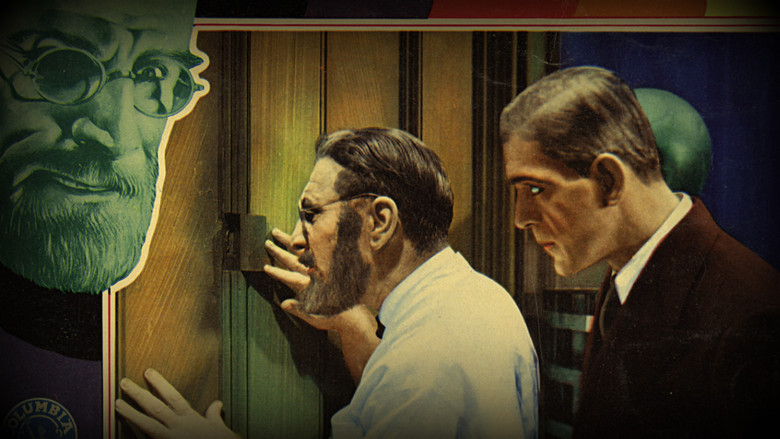
In a very few films however, someone clearly takes a stand against these tired/true rules, such as in the consciously progressive, often forgotten voodoo film from Columbia, BLACK MOON (1934). With its mix of horror-action and white man's burden-coded proto-feminism it just may be the least racist and sexist of all 1930s racist-sexist zombie movies --a kind of pre-Lewton Lewton where women understand the supernatural realms instinctively while the half asleep men try to keep it all buried via tactics like condescension, humiliation, beatings, and threats --none of which work a damn-- until the status quo boundaries have shrunk to noose size.


Keeping with the subjugation motif, Fay Wray gets second billing in MOON but is the most recognized name, having tangled with Kong on Skull Island the year before. However, on this particular forgotten island the white power over the ebony denizens is long established, thanks to a racist French sugar cane plantation owner (Arnold Korff). His young niece (Dorothy Burgess) left the island years ago for New York City and now wants to come visit. He doesn't want her to, lest it excite the natives. Living there as a kid, she apparently did some serious mystic bonding with the locals and now the drums are calling her to return, return, with her own young daughter in tow.

The voodoo scenes turn out to be surprisingly respectful of the tradition - and the drumming and singing is awesome, with day-for-night shots of glistening black bodies drumming and dancing, old wizened faces staring off into the distance, and lots of white plantation garb that may be more true to the mileu but lacks the exoticism wer'e hoping for. There's no 'real' night in these scenes, no Anton Grot or William Menzies-type set design to bring it all into a rarefied realm. And it's slow going in spots, and very odd. It never seems sure where it wants to go, only where it doesn't. They even bring in the under-sung Clarence Muse (see my ode to him here) as the charter boat captain who takes old Jack Holt to the island (he wants to make sure his girl is all right). Muse is worried about his own girl, a local who's become much too mixed up with the voodoo scene. The form a kind of interesting bond of equals, not unlike Paul Newman and Sidney Poitier in Paris Blues, just two normal American guys wondering what's got into their women. There's no nonsense like there would be if their characters were played by Willie Best and Bob Hope, for example, though they werent' too bad in and of itself compared to other teams.


But while it's applaudable on these levels, and it is spooky right from the opening with servants in the voodoo lady's New York City apartment, shuddering at the sound of Dorothy Burgess teaching her infant daughter to play voodoo drums, it never lasts: a strange man who works for the colonialist uncle shows up with the message he doesn't want Burgess to go to the island--the natives are too agitated. She says buzz off, and then he's killed on his way to see the husband to try and get him to nail her fins to de floor, so to speak. What's cool is we want her to go to the island, so the native skulkers are killing the messenger for our benefit. Thus, the natives are clearly the good guys up to a point, as we bristle at the idea these scowling white dudes are going to decide where Dorothy Burgess can and can't go.

But in the end of course they are right.

Aren't they always?


Lacking any kind of central figure to care about, aside from Wray and Muse (both minor figures in the film) makes the film a little too reliant on atmosphere and expectation. The ominousness builds up for the big ceremony but it's so 'respectful' when it comes it's a bit of an anticlimax. The kid's maid is killed early on when she keeps objecting to the child being given things like knives and voodoo dolls to play with, but we don't see the murder or even the body. Why? This is a horror movie, after all. Wray wires for Holt to come and take them home but the wire operator is killed before he can send it. At least we get to see the explosion.

Even so, we side with the voodoo crowd because we're waiting for something genuinely 'bad' to happen. They keep talking it up, until it can't possibly match our expectation. But we do like Holt's relationship with his little daughter. They have a genuine bond and he's not a simpering sort like dads in films today, but a rough and ready 70s dad type and she loves him for it.


PARANORMAL ACTIVITY 2 shares a lot of BLACK MOON's deep subtextual feminism. Here the dad is a self-satisfied liberal authoritarian pretending to be fun, hip, gentle family man but he scoffs at the supernatural while his wife and maid know better, which only makes him resentful and furious, forbidding any mention of supernatural goings-on in his presence, even firing the maid for daring to light incense in the house. What a dick!


Like its forerunner, PA2 was a huge hit in theaters, and like BLACK MOON has a great, prolonged set-up with only mild yield: the initial ghost attack looks enough like an ordinary break-in that it compels dad to install security cameras and as our subjects sleep through the night these security cam images--a ghostly lit pool with the cleaner snake slithering around the surface; the crib room with the German shepherd guardian (the dog's not much for supernatural detection, surprisingly; the big petit bourgeois living room--take on a creepy life of their own as our eyes nervously scour the banality in search of some uncanny element or movement. Andre Bazin would surely approve!
 

One reason the PARANORMAL ACTIVITY films work as instant pop culture artifacts is their William Castle-ish utilitarianism - they are here to provide bonding moments of shock in the cinema on Saturday night, or to creep out couples on their couches, couples similar to the couples depicted. And that is all - they are obviously super cheap to make, and make far more than their more expensive competitors. But what they show is something new--the modern American family to itself as it really is, revealing the awful difference between how 'scary' we look on video vs. the pretty people we see in the mirror. The dad thinks he's a hilarious righteous sex machine but we see he's an asshole, etc. and then, watching himself on screen, so does he. These people are the American family that the sitcoms and TV want to portray, but don't have enough time. All the corpses the screenwriters can dredge up in the family garden pale in comparison to the unstoppable demonic ghost possession in the real time found footage usually edited out of TV shows. For eight hours or so every night most of us are in a sate of total unconsciousness. Who knows what's going on while we're asleep? It's creepy. That's what got us hooked in the first place with the first PA - a possessed sleeping girl standing motionless over her sleeping husband... hour after hour.

It's important in each example here that the endangered family be upper-middle class as success makes the dad 'dependent' on the prevailing reality and culture. He's got something to lose. He knows hungry young bucks are eyeing his spot. A white trash redneck sleeping in his pick-up truck has nothing to lose by embracing new paradigms and is thus way more likely to be down with the supernatural. But in the American upper middle class' unconscious, the uncanny is ghettoized so deep that when dad finally sees the tape and learns the truth he becomes a fractured, incoherent mess, worse than useless and ripe for possession. If such a possession was offered he'd snap at it, a chance to switch sides and affix his star to whatever's currently in charge, whatever overpowering force wants to supply the new paradigm, no matter, as long as he can still feel smug.

Just as BLACK MOON is not just about race oppression but gender oppression, each one a metaphor for the other, so too the PARANORMAL films are about superstition and rational thinking kicking each other into oblivion. When the rational left-brained know-it-all douche bag dad types are forced to confront the truth, forced to realize via the very rationalist tools of the skeptic-- security cameras-- that they can never completely protect their children, even in their own house--that their kids will always be exposed to danger, then not even the TV set can provide a respite, then dad is drained of all his false entitlement. And if he denies he ever even had any, his double negative shoots him in his own foot through his mouth.

Such a realization of complete powerlessness is the apocalypse of the American family and its one salvation. One thinks back to the "they're here" moment in POLTERGEIST, and if you compare the downward spiral from level-headedness to powerless tired mess of Craig T. Nelson as the dad in that film vs. the gone-to-pieces dad in PA2, all you can do is weep for the incredible dissolving father. The ghosts came through the TV static in that 1980 pre-cable film (when white noise static and station sign-offs still existed), but the PA films are made on and with digital --there is no more four AM shot of an American flag to signal the end of another broadcast day, no chance for static to sneak through and speak to us in its crackly 'popcorn' white noise languge. We have 900 channels of cable and it never, ever sleeps. It's not just ghosts we shut out, it's everything. All hail Shark Vacuum

Related Posts Plugin for WordPress, Blogger...