Showing posts with label feminism. Show all posts

Tuesday, June 27, 2017

Jills of Jack Hill Part 2: BIG DOLL HOUSE, COFFY, SWINGING CHEERLEADERS, SORCERESS, BIG BIRD CAGE, FOXY BROWN


At last, the color portion of my promised Hill oeuvre, celebrating the mountain of Hills now available on Blu-ray, framing the golden question of whether Hill "gets" women or just loves them - whatever the difference is, and if a single filmography can answer it. Thanks to great work of the mighty Arrow video, and Scorpion releasing; most everything Hill did is on Blu-ray or at least DVD (see part one of this series, the Hill black and white era). Next to the great JC, he's the premiere Hawksian of the drive-in era. Cherish him.

The following have always been in print and written about quite a bit, largely due (I think) to Quentin Tarantino and Pam Grier, so just a quick pass through of their (both literal and figurative) pros and cons.

PART II: THE GRIER YEARS

THE BIG DOLL HOUSE
(1971) Dir. Jack Hill
*** / Amazon Image - A_

Made during New World's stint filming everything down in the Philippines with a brigade of rising talent, this quintessential Women in Prison movie has aged far better than most, with Jack Hill's love of strong beautiful women in full effect. The leggy cellmates (Hill is a master of keeping them all in-frame, splayed on their bunks) include: Pam Grier as the dyke alpha; Brooke Mills as her strong-out junkie squeeze; Judy Brown as the newbie; Pat Woodell as the guerrilla/activist; and Roberta Collins as the tough blonde who's only looking out for herself (and advises the newbie to do the same). 

This was Grier's first film--she'd been Corman's secretary when Hill 'discovered' her--and you can see why she was an instant smash. She would go on with Hill to make history with two iconic films as we shall see soon. But here her iconic force and breakthrough sexual heft (always with innocent sweetness she can't squash in herself no matter how hard she tries) is kept in chains, more or less. She's just part of an ensemble who spend their days racing cockroaches, fighting in the mud, showering, and getting it on while the sadistic head guard (Kathryn Loder, left) conducts nightly torture sessions for the pleasure of the mysterious Colonel Mendoza (the kind of character who watches from behind screens --only his cigarette holder and riding crop discernible in silhouette). 

What's great is that for the most part these girls are damned tough, they suffer but they don't plead and moan. They're tough, like Cagney might be if given the same treatment, rather than moaning in surrender and pain to appease the kinky raincoats. Naturally Mills doesn't quite live up to that tough girl standard when it comes to the real torture of heroin withdrawal (turns out the head guard is supplying but holding out now that her snitch isn't snitching enough). But freedom in one way or another will soon be theirs, guns blazing! 


Grier's dynamite song "99 Years" tops a great knowing soundtrack, and highlights include Collins raping a delivery guy at knifepoint after she notices him spying on her in the shower (Hill lingers on her lusty gaze and she really sells it). Kathryn Loder is genuinely chilling as the sadistic guards, with just enough Nurse Ratchet surface warmth and justification of her behavior to chill the blood all the more after she gets the disobedient inmates all strapped down. Sadly, Hill mainstay Sid Haig delivers one of his worst ever southern accents as a skeevy fruit vendor. I'm not a fan of this genre in general, but there's no denying this is one solid piece of quintessentially New World drive-in exploitation. Sexy and sordid without ever being depressing or cheap, it's easily the best WIP movie as far as I'm concerned, thanks especially to the new HD restoration/remaster. The photography is dusky and vivid without any of the waxy tropical sweat that seemed to cover every surface in past versions, i.e. when the air is so humid it can't evaporate any more liquid, so every surface seems slimy --the main reason I always used to avoid movies shot in the Philippines. Not sure where it went, but I'm sure glad it's less pronounced, as if the HD remaster came with a big blowing AC.

THE BIG BIRD CAGE
(1972) **1/2

The Doll House was such a hit that Hill and Grier had to go back to the Philippines and crank out another; this time there's more comedy, more rebels, and a bigger budget (a whole summer camp-style compound is blown up, searing even the celluloid). Now the showers and catfights are outdoors on muddy sloping hills, which is slightly less depressing, and there's even more of a revolutionary angle as Grier's boyfriend is rebel leader Sid Haig, and the plan is to get his lonely rebel troops some girlfriends by liberating the women's work camp. That's all fine, but the real selling point is the the amazingly slender-hipped huge-haired mega-babe Anitra Ford as a free-spirited nymphomaniac named Tory, whose bedding of important political figures has landed her 'on ice.' She becomes Grier's sparring/bonding partner and helps blast their way to freedom.  I dug this the first time I saw it with my socialist rebel Argentine espousa (when I was working as a film critic covering the New World canon for the Muse); I didn't like it the second, alone and disheveled.


Pros: Grier and Ford are both dynamite with their bad attitudes and skimpy prison attire (Ford may have the best mid-riff in the history of the genre - though she's not in the above pic) and this go-round Hill is much more about escape, sisterhood, and machine gunning your way to freedom, than he is about seeing women tortured (though there's plenty of that too - alas). Grier and Ford are a great team, and--even though he's rocking a misplaced accent--Haig's the man.

Cons: It's a personal thing, but I find the sweaty Filipino foliage claustrophobic in its visible sweaty humidity. The gay mincing guards (the film's most dated element) are much too flouncy, and there's a wearying amount of suffering and abuse prior to the revolt. Me, I like ten pounds of vengeance to an ounce of provocation, not vice versa. As with the next two films, Hill seems to get meaner the second time he covers the same ground (venting subconscious anger at Corman for trying to pigeonhole him?)

COFFY
(1973) - ***1/2

Grier rocketed to stardom as the queen of blaxploitation films with this big cult hit-- capably stepping out from her ensemble work in New World's Philippine prisons and into starring roles at the now blaxploitation-focused AIP. She's a hardworking nurse out to avenge her smack-addicted 11-year-old sister by waging a one-woman war on Los Angeles' drug/prostitution racket after her kid sister is made into a junky ("her life is over!"), and cop friend Carter (William Elliott) is beaten up for not being crooked. She blows (the head off) a pusher, forces another to give himself a hot shot; threatens to carve up a prostitute's face unless she gives up her pimp's secret stash, and goes undercover as a high-class Jamaican prostitute to move herself into the stable of the marvelous King George (Robert Doqui), a super mack-daddy pimp with big-time heroin connections and his own funk leitmotif by legendary Roy Ayers (the whisper of "King George..." over and over as he struts around helps make this high-end pimp quite endeqaring). Pam's Jamaican accent is limited, but her white bathing suit is divine, her body bedazzling, her cape delicious (she also has a cool cape with her nurse's uniform. Capes!) Her hair huge and (it turns out) spiked with razor blades. 

She's soon getting in over her head, escaping narrowly, pinning her own theft of the stash on King George and flowing back up the chain of smack empire command like an IV of death. Sid Haig delivers a truly chilling extended laugh while dragging King George behind his car (courtesy Chevrolet!). Diane Arbus's husband, Allan, shows up as a sleazy sheik (MASH fans are bound to be pleasantly unnerved by the sight of visiting shrink Sidney demanding Coffy crawl to him on the bed). Booker Bradshaw is Coffy's tall, dark, and handsome politician boyfriend, whose slick-ass roadster is so low he has to step down to get into it. Through it all, Grier keeps her character tough and glamorous and always holding onto her sensitive center, even when wielding a sawed-off shotgun. Hill stretches the movie to accommodate her three dimensions, her towering strength always coming with back-end working girl weariness, the kind that needs no man's aid, just maybe a cup of coffee or a Sunday drive. (It's clear Tarantino was trying to capture that mellow openness, the weary but kittenish honesty, during her early scenes with Robert Forster). 

It's temporarily good to be the 'King'
Cons: The Olive Blu-ray is barebones and in its widescreen HD reveals something not as immediately apparent on VHS, just how cheap the sets on this movie are, something the full screen VHS I used to have successfully obscured. Here we can see the far edges of the cheap plywood phony walls in mid-warp/decay from the swampy heat of the soundstage lights; every surface has that sad "under construction" look. The bars and apartments have an airless, sweaty claustrophobia. As for the actors --their wigs appear crooked and misshapen, their make-up runny; it's like a giant basement of Arbusian freaks (or was I just really strung out on cough medicine last time I watched it?); even the outdoor scenes have an existentially oppressed vibe. And just because he's a pimp doesn't really mean King George (above) deserves to be betrayed and dragged around behind a car like Angelo in Wild Bunch, or the fellow stable whores deserve to be all cut up or otherwise abused just so Coffy can use them as stepping stones to her ultimate vengeance. She's just slumming but this is how they make their damned living!

Pros: In the end, though, none of that shit matters, because that score by Roy Ayers is so damned funky, so tight, so on point, and sounds so full and badass in the Blu-ray digital that if you watch this with the stereo connected, you'll be blown well clear of any lingering urban blight. And despite the bad wig factor, the actors are first-rate. Grier, especially, is in a class by herself. And, more tellingly, the tawdry atmosphere works to make all the heroin addiction--that longing for release--perfectly understandable. Hill can't convey the way an armful of opiates can make a heaven of ghetto hell, but he sure has a handle on the look and feel of withdrawal. The whole COFFY mise-en-scene seems as if its an aesthetic reflection of what the Hold Steady's Craig Finn calls the 'crucifixion cruise', i.e. the endless slog through the pain and despair that is withdrawal, pain and despair that makes you so desperate for release, you'll sell your soul to the first buyer.

(PS 1/19- Seeing this again on the Amazon Prime HD streaming print, I'd scratch all that urban blight stuff- everything looks gorgeous and glamorous, even the dingy green light of the hospital where she works highlights Pam's luminous skin, and Booker's pad and topless bar hangout scintillate with moody fireplaces.)

courtesy Art of the Title


FOXY BROWN
(1974) - **

Paid homage to by directors from Spike Lee to Quentin Tarantino, this is the title Pam Grier is known for/by even though it's COFFY they're thinking of. Originally set to be a sequel, this incarnation of Grier is a tougher, more cartoon-like version of her same vigilante character. A  'take back the street' grassroots anti-pusher coalition jostles in her loyalty with her scuzzy small time junky brother (Antonio "Huggy Bear" Fargas). Drugs and gang violence have so destroyed her neighborhood that when her undercover cop boyfriend (Terry Cotter) is gunned down in the middle of the afternoon, no one comes forward as a witness. Her brother might know who did it, though and so--uniting with that local "neighborhood action" group--Foxy goes undercover herself as ---what else?-- a high-end prostitute. 

I dig the opening sequence at a late-night coffee stand with Fargas nervously hanging out while two Italian legbreakers wait for a pair of cops to finish their coffee and go so they can beat him up. His call to wake up sister Foxy, and her last minute cavalry rescue are all pretty good, but then we start cutting over to the the bruised thugs and their leader, a dour white girl (a doughy Kathryn Loder) and it all starts to twist downhill to an wildly uneven mix of broad camp, shrill sadistic (ugly and prolonged) brutality and glum inner-city realism.
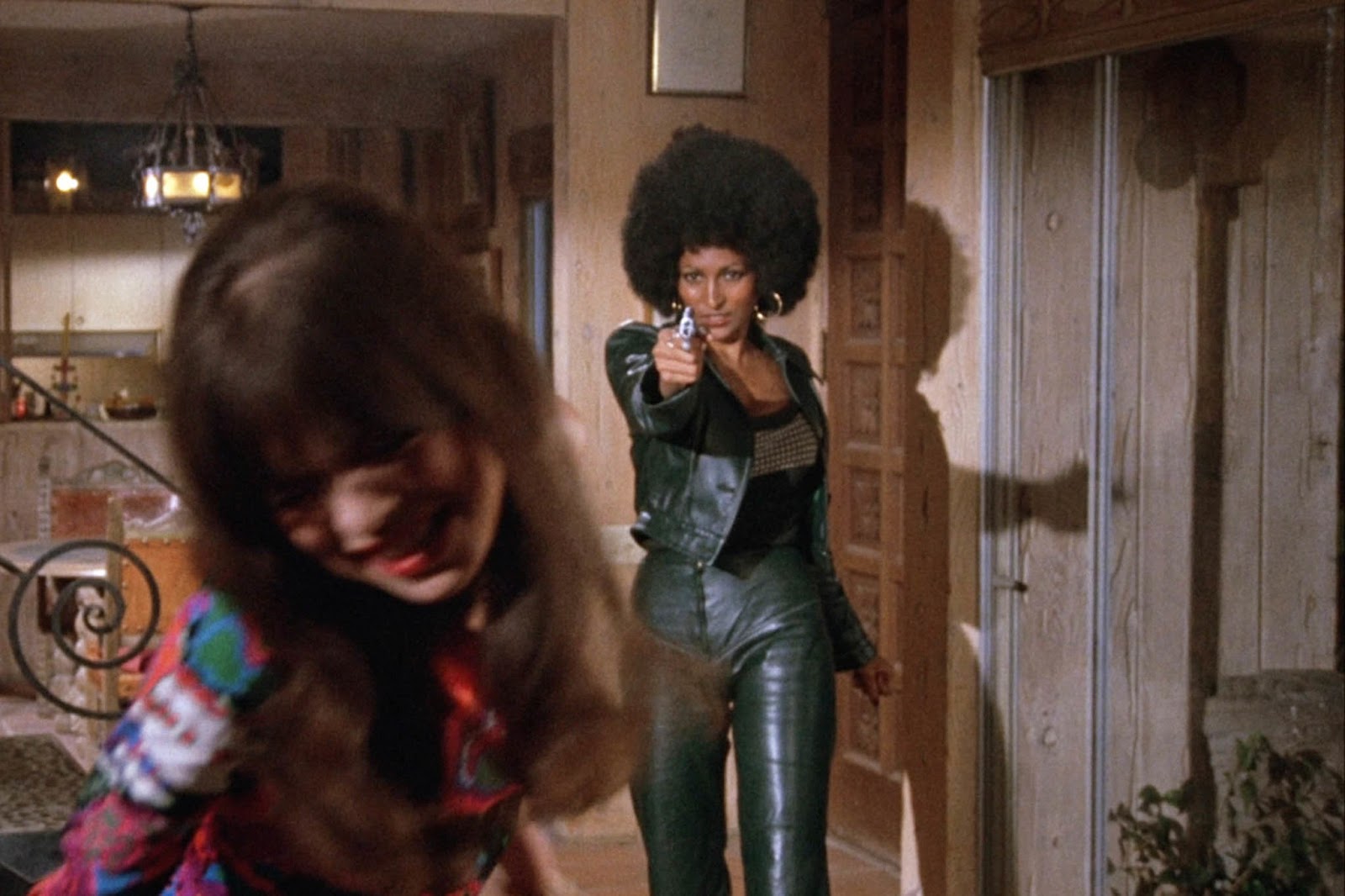
Lacking a lot of the sadistic flair she brought to The Big Doll House, Loder spends way too much time dressing down her underlings, threatening the girls who 'work' for her, and nuzzling her right-hand boy toy, Stevie (TV actor Peter Brown). I think she and Stevie even end up sharing a slow, menacing maniacal laugh at one point. As for Foxy, she travels as far as the poppy fields of the Philippines (where else?) in her quest to bring down the operation. We keep expecting her to be smart and manipulative. but she winds up captured, raped, given forced heroin injections (which is always--it seems--how the bad guys get the girls submissive, uninhibited and completely dependent) and her eventual payback is never enough to right the catalogue of wrongs. For example, Foxy's sexual belittling of an old white judge is pretty hilarious, but even that goes sour when the call girl she encourages to participate (Sally-Ann Stroud) winds up tortured and murdered after Foxy leaves. (How emblematic of America's involvement in third world power struggles)!

Pros: The crazily colored opening credits feature Grier boogying down in all sorts of super-sexy outfits to that iconic Willie Hutch theme song. As with Roy Ayers score on COFFY, that Hutch soundtrack worth the price of admission all by itself, play it loud, neighbors be damned. Unless they complain, of course. Then put on your most expensive headphones. 

Cons: Way too much screen time is spent watching Loder sadistically abuse her girls and dote on her  gigolo and not nearly enough watching Grier kick the shit out of people. Even more so than COFFY there's way too much urban blight, sexual abuse, and general social degradation. Foxy seems to think turning tricks, getting shot up, raped, harassed, shot at, and leaving the people who help her to be tortured or killed, is small price to pay for --what? Does she get anything for her troubles? SPOILER ALERT: She doesn't even kill the evil Loder at the end, as if to pay back Loder's endless ugly egotistical sadism--which by then has grown as soul-crushingly wearisome as that of Alan Ormsby in CHILDREN SHOULDN'T PLAY WITH DEAD THINGs or Michael Gambon's Peter Grant-ish thug in THE COOK, THE THIEF, THE WIFE AND HER LOVER--with merely death wouldn't be enough to avenge how soiled we feel. Still, it would be a damn sight more satisfying than what happens.


PART 3: The Centaur and the SORCERESS

Hill would break out from Corman's wing a bit for his next film, to form Centaur Releasing with John Prizer, for which he'd bang out two quick punchy films in the female ensemble vein: one would rake in a small fortune; the next would lose it. After a lengthy hiatus he went back to Corman for one more film, would fight a bit with him one time too many and then that would be it. Career over. To all our regret. Well, how else do you graduate from the Corman school unless it's to fight with him about some creative issue and off you trundle, into either the abyss or the big time? Sadly, Hill's disinclination to work in direct-to-video or TV led to him doing just zero more films after that. 

He's still around though! Never say never...

THE SWINGING CHEERLEADERS 
(1974) - ***

Following New World's tried-true three girls at work-and-play ensemble "nurses" formula, this brings Hill's cunning mix of sexy feminism, cathartic violence, deadpan wit, and covert liberal politics to bear in a sexy comedy-drama form. Radical journalism major Kate (Jo Johnston) goes undercover to expose outdated mores and institutionalized sexism within the college's football cheerleading team, but instead she finds she these girls are cool, while her wild-eyed radical underground newspaper editor boyfriend Ross (Ric Carrott) is a rapey dick. Besides, the handsome quarterback Buck is played by Ron Hajek, his teeth white and straight enough he's worth stealing from the bitchy, manipulative cheerleader squad captain Mary Ann (Colleen Camp). Sulky Ross, meanwhile, takes out his anger by publishing Kate's expose (after she tried to scrap it) and then, later, inviting his sicko friends over to "break in" the virgin cheerleader (the doe-eyed Rainbeaux Smith). Mary Ann's dad, the dean of the school, is meanwhile embroiled in a plot to "fix" the big game, along with the coach, and a black professor (Jason Sommers) who is having an affair with the black cheerleader (Rosanne Keaton, one of Playboy's first black centerfolds).

Pros: Hill keeps the action flowing in surprising ways. I'll confess I have a low skeeve threshold when rapey idiots start snickering and egging each other on like so many dickweeds needing their graves spit on (like in the odious misogyny benchmark PORKY'S). So I like that here the jocks are sensitive and serious and the radical underground journalist is the swine. (Hill reports that a Texas audience one burst out of the seats applauding when the jock beats up Ross- so did I!)

Cons: I liked it the first time I saw it, and kind of fell for Johnston in those shorts. Now, a decade or so later, she just terrifies me--those eyes seem wild and unhinged, the mouth grinding as if from a line of badly-cut coke snorted fifteen years ago but still lodged behind her eyeballs. (Am I just talking about myself? I guess that's what they call 'maturity.')

I know it goes without mentioning in a more enlightened era, but what sticks out now isn't that there's a black main character --there were more than a few at the time (as in 1970s' BEYOND THE VALLEY OF THE DOLLS and all the New World nurse movies) but that it's a reminder of the miscegenation taboo that no black woman and white man (or vice versa) can ever be attracted to each other in these movies, so if you're black woman at a predominately white school, there will be one or two black men showing up, and you'll be bound to have an affair with one or both. As a kid in the 70s I wondered if that was just some instinctual thing - like black people don't find whites attractive, genetically, and vice-versa. Now of course I know the truth (racist southern distributors would never show the film otherwise) but in today's enlightened time, it actually seems conspicuous.

Pros: The black professor has a ferocious tough-as-shit black wife (Mae Mercer), who drops in on our terrified cheerleader in the film's most surprising powerful scene. Even if you've never been verbally threatened by your lovers' spouse--either by knife-point or just over the phone--you will get a queasy pit of your stomach thrill from her intensity . I've been on all sides of that equation and let me tell you, Hill gets it right and Mercer is a powerhouse. Never losing our sympathy even as we're terrified to the point of shitting our finest cheerleader slacks, she makes an impression so deep the picture still shakes after she's gone. As for the 'sweet one,' Rainbeaux Smith glows with a mix of doll innocence and angel sublime grace (hard to believe she was pregnant at the time --as we learn in the Arrow Blu-ray's generous extras). I like too how Hill doesn't even bother with the big climactic game at the end, nor even deign to mask the terrible emulsion damage and faded color on his stock footage of the game (do we ever even see a football?)

Cons: The main thing I can't stand about it all though, is the Scott Joplin rag underscoring the big climactic brawl at the warehouse. That kind of corny silent film (i.e. royalty-free) ragtime jazz nonsense hangs anachronistically around all through New World nurse and AIP's beach party catalogues, even in The Trip! I'm sorry Hill had to lug it with him to the Centaur's kingdom.

Blu-ray: The Arrow restoration is surprisingly only so-so as far as some colors being restored (lots of glowing greens) but it still seems very bleached out. I'm sure they did the best they could, but expectations are so high after the beauty of Spider Baby and Pit-Stop. 


SWITCHBLADE SISTERS
(1975) Dir. Jack Hill
****

SPIDER BABY's my favorite Hill but this is the second, a complex but highly re-watchable tale of feminism, street violence, and short-shorts. Doll-faced, sweet voiced, crazy-eyed Robbie Lee stars as Lace, leader of the gang, the 'Dagger Debs.' New girl in town Maggie (Joanne Nail) is the newcomer, and not averse to using her belt as a chain and/or grabbing a switchblade to defend herself at the burger place. Lace's one-eyed Iago, Patch (Monica Gale), sees the writing on the wall re: her beta status. Lace just thinks Patch is jealous of Maggie's cool gutsy charm, but ole Patch is right. Not only that, there are the sparks between Lace's boyfriend, the Daggers' leader, Dom (Ashner Brauner, doing a great Ralph Meeker impression), and Maggie. Even his breaking into her room to rape her can't change that, nor Lace getting pregnant and getting all gooey about raising the baby, to which he snorts and tosses her cash for an abortion.

Pros: a big roller rink massacre; an attack coordinated with a feminist black militant coalition, with machine guns and a badass armored Cadillac; the heavenly blonde Daryl Hannah jawline of Janice Karman as Bunny; the badass 70s funk score; some great hair and dialogue; and a lightning pace. See it when you're super furious at the world or just strung out with the shakes because your dealer never showed, and bask in the cathartic anger, the fabulous legs of Joanne Nail, and the way Robbie Lee's eyes widen and dilate, then contract into a glowing glaze when she talks. Savor too Nail's final rant to the fat cop, her face streaked with blood, eyes wide and maniacal, a shocking Cagney-by-way-of Lorre raving moment (maybe my favorite ending in all schlock cinema).

Joanne Nail would be back all right... in the fascinating 70s all-purpose drive-in capstone, THE VISITOR! (1979) Not much else, alas. Oh how I wish that Switchblade Sisters had a bunch sequels, like it would have in Japan. (Fuller review here).


SORCERESS
(1982) Dir. Jack Hill
***

Wild-eyed sorcerer Traigon (Roberto "the Mexican Martin Holden Wiener" Ballesteros - who really knows how to swirl his blazing red cape) needs to sacrifice his firstborn child to his crazy Reptile goddess to keep his magic strong, but his hot young wife (Silvia ManrĂ­quez) has twin girls and won't tell him which one came first (if he gets the order wrong, he's screwed). A wild-haired noble wizard strides forth to zap Traigon into a 20 year-long period of oblivion, but too late to save the mom from Traigon's swordy pique. Naturally, the wizard brings the orphaned twin girls to a farmer off in the wild to raise in secret (disguised as boys), imbues them with latent magical abilities and drops back in, Merlin-style, twenty years later, to tell them about it. By then the girls have grown into beautiful Playboy playmate twins, Lynette and Leigh Harris, who don't even know how hot they are or that they're girls and that they live in a world where there is no word for 'twins' so they have to be called "the two who are one" all the time. Traigon comes back too and resumes the hunt for the first born. His guards assault and murder the farmer family while the twins are out nude swimming. A vow of vengeance is sworn! The hearty viking, Baldar (Bruno 'the Mexican shorter John Goodman' Rey), and a horny satyr (who baas like a sheep) sign on for the ride. During a remarkably large scale market town square scene (viva la Mexico) they meet up with Erlick (Roberto Nelson), and launch a market-wide donnybrook. The twins do a pretty good job as a kind of tag team bo staff whirligig and the size and detail of the village is impressive. Ensuing are 'surprises in store' for the two who are one', not just birds-bees discoveries, but hair-raising escapes, magical spells, fights, god-wars, apes with druggy fruits (if you'll forgive the expression), remote orgasms (the girls are linked psychically), and undead warriors culled from their crypts. Erlick has his own problems too, including a near-impalement the original style of the word (slowly sliding down a greased pole towards a sharpened stick aimed up your arse and bound to pop out the top of your head --if you're lucky).


Long unavailable in any format, SORCERESS is now with me forever! I love it! It has just enough of Hill's dry Hawksian wit to stand apart from other sword and sorcery "epics" of the 'shot in Mexico or Argentina' New World post-CONAN era. With its score lifted bravely from BATTLE BEYOND THE STARS, and a cast of strong women (though for me the most exciting and charismatic is
ManrĂ­quez as their mother--who dies the prologue), hilarious monsters, very little torture and injury, and humor always well inside the boundary that separates dry deadpan wit (ala Big Trouble in Little China) from self-aware camp, and superb lighting of the night and underground scenes )it looks especially great on this Blu-ray - all burnished golds and charismatic highlights), it's a blast. And, of course, under 90 minutes long.

Pros: One of the lead guards has a crazy helmet that seems lifted from the 1936 FLASH GORDON. There's also a genuinely spooky crypt scene where the vertical dead in rows of alcoves slowly shamble to life out of the darkness. Baldar's a great wingman. The twins are real (in all senses); the little ape monster masks have facial movements; the satyr leads a charge of real sheep at the climax; and the effects are all of the charming 'painted on the celluloid' variety (CGI was still ten years away). The tactile earthy effort of it all--its solid mythic arc and florid array of weridness--floats it past its limits. Didn't all the best Hills? 

Cons: It's sad to learn this was Hill's last movie, mainly because he got in an "enough is enough" spat with Corman over the editing (i.e. length). Why couldn't Hill have just let Corman cut the movie up? Corman's judgement has always been--to my mind--pretty solid. Why did Hill have to raise a ruckus which caused a falling out? Hill's needing to look elsewhere to make his movies led to... no more movies? To all out detriment and loss.

But then again, home video was changing the landscape and who knows if he'd been as good on direct-to-video? I ain't as good a writer as I used to be either). Age and experience brings wisdom at the expense of exuberance. And Spielberg was coming along to make decadent deadpan larks like this -- too dirty and weird for the young kids and too cheap for the adults-- left to lurch along solely with the 16-20 year-old males at the video rental store looking for a post-Conan fix.

 Still, there were many more films in this style for New World to come, and a good number of them are pretty decent, as far as bad movies g, full of the wondrously paradoxical Corman mix of feminist empowerment and bared breasts, dry wit, and deadpan in-jokes we crave when relaxing in a late Saturday afternoon or five AM Sunday morning stupor. Sorceress's release year (1982) was a high point for A-list sci-fi and horror/adventure, and amidst that year's B-list, Hill could have rocked out for at least a few more classics. Damn you, Traigon! 

At any rate, long unseen in any format, SORCERESS is-- finally, thanks to Scorpion's gorgeous Blu-ray (replete with detailed extras)--made eternal. We are blessed twicefold, for the reds (of Traigon's cape especially) glow gorgeous and the black lunge deep - and when those corpses emerge from the thick cobwebs of the crypt into the torchlight,.


CONCLUSION

So in short, to answer my question from part 1, does Jack Hill 'get' women, the answer is clear: fuck you for asking!

Sorry, all that violence has me snappy and so does the state of the nation, and the liberals' bad habit of the back part of a movement lynching its own vanguard in its zeal. Hill's women are from the second wave of feminism, when it was called 'women's lib' and involved a certain amount of sexy strutting and sensual freedom that would now be considered a male-imposed fantasy. But from where I stand as a SWM, 'now' is a mighty buzzkill place. The third wave's dour sense of sulky humorless privilege still hasn't found a cinematic representation other than preachy documentaries and the kind of amateurish avant-garde downers seen mainly at museum and university lectures. The difference between Hill's strong babes and their un-charismatic 'representational' figures is like hanging out in an air-conditioned bar full of drunken undergrads vs. a sweltering administrative office full of self-righteous grad students who consider deodorant and air conditioning to be toxic.  Maybe they are right, man, but that don't make it fun to be around them. And maybe that's why no one is, unless they need to be, i.e. for a grade or a tenure recommendation.


Oh shit I'm becoming the very critic I was just critiquing, I've been beaten into a coma by my own copy of Sexual Personae. Actually, I never did read anything bad about the Hill oeuvre. Unless I wrote it about Foxy Brown. Still, I haven't watched Foxy since that bad experience in '99. Why would I? I'll just watch Switchblade Sisters for the dozenth time, or Corman and Angie's Big-Bad Mama, or The Lady in Red, by Lewis Teague and John Sayles, all celebrations of badass women who 'tag ya back' in ways unthinkable in today's noxious clime. We can either glumly point out they were made by men or we can act like the women in them and take out the trash, figuratively, and throw it all over the floor and tell the men to clean it up literally! Up (with) the Hill!

Let the games of spider begin, and let Robbie Lee, Jill Banner, Beveryly Washburn, Adele Rein, Joanne Nail, Lynette and Leigh Harris, Mae Mercer, and ---oh yeah, PAM GRIER...and all the rest, run into the blazing light of eternal replay.
---
PS, Beware a movie with Linda Blair directed by the semi-odious Jim Wynorski--also called Sorceressfrom 1987-- it sounds awful, though I do love that he just reused a title on which he already had credit (the 'original' story of Sorcreress). Had he forgotten? Does he just love that word? Jim, if you're listening, you're a dog, sir. A dog! PS - Loved Deathstalker 2!

Thursday, August 11, 2016

Jills of Jack Hill (Part 1): BLOOD BATH, MONDO KEYHOLE, PIT STOP, SPIDER BABY


It's hard to say if Jack Hill 'gets' women. The holy father of Pam Grier and WIP (Women in Prison) films, Hill has never shied from lurid sex-sensationalism, but at the same time never belittled, demonized, or completely objectified even the most minor of his female characters, balancing sensitivity with raucousness, insult with retribution, violation with vengeance, and growth over puerility.  Sex in a Hill film is positive and empowering. Social change doesn't preclude hedonism; 'morality' and 'the law' fall apart under the female's avenging knife. In a morally restrictive / excessive country like America in the 60s-70s, Hill was, even for today, forward thinking to the point of an implied threat. His murderous cannibal nymphs are the real heroes, no matter who they kill; the grabby lawyers on the other hand, can never be saved.

Either whether all this makes him a feminist or a counterrevolutionary chauvinist, Hill is one of the all-time great drive-in auteurs and stands tall with initial mentor Roger Corman in delivering the drive-in's biggest array of strong female characters. His oeuvre stretches through two decades of variable budgets with many films long available only in shit condition. But life... can be beautiful, and this has been the golden retrospective summer of the mighty Hill. Arrow alone has given us PIT-STOP (racing), SPIDER BABY (carving), and BLOOD BATH (painting) in black and white. And in bleached color but with vivid reds and greens, SWINGING CHEERLEADERS (pouting) and SWITCHBLADE SISTERS (sticking) - Go ladies go!

Shout, Olive, Scorpion, etc. have released the rest. We now have the entirety of the Jack Hill oeuvre available, cleaned up in--mostly--HD sparkle, and fit to marvel at. Many of these discs feature Hill commentary tracks with Elijah Drenner. In case you're unfamiliar with his work, AMERICAN GRINDHOUSE, Drenner is a fine, casual but informed interviewer, knows his shit, and is as a big fan of Hill's as I am, and maybe you are, bringing a balanced blend of reverence and analytical curiosity that never muddies over into pompous pretense the way, say, Peter Bogdanovich's Hawks commentaries (1) do, so that clicking over to the commentary track during one of these great Hill discs is like watching it with the pair of them on the couch, and you're comfortable having them there; they won't embarrass you if your girlfriend is half-listening while reading her phone, or chew your food for you, so to speak, by explaining every last wry in-joke.

The DVD company Scorpion put out SORCERESS from 1982 this summer, too, Hill's last film, for Corman (or ever) and if you're Hawksian then you're also Carpenterian and thus a Hilliard because if you add Carpenter and Hill together you get Hawks, more or less, and if ever a man was holding a bull by a tail, you're it.

 I'm too frazzled with excitement to clarify that enigmatic uttering (if you get the reference, you're a Hawksian), so I'm gonna just lay it all out in the grand style of my cannoneer forefathers, i.e. chronologically. First this post  for his first four features (in black-and-white), then, later, the color. And then when the smoke clears and the flying tiger bat god of SORCERESS disappears back from whence he came in the sky, we will know... if Hill truly 'gets' women. Or die tryin'.

BLOOD BATH
(1966) - ***

It's not perhaps a coincidence that this approximation of a "movie" comes out on Arrow the same summer as their long-awaited remastering of BLOOD AND BLACK LACE (1964). Mario Bava's seminal color-drenched protean giallo quasi-masterpiece, BABL "speaks to" the idea of art's pinnacle being the killing of a beautiful woman - sex and violence so commingled as to be inseparable. Strutting along the line between lurid exploitation and self-aware qua-feminist statement, riffing on the world of the California beatnik artists ala Corman's 1959 epic BUCKET OF BLOOD and prefiguring Argento's groundbreaking BIRD WITH CRYSTAL PLUMAGE (1968), BATH is more interesting in its larger context perhaps than by itself. Thanks to Arrow's comprehensive packaging and great psychotronic guardians like Tim Lucas on the supporting documentary extra, BATH can finally be appreciated both within and without its context, illuminating the way one movie became two and then four (and all four are included). So far, I've only seen BLOOD, as that's the Hill one. But I know from the documentary it started out as a Hungarian spy thriller, with two versions being shot at the same time, one in English by young Francis Coppola, neither any good. Then back home, Corman gave both to Hill, who shot more stuff around it and took the boring bits out, to make BLOOD BATH. Then, later, Stephanie Rothman shot more so it would fit in the TV slots, and it was TRACK OF THE VAMPIRE. Crazy, pops.

William Campbell (STAR TREK's go-to fop) stars in Hill's version as a crazed painter / reincarnation of an infamous descendent (also a crazed painter) who was burned at the stake based on the testimony of his insane (and insanely hot) model/muse. In flashbacks we learn she danced around the fire and laughed as he burned alive, his canvasses providing the kindling. The horror then is twofold: not just of dying but of being assured your work will indeed not live on, will not lead to some century-later museum show like Van Gogh, because it's all destroyed in front of you as you die. That's the real terror in that story, for are not all obscure writers and artists comforted by the idea of posthumous immortality? I know I am. If you read this and I'm already dead, then right there, for example - I live!

In the best scenes, Campbell tries to paint various local babes he lures over at his stony loft and each time no sooner as he laid down a black background than he sees his ancestor's crazy anima/muse/accuser laughing and sneering at him from inside the canvas' wet surface. In classic Freudian projection, he kills the local babe currently posing for him for revenge, dousing her in hot wax (which he keeps bubbling below his pad) and posing her as a sculpture (his past 'work' just lies around the loft, trying not to sneeze or laugh while wearing what looks like a few dabs of oatmeal on their faces and arms). Meanwhile his "Dead Red Nude" series (painted before or after) sell like hotcakes at the coffee shop gallery in downtown Venice Beach, a dive haunted by a trio of beach bum types (Sid Haig, Jonathan Haze and Fred Thompson), their eyes agog at every new misogynistic abstraction. 

More so even than BUCKET, it's this deconstructing/deflowering of art as misogyny even with this (relatively) decent beatnik trio (vs. their coterie of strong, sexy take-no-crap girlfriends) that foretells what will later be best in the Hill tradition (and arguably lead to accusations of misogyny against folks like Bava). When art for a man involves bloody women, something's wrong. Red flags abound! "You're a little naive when it comes to men," a fellow expressionist/ballet dancer puts it to Sordi's virginal (therefore spared) girlfriend (Lori Saunders) at the dance studio, but she's the only one in the film who is. Buxom beauty Marissa Mathes all but devours little William Campbell at his studio (he gets the better of her only via drugged wine); Sandra Knight pursues him, thinking he's the killer of her roommate, until he turns into a big blonde Czech and pursues her, and the demoness laughing in the painting taunts him, urging him on. In short, the women are tough, and he's a weak, deranged lunatic, driven to kill by his amok demon shadow anima. 

This patchwork recycling of objects and identity all obliquely connects to the openness to the moody old world European footage woven in from Operation Titian/Portrait in Terror: its dark ornate tower chimes and long cobblestone shadows are deftly spliced in to the deserted Venice Beach streets. So as beautiful Yugoslavian women are killed by a burly blonde vampire in stylish artsy expressionist tableaux, we also get the nonlethal version back in Venice, as Corman/Hill beatniks ponder each other's abuse of their girlfriend models: Haig smears paint all over his girls' face and rubs it around on a piece of paper; Mathes has to endure the psychological hurt of Max shooting her portrait in the face with his 'quantum painting' gun. When she pours a bunch of wine on his head though, all he and his friends can do is marvel at its effect dripping down on the paper in front of him. So no hard feelings. It's complicated. Despite the patchwork, it's a Hill film all right: women get abused but they don't go docilely onto the next beat. They beat back, and the men don't say shit about it. Fair is fair.

Besides, say what you want about these cats' misogyny, they really do love art. And when push comes to shove these three are the only ones the endangered girls can depend on for help against the weird vampire/Walter Paisley concoction that is William Campbell. Their misogyny is all on the surface. By contrast, there are no cops in the film and when girls in the burly blonde vampires' sights (i.e. Sandra Knight) try and beseech locals for help said locals are all too drunk and dismissive to help. Knight's futile beseeching of a party of masked revelers who--instead of taking her seriously--just dance with her, and even try to push her into the vampire's arms, thinking he's in costume and they're acting, recalls a similar scene in Lewton's Seventh Victim... . Her final end on the carousel, the spectators not noticing her screams for help are the most perfect evocation of one of my key childhood nightmares.

It's those nightmare moments that really casts a mood, conjuring deep dreads associated with being a kid trying to convince adults someone is really hurting you or chasing you and they either ignore you or shrug you off, so locked up in their false sense of permanence that they can't or won't recognize you're in real danger. The only time they snap out of it is when she tries to jump off the carousel, then they all but throw her back into the arms of her killer before blithely skipping off to their own doltish fates. It's a harrowing, brilliantly executed--if frustratingly fractured--part Herk Harvey, part Jacques Tourneur--moment that marks Hill as a real auteur in the works. One wonders why he made so few horror films. Really this and SPIDER BABY are the only ones and that's a comedy. He could have been a unique beatnik Lewton and cranked out a legion of future bargain classics. Like his and Tourneur's Leopard Man, the murders might be gore-free but they're difficult to watch, even today, especially the super eerie European-filmed murders, which skip in and out of the film like a concurrent nightmare reality ever slicing its way into a totally unprepared Venice.

For the longest time Blood Bath was confusedly mixed up with its original Eastern European spy film source, Operation Titian and the English version --partially mulled over by Coppola (to no one's satisfaction) as Portrait in Terror. After Hill's horror remix version came and went in theaters (on a double bill with a Bucket of Blood re-release), it later reappeared  as part of a TV package with footage added by assistant director Stephanie Rothman as Track of the Vampire. But now, thanks to the scrupulous loving restoration work supplied by Arrow (and the amazing research of Tim Lucas), we can unpack it all, and note a fine example of how Coppola may be a genius now but when he worked for Corman all he knew how to do was spend money on developing his signature style, and leaving a mess for a more trash-savvy Jack Hill to clean up (as according to Hill was the case for the underrated Dementia 13). Hill's Bath may not make a lot of sense, but it makes for a nice triple feature with two other Venice Beach beatnik horror dream poems of the era, Dementia (1955 ) and Night Tide (1961). All are available on DVD or Blu-ray, so we can still soak up the spell of that frequently-filmed carousel, the strange buildings and the atmospheric area underneath the boardwalk, where salt-soaked wooden columns are lashed by rolling surf, and seaweed-wreathed mermaids wash up and out with the tide and then appear in a basement jazz club with Shorty Rogers or a beatnik coffee house with a gone saxophone as you wail about feeding fishes to the artist, playing out the drag of the current on the bongos.

Sorry if this review's disjointed - why should it be different than the film, man? Look at the sea under that boardwalk during the big sandy brawl with the vampire, that's where Dennis Hopper was almost dragged to his death by Knight in Night Tide. She's also the girl in this film killed on the same carousel Dennis Hopper stares at, and Knight was married at the time to Jack Nicholson! In short, now that we have Blood Bath so refined and fine, it's as if a crucial lynch pin Venice Beach beatnik jigsaw puzzle piece is at last in place. No one gives Knight any credit as one of the creative forces of the era- but Hopper and Nicholson are regarded as titans of art. That figures.

 DVD Review: A+

MONDO KEYHOLE
(1966) - **1/2

If this was the first "roughie" you saw, you might think it was a pretty reputable and artsy genre. A film Hill made for flimflam man / erotica producer John Lamb, it's a low budget black-and-white little post-dubbed freak-out, the "Psychotronica" disc it's on is non-anamorphic for some sad reason, but it still looks groovy. And under Hill's direction--even if it is about a skeevy rapist pornographer (played with no small amount of gusto by Nick Moriarty)--it's never brutal or traumatizing. Besides, we're never quite sure if these girls (he meets them via personal ads or at his photo shoots) are real or just the equivalent of a Penthouse Forum "true story." Either way, rather than being all Dragon Tattoo of Thrones dehumanizing, the violations take on the surreal impact of a post-sync sound dream art film (ala, say, Dementia or Carnival of Souls) to help us distance it more into some kind of perverse erotic fiction rather than a brutalizing Videodrome "sharpening up." In a way, and I never say this about any film that tries to be, I actually found it erotic. Hill clearly 'gets' the amoral nature of eroticism in ways the merely tawdry or romantic do not, i.e. it's not 'correct' but since when has eros ever been? Ask the French. Know who hot French girls thought sexy? Serge Gainsbourg! This is sexy like him.

And don't worry, he gets what's coming to him by the end, more or less, and his elegant wife (the very sexy and alluring Adele Rein)--up to this point so hopelessly bored and sex-deprived she winds up shooting heroin and making love to herself in the mirror (a very groovy scene)--meets a guy dressed as Dracula at the big costume party climax who takes her to a big orgy, where she loses--and so finds--herself. Aside from her date having one the worst post-sync Transylvanian accent ever, Adele's the film's true victor. In the commentary Hill lets us know the actor who did the accent is really a helluva nice fella, seriously, but that accent is almost as nauseating as the human salad bar or drunken shaving cream pool scene. Why it wasn't re-done in a director re-cut or left out altogether is just one of those things - half-star deduction!

Pros:  Hill's camera captures the moon and string light reflection on the shaving cream coated surface of the pool after all the orgy revelers have straggled off to bed and the ripples stop; its texture reflects the lights like some kind of murky 3-D ant's eye view of a flat ice cream soda idling in a midnight bus boy bin. Adele Rein is gorgeous and our heart bleeds for her - we'd be good to you, Adele! Her crazy groovy house (actually Lamb's) is 60s California architecture at its best.

Despite its issues, this is clearly a Hill film. Between the photography and the gorgeous Rein you're bound to find something you like, and if it gets boring you can listen to the lively commentary between Elijah Drenner and Hill, who explains Lamb's penchant for ripping off pornography mail order customers (based on footage in the movie, it's clear Lamb's behind the mysterious Tortura album that used to be a tripping "favorite" in my old hippie house). Always a welcome presence on a lot of Hill commentaries, Drenner's adroit at keeping the focus on the action onscreen and the pair have a fine rapport. We learn Lamb shot the excellent underwater stuff with a camera he personally designed. He was cuckoo for scuba and big game hunting! Not cool the last one, Lamb.

The lovely Vicky Wren (Reine) in her and Nick's ultra hip 60s LA pad (dig the Brady Bunch style stone wall)
Psychotronica DVD review: B (non-anamorphic but redeemed with great Hill/Drenner commentary)


SPIDER BABY
(1964, released 1968) ****

Flmed originally in 1964 but held up 'til '68, this was then was subject to a rash of title changes, and was supposedly shot for $65,000. over 12 days, I mean shit, I'd pay that out of my own IRA just to have this film in existence I love it so goddamn much, and I know I'm not alone. I bought it on Blu-ray from Arrow and it was worth it even if I already had three or four different versions, each better than the last - and now the Blu-ray and each time it gets frickin' better looking and more and more a classic of the macabre to put all horror macabre comedies to shame. In fact it now rivals with the best horror comedies of all time, maybe the best - certainly my own favorite. I only hope one day we'll see a similar evolution in quality from as-yet only semi-upgraded rarities like Old Dark House (1932) and The Ghoul (1933).

See my piece on it back in the day, with Blu-ray update yonder, though I ain't never yet been able to write about it to my full satisfaction. (full review)

Arrow DVD review: A+


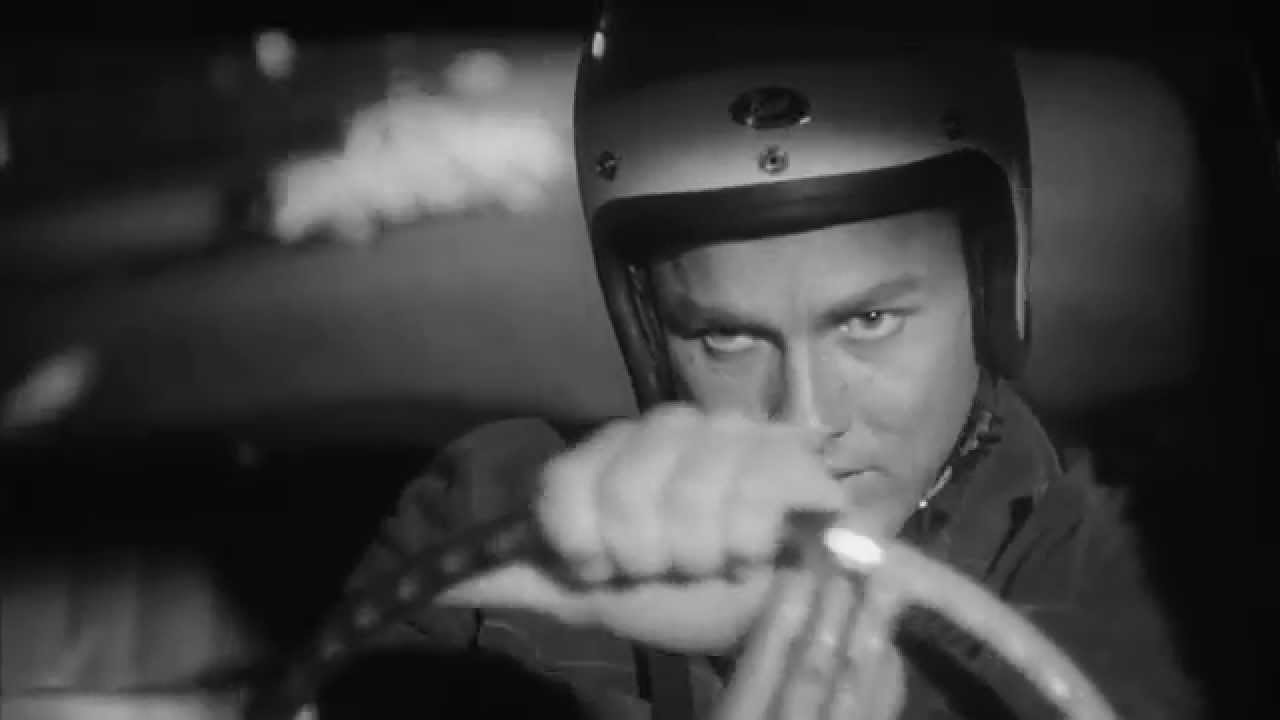
PIT STOP
(1969) ***1/2

The second best movie about drag racing after Two-Lane Blacktop, Pit Stop has a sporadically slurring Brian Donlevy as a shadowy race promoter Grant Willard, who sees star potential in surly drifter Rick (Richard Davalos) after watching him crash through a department store window. Grant gets Rick a job at a junkyard, and tells him to build himself a smashable car for figure 8 racing, which is as dangerous as it sounds, especially around the crossover-middle of the figure-eight-shaped track. Damn cool idea if you love big wrecks! The big ace wrecker/racer of Grant's stable, Hawk Sidney, is played by--who else?--Sid Haig. Hawk gets so mad at Grant for stealing his girlfriend (Spider Baby co-star Beverly Washburn) he beats the crap out of him and then takes an axe to his car! Is it Sid's ultimate craziest moment? He's had so many, how can we know? It's up there, let's say that.

Alas, like Spider Baby (which was filmed in 1964 but didn't get released until 1968) before it, Pit-Stop had a hard time finding an audience on its initial release, as black-and-white was considered passe at the drive-in (unless --like Night of the Living Dead, it offered something too shocking for color), and its a shame, because a lot of those color films from the era/budget look like shit today, but Pit Stop looks geee-yorgeous in this new "director approved" remastered HD Blu-ray from Arrow. Maybe even more so than when it was originally released, the full brilliance of 35mm black and white film is revealed. The silvery grays and deep blacks are so seductive you want to frame every shot and admire it over a period of years. The Blu-ray is maybe up there with Criterion's Blu-ray of Repulsion as far as capturing a late night surrealism that seems to shimmer holotropically with good silver cinematography. Real night (and even day-for-night) is now beautiful, dark and deep (if you have a good HD TV or projector, especially) instead of the glowing gray we've been used to for so long.

As a score there are some generic, but effective, bluesy rock songs played over montages of the lovely little junkyard: tires are hauled in around and hoods and parts and there's even male bonding as the songs grind and sway. I like that Rick actually grows--or seems to--as he moves from combative and surly to being nice and joshing around with the boys--which is an an unusual change for a montage sequence --another element of Hill's ballsy but effective strategy that contrasts Rick's character very well with Sid Haig's wild man figure-8 champeen racer. Tellingly, after parting with track scamp Washburn, Grant hooks up with another rival racer's mechanic girlfriend, this one played by the future Ellen Burstyn (above). Billed as Ellen McRae, her dry, low-key person suits Hill's equilibrium to a Valvoline-splattered tee. You can tell she's going to go onto big things (The Exorcist was just five years away), sharing some romantic clinches amongst the Imperial Sand Dunes that show Hill's mastery of day-for-night shooting, giving it all a delirious, dream-like air.


I'd go so far as it to say that, as far racing movies go, Pit-Stop is more Hawksian than Hawks' own RED LINE 7000... Mind you, it never claims to be better than it is. But for fans of the Hill, it's manna.

Arrow Blu-Ray - A+ - Another great Hill-Drenner commentary, gorgeous restoration, da woiks
--
CONTINUED

NOTES:
1. I  know Bogdanovich loves Hawks, and he knew Hawks, but his explaining 'little jokes' in EL DORADO as if they're some pithy New Yorker cartoon being explained to a bored 12 year-old, sucks the wind out of them, like shellacking a soufflĂ©. Drenner avoids all that,

Tuesday, March 10, 2015

Rothrock Rules! YES MADAM!, ABOVE THE LAW, MERCENARIES, BLONDE FURY; Carano Crushes! HAYWIRE, IN THE BLOOD


It seems we're living in an age where feminist worries about the detrimental effects of sexual violence in the media really have proven valid. Popular cinema is awash in white slavery, child abduction, sexual sadists, date rapists (the horrible disillusioning for those of us who loved Cosby as a child) and dead hookers as nothing more than 'what stays in Vegas' punchlines. Was Laura Mulvey right, the male gaze is the root of all evil? Her "Visual Pleasures in Narrative Cinema" essay opened a dialogue on the male gaze but unfortunately spawned a downer academic feedback loop as--in their drive for tenure and full professorship--film and media theorists have sometimes erred on the side of humorlessness. Attempting to highlight all the dirty bathwater they burn the baby, or drown it, or both. At least it keeps them off the streets, which aren't safe, if the last million films starring Nicolas Cage or Liam Neeson are correct.

But as winter melts away and pollen and seasonal depression lurks, a man whose gaze is only half Mulveyan at most needs deliverance, needs a break from the heavy theory and artsy shizz, and liberal arts guilt.

I'm supposed to go to a damn Laura Mulvey lecture/film screening at 6PM today/tonight (no joke)!  Jim, I'm becalmed, and no avant garde collage detournement deconstructions of 50s Hollywood's feminine ideals can raise me spirits. Not tonight, Josephine!


I'm sure Mulvey will crush it, or whatever term is gender-awareness allowable, but her film will probably be--as is so often the case when the male gaze and its 'western eye' is unplugged or jabbed-- inert, demoralizing and irritating. Fuck that! I need to see women literally crush it to feel better instead of worse. Not the usual direct-to-cable bimbos in halter tops running along some Philippine beach with plastic guns in hand, mind you, Laura, nor dour sermonizers who feel bad about all their finely wrought violence either. I'm talking women who are confident, fearless, and could believably put a hole through a windshield with a single kick.... Ain't many. Let's see two:

YES MADAM! 
(1985) Dir. Corey Yuen
***1/2
This Hong Kong hyperkinetic comic ballet has as its comic center three bumbling petty crooks who accidentally grab a MacGuffin microfiche during a robbery. Now all these crooks want to kill them! Cue manic slapstick! The ballistic Cynthia Rothrock and graceful Michelle Yeoh are a pair of HK (Rothrock sent across from 'the Yard') detectives trying to get it back and/or protect them from evil spies. Both women are great, but Rothrock is extra ballsy and fights like she's really fighting (she was a real-life karate champion). Yeoh on the other hand fights like she's dancing which is perfectly fine, and her balletic style matches that of most of the guys she battles. But she tends to kick a guy then let him recover and strike back before she lands the next blow, like one might at a martial arts demonstration rather than a competition. Rothrock never gives her opponent time to recover, she just moves in bam bam bam, like a boxer, no chance for her opponent to shake off the previous blow, or even the one before that, until he's down and out for the count. Best part is a great climactic knockdown brawl wherein their two styles merge and they bond, and its glass-and-face-smashing greatness elevates the soul. The three doofuses wear on the nerves quickly but you'll believe a girl can fly through a glass window to dodge a guy's kick and then swing around underneath it and kick him through the same hole in the glass all in one smooth flip. And you'll be right: ROTHROCK RULES!

ABOVE THE LAW 
(1986) Aka: Righting Wrongs / Dir. Corey Yuen
***

Biao Yuen stars as a Hong Kong lawyer who watches as scumbag rich criminals get off scot-free by merely having all the witnesses to their crimes, plus their children, blown-up and/or shot (by a black guy in an American army uniform); there's an undercurrent of the old British rule being corrupt and the powdered wigs they all have to wear in court look horribly itchy. Yuen winds up so pissed off he takes the law into his own hands and goes gunning for the bad guys on his off hours. He's not a very good driver but he's good at close quarters fighting when hired hit men try to run him over in a third-story parking garage. Investigative cop Rothrock talks about the evil of vigilanteism while watching a toy train run its track at a Xmas party. Great! The only drawback is the slovenly cop she picks as her assistant; he's one hell of a sloppy gross eater, to the point a sensitive guy like me has to look away. Rothrock though, man, she can fight... so I have to look back.

The final climactic brawl occurs in an airplane hangar and makes good use of everything from a propellor to an on-airplane fight to the death. Yuen more than holds his own, but its Rothrock--as an HK cop who starts out investigating the murders of all the high level scumbags but winds up on Yuen's side--who really registers. She's not here to make friends, and though she doesn't get near enough screen time, it's enough to make us realize just how much ROTHROCK RULES!

THE BLONDE FURY
(1989) AKA Lady Reporter, Righting Wrongs 2 / Dir. Mang Hoi
**1/2

Lots of the typical HK action-comedy elements, this time centered around an American FBI agent (Rothrock) who works the SF Chinatown beat and has friends in HK, so she's sent back there to crack a counterfeit ring by posing as a reporter. As per usual, all the men are either spastic morons or grinning evil bad guys, crooked pols and cops with shady motivations and/or the sullen flunkies. Rothrock isn't quite the boxy brawler from YES MADAM! and ABOVE THE LAW anymore. She's more along the Yeoh lines: graceful, agile, but the fights are often sped up slightly more than usual and her kicks don't look like they hurt as bad as they did a few years ago. Now the guys just bounce back up again and the spastic imbeciles with their bugging eyes run hither and yon with equal speed. This spastic Lewis-esque mania can be blamed maybe on director Mang Hoi --his crooks here make the ones in MADAME seem like the goddamned Danny Ocean's Eleven. We may make allowances for Continental Asia's love of 'big crowd pleaser' comedy, the kind that gets theaters full of all ages people rolling in the aisles, but then comes off labored on video alone at home or with your discerning Rothrockian film snob cronies. Helping offset the damage is a fine centerpiece battle with bamboo poles up and down three or four stories of a half-finished domicile. Its DVD is OOP but it's streaming free on the old YT and one day I swear I'll spring for the iOB. 

d
HAYWIRE 
(2011) Dir Steven Soderbergh
****

Smoky-eyed UFC fighter Gina Carano is most believably ass-kicking American babe since the early Hong Kong Rothrock, but this is no Hong Kong street brawl, this is Soderbergh making up for the outrages of CONTAGION (same year). This time the liberal hand-wringers are nowhere to be find and there's only two problems: it's rushed open ending and Ewan McGregor's terrible haircut. Otherwise it's perfect. This is Steven Soderbergh's big masterpiece as far as I'm concerned. I could go press play and re-see it right now. I've probably seen it ten times already (I bought it on Amazon streaming! Six dolla!) and I can't get enough. I sure wish it made a ton of money so it would make a dozen sequels. Instead, here comes OCEANS 18.


OK still here? Let me tell you about HAYWIRE's touching military-trained sense of cool in the face of danger, the close bond between Gina's merc and her father (Bill Paxton), a former Marine (like her) now writing books on WW2 desert warfare way up in the Colorado mountains (?), or the cold blue-eyes of Michael Fassbender as an MI6 agent lured into thinking he can kill her easy; the way Michael Douglas as a Washington insider doesn't buy her high level betrayal frame-up, and just encourages her to keep killing her way up the ladder all without ever saying anything over the phone that might implicate him in anything, and the intrinsic way she understands this; Channing Tatum as her lover / would-be assassin and their great diner brawl opener; the confused but smart hipster who gets told the backstory; the cool reflective Soderbergh surfaces and post-modern globalism that only he and a few other directors--Assayas, Liman, Greengrass--can really deliver.

Too bad though, that Carano hasn't been given much other proper material after this. She could be a new kind of Jenn Bourne, instead her best post-HAYWIRE work is in the most recent FAST AND FURIOUS, which allows her one big subway steps battle, where we're supposed to believe Michelle Rodriguez would have a chance against her. Never happen, kick-boxing class or no.

IN THE BLOOD 
(2014) Dir. John Stockwell
**

We see the importance of Steven Soderbergh's way of pulling out great depth of dark-eyed beauty from Carano's face and movements, the way she seems to be leaning way back into herself, even while throttling guys in waves of UFC leglock mount moves. During the tepid IN THE BLOOD all the best moves occur early on in a big nightclub brawl where a honeymooning Carano rescues her new husband from pimp Danny Trejo's club girl stable. That said, there's sunshine, island mood, and unrepentant violence including some sideways likenings of Carano's actions to those of Shagur in NO COUNTRY FOR OLD MEN. She even commits some cold-blooded outright murder, including several cops! Female action heroines are seldom more cold-blooded than even their most despicable enemies! Mad respect.

The story is a kind of THE LADY VANISHES or BREAKDOWN as a zip-lining accident leads to Gina's new husband's disappearance, and his rich father (Treat Williams) and sister accuse her of killing him for the inheritance. It's up to her now to carve a bloody torturous trail through the brush; her particular set of skills collaterally damaging several mostly-innocent people.

Director Stockwell gave us the excellent INTO THE BLUE and BLUE CRUSH (so he knows his tropical island island action) and TURISTAS (so he knows his gringo organ harvesting). But has he ever seen a lassie go this way and that way, so goddamned fast? He tries to catch up via limb-shredding and gun fire brutality, but we'd rather just see Gina kick some crap out of some Triads or Golden Tongs and aside from that nightclub scene, there's woefully little fight choreography. The anti-climactic Danny Trejo speech at the end is priceless, though. His island ladies need tourists after all, and when rich white people are attacked, it's no good for anybody's business. Amen.

MERCENARIES 
(2014) Dir. Christopher Ray
**

ZoĂ« Bell has stunt doubled for Xena and Buffy and Uma long enough. She's stepping into her own here (after breaking out atop the Challenger in DEATH-PROOF) as an action hero lead and her hair looks great. Directed by the ersatz maniac behind MEGA SHARK VS. CROCOSAURUS, This is the B-chick version of THE EXPENDABLES: fellow Tarantino alum Vivica Fox, Asian-American badass Nicole Balderback (BRING IT ON) and TERMINATOR 3 babe Kristanna Loken team up with Bell against a dyked-out Brigitte Nielsen. The unsavory white slaver angle is handled with some level of tact, though a massive machine gun massacre of the imprisoned 'product' leaves a bad taste. Mostly there is a lot of mean talk and discovered girl bodies dealt with via vengeance of a mostly cathartic order and-- in the boondogle EXPENDABLES tradition, albeit with around a 1/100th of the budget (its director is Fred Olen-Ray's son, as if the word 'Crocosaurus' wasn't enough of a tip-off)--it walks that thin line between camp and dour angst very well.  Low budgets never stopped Hong Kong actors from delivering the goods, so why should the word 'Crocosausus' convince these ladies to phone it in? Ray can barely figure out where to put his camera but Rothrock rules eternal, even when leaving the high kicks to the kids.


Related Posts Plugin for WordPress, Blogger...