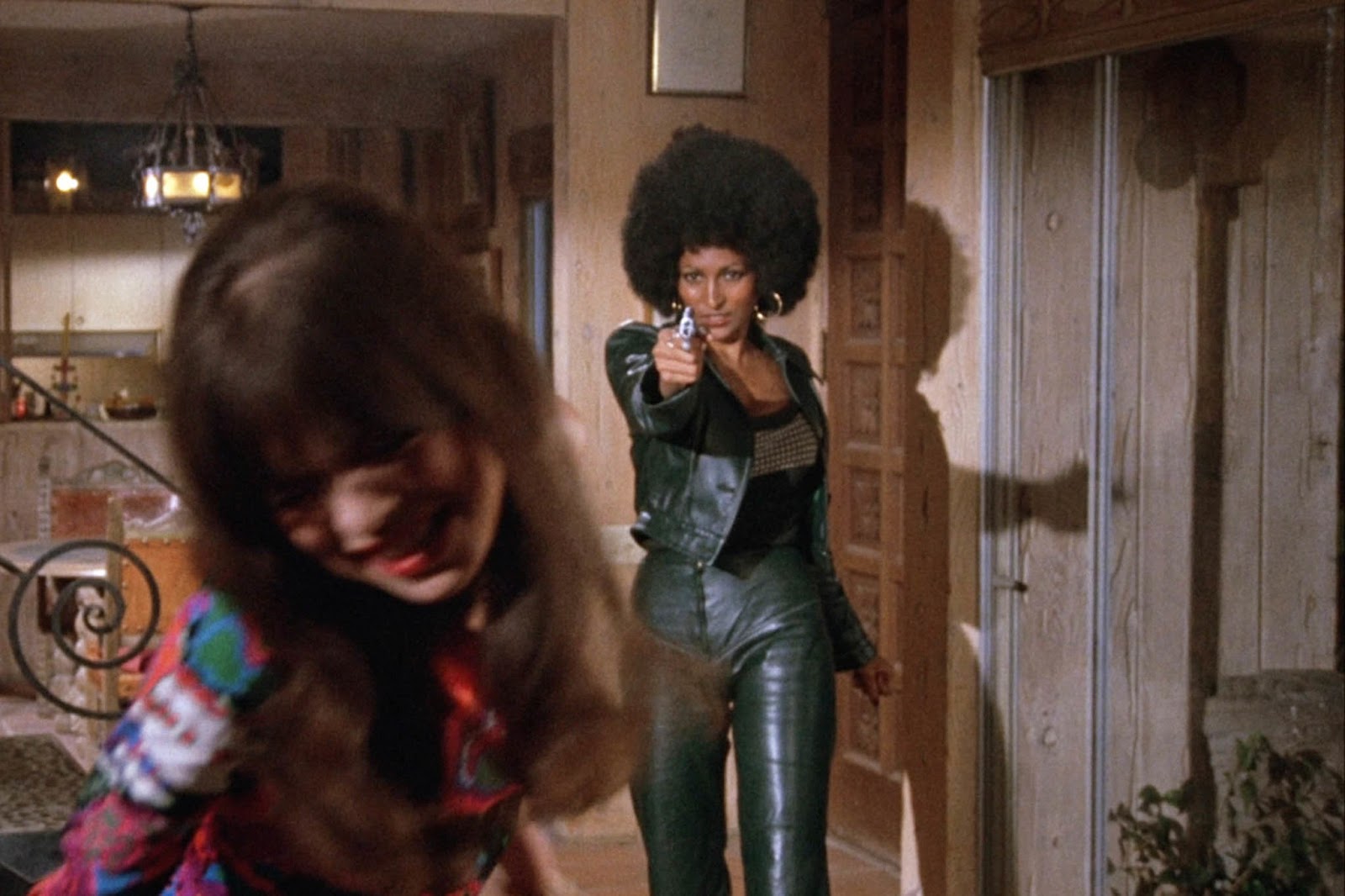

 This is just a working theory, but since cocaine plays such a huge part in the films of the
70s it behooves us to look into it while discussing the era's intense licentious interest in icons of sexual purity and the permissiveness, until slavering over young 15-16 year-old girls--the ultimate pseudo-incest taboo-- was somehow socially acceptable.
As Randy Newman sang:
"They say that money
can't buy love in this world.
But it will get you a half pound of cocaine
and a 16 year-old girl.
In a big black limousine
on a hot November night.
That might not be love,
but it's all right"
-- "It's Money that I Love" - from Born Again (1979)
In the height of the drug's popularity (late-70s) there was disco and there was a 15 year-old Brooke Shields inferring she wore no underwear underneath her Calvins, creating quite a lot of tabloid and water cooler arguments as to where naughty fun ended and licentious statutory leering began. Shields already had a lightning rod signification having appeared two years earlier in a film by Louis Malle, Pretty Baby, about a New Orleans child prostitute. The jeans ads rocketed her into a weird place in the zeitgeist, one that--nowadays--would be unthinkable. The more the press condemned her exploitation and licentious positioning the more the jeans were sold.
But on the other hand, sex wasn't supposed to be as rapey/vile as it seems today in shows like Euphoria and other HBO dramas. It was considered fun, and no harm done, and everyone entitled to a lover. You know, like in Europe? Were we finally grown up, or just living a fantasy that would have long-lasting consequences, you know, like a hangover?
To set the scene: 1978 was a special year: Saturday Night Fever (1977) was no longer in theaters but the album was still #1. We elementary school kids listened to it and danced obsessively. The film itself was depressing and sordid compared to the relatively cleaned-up Travolta figure next year -Grease. Looking back, was it magical fairy dust that changed Olivia Newton John overnight from a goody two-shoes to a freeze-licking biker chick overnight? "You better shape up!" she sings, blowing Travolta's mind (left).
Looking back at it, man it had to be that she tried coke the night before her radical change. In an effort to win her man she said yes to her first line of coke and was blown out of her goody two-shoes. By the second line she was borrowing Roz's trashiest black leather, and by dawn she was chain smoking. This is the power of drugs, and especially the insidious power of coke to remove one's sense of empathy, guilt, shame, and responsibility - all the things that keep a girl virgin pure. Just like Laura Palmer or some victim of Monarch mind-control: give any girl cocaine, it seemed, and she was forever out of reach of her parents and teachers --yours for defiling, as long as you had a stash back in your bedroom drawer.
At the time all this was going on, I was just a kid myself, two years younger than Brooke Shields. She was, in a sense, too young for my tastes (I was way into Charlie's Angels), and a little too generic and skinny for my tastes. I remember having zero interest in seeing either The Blue Lagoon (1980) or the following year's Endless Love (1981).
But as someone unable to buy a ticket to an R-rated movie (which they both were), it was fascinating that, actually, neither could she.
Looking back to the silent era and their never-ending exotic locations with castaway waifs taking soft focus showers in waterfalls; never knowing of men or of sin, so how could they be ashamed of these strange feelings, etc., it's clear just how thoroughly socially-instilled repressive sexual guilt has lessened over the years as far as needing to escape to a desert island to avoid one's mother and priest.
 |
| One sniff makes you wilder.... |
Looking back at it, man it had to be that she tried coke the night before her radical change. In an effort to win her man she said yes to her first line of coke and was blown out of her goody two-shoes. By the second line she was borrowing Roz's trashiest black leather, and by dawn she was chain smoking. This is the power of drugs, and especially the insidious power of coke to remove one's sense of empathy, guilt, shame, and responsibility - all the things that keep a girl virgin pure. Just like Laura Palmer or some victim of Monarch mind-control: give any girl cocaine, it seemed, and she was forever out of reach of her parents and teachers --yours for defiling, as long as you had a stash back in your bedroom drawer.
At the time all this was going on, I was just a kid myself, two years younger than Brooke Shields. She was, in a sense, too young for my tastes (I was way into Charlie's Angels), and a little too generic and skinny for my tastes. I remember having zero interest in seeing either The Blue Lagoon (1980) or the following year's Endless Love (1981).
But as someone unable to buy a ticket to an R-rated movie (which they both were), it was fascinating that, actually, neither could she.
 |
| Shields reclines by the BLUE LAGOON |
The 'return to Eden' surge at the end of the powder-coated 70s led to a plethora of "corruptible innocence" films at the box office. Not just Malle's Baby, but Polanski's Tess (1979), The Blue Lagoon (1980), Foxes (1980), Little Darlings (1980), Manhattan (1979) -- They all feature innocent, wide-eyed, underage sexualized nymphs that fit the mood of the moment perfectly. If they caught any flak, it was the groups who flung it that were judged, as prudes.
Throughout the 70s, America was still in a pre-AIDS hedonistic mindset whilke nudity was still something you could only get on the big screen at an R-rated picture (or-X, gasp - for there were no video players except in the homes of super rich a-holes). Maybe we saw sex as 'good' maybe because we hadn't seen that much of it. We were all curious and felt protected in that way children are who don't yet know how ugly the world is. How could there be anything bad about sex, especially with adorable Dr. Ruth dispensing prime time sex advice?
We were too innocent to know how dangerous it was to let coked-up producers capitalize on our prurience by promoting innocence itself as sexy.
As recent events and movements indicate, we're still learning.

In this light, it's clear 1982's Conan wasn't born in a vacuum, but because people were confident about the success of the insanely-hyped Bo Derek film Tarzan the Ape Man (1981 -above) a kind of adult's only-Lagoon meets the violence and macho of classic pulp, a short jump from Burroughs to Howard - indeed, the paperbacks looked almost alike.
In the late-70s, crazes ran in quick succession. Thanks to the surprising box office of Blake Edward's "10" (1979), Bo Derek was the goddess at the top of a big pyramid (everyone was giving everyone else a number all of a sudden - were you a seven or an eight?). Girls got those tacky micro-dreads--or tried--then combed out the damaged hair, the resulting frizz leading to the perm. John Derek, Bo's husband/ photographer, was the 80s American equivalent of the 60s Roger Vadim (see Pimps: The Devil's Auteurs). decided she needed his guidance. He would direct her next film: Tarzan would be a kind of Blue Lagoon 2 for a slightly older pair of naturalist lovers to entwine within.

That was the hype. But a critical laughingstock was born instead. Hoots and hollers and not in a fun The Room kind of way, but a boring way... Bo began a descent as meteoric as her rise.
 Still, Tarzan was massively profitable, so much so that the engines of Italian 'draft rider' pulp started up full force. Dino De Laurentiis' Conan (1982) was another 'adult' adaptation of classic pulp (Robert E. Howard instead of Burroughs -above) with a fetishized male body (Arnold) instead of female, and this time it worked! People liked it, boys like me especially. And the best element was the genuinely touching romance with Sandahl Bergman as Valeria, a character we loved from the comics and were worried would not be represented well, and Arnold - whose accent endeared him to us immediately. We adored these lovers' openhearted moxy. Valeria (left) was a strong, capable character suddenly vulnerable through a first love. Bergman did most of her own stunts, and wielded a real scimitar -- she was no kibbitzer. She was worlds away from the innocent naifs of Tarzan, Blue Lagoon. This was a movie where corruption of innocence was met not with musical numbers and leers but with sharp steel. This was barbarians sneaking downstairs to crash the party and send the reptilian cokehead directors running for the door. Like April in Taxi Driver, we helped Brooke Shields home to her worried Max Von Sydow father to sober up, and the doors of the orgy room were sealed shut.
Conan was a hit. And so the draft riders pulled in behind that, and the sword and sorcery age of the early-80s was born. The hedonistic debauching of innocents was out - the disemboweling of hedonists by the innocents was in.
Imitators sailed in from New World, and of course, Italy, where they mixed and matched with the other big hits of the moment (see my list of awesome ROAD WARRIOR rips from last month) and hey -- many are on Prime. Four of them are worth mentioning, for they give the right kind of viewer a peaceful, easy feeling of nostalgia and archetypal alignment. They are all perfect for napping to... on a lazy... Saturday... after... nnnz. And hey, onr og yhrm stars Miles O'Keefe, Derek's Tarzan himself! Everything comes full circle.
Throughout the 70s, America was still in a pre-AIDS hedonistic mindset whilke nudity was still something you could only get on the big screen at an R-rated picture (or-X, gasp - for there were no video players except in the homes of super rich a-holes). Maybe we saw sex as 'good' maybe because we hadn't seen that much of it. We were all curious and felt protected in that way children are who don't yet know how ugly the world is. How could there be anything bad about sex, especially with adorable Dr. Ruth dispensing prime time sex advice?
We were too innocent to know how dangerous it was to let coked-up producers capitalize on our prurience by promoting innocence itself as sexy.
As recent events and movements indicate, we're still learning.

In this light, it's clear 1982's Conan wasn't born in a vacuum, but because people were confident about the success of the insanely-hyped Bo Derek film Tarzan the Ape Man (1981 -above) a kind of adult's only-Lagoon meets the violence and macho of classic pulp, a short jump from Burroughs to Howard - indeed, the paperbacks looked almost alike.
In the late-70s, crazes ran in quick succession. Thanks to the surprising box office of Blake Edward's "10" (1979), Bo Derek was the goddess at the top of a big pyramid (everyone was giving everyone else a number all of a sudden - were you a seven or an eight?). Girls got those tacky micro-dreads--or tried--then combed out the damaged hair, the resulting frizz leading to the perm. John Derek, Bo's husband/ photographer, was the 80s American equivalent of the 60s Roger Vadim (see Pimps: The Devil's Auteurs). decided she needed his guidance. He would direct her next film: Tarzan would be a kind of Blue Lagoon 2 for a slightly older pair of naturalist lovers to entwine within.

That was the hype. But a critical laughingstock was born instead. Hoots and hollers and not in a fun The Room kind of way, but a boring way... Bo began a descent as meteoric as her rise.
 Still, Tarzan was massively profitable, so much so that the engines of Italian 'draft rider' pulp started up full force. Dino De Laurentiis' Conan (1982) was another 'adult' adaptation of classic pulp (Robert E. Howard instead of Burroughs -above) with a fetishized male body (Arnold) instead of female, and this time it worked! People liked it, boys like me especially. And the best element was the genuinely touching romance with Sandahl Bergman as Valeria, a character we loved from the comics and were worried would not be represented well, and Arnold - whose accent endeared him to us immediately. We adored these lovers' openhearted moxy. Valeria (left) was a strong, capable character suddenly vulnerable through a first love. Bergman did most of her own stunts, and wielded a real scimitar -- she was no kibbitzer. She was worlds away from the innocent naifs of Tarzan, Blue Lagoon. This was a movie where corruption of innocence was met not with musical numbers and leers but with sharp steel. This was barbarians sneaking downstairs to crash the party and send the reptilian cokehead directors running for the door. Like April in Taxi Driver, we helped Brooke Shields home to her worried Max Von Sydow father to sober up, and the doors of the orgy room were sealed shut.
Conan was a hit. And so the draft riders pulled in behind that, and the sword and sorcery age of the early-80s was born. The hedonistic debauching of innocents was out - the disemboweling of hedonists by the innocents was in.
Imitators sailed in from New World, and of course, Italy, where they mixed and matched with the other big hits of the moment (see my list of awesome ROAD WARRIOR rips from last month) and hey -- many are on Prime. Four of them are worth mentioning, for they give the right kind of viewer a peaceful, easy feeling of nostalgia and archetypal alignment. They are all perfect for napping to... on a lazy... Saturday... after... nnnz. And hey, onr og yhrm stars Miles O'Keefe, Derek's Tarzan himself! Everything comes full circle.

1. ATOR, THE FIGHTING EAGLE
(1982) Dir. Joe D'Amato
**1/2 / Amazon Image - B+
Maybe it's the languid sexually uninhibited postures, the dreamy pace, the tastefully provocative fur loincloths and armor; maybe it's the muted cinematographic palette of purples and yellows; maybe it's the rumbling timpani and Wagnerian brass of Carlo Maria Cordio's score; the long flowing wigs and cute fur boots and wrist bands on the young leads, their flawless faces conveying just the right level of youthful blankness, maybe it's the lack of narrative urgency coupled to hitting all the expected marks, but goddamned it there's something about this terrible movie I love. It's a case of less is more: the lack of blood and gore makes the clumsy fights adorable; the lack of nudity and sex helps make everything paradoxically sexier, more alive with a kind of polymorphous haziness. And then there's the clankety fight scenes and minimalist set design. Look at the above, for example: is that supposed to be a cave wall or a frumpy dark purple tarp behind our plate-chested hero? Look at his splayed posture! Look at who he is, the Derek's Tarzan himself, Miles O'Keefe! Could we be any chiller?
Wake up, Miles! You're playing Ator, a young warrior type raised by farmers after escaping a 'first born male son' purge by an evil warlord (a not uncommon procedure in these films). Not to pick on poor Miles, whose fault it surely isn't that the Dereks' Tarzan was such an epic--albeit profitable--fail. Here, thanks to D'Amato's sleepy mise-en-scene and a good (famiar-voiced) dubbing job that manages to inject just the right note of deadpan knowningness to every cliche'd line (i.e. "first I must complete... what I was born to do."), his dazedness aura insures his inability to play his role any other way than deadpan straight (there's not a bone of self-awareness in his lithe, muscular body). Rumor has it that D'Amato was routinely frustrated with his star's continued listlessness --but then again, looking around at the rest of the film, O'Keefe probably had a lot to listless about! Still, his combination bride/sister Sunya (Ritza Brown) has been abducted by a band of roving spider-worshipping brigands led by "the Hight Priest of the Spider" (Dakar), who holds onto power by making his army of about 15 stand around for hours while he plays with a real tarantula. Plenty of time for Ator to quickly train with a guy in a terribly hacked-up dusty Mongol warrior wig who instructs him in the art of war for about two minutes. He is ready!

Inevitably, Ator--and his little bear cub pet-- soon hooks up with an enterprising young Amazon named Roon (Sabrina Siani- above, a regular during this brief phase of Italian Conan knock-offs) after she wins him in combat over breeding rights. She's not in the same league as Sandahl Bergman, fighting skill-wise but a perfect match for O'Keefe as far as strung out wavelengths. She shoulders an equal share of battling derring-do once they team up, and I'm a fan of her lack of moral compass. You can decry as clumsy and amateurish their brawls with blind sword makers, indignant robbery victims, and spider worshippers, but why bother? They're not using stunt doubles, and they're probably tired, and D'Amato can work sly in-camera miracles just through blocking (I especially like Ator's battle with his a pesky mirror shield shadow). I don't find any of that a problem, since it reminds me of my own Conan-inspired super-8mm opuses made around this same time. We used all the same tricks. And befitting something perhaps suitable for the whole 13 year-old boy's slumber party, D'Amato spares us gore and torture, sleazy sex close-ups, and all the other things associated with trying for an R-rating, and just delivers the rest in that pleasingly totemistic ritual manner that makes me so enamored of Luigi Cozzi and Ed Wood. There's no trauma, no emotional investment, no wasting time with long caravans and mustered armies of extras (the Temple of the Spider holds onto power for thousands of years with an army of about ten guys in long black Kiss wigs) suspense, no loud noises. the weird golden-pale color palette is a great mix of D'Amato's own gift with cinematography and a good restoration (it doesn't try to do too much) are very becoming to the actor's naked limbs and the purple cave walls, Siani and Brown are very pretty, the hero is unobjectionable (like that good-looking guy you're still friends with because he's not somehow not a vain prick) and there's a giant spider that puts the fur Volkswagen in Bill Rebane's Giant Spider Invasion to shame. I haven't even mentioned D'Amato regular and fan favorite Laura Gemser (below).

But all that doesn't totally begin to explain the appeal, the unique sexual pull of Ator. A great example of it I think can be found in the two scenes of O'Keefe's resting a goblet on or near his genitals (above, and top), splaying his legs out, when sitting, as if trying to get some air flow to his balls or presuming a fluffer is going to be down there momentarily, rummaging amidst the luxuriant pelts of his furry loincloth. In your average 80s sex comedy this pose might be done by some smug jock with a Red Ball cup, and it would be rapey-vile instead of sexy-cool. The difference is between wanting it vs. not even being aware of it, i.e. muscle memory. In other words, our Ator/O'Keefe seems like a very laid guy. Maybe that's why he's so listless?
Like many truly sexy films, though, Ator is seldom overtly sexual; it's more akin to the kind of thing I used to fantasize about as a seven year-old, all power and submission and polymorphous perversity. Ator is always the desired, not the desirer; the Amazons choose one of their sisterhood to mate with Ator since he looks healthy, and so he's locked up in a hut and the victor comes in to claim him like a prize stud (but without any soft focus or jazz) and then Gemer's enchantress seduces him while Roon spies from a hole in the roof and sends his pet bear through a crack in the rocks to run a Toto-style cockblock. Again and again, sex never happens but almost happens --with Ator fought over as an object being used for sex and seed -- too languid and reposed to resist, preferring to just rest his flagon near his pelted crotch as if a grail light for wandering maidens. Like all good D'Amato movies, a close analysis reveals just how truly fucked up this all is. Ator plans to marry his own sister (even before knowing he was adopted) -- their early scenes together pulse with a yearning primal energy, never falling over the side into the abyss of puerility or camp. Michele Soavi was an uncredited co-writer and I'm guessing he maybe helped keep a kind of surrealist lid on things. Surely his absence is felt in the later sequels.
In short, my friends, if you miss the smell of 1980s Grateful Dead tour, the mix of patchouli, hashish and sizzling meat all mixed together opening your third eye like a burning ember in the center of your forehead, helping you 'see' as the maroon bewitched core of life itself, the sizzling of a tailgate grill cracking open kundalini serpent eggs, then run, walk, and scamper to Ator. It's all there in Sabrina Siani's gleaming light-blonde princess wig, in the purple hues of the purple crepe paper cave walls, in Cordio's grounding timpani and Holst/cop show woodwinds, the cinematography, the nicely small cast and inoffensive / bloodless violence, the cute black fur boots of his scrumptious sister-wife, and in every strand of oversized clothesline web.


SORCERESS
(1982) Dir. Jack Hill
*** / Amazon Image - A
Usurping, wild-eyed sorcerer Traigon (Roberto Ballesteros) needs to sacrifice his firstborn child but his hot young wife (Silvia Manríquez) has twin girls and won't tell him which one came first. A wild-haired good wizard, Krona (Martin La Salle) strides forth to zap Traigon into a 20 year-long period of oblivion, alas, too late to save the mom from Traigon's sword. As is the custom, Krona leaves the babies with farmers so they don't attract despotic attention. He drops back in twenty years later, alas, too late again to save the farmers from Traigon's soldiers. The twins have gestated into blessfully unmodified Playboy playmates Lynette and Leigh Harris. A hearty, if unusually short, red-bearded Viking named Baldar (Bruno Rey), his curly-haired romantic-lead rascal buddy Erlick (Roberto Nelson), and a ridiculous horny satyr, vow to help the twins get revenge against the now-revived Traigon, who still needs that first born sacrifice or his god be angry! Traigon's right hand woman, Delissa (Ana de Sade) promises the second-born twin to her pet monkey monster, and the monkey uses druggy fruits to disorient the gang and abduct the right one. Signal the hair-raising escapes, magical spells, fights, gods fighting in the sky while zapping the battlers below with lightning, remote orgasms (the girls are linked psychically), and undead warriors culled from their crypts.

To call back to my long-winded out-on-a-limb opening introduction, there are copious drug references here: the idea that a drug instantly reduces the heroes to laughing idiots, allowing their shady dealers (the apes) to carry the girls away with no resistance, must have come from parties I've been to. And the later drugging and hypnotizing of the first born of the twins and Erlick so they'll get it on during a big pre-sacrificial sex magick ceremony to appease one's reptilian overlord? That's so Illuminati-Monarch7! (1)
It was director Jack Hill's final film (alas), made for Corman's New World down in Mexico as part of a multi-picture deal. Its production values are a little higher and the extras and supporting cast a little sexier than we're used to in a New World film of the time (no day-for-night, good lighting, effects, etc.), and Amazon's streaming source is pretty solid, presented HD and with deep, blazing reds and blacks. My only issue is that, perhaps to enhance the night scenes and presumably, and bring out that red, the color correction effort gives a lot of the actors an orange-sunburnt tint. I didn't get this issue on the Scorpion Blu-ray (see my review here), where the blacks are jet deep. But hey, it beats having to get up.

Sorceress's release year (1982) was a high point for A-list sci-fi and horror/adventure, and amidst that year's B-list, Hill could have rocked out for at least a few more classics or even moved up to the big leagues. Today enough Hill fans are in high enough places that he could get a film crowd-funded in five minutes if he wanted. Hell, Tarantino alone could hook him up! Do it, Jack! Do it!
Hey, Jack, I get it, age and experience brings wisdom as well as the loss of exuberance. And Spielberg was coming along to leave decadent deadpan larks like this -- too dirty and weird for the young kids and too cheap for the adults-- lurching along with only the 16-20 year-old males at the video rental store for company. But here it is 30 years later and those boys now get nostalgic pangs for a simpler age and we're grateful that films like this hold up so well. So thanks, Jack, for putting in the extra effort. Your weird genius endures. Would there'd been a dozen more just like this, that you'd been a Crio Santiago, a Wynorski, or a prolific guy like Matt Climber, the director of...
 3. HUNDRA
(1983) Dir. Matt Climber
** / Amazon Image - C
By now you know the story- a peaceful Amazon village is overrun by slavering invaders; they kill the men, enslave the women, the male children - if any - are taken to gladiator school, etc. But sometimes one brave woman escapes, gathers a force, or fighting skillz or whatever, to wreak havoc on the invaders in the name of her fallen sisters. No one's ever stayed awake through the opening to get the exact details of the variations to the plot in Hundra, but there's a bouncing Ennio Morricone score, vivid Spanish desert locations and a reasonable amount of action. As the unstoppable, untamable Hundra, Laurene Landon does all her own stunts, which is pretty cool but she seldom loses her doofus smile, which is not cool. Probably cast due to her resemblance to Bo Derek and Linda Evans, she's also fairly athletic, tall, and has no problem literally picking up guys and spinning them around. She jumps on and off of horses, onto and across roofs, knocks guards over right and left like a merry Errol Flynn in fur bikini, and seems to be having a kind of sloppy boozy time doing it Hanging back on her lines and reactions like she's waiting for a cue card, smiling confidently before leaning into a guy or throwing him over her shoulder like she's Tarzan and he's Maureen O'Sullivan, all with a buzzed smile on her face.
How are we supposed to read the tone with this weird actress? The Ennio Morricone isn't going to help --he's no Mickey Mouser and not about to add comic effects or ominous undercarriages, quite the opposite. He practically invented the Italian style of operatic antithesis, so leans back on the stick himself, pumping the lady up like a cheering papa with Wagnerian orchestral urgency. Since she's proving her mettle right in front of us, it's hard not to forgive her goofball trespasses, and even her dated frizzy ironed hair (were they trying for those Bo Derek braids and then gave up and just hot combed most of them out?) See below.

Alas, as an adventure of feminist empowerment, the ramshackle tale tries to do too much and in the process gets old fast (it's taken me three years to finish watching). It may help to consider that the writer/director Matt Climber was once married to Jayne Mansfield, and shepherded the original GLOW (Gorgeous Ladies of Wrestling) TV show, shortly after making this film, making him the obvious inspiration for the character played by Marc Maron in the Netflix series of the same name (see also Climber's masterpiece, The Witch Who Came from the Sea). When you realize Laurene Landon played one of the lady wrestlers managed by Peter Falk in All the Marbles (1981) it gets clearer. Whether or not Climber has some weird women wrestling 'thing' or not, his love of strong women makes him an ally, of some sort of other.
Pros: That big chase scene I mentioned really benefits from Landon doing her own stunts as we see her leaping around like Errol Flynn or Buster Keaton might do (or we see in films like The Stuntman), albeit a bit sloppier. A standout scene goes on an on in and around this small gated village, with Hundra running from parapet to rooftop to second floor balcony and back again, her horse and dog keeping up with her progress in perfect time from ground level (the dog leading the horse!), all three together in an elaborate and quite impressive centerpiece action scene. It ends with her falling through the roof and onto the bed of a brooding doctor (Ramir Oliveros). Without even pausing to shake off the wild ride she just had, she jealously eyeballs the girl who's leaving without missing a beat, not even being out-of-breath, grabbing and eating an apple from his table, pinning him to the wall with hurled daggers, and proclaiming she intends to mate with him! She's like a one-woman version of Liz and Dick in Taming of the Shrew, rolled together and sheathed in odd furry raiments!

Cons: Alas, the inevitable temple orgy sequence that follows the lengthy single-take / clearly great chase sequence, is sordid as hell. Full of hot girls pawed by fat ugly-hairy-middle-aged drunks, and seeming to go nowhere, it just drags on and one and seems present mainly to show how vile temples were before the Christ our lord did pass amidst them. We're subjected to gross men loudly announcing their superiority to women, who are all there solely to serve them, etc. and making women bow down to a bull they worship (how and why and what is expected to happen between the women and the bull is vague). The snotty king (Cihangir Gaffari) meanwhile, reigns via one interminable snit fit, letting girls know who's da boss while his little toadie does the close-up bullying. It's all paving the way to Hundra teaching the court virgins to kick their men's asses and --in a big slow motion climax set to dynamic Morricone howling Wagnerian ecstasy--killing every last oppressor with her mighty sword. It's cathartic but at the same time very odd that she'd wait so long, and submit to make-up regimens and learn how to walk in heels, rather than just wiping them all out and odd that Climber keeps it all in extreme slow-mo so we have time to notice the punch pulling in some detail.
Caution: Even if you like Hundra, I'd advise you to steer clear of Climber's western follow-up with Landon (also on Prime), Yellow Hair and the Fortress of Gold, wherein she's a half-breed after Aztec treasure with her bumbling Mexican sidekick. It looks even worse than this, both figuratively and literally, and Hundra looks bad enough, "Clearly" sourced from a letterboxed (not anamorphic) video source, it has a very blurred streaky look, with digital edge enhancement added as an attempt to make it more palatable. The color contrast issue is not helped by the over reliance on daylight outdoor scenes, all tan/brown sandy deserts which help make the blonde haired, pale skinned, earthen-clothed actors all but disappear. The occasional purple tunic, as in above right, is so jarring by contrast it seems like it was superimposed.


Even if, like me, you have problems with Beyond the Valley of the Dolls (1970) you still love John Lazar as the insane and charismatic record mogul. And even if, like me, you have problems with the oeuvre of Jim Wynorski, you can still love Deathstalker 2, because Lazar is the evil villain, Jerek, and though he's not looking quite as dashing as he was 17 years earlier and spends most of his few scenes 'practicing' swordsmanship, killing off his warriors with a drowsy hooded-eyed flatline level of bemusement. John Terlesky stars as the titular 'stalker and luckily he's self-aware grin is free of the snarky puerility that undoes so many of his ilk. Toni Naples is Jerek's evil henchwoman. Bewitching-eyed Maria Socas is the Amazon queen. They're all fine but the movie really belongs to Monique Gabrielle as the pauper/princess, her tanned and toned limbs, buckskin minidress, cool straight blonde hair and bangs go a long way towards absolving her flat line delivery and over-the-top eye rolls. Lucky for us, what she and Terlesky lack in acting chops is made up for by their youthful chemistry. (She's more overtly sexual and less cute as the slutty evil doppelganger whipped up by Jerek). Though she and Terlesky may plow through their His Girl Friday-esque dialogue like a lawnmower through a victory garden, we can't hold it against them. They are lovely and young and--unlike so many others-- not smug and glazed-eyed narcissistic about it. They're fun, self-depreacting, seem to be having a good time and holding things just this side of camp, able to keep the ramshackle comedy without shucking totally loose from a sense of quality, attentionb to detail, narrative and something being actually at stake.

Alas, as an adventure of feminist empowerment, the ramshackle tale tries to do too much and in the process gets old fast (it's taken me three years to finish watching). It may help to consider that the writer/director Matt Climber was once married to Jayne Mansfield, and shepherded the original GLOW (Gorgeous Ladies of Wrestling) TV show, shortly after making this film, making him the obvious inspiration for the character played by Marc Maron in the Netflix series of the same name (see also Climber's masterpiece, The Witch Who Came from the Sea). When you realize Laurene Landon played one of the lady wrestlers managed by Peter Falk in All the Marbles (1981) it gets clearer. Whether or not Climber has some weird women wrestling 'thing' or not, his love of strong women makes him an ally, of some sort of other.
Pros: That big chase scene I mentioned really benefits from Landon doing her own stunts as we see her leaping around like Errol Flynn or Buster Keaton might do (or we see in films like The Stuntman), albeit a bit sloppier. A standout scene goes on an on in and around this small gated village, with Hundra running from parapet to rooftop to second floor balcony and back again, her horse and dog keeping up with her progress in perfect time from ground level (the dog leading the horse!), all three together in an elaborate and quite impressive centerpiece action scene. It ends with her falling through the roof and onto the bed of a brooding doctor (Ramir Oliveros). Without even pausing to shake off the wild ride she just had, she jealously eyeballs the girl who's leaving without missing a beat, not even being out-of-breath, grabbing and eating an apple from his table, pinning him to the wall with hurled daggers, and proclaiming she intends to mate with him! She's like a one-woman version of Liz and Dick in Taming of the Shrew, rolled together and sheathed in odd furry raiments!

Cons: Alas, the inevitable temple orgy sequence that follows the lengthy single-take / clearly great chase sequence, is sordid as hell. Full of hot girls pawed by fat ugly-hairy-middle-aged drunks, and seeming to go nowhere, it just drags on and one and seems present mainly to show how vile temples were before the Christ our lord did pass amidst them. We're subjected to gross men loudly announcing their superiority to women, who are all there solely to serve them, etc. and making women bow down to a bull they worship (how and why and what is expected to happen between the women and the bull is vague). The snotty king (Cihangir Gaffari) meanwhile, reigns via one interminable snit fit, letting girls know who's da boss while his little toadie does the close-up bullying. It's all paving the way to Hundra teaching the court virgins to kick their men's asses and --in a big slow motion climax set to dynamic Morricone howling Wagnerian ecstasy--killing every last oppressor with her mighty sword. It's cathartic but at the same time very odd that she'd wait so long, and submit to make-up regimens and learn how to walk in heels, rather than just wiping them all out and odd that Climber keeps it all in extreme slow-mo so we have time to notice the punch pulling in some detail.
 |
| Maria Casal - right |


4. DEATHSTALKER 2
(1987) Dir. Jim Wynorski
**1/2 / Amazon Image - C-
Even if, like me, you have problems with Beyond the Valley of the Dolls (1970) you still love John Lazar as the insane and charismatic record mogul. And even if, like me, you have problems with the oeuvre of Jim Wynorski, you can still love Deathstalker 2, because Lazar is the evil villain, Jerek, and though he's not looking quite as dashing as he was 17 years earlier and spends most of his few scenes 'practicing' swordsmanship, killing off his warriors with a drowsy hooded-eyed flatline level of bemusement. John Terlesky stars as the titular 'stalker and luckily he's self-aware grin is free of the snarky puerility that undoes so many of his ilk. Toni Naples is Jerek's evil henchwoman. Bewitching-eyed Maria Socas is the Amazon queen. They're all fine but the movie really belongs to Monique Gabrielle as the pauper/princess, her tanned and toned limbs, buckskin minidress, cool straight blonde hair and bangs go a long way towards absolving her flat line delivery and over-the-top eye rolls. Lucky for us, what she and Terlesky lack in acting chops is made up for by their youthful chemistry. (She's more overtly sexual and less cute as the slutty evil doppelganger whipped up by Jerek). Though she and Terlesky may plow through their His Girl Friday-esque dialogue like a lawnmower through a victory garden, we can't hold it against them. They are lovely and young and--unlike so many others-- not smug and glazed-eyed narcissistic about it. They're fun, self-depreacting, seem to be having a good time and holding things just this side of camp, able to keep the ramshackle comedy without shucking totally loose from a sense of quality, attentionb to detail, narrative and something being actually at stake.
The plot is a variation of the familiar "princess disguised as beggar/seer recruits wandering warrior to help her reclaim her stolen throne by an deposing evil sorcerer usurper" story. And though parts are certainly innuendo-laden, even during Deahstalker's trial by combat with a gigantic lady wrestler (Dee "Queen Kong" Booher -- from GLOW - second GLOW reference!)--it's a film that never courts misogyny or grotesque undulance.
Another thing I like about this film is how much of it occurs at (actual) night, leading to a fun kind of cool breeze atmosphere not present in films usually bound by using natural light on hot desert sets which can give things a washed-out patina even before they age and fade (i.e. in latter films in this genre from New World, like Warrior and the Princess). It was filmed in Argentina as part of a multi-picture deal, so the craftsmen down there must have known how to light their backlot so it glows beguilingly in the moonlight (as in the green-tinged cardboard cemetery at left). With castle mattes courtesy The Terror (New World's eternal wellspring), it's the ideal film to watch as the sun is coming up when you're still debating opening another jug or slinking up to bed before your significant other wakes up for work. :)

Also recommended:
* YOR: HUNTER FROM THE FUTURE (1983) - Now on Blu-ray or for $$ download
Great ancient aliens / dinosaurs / ape creature movie with Reb Brown as Yor and a bevy of comely Italian actresses vying for his... love.
*SHE (1984) Starring Sandahl Bergman
it was once on Netflix! Now... in the void. By cracky, it must be released! If you're the one holding it hostage hear my demand: Release SHE! (not to be confused with the 1935 film or Hammer's Ursula Andress remake)
* HEARS AND ARMOR (1983) - avail. on VHS, but needs a good Blu-ray upgrade - Tanya Roberts as the Muslim princess! A beautiful Italian girls lying in beds of flowers wearing full armor - never was all that is cool and lovely so succinctly in a single image wrapped.
DEATHSTALKER 1(1983 - get the anamorphic shout DVD with Deathstalker 2, and two forgettable other films)
Sigh - this concludes my lengthy and obsessive journey into Amazon Prime's mid-80s post-Conan bloom. See them all! I'm moving my focus to the Criterion channel. I need art, damnit!
NOTES:
1. See (for starters)L The Illuminati, Hypnosis, Paranoia, Schizophrenia, Kubrick, and Tom Cruise
 |
| Riding through the Ed Wood-esque graveyard |

Also recommended:
* YOR: HUNTER FROM THE FUTURE (1983) - Now on Blu-ray or for $$ download
Great ancient aliens / dinosaurs / ape creature movie with Reb Brown as Yor and a bevy of comely Italian actresses vying for his... love.
*SHE (1984) Starring Sandahl Bergman
it was once on Netflix! Now... in the void. By cracky, it must be released! If you're the one holding it hostage hear my demand: Release SHE! (not to be confused with the 1935 film or Hammer's Ursula Andress remake)
* HEARS AND ARMOR (1983) - avail. on VHS, but needs a good Blu-ray upgrade - Tanya Roberts as the Muslim princess! A beautiful Italian girls lying in beds of flowers wearing full armor - never was all that is cool and lovely so succinctly in a single image wrapped.
DEATHSTALKER 1(1983 - get the anamorphic shout DVD with Deathstalker 2, and two forgettable other films)
Sigh - this concludes my lengthy and obsessive journey into Amazon Prime's mid-80s post-Conan bloom. See them all! I'm moving my focus to the Criterion channel. I need art, damnit!
NOTES:
1. See (for starters)L The Illuminati, Hypnosis, Paranoia, Schizophrenia, Kubrick, and Tom Cruise