
Thursday, May 10, 2012

Suspended Imagination: WAXWORK, NIGHTMARE ON ELM STREET 4: THE DREAM MASTER


Ernest Hemingway once defined cowardice as "the lack of ability to suspend functioning of the imagination."  Ernest would have surely made it to the final round of any teenage horror movie, but in two post-modern miracles that came out in 1988, WAXWORK and NIGHTMARE ON ELM STREET 4: THE DREAM MASTER, he would have maybe kicked ass by remembering that little adage. The lynch pin the Nightmare films hinge on is the same return of the repressed imagination, the visualization of dying or unendurable pain that our conscious mind shuts out when we need to be brave--that causes cowardice, nightmares--and whether or not you can remain cool and control your reactions to an upsetting dream environment determines your survival. Even when we 'wake up' inside our nightmare and try to fly or transpose the scene to a sunny beach we're not always successful at escaping our inner demon. It's only by facing it, making it conscious. It's a matter of admitting, perhaps, that the 'we' who is awake in the dream, the conscious ego, might not be the strongest 'voice' in the whole of our soul, which encompasses our waking, sleeping, even life-after-death personas. The real dude/dudette in charge may be someone else, some thing darker. We may be monsters just dreaming we're final girls, or alcoholic writers.

The best line in The Dream Master exemplifies this: when Alice tries to deny Freddy is real, telling him defiantly: "I don't believe in you" he says "But I believe in you," with guidance counselor seriousness. Yeah, maybe he doesn't even have to. Maybe he can just close his eyes and she dissolves.

A lot of directors of bad teenage horror films should study the moves and colors and music of the films of Argento, Fulci and Lenzi, i.e. be more Italian. It doesn't cost more than the shitty American style. And that's what Renny Harlin clearly does for The Dream Master -goes Argento with grand bold reds, greens and blacks, 'fuck the dots' pacing, an Italian synthesizer Goblin-ish score, endless clever tracking shots that weave in and out of waking and dreams within a single take, surrealist disregard for gravity and the time/space continuum, a refusal to demarcate the line between the 'reality' of the waking moments and the 'fantasmatic' of their nightmares (see my piece on Italian dream logic here).

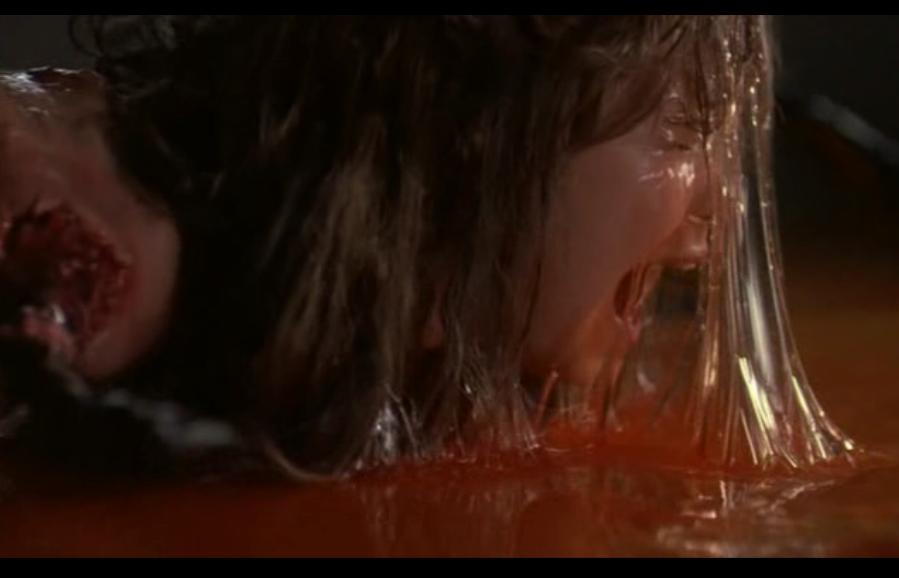
4 is also the last of the Nightmare films wherein Freddy is still scary. He endeavors to keeps his quips to a minimum, and we're not expected to "kind of" root for him. In all future installments he's all self-aware and hammy but for The Dream Master, even though he wears hipster shades when crashing Alice's happy place, he has very few actual lines and more truly disturbing moments like seeing a girl wind up face down in a glue trap next to some dying roaches, with Freddie's face peering in like the cat in Incredible Shrinking Man. Most all of us have killed roaches or mice at one time or another, after all, and maybe we had a flash of compassion but shut it out of our conscious in order to get on with our day. Suddenly we're seeing ourselves from the glued-down perspective, the terror and horror of being trapped with other dying and dead insect souls and the callous deformed monster slowly crushing the box down from above you, reminding us that instead of being the good shepherd as Jesus intended, humans are the Freddy Krueger of the animal kingdom.

Did I just mention Jesus? I'm amazed no teenager thinks to try that approach. Good lord, I have, when fearing the Goatman at Presbyterian Camp in the Maryland Woods circa 1981, we all slept with our bibles like they were lifesavers at sea.

Alas, hardcore horror fans don't like 4 so much because it sacrifices real bloody, traumatic scares and gore for grotty sci-fi special effects but I like that there's a refreshing shortage of trite explanations and unnecessary roughness. Instead: Sarah Connor / Karate Kid 3 levels of soul energy transference and sudden nunchaku know-how (a precursor of Neo's Kung Fu implants in The Matrix), trigonometry exams with slithering numbers (been there, bro), Freddie attacking and killing most of the B-list survivors from Elm Street 3--the original Dream Warriors--before moving onto a girl named Alice (Lisa Wilcox) suffering from a dysfunctional (drunk embittered dad) home life. I relate, and love it all. Supported by some well-etched casual friends and future Freddy casualties--the black girl brainiac asthmatic; the 'only in the 80s' big perm, spandex work-out queen; a protective brother who knows karate; his "Dream Warrior" girlfriend--there's none of the usual sleazy snickering of the jocks and backstabbing of the girls and brooding of the Depps overshadowing the graceful struggles of dear Alice. No time for it, really, so most everyone is pretty nice to each other. And how often do you get to see that in a high school film? Highlights include Alice going to a near-deserted Rialto and being sucked into a screening of Reefer Madness, where she meets herself if she never gets to leave her waitress job and gets old and cranky there, she watches as Freddie eats her screaming brother who's become a meatball on a screaming pizza and watches as everyone left in the theater applaud her special effect 3-D entrance (Freddie doesn't kill her because she's the conduit who calls in other teenagers for him to devour.

The first and only time I saw Dream Master before catching it yesterday on Syfy was at a very rainy and near-deserted, crumbling drive-in on a rain-streaked screen in the year of its release, with the soundtrack coming in through weird static on the radio (speakerboxes were long gone by then) me terrified leaving the radio on would drain the battery and we'd get stuck in this creepy place after the screen went dark, all while trying to break up with my clingy girlfriend in between steaming the windows, young and dumb enough to think that combo would work, and too young to appreciate the metatextual richness of the wind tearing through the trees, ripping the edges around the screen. I had a dream a few months later where I was a girl by a fountain on a sunny day, and Freddy was proving his love as a boyfriend by showing me his manicure --he'd cut the blades down to modest fingernails. I saw their shadow in the fountain waters. I was touched but still scared. I was planning to try and kill him or at least break up with him even so... but this gesture threw me.

And the first NOES had done the same--in the best of ways--my pal Alan, his girlfriend Germaine and I were bugging out for weeks, this being awhile before it became a huge hit. I've only seen it once since then. But now, with teenagerdom far behind me, I have had the DTs and been terrified to fall asleep, staying awake until dreams actually roared up to get me. I've suffered from the delusions and lived that weird trippy netherworld wherein you can no longer distinguish where safe 'reality' ends and the surreal anything-goes realm of dream begins. It's these 'when exactly did we fall asleep?' moments that make the NOES movies ingenious, and there's real meth madness in lines like "I can't sleep, someone might die. "

Long live the new flesh, Boom Boom
Consider in comparison, wanting to see someone actually die, going to the the movies for that expressed purpose. Consider the South Park episode called "Britney's New Look" wherein poor Ms. Spears is hounded to death by the paparazzi, and the medical establishment keep her alive even after she shoots off the top of her head, all just so they cam gleefully point out the breast augmentation scars visible in the hospital photos. The end reveals all of humanity is a variation on the enclosed communities of Dark Secret of Harvest Home and The Wicker Man. Each year a beautiful blonde girl is showered in jewels and affection that increases exponentially until she is sacrificed on the bloody altar, and her blood spilled in the fields to ensure a good corn harvest, and photo souvenirs.  These suicides of bullied kids across the nation carry a similar resonance (a sacrificial offering archetype), as if no legislation granting equality can move forward unless blood is spilled in its name. With recent anti-gay marriage vote in North Carolina a sad sign on just how close we always are to devolving into fear and suspicion-based group activity, i.e. sacrificing to ensure good corn harvests. Murderous social rituals like those in the Hunger Games or Shirley Jackson's "The Lottery" or what happened to some of my relatives in Salem in 1698 (1)  can't be far behind. (See also my piece on Dogville Vs. Monster from Acidemic #2!)


After all, sacrifice of one sort or another is inevitable, and at least if they're killing you that means they're showing you some attention. Better the kind of obsessive building desire that leads to the Ancient Rite of Sparagmos, than them leaving you alone to languish in the isolation of your upstairs bedroom and has-been stack of glossies. Adults tend to not take kids' concerns at all seriously, at least not in my day... unless we went ahead and (successfully) committed suicide. Only after you committed suicide (if you just attempted they'd only think you were trying to get attention) would your parents consider maybe sending you to a shrink. Psychiatry implied failure as parents up until the 90s and the arrival of SSRIs into the mainstream. But suicide is a way to avoid having to ask for help. The terror associated with not being able to prevent the clock from ticking, from mom forcing you to wake up and fill out your resume, making you get a job against your will --as a young turk afraid of your own shadow it can be so wearying that just bowing out early, before you fill out your first temp agency time card, seems like the smart thing to do, like deciding you don't want to go on the trip BEFORE you get on the bus rather than later, when it will be much harder to get home.

That said, the issue of suicide is creepier than most other deaths since it occurs usually alone and with time to think about what you are doing. BUT what if, for example, most of the deaths attributed to suicide are really dream murders, like the way Johnny Depp wind up hung in his prison cell while asleep in the first film? Parents have no clue. They think everything is your fault anyway, so naturally a dream murderer would escape judgment and you'd be blamed for your own death even though you never considered suicide ever in your life.

And that, my friends, is what Salvia Divinorum feels like. You can finally hear your death in the creaking of the floorboards.


WAXWORK is another 'great' teenage horror film from 1988 that, like Dream Master, understands the concept of 'lucid viewing' and the way courage hinges on 'suspended imagination.'

One day a weird Tudor suburban building in upscale suburbia appears with a sign on the lawn: 'Waxworks.' David Warner skulks by the sidewalk, inviting loitering high schoolers over at midnight for a stroll through the displays. After some routine drinking, smoking, and unrequited romantic longing, the clique heads over to check it out. A little person greets them and offers them drinks which they're dumb enough to refuse.

Any high school kid passing up a free drink deserves what's coming.

They're each sucked into a separate tableaux adventure, often from familiar 'barely concealed for trademark reasons' monster movies, including: Curse of the Werewolf with Raiders of the Lost Ark-fan favorite John Rhys-Davies in the Oliver Reed role (and the human visitor looking up when he's first thrown into the world and saying, good-naturedly, "all right, who put acid in my drink... again?!"); there's a Night of the Living Dead adventure, in black and white; De Sade with his whip and drunken attendant lords and lashed ladies (a composite of Jess Franco movies?); and a very Anne Rice-ish bunch of sexy vampires brooding over their strawberry jello. The unentered displays include the usual Aurora monster model dozen, but also: Freaks, Little Shop of Horrors, Invasion of the Body Snatchers, Jayne Mansfield's car accident, a guy in bandages forcing a tube of gasoline into a girl's mouth in a very unsettlingly sexual/misogynist manner.. I'm sure I'm forgetting some and it's very impressive, a lot more work put into these things than really necessary. Somebody loved them, fed them nightshade... (Silence of the Lambs was still three years on and if it wasn't you can bet there'd be a waxwork). 

As for the cast, Zach Galligan as the lead isn't my type (I can't stand that type of upturned little pisher nose job that my fist just longs to flatten, here exacerbated by oily hair and a paunchy beer drinking bloat) but there's an aristo nympho (Michelle Johnson) and a virginal one (Deborah Foreman) who gets her first orgasm being flogged in the De Sade exhibit, and right there I would have loved this film as a kid who was cultivating an S/M philosophy (see my McSweeny's high school memoir piece on the Velvet Underground's "Venus in Furs" here). So, Galligan's punchable nose aside, the Waxwork kids are pretty cool (including future Twin Peaks star Dana Ashbrook --he draws the werewolf episode). Most of them smoke and don't give a shit about your petty morality (there was no minimum age for smoking back then and most junior high schools had smoking areas) and neither does the cop who winds up entombed in the mummy exhibit. Ooops! But I guess telling you counts as a spoiler but not really, since the whole film is about the joys of the spoiler process, like an early predecessor, along with the Nightmare series, of the Scream films, wherein the terror isn't abated but actually enhanced by the characters already knowing the plot, and aware they're stuck inside a simulacrum (see Mecha-Medusa and the Otherless Child)

The looser vignettes can fall on the confused side of campy (the werewolf beginning with its Cushing-esque hunter makes you think we're headed in a goofball Monster Squad direction) but there's a scene of eating flesh and drinking blood under the rule of a brooding vampire who looks eerily like Tom Cruise as Lestat--though that movie was six years away--and another dashing hunk-type could be the Gerard Butler Phantom of the Opera--so the waxworks hold future horror icons as well as past. A major highlight is that the big climax is an all-out brawl between the locals and all the released monsters: Zach duels with the pleasantly jaded marquis like he's Robin Hood, tosses the midget from Freaks into Audrey from Little Shop of Horrors, encounters a vague version of H.R. Geiger's alien and a pod person coming out of their pod, and a black voodoo guy right out of Banana Splits' Danger Island comes roaring up for a fistfight. Dirty Harry shoots off the head of a bat. Those are just the ones I wrote down!

The trick to survival inside any film is to realize that you're just a character, an archetype inside the bigger picture, so play your part well and if you die, deliver a first class death scene (see my piece on Scream 4 here). We all have the ability to be cool in a crisis; as Tura Santana once said, "you don't have to believe it, just act it!" But if you keep doing that for too long you become like the kid who can't uncross his eyes. Suddenly the script is flipped and you can no longer return to the safety of the seats because there's no longer a seat to come back to; the tabloids denounce you as a sell-out, a has-been / never was. You disappear back behind the veil of the image within the image, a sad clown poster in the dorm room of a college kid in a movie being watched on tape by a dude being filmed for a reality show that will one day wind up on the internet, where it will be used in a multimedia collage, seen later by you, clown. Zap! A clown on a post-modern mirrored hamster wheel, that's you! Dance, clown, dance through your tears!

Suspended imagination is not just the key to courage, then, but to immortality!

Though there's no escape you can still make a move to escape the abstract distance you've set up in yourself, to shuffle off the mortal coil of fear and come to grasp your true power as one who has seen these movies before and knows how to anticipate danger and make sure that at the very least you're not dying without a close-up and a farewell monologue to have them weeping in the aisles. Deborah Johnson's masochistic awakening at the hands of the marquis in Waxworks shows she's got a fine grasp of this idea, for the S/M pleasure is derived from complete surrender, and surrender comes with many bonuses, not least the ability to transmute pain and fear into ecstasy and submission (the other ladies in attendance can only wince in jealousy). She knows where her desire is leading her, and it's a trap built just for herself, so why shouldn't she die right in? It's Stockholm syndrome writ so large upon the soul it becomes a perverse new kind of spiritual transcendence. Each lash cuts through the veils and layers of image until the whip comes right out of the screen like a newborn baby.

This De Sade thing is clearly my favorite part. I love his good sportsmanship in the final duel, letting Zach pick up his sword rather than kill him when the moment arises; his casual mention that he's given Deborah her first orgasm, and his departing line--"don't look so smug, boy!"--would have been a good note for Zach to take home with him after the shoot wrapped. Deborah Johnson gives it her all in these scenes, and her subsequent transformation from virgin to orgasmic submissive and struggle back from the dark side to 'normal' teen reality is richly felt and makes her a true 'lived-in' heroine, from a stereotype in bad 80s hair to a more fully-developed character... with sexy wet hair.

I  kept trying to imagine what would happen if Johnson's character, post-orgasm, was summoned from the Waxwork tableaux and across the multiplex and into the dreams of Elm Street 4. What if she submitted to Freddy's claws the way she submits to De Sade's lash, with open arms and heroic disregard for her own life and death? Would that destroy him? Would he get that manicure? Isn't that the only way to really ensure you don't get reincarnated, in the Buddhist sense, to not tremble or wince or waver from your rending, to love your demons even as they tear you limb from limb, until all that remains is just the witness, the viewer, the mad I AM at the center of the void?
.


A similar transfiguration occurs with Debby Harry in Videodrome (1983), where she's drawn into the simulacrum by the promise of masochistic sensation and desire, and ends up incorporated into the media itself. What a fine double bill it would make with Waxwork! 

The masochistic response is an innate part of horror film viewing (you are strapped into your chair and powerless to change the events unfolding before you), as discussed in the works of Steven Shaviro (see his awesome book The Cinematic Body) so you might as well roll with it like Slim Pickens on an A-Bomb rather than Dan O'Herlihy in Fail Safe. When all the rats are swarming into the lifeboats, jump out of one instead, just to spend a few more moments with Leo Di Caprio. Ride out to meet Blue Nose to offer him life or death with perfect cool if you're The Outlaw Josey Wales. Move towards death, unafraid, and death shall be shocked and take a step back, and maybe realize he's at last found a partner in the darkness, someone to make the blood brothers' peace with, to race with purple lips towards icy kiss like Frederic March and Evelyn Venable in Death Takes a Holiday (1934), or Kristen Stewart in Twilight.

Until that rare love manifests, kids will be afraid of the dark, even as they rush backwards towards it. They're terrified of someone infiltrating their frail suburban home, of finding themselves stuck inside a slasher movie unable to wake up or get out of their blood-signed contract, even as they long for escape. It's one thing to be master of your mise en scene--like Sherlock Jr. or the girls in Daisies-- it's another to not have any control over it even as you realize it's just a movie. So next time someone's texting in your peripheral vision, don't be afraid to strike, dear mistress, and cure his heart. Just make sure you know which side of the screen you're on, while it's still possible to tell.

Monday, May 07, 2012

22 Films that prove 1933 was the greatest year for classic movies.


Everyone cites 1939, year of Oz, Wind, and Grapes, as the best year in the history of movies, but not Acidemic. Here we know the best year was 1933, wherein we had more genuinely subversive, insightful, free-wheeling, gutsy, stunning, transgressive and revolutionary movies than ever before or since. How is it true, even, that 1933 was hipper and more socially progressive, more downright dangerous, than 1939, or 1968 for that matter? The code, of course, and the Depression, and a savvy new breed of American, the modern era WW1 'forgotten man,' still struggling to find his niche. There were no hand rails like welfare (started in '36 with FDR's New Deal) or Social Security ('35). People were starving in the street as a matter of course, so no one was going to bow to some goddamned moral minority sermonizing. Nothing like hunger and despair to open one's eyes to the hypocritical racist and sexist undertows of the old-fashioned 'small town' picture. Add the bevy of Broadway wits lured to Hollywood by big bucks and the new era of sound, all able to circumvent the production code of the time (barely enforced) by their mastery of double entendres and there you were, the peak of Hollywood's luminous gutsy depth.

Oh, and in 1933 prohibition was repealed! The first joyously fulfilled promise from the newly-elected FDR, who, America could feel with a giddy rush, was going to deliver the New Deal he promised.

Filmmaking itself had also reached new heights: sound recording issues that plagued films in 1930-31 were all solved and cameras were fluent and free. Actors didn't have to stand very still and leave space between... each... word; the letters they were reading from were no longer soaking wet so as not deafen with their crinkling.  It was this magical year that was so great it aroused the ire of the Joseph Breens and Catholic Legions, who in 1934 would insist on enforcing their provincial, sexist, racist, classist 'moral' 'ethics.'

And of all the studios, Paramount OWNED 1933: Cary Grant, Frederic March, and Gary Cooper at their most luminous, young, and gorgeous; Marlene Dietrich, Mae West, WC Fields, The Marx Brothers, Franklin Pangborn, Miriam Hopkins, Maurice Chevalier, directors like Mamoulian, Lubitsch, Cukor, Von Sternberg, to name but a few... to see that old mountain with the clouds and stars as a 1931-4 film is starting is automatically to relax into that special cinematic zone wherein you know nothing bad can possibly happen to you...

The 22 awesome films assembled here range from the delightful and cheery to the hard-hitting. There are some from Warners /Vitaphone, RKO, MGM and UA... but the studio who really nailed the formula for delicious surrealist comedy of 1933 was, and shall always remain, the mighty mountain. Salut!


1. DESIGN FOR LIVING (Paramount)
Design for Living (1933) centers around a "gentleman's agreement" that there will be no sex between sketch artist Miriam Hopkins and playwright Frederic March and painter Gary Cooper. There's a very good reason for this: they like each other so much, they don't want to fuck it up. American ex-pats in 1930s Paris, they all meet on a train, so neither March nor Cooper can claim to have seen her first and have any 'finder's rights' and Hopkins refuses to choose one over the other. She is 'very fond' of both, so the agreement is she will be a 'mother of the arts' and spur their work while spurning their advances. But once March is off to London to shepherd his play's West End opening, Hopkins takes Cooper into her boudoir to console him over their mutual loss, and beds him for, after all, she is "no gentleman." From there, it only gets wilder and funnier, especially once Hopkins runs off to marry Edward Everett Horton who proceeds to try and bore her to death.

This movie is still ahead of its time as far as cool-headed artistic approaches to trans-pair bond love affairs. The next closest thing to it would be 34 years away and a song, David Crosby's "Triad." After that the closest thing to it is probably the unspoken relationship fluidity between Meryl, Christopher and Bobby De Niro in The Deer Hunter. Know too that this film was so 'hot' it was banned from being revived and wasn't seen until pre-code festivals began to make the rounds of select, cool theaters like NYC's Film Forum in 2000. In 2000, finally, the public was ready for what only 1933 hitherto could handle.


2. KING KONG  (RKO)
Like so many of us hardcore film fans, I was lucky enough to catch this alone with my dad on afternoon TV once upon a time in the late 1970s. He made a big to-do over it, like the film might be too intense for my little 10 year old brain, but he'd be here to guide me. I loved weird old black and white monster movies of course, and so did my dad, but King Kong was in a class by itself. I remember being bored and anxious at first, because the film takes it's sweet time getting to Skull Island, but once Kong shows up, forget it, my lust for dinosaurs and good monster fights was gratified a thousandfold. It was like entering a super intense waking dream. That afternoon stands as a pinnacle moment of my film-watching life, and surely my dad's sharing of this film with me is part of the reason for this blog today.

Of course since then I've seen it so often it's practically part of my subconscious. I can tell you about miserable summers as a 16 year-old, watching it over and over with the fan blowing right in my face, and taking a long uphill bike ride to shake out my depressive angst every hour or so, and my brother walking through the room with his buddies and seeing me watching it, coming back a few hours later and I'm still watching it, again, and him thinking damn, what happened to my cool older brother and me being like, shut up Fred...rama rama! Kong !


3. SHANGHAI EXPRESS (Paramount)
What better place to ride from Peking to Shangai than in a first class train compartment with two high-rent courtesans like Lilly and Anna May Wong?  Dietrich is at her most luminous and morally ambivalent, and incredibly cool; her crazy black feather outfit fulfills the promise of all the slinky black snake and feathered collar femme fatale costumes that Edith Head and her ilk had been stitching since the silent era.  There's great business with Dietrich turning the tables on the old Professor Henry Davidson type and counter-snubbing an old lady with a dog, but even better is her teasing treatment of brooding British military doctor C. When he tells her he tried to forget her she replies, eyes wide like a child's, "Did you try, very hard?" I wouldn't be able to forget her either, but I don't really try... very hard. And Anna May Wong was never lovelier. (Note: This film is now listed as being from 1932, but I swear used to be listed as '33, and has always been so in my heart).


4. ISLAND OF LOST SOULS (Paramount)
"..The big highlight is the climactic showdown between the two biggest hams of the 30s: Bela Lugosi as the keeper of the law going against the whip-snapping Charles Laughton as Moreau. Lugosi-- beaten down, hunted, despised, forced to endure untold hours of daily make-up application, brought to heel by bad negotiations with Universal--brings several lifetimes worth of rage to bear and Laughton's hamming. Laughton, matching Lugoisi's floridity with a gradually eroding bed of fearlessness. (click on link above for the whole, rambling essay)


4.5 ALICE IN WONDERLAND -- (Paramount)
Unscreened since 1933, until very recently, this Joseph Mankiewicz scripted bizarro world all-star cast film is too dark and strange for young children but just perfect for tripping adults, and as funny and disturbing as a 10 year-old's fever dream after eating too much before bed. Cary Grant takes full advantage of being unseen under a mock turtle shell to deliver a truly unusual crying-singing rap reminding us he was once belting out jokes and pratfalls in Vaudeville, Gary Cooper is laconic and hilarious as a woozy knight, W.C. Fields a wise 'crackin' Humpty Dumpty, and on and on until the final insane party sequence that's about the most accurate depiction of a bad trip or K-hole I've ever seen. Bear with its slow start and let its gradual dream reflection (Alice's journey begins with stepping through the parlor mirror) suck you in...
-----------------

5. DUCK SOUP (Paramount)
So many great bits--the popcorn stand war; the real war; the mirror scene; the buxom Ms. Marquel; Chico and Harpo as spies against Freedonia ("Tuesday we a go to the baseball game, but he fool us, he no show up"); the amazing opening song; the barking dog tattoo--that it's the crown on the peak surrealist champagne and reefer heights that was 1933 Paramount.


6. I'M NO ANGEL - (Paramount)
7. SHE DONE HIM WRONG (Paramount)
1933 saw both of Mae West's greatest movies appear, as if the icing on the pinnacle of 'getting away with murder' cake. Both films are witty, solidly made (much like the babe herself), and written with the saucy double entendre and warm wit of the premiere lady of the game. And who doesn't love the tales of West and Dietrich swapping their young proteges like Cary Grant and Gary Cooper back and forth between their  neighboring dressing rooms whilst engaging in 3-ways and lesbian trysts during lunch breaks? Paramount RULED!
 

7.5: SNOW WHITE (Paramount - Fleischer studios)

In true pre-code, reefer-smoking, laudanum-quaffing glory, everything in SNOW WHITE is alive and wriggling and swathed in the groovy music of Cab Calloway and his Orchestra.Considered to be the best and most surreal of all Max Fleischers's pre-code Boops, SNOW WHITE's highlight is when Cab sings "Saint James Infirmary," with plenty of dynamite "Hi de Ho" and his lanky white tuxedo-ed frame rotoscoped into the figure of a twirling dancing ghost with improbably long legs, accompanied by swirling phantasm chorus in the hell/underground/uptown jazz joint, "The Mystery Cave."


8. INTERNATIONAL HOUSE  (Paramount)
The love story began when I was a 15-year old monster junkie, scouring the TV Guide for things to tape and watch obsessively to fill the hours of a lonesome adolescence. Out of desperation I taped INTERNATIONAL HOUSE because it had Bela Lugosi in the credits... and of course I fell instantly in love with W.C. Fields, Cab Calloway, and the whole pre-code saucy comedy genre in one collective cupid arrow burst. A few years later, I brought my VHS tape of it to college and my drummer Max and I watched it nightly while pounding bourbon and playing Blind Blake songs on our gee-tars. Decades later and we still have long conversations set to the Vaudeville rhythm of Burns and Allen ("You had a raffle for poor old woman!?"  / "And he won/" / "And he won, oh I see, you people live like fools.") And of course there's W.C. Fields at his most insane; to drink along with him in this movie is to know a rare anarchic joy, and then to pass out... and scabby-kneed street urchin "Baby" Rose Marie sneaks up to steal the rest of your bottle and sing "My bluebird is singing the blues." A little girl belting the down and dirty blues with the voice of a 50-year old smoker, Baby Rose is undoubtedly the inspiration for the dancing moppet singing the "Reefer Song" in Day of the Locust. (Interestingly a variation on the "Reefer Song" is sung right before her appearance in the film - hell yeah Nathaniel West loved this movie!)


9. BABY FACE (Warner Bros.)

Abused and pimped out by her beer hustling father since the age of 14, Stanwyck's 1933 pre-code heroine could be forgiven for having a bad attitude, but a German cobbler drops by the speak to drink some beer and read her some Nietzsche so at least she has a goal in life, 'USE MEN!" Since she's hot, ruthless, and canny, she slowly climbs the building like an inside job King Kong until finally a guy young enough and rich enough expects her to give up her bling when he's caught with his hand in the cookie jar... say what!? 


The censors didn't want young women finding out about the cobbler's prescribed kind of power so they edited out the scene with that book and inserted a letter instead saying she'd misunderstood his teachings and was a big disappointment for being so ambitious and super slutty. HarumpH! Zey lie! The point is, the Superman is triumphant! The 'real' version has been recently found and restored!   (Photos courtesy Matthew Gallaway)


10. WILD BOYS OF THE ROAD (Warner Bros.)
One of the most absorbing, clear-eyed, unsentimental pieces of social realism ever made, and it pre-dates Grapes of Wrath (1939). It's the Over the Edge (1979) of the Depression, telling the tale of the "children of the forgotten men" — boys (and some well-concealed girls) who leave their starving families behind (so as not to be a burden )--- who ride the rails in packs, hurling rocks and eggs at the railroad bulls who try to stop them, beat them, and in one case rape them (a very intense pre-Code moment). Frankie Darro begins the film with a slogan-covered jalopy, supportive high school chums, and loving middle-class family. Believably and painfully he loses all that to the Depression, and eventually becomes the rogue leader of  100+ wild-eyed children living and starving on the rails, in shanty towns and on the streets. He's one little Piggy short of being Lord of the Flies, but buoyed by an innate sense of group support and the dim remnants of middle-class decency. And you care every second of the way because Darro is neither a simpering Freddie Bartholomew type, a blubbering Jackie Cooper type, nor a snickering Dead End Kids type. He's just a smart kid trying to do the right thing, looking after his own and leaving any sensitive viewer completely devastated.


11. DINNER AT EIGHT (MGM)
I watched this film a lot when I was really, really, really beginning to descend into the round-the-clock drinking abyss, and I'm glad it was there to sink into the mire with me. If you drink along with the Depression era-sorrow and small triumphs and wallow in your own self-pity like the swine you are the film glows like a lamp in a flop house doorway, especially if the girl you're pining for happens to be named Paula and look a lot like Madge Evans (above), who plays a Paula pining for John Barrymore, near end... a swell funhouse mirror reversal! I watched this every night, drinking and retching along in sympathy as Barrymore's shakes continually threatened to rear up and destroy him... until finally he beats them to the punch.

First though, you can nod out during the long, drawn-out conversations with ill shipping magnate Lionel Barrymore asking former siren of the stage Carlotta Vance (Marie Dressler) to not sell her stocks to a corporate raider (bullish Wallace Beery). The raider's wife meanwhile is a hot-to-trot bimbo (Jean Harlow in some truly shiny sleepwear), with a yen for her doctor (Edmund Lowe), who'd rather not but likes the promptness of payment. And, oblivious to all the suffering and real time issues going on around her, Lionel's chirpy wife Billie Burke freaks out because she "got the Ferncliffs" and the aspic isn't just right and all the other stuff that bourgeois pretension-suffering perennial dinner guest scribes like Herman J. Mankiewicz and Frances Marion wrote for her to say until you just want to punch her and shout "your shrill pettiness is killing your husband and your daughter Paula's chasing after a drunk former rock star named Erich, I mean actor named John, I mean character named Larry Renault!" And then grabbing the sherry or port or whatever she has out and draining it in a single swill.


12. QUEEN CHRISTINA (MGM)
In this list of best films of 1933 we've got big gutsy strides in depicting race issues, child endangerment, drug use, alcoholism, sexual misconduct, and homosexuality, so why not a drag king... of Sweden? When I spent many nights circa 1993 drinking heavily and watching this over and over and sobbing to Garbo's big speeches about war ("I will have no more of it!") and abdicating in the name of love, and riding through the snow dressed as a young noble, and possibly dallying with a young female ward (above) and then falling in love with a dude who for awhile thinks she's a dude. Now I wonder now how many girls I showed that movie to thought I was using it to tell them I was gay, or maybe I was closeted even to myself and this was my way of trying to tell myself to come out? Who knows what our movie choices say about us? All who have fully developed souls generally exhibit characteristics outside of their specific gender's own narrow conscription. To not embrace a side of you just because it's not part of your persuasion or gender's toy box is, how you say, to pussy out? That said, I've never been able to get back into this movie now that I'm sober, and heterosexually laid past the point of exhaustion.


13 GOLD DIGGERS OF 1933 (Warner Brothers)
 (from Film Experience - on Gold Diggers: here)
Opening with hot chicks (including Ginger Rogers) naked behind gold coins singing "We're in the Money" in Pig Latin, GOLD DIGGERS is as savvy and hip a denouncement of the status quo as hard times can produce. Robert Dudley (the Weenie King!) plays a producer who wants to put on a show about "men, walking, walking, hungry, jobs! jobs! jobs!" (but he's yet to be 'cheezy with money'). Heart-of-gold-digger Joan Blondell, comic beanpole Aline McMahon, and normie Ruby Keeler (as always, assigned to sing and smooch with 'juvenile' songwriter Dick Powell), get in on the ground floor. Of course it turns out Powell's a rich kid pretending to struggle in the Village rather than bust open his trust fund and live a little, but he's got no problem bank-rolling the show, leading to--hilariously!--the entrance of beloved rogues Warren Willian and Guy Kibbee as his concerned wards. All they need is some emotional blackmail to get them swinging on a star....and soon they, the girls, and us are all heaven-sent, and ready to give it all back up for that Busby Berkeley-choreographed poor forgotten man walking, walking, hungry, jobs! Jobs!

14. HOLD YOUR MAN
Jean Harlow finds out she's pregnant via hood Clark Gable, but she's in jail by then and a martyr so doesn't tell him. Stu Erwin wants to marry her and move her to some bo-hunk town when she gets out of stir but no way. See, there's only one guy for her - and he can't visit her in the clink as he's wanted himself, see, for a crime he did commit! See? George Reed (THE GREEN PASTURES) is the black preacher father of fellow inmate Theresa Harris (Alma in I WALKED WITH A ZOMBIE) who sings "Saint Louis Blues" while the girls relax after a hard day steam-pressing shirts.

HOLD YOUR MAN gets me deep in the gut because everyone is redeemed at the end--even the romantic rivals and prison warden--and not in a humorlessness Loretta Young kind of way, but in a genuine caring, cliche-defying way.  When Gable cries to Reed in the chapel, I feel redeemed --every time - and mister, I'm a hell of a sinner. That HOLD YOUR MAN was written by a girl (Anita Loos) doesn't fully explain the incredible compassion this film offers, but it's a part of it. How often do you come away from a tough, never once maudlin, pre-code women's prison picture feeling truly optimistic about humanity? Just this once, baby.

 
15. THE EMPEROR JONES (United Artists)
Robeson's big 'signature' film (and his last, at least in the US), written for the stage by Eugene O'Neill. A dark mirror to Robeson's quest for dignity and justice for all, Brutus Jones was how we assume white conservatives imagined Robeson, i.e. a strapping 'buck'-wild monster who can't be stopped except with a silver bullet or a passport revocation. In real life Robeson was far more political, sober, and idealistic, and a Communist, while his Jones is the dark Col. Kurz-style heart of amok capitalism. Slang for withdrawal cravings, "Emperor Jones" was where, among other things, the first time we saw a black man strike a white man and get away with it. Awesome! Of course the nervous distributors ended up cutting those moments (partially restored since) but it's still an impressive 1933 pinnacle of (then) gutsy taboo-busting we wouldn't see again til 'the slap hear round the world' in Heat of the Night.


16. THE NARROW CORNER (Warner Bros.)
You never know which classic authors are going to age like wine, and which to vinegar, but the South Seas commonwealth parables of W. Somerset Maugham have become particularly potent wine and THE NARROW CORNER is the good stuff you keep for yourself. Why is it so forgotten compared to, say, the self-absorbed forgotten man badgering of THE PETRIFIED FOREST? Where Leslie's maudlin rambling smacked of self-pity, Maugham's dead-eyed stare into the riptide (where life is wrest from us as a berry from a branch by a half asleep Mexican gardener) is heroic to the max. The role of the wan Brit boytoy who has to take it on the lam out of Australia when he kills... ahem... the lady's husband, is perfect for this very young man of Hollywood royalty, Douglas Fairbanks Jr. We can see in him the natural actor who's absorbed everything he saw and heard from his upstairs bedroom air vent as a spoiled child in the thick of his dad's silent era decadence and brought it to bear on this peevish dork of a character who hates the women who fight over him, because then he has to kill their jealous husbands and fiancees. And the best character is a debauched doctor (Dudley Digges) who tells his trusting Chinese servant how many (opium) 'pipes' he'll have that night, "Seven pipes tonight, no more no less."

17. MYSTERY OF THE WAX MUSEUM (Warner Bros.)
For a good 70 years or so there were two Warner Brothers attempts at sophisticated horror, this and 1932's DR. X --both were pretty hard to watch, thanks to poorly preserved (and very early) two-strip technicolor since run to muddy red. With DVD and digital restoration however we can dig the films' ghostly colors in their true glory and enjoy the art deco expressionist high strangeness on display. Both films star Lionel Atwill as a possibly evil mastermind, and a nubile young Fay Wray and both are nearly sabotaged by dated cornball snappy wisecracking journalist comic relief / investigators. But age has again been kind, and it's especially interesting to see Glenda Farrell as the reporter in WAX, outsmarting the men, stealing bootleg liquor from coffins, and following leads with tenacity, until, alas, she decides to marry Frank McHugh's repulsively chauvinist senior editor and start darning socks. Even worse is Lee Tracy in DR. X, though that's technically from 1932; but again, the moody atmosphere makes up for the dated humor, especially now that the colors are back, and so eerie (all turquoises and ghost pinks) you can nearly faint from pre-code ecstasy.


18. THE STORY OF TEMPLE DRAKE (Paramount)
"Hopkins is Temple Drake, the pleasure-seeking debutante granddaughter of a respected southern Judge (her dad was killed in "the World War"). Her date for a country club party gets drunk and crashes their car in the rain near the drippy farmhouse of bootlegger Irving Pichel and his wife, Ruby (Florence Eldridge), who live there with the requisite (for Faulkner) idiot manchild, Tommy (James Eagles), and their baby (Ruby keeps it in a box so "the rats don't get it"). Staying at the house, playing cards til the rain stops are some creepy gangsters from the city, including the greasy and virile Trigger (Jack La Rue). The moment Drake's eyes lock with Trigger's, it's on... " (read full review here)


19. OUR BETTERS (RKO)
One of my favorite recent TCM discoveries, this has great saucy dialogue and sophisticated ideas on lover-swapping betwixt American-born heiress Lady Grayston (Constance Bennett), her voracious duchess pal Minnie (Violet Kemble-Cooper), and their shared gigolo, Pepi (Gilbert Roland). A weekend in the country is called for, REGLE DU JEU-style, wherein Grayston hopes to get it on in the poolside bathhouse with Pepi and placate Minnie with the guest of honor, a fey dance instructor named Earnest (the hardest-to-get house guest in the whole of upper crust London!) Meanwhile Anita Louise, Alan Mowbray, and others look on, askance.

George Cukor--as few have before or since--really shows how the right gay male at the right time makes any party ten times better and Earnest's last act entry really kicks home the idea of a weekend party's hungover Sunday. Maybe you know the feeling: you've had a great drunken time but now its Sunday afternoon and as you think about the drive ahead and struggle through a cup of coffee and a grapefruit you can barely remember how and when you may have made a fool of yourself the night before. You're anxious to leave before brunch so you can get home to your private bar and video collection, but are stopped on the way out by the late arrival of the very person you'd been hoping would come the night before. This late arrival's lack of connection with last night's damage makes him or her like an embodiment of fresh starts and forgiveness as he or she just starts rearranging everyone's mood even as the butler's taking your bag out to the car. So who laughs last? Call Earnest a stereotype, but he's delightful and even gets the priceless closing line: "There's no finer sight in the world than.. two women of title, kissing each other!"(more)


20. HALLELUJAH I'M A BUM (United Artists)
A pre-code salute to vagrancy, anarchism, and the days when Central Park was a refuge for depression-era homelessness, Lewis Milestone's delightful film is crammed with half-spoken Rogers and Hart songs lamenting the amount of work it takes to remain unemployed ("You own the world / when you don't own a thing"). There's enough economic savvy and cool Central Park set design here to make it both Brechtian and bucolic, an AS YOU LIKE IT with Central Park as Arden and Jolson the swaggering Mack the Knife from THE THREE PENNY OPERA if he was played by a balding, gap-toothed Marx brother; with the evil duke a thousand dollar bill Jolson finds in the trash --the very rumor of which sends the park's unwashed denizens into a near riot. Hard boiled softie newspaper man-turned-Broadway scribe Ben Hecht wrote the shit out of it-- imagine the Lubitsch touch on a SCARFACE spittoon. One of the many awesome little joys is hearing Frank "The Wonderful Wizard" Morgan saying "there's no place like home, there's no place like home, there's no place like home" six years early! Truth is, Oz or no, there's no place like 1933!


21. THE PRIVATE LIFE OF HENRY VIII (London Film Productions, Ltd.)
Let's not forget, at the last moment, dear old England! Charles Laughton's hammy royalty finds a perfect framework via director Alexander Korda's painterly direction. Born to play the portly voluptuary king, Laugton is full of schoolboy-on-a-bender gusto, and wears the crazy costumes with the comfort of, say, Jeremy Renner wearing a bomb-proof jacket and helmet in THE HURT LOCKER. For this kind of film, characters need to stand very still, like tarot cards, while lighting technicians fuss over them as grooms of old. It takes a certain imperiousness to pull off and Laughton nails the royal spirit down to the last nuance while still being “real” and alive with wit and sauce, though heavy and laden with furs he all but floats off the ground he's so spry in his step.


22. BOMBSHELL (MGM)

Playing a loose conglomerate of Clara Bow, Thelma Todd, and herself, Jean Harlow comes through in metatextual spades here as an overworked MGM starlet, earning her place at the top of the spitfire heap with rapid fire slang-filled dialogue pouring in satin torrents from her tongue as she goes zipping, 8 1/2-style, through a carnival of blustery studio heads, make-up artists, insurance fraud grifters, drunken joneser fathers (Frank Morgan, partying like it's 1899!), an accented gigolo lover, an infatuated director (Pat O'Brien), and Lee Tracy, as usual, an unscrupulous publicity agent.

There's something inherently unlikable (to me) about Tracy, but he sure can talk fast and believably think on his feet. Even when he apologetically comes to tell Harlow he's been fired on account of her complaints you don't notice his emotions, you just stare at the ferocious meta-amphetamine insect anger in his sharply slicked-back hair. It forms--in the excellent TCM transfer--a weird bi-level triple side wave-part. Too much information!

In order to appease Harlow and get his job back, Tracy must pledge to cease sleazing her up in the tabloids and instead put her onto the 'Home and Garden' page, dressing her up in frilly aprons, with forked potato in hand, longing wistfully for the patter of little feet. In a hilarious interview with a matronly journalist, Harlow holds her hands clasped together and gazes into the heavens, imagining the baby to come, then sets off to adopt one, ala Angelina Jolie, picking them out by the bushel like puppies.

ALSO: FOOTLIGHT PARADE, 42ND STREET, FEMALE, HEROES FOR SALE, LADIES THEY TALK ABOUT, NIGHT FLIGHT, CHRISTOPHER STRONG

Wednesday, May 02, 2012

Cinemarchetype #12: The Sage (Senex)

L-R: Ian McKellan as Gandalf; Richard Harris as Dumbledore; Nicol Williamson as Merlin; Alec Guiness as Obi Wan

The 'one who knows' (at least some) of the dark and light secrets of the world, the Senex/Sage finds the truth at the cost of petty human interaction. To achieve this knowing, first he must be free of the meddling and stale thoughts of the unenlightened, thus the sage goes into the wild to meditate and channel and commune with the plant spirits. He lives outside of the social order, all the better to teach the young warriors--or bullied teens or spiritual pilgrims or astronauts-- who seek him out, so that they might have both sets of tools--the social order and the outside/natural. He may bring harmony to these otherwise warring factions.
'If an individual has wrestled seriously enough and long enough with the anima (or animus) problem...the unconscious again changes its dominant character and appears in a new symbolic form...as a masculine initiator and guardian (an Indian guru), a wise old man, a spirit of nature, and so forth'. (Franz, Marie-Louise von (1978). "The Process of Individuation". 
In other words, when you've done 'the work' - as we say in AA - you can walk out of the swampy nest of your old anima incarnations and into the new freedom of a life with minimal internal/projected conflict. That you've been around the block, and lost your testosterone levels to old age, surely helps in this. And now you are ready to sponsor the younger version of yourself!


Aside from fantasy cinema where he's always around; I skipped a few for sake of avoiding redundancy, like Mr. Miyagi from The Karate Kid and Rafiki (above) in The Lion King. At any rate, the sage is a pretty rare character in modern film, maybe because a) there are so few in our fucked-up modern age --the TV,  draconian drug laws, trite marital codes and dumbing down of media sees to that, and b) he's left behind earthly desire, and enflaming desire is what non-fantasy film is all about! So how does cinema make him interesting? Pull ze string! His story must be told! In the end, its all about the actor, and the animator, or puppeteer. Rafiki

1. Ian McKellen as Gandalf
The Lord of the Rings Trilogy.


Frodo: It's a pity Bilbo didn't kill him (Gollum) when he had the chance.
Gandalf: Pity? It was pity that stayed Bilbo's hand. Many that live deserve death. Some that die deserve life. Can you give it to them, Frodo? Do not be too eager to deal out death in judgment. Even the very wise cannot see all ends. My heart tells me that Gollum has some part to play yet, for good or ill before this is over. The pity of Bilbo may rule the fate of many.

Perhaps in that lies the kernel of the sage's great wisdom --his sense of life and death is more genuinely compassionate, more wise than, for example, the ill-fated mercy gestures of Viggo Mortenson, who spares King Thoeden's sniveling turncoat advisor, Grima Wormtongue (Brad Dourif), and has cause to regret it. Gandalf sees too far into the future and past to be limited by momentary squeamishness or flashes of compassion as befall Viggo. Gandalf's mercy is a more long range brand, and it doesn't extend to fighting his charge's battles. The only time he really steps in is when there's a demon up to his level of skill, so it's more a fair fight, as happens in the climax of The Twin Towers. What a bearded sportsman!

 2. Yoda (voiced by Frank Oz) - 
The Empire Strikes Back (1980)
Back when Empire came out I was only 13 and Yoda became a training wheels guru. Hewas voiced by the man who also gave us Fozzie Bear and Miss Piggy, so it wasn't too hard to take him into our hearts. Was it an accident he looked a shriveled old Chinese kung fu master? We all considered Yoda the best thing about the film and Yoda fever took over. I can still talk like him! (my brother can too and we'd crack ourselves up saying "Teach you I will, eat you I will" ) Who's to say to what extent Yoda is the wellspring behind my generation's interest in things like yoga, meditation, and even LSD use?

If you ever see a kid trying to move something with the power of the force (see Mallrats), then you know the power and longevity of Master Yoda. While Ben Kenobi let himself get cut down by Vader in the first film, Yoda's too crafty to ever disappear, or even be anywhere specific, and it's with no shortage of bemused nostalgia that we finally got to see him fly into battle in Attack of the Clones, where he was once again the best part of the film, twirling through the CGI air like a hyper-ass curve ball.

3. Terence Stamp as Stick
Daredevil (2003) / Elektra (2005)

Maybe you have to be a Marvel comic book fan in the early 1980s, subsisting on a crumb diet of X-Men and Fantastic Four, to appreciate the neutron bomb force that was the moment Frank Miller took over full writing and penciling duties on Daredevil. Of course when Miller launched the next level of that game, The Dark Knight (for DC), I was  getting too old and drunk to read anymore non-underground comics, and the slick bled-page graphic novel paper (and racked up price) was a bummer to me as I loved the old newsprint smell. But the stint of prime Daredevil which saw the rise and sad slaughter (and fan-demanded rebirth) of Elektra--the hot Greek assassin--still lingers and now my generation rules Hollywood, so why did Daredevil bomb? And Elektra too? Why? Were they too moody? I like them both and amidst both is Terence Stamp as Stick - the blind sage / kung fu instructor and white ninja school operator. His breath of life brings Elektra back from the dead and that's why she gets her spinoff sequel - yer WELCOME!

Man, something about this sage archetype is regressing me to a very young and geeky time, let's fast forward to my jaded state of 1991..

4. TIE: Cecil Humphreys as The Holy Man
The Razor's Edge (1946)

The 1984 Bill Murray remake gets a little bogged down in craftsmanship but the 1946 version of W. Somerset Maugham's opus has retained its fleet-footedness thanks to Edmund Goulding's gift with soapy angst and a solid cast including the delightful Clifton Webb. All the commotion is a great prelude and post-lude to the mystical stillness of the mountaintop where Garfield learns at the beard of Cecil H.

Sam Jaffe -- Lost Horizon (1937)

"We believe in moderation," notes Jaffe, "a little bit of everything." Somewhere I have a poem about seeing Lost Horizon, over and over, high on Percocets this girl Kate sent me and an intense, hallucination-ridden fever after a drunken / Ritalin-spiked weekend trip up to Syracuse in the dead of winter (see my tale of hallucinating a demon in my bookshelf here). It was awesome, being delirious, sweating and freezing at the same time up on my twin bed (I'd boomeranged back from Seattle and was living in my old bedroom) and floating on Percocet and watching a VHS dupe of Lost Horizon on a small TV at the foot of my bed, the tracking streaks like footprints through safe, warm, icy snow on the voyage to Shangri La. And then of course, 'missing scenes' restored with sound and still photos only - which merely added to the surreal ecstasies, as to my hallucinating eyes the pictures' lips were still moving to the words. I still think of Shangri La as a magick place where, as Peter Gabriel once sang, they talk in pictures not in words.

All of which segues masterfully into Sam Jaffe as the Anti-Kurz, dwelling in the heart of lightness, and creating a nice paradise for tepid Ronald Coleman, until said Coleman gets cold feet and lets his sourpuss little brother drag him back down the mountain, all just so the brother's wife can age 100 years in front of his eyes. What a sourpuss, that brother!

Still, the brother had a point - Fuck Moderation!

 5. Nicol Williamson as Merlin - Excalibur (1981)

Another mystical keepsake from my past. My kid brother and I still quote Terry's weird Merlin voice from this film: "Behoooold tha sword of power!" and "A dream to some.... a NIGHTMARE TO OTHERS!"

Excalibur is convoluted enough that ten viewings later and I'm still noticing odd new details and connections; my dad loved the music-- "Siegfried's Funeral March" from Wagner's Parsifal-- and that kept his interest so he helped explain parts I was too young to understand during my first viewing/taping. Now that I'm Merlin's age the brilliance shines, with Williamson a weird half-human asexual elder god splitting the difference between metaphors and 'the real'--the human and the myth-- 'the dragon' in this case becomes a mix of 'the force', 'the matrix,' and the green man spirit of the woods, all tied together into a terrifyingly ambivalent intelligence. I've seen the dragon myself on wet streets at night and in the serpentine glistening of bathroom tiles...

6. Robert Morley as Andrew Undershaft ("Dandy Andy")
Major Barbara (1941)

I came to this movie very late in life, and it's easy to see why since G.B. Shaw's most famous work is Pygmalion which I find a tad shrill and misogynist. I love most of his other work though, especially this film adaptation, a covertly pro-industrial tract that finds the allegedly decadent Undershaft promting his capitalist ideology against his Salvation Army daughter Barbara (Wendy Hiller) and her Ancient Greek teacher fiancee (Rex Harrison). Tussling with him over his choice of fortune-amassing industries, namely arms, as his stodgy ex-wife laments "you can't trust someone who preaches immorality but practices morality," which is like my motto. He's full of wise oaths and bearded like the bard with a pop-eyed curiosity about nearly everything, and a refusal to get dragged into his bourgeois exes dogmatic drippiness, He and his daughter strike a deal: he is willing to grab a trumpet and march with the S.A. if she'll come to his armament factory. "You've learned something, my dear, and that always feels at first like you lost something." I cry every time. Morley's Undershaft is what I hope to grow up to be, not necessarily a weapons manufacturing titan but a guy who even as an aging father can stay in the moment and guide others towards it without real agenda or malice; and Rex Harrison has never looked sexier in his all black S.A. tunic, eyes alight with detachedly ironic religious fervor forty years before its time! And what's worse, the Criterion edition is CUT of the best Undershaft scenes (his showing Harrison his row of framed photos of ex-mistresses, what he has around instead of a wife, and man who amongst ye swingers can't relate?

7. Walter Pidgeon- Morbius
Forbidden Planet (1956)

Based around Prospero in Shakespeare's The Tempest, Morbius is an interesting example of the Lacanian non du pere, with its implied understanding of the dualistic nature of prohibition and enjoyment. For in the end, Morbius is all talk when it comes to prohibition. He verbally forbids the captain to land his craft, forbids his hot daughter to go visit the spaceship and flirt with all the crew, but she does anyway and Morbius doesn't discipline her or even seem upset. He listens to her swoon about boys and doesn't get all James Mason in LOLITA on her ass, which surprises and delights us. He listens attentively and withholds his opinion, hardly the actions of a typical 50s dad. And yet, almost to put on a show, his questioning and addressing her in the men's presence becomes patronizing: "Then my little girl never feels lonely or confined?" It's almost like he's posing as the 'anal father' when he's actually the wise sage and is just testing our hero's wooing mettle... like Sarastro in The Magic Flute! (To Dream some Impossible Tree Sloth)

Sarastro, bitches


8. Alejandro Jodorowsky as the Alchemist in 
The Holy Mountain (1973)
"The grave receives you with love. Surrender yourself to the Earth. Return what was loaned to you. Give up your pleasure, your pain, your friends, your lovers, your life, your past, what you desire. You will know nothingness, it is the only reality. Don't be afraid, it's so easy to give. You're not alone, you have a grave. It was your first mother. The grave is the door to your rebirth. Now you will surrender the faithful animal you once called your body. Don't try to keep it, remember, it was a loan. Surrender your legs, your sex, your hair, your brain, your all. You no longer want to possess, possession is the ultimate pain. The earth covers your body, she came to cover you with love, because she is your true flesh. Now you are an open heart, open to receive your true essence your ultimate perfection. Your new body, which is the universe, the work of god. You will be born again, you will be real. you will be your own father, your own mother, your own child, your own perfection." (courtesy IMDB)
Most cinema sages are either fatherly or cuddly or at least not terrifying, but real sages are probably so weird you want to shit your pants and run the minute you see them coming, their damned goats bleating behind them. As he leads a rag-tag group of castrati soldiers and military toy manufacturers up onto the titular mountain, Jodorowsky gradually becomes more human, but the sheer next level craziness of his vision ensures we descend much less so.

9. Edward Van Sloan as Van Helsing in 
Dracula (1931)
"For someone who has not lived even one lifetime, you are a very wise man, Van Helsing."
Like Dracula, he comes from the continent, and brings musty arcane knowledge to the relatively sane manners of GB. He easily outguns doubting skeptics like Dr. Seward, noting that "the superstition of today can become the scientific reality of tomorrow" and talks almost as slowly as Lugosi. With his overgrown crew cut, bottle cap specs, and hawk nose, old Van Sloan reminds me a lot of my late German grandfather and/or childhood physician, the terrifying Dr. Scherzinger.

10. Victor Wong as Egg Shen
Big Trouble in Little China (1986)

My favorite scene in this favorite John Carpenter film is when Egg Shen, having led Jack (Kurt Russell) and the crew through the underground passages to Lo Pan's secret lair, finds a handy bar and pours them all drinks from a special gourd. When Jack asks what it for, Egg says "it's a good buzz!" then adds this, quoted from IMDB:

Egg Shen: Can see things no one else can see. Do things no one else can do.
Jack Burton: Real things?
Egg Shen: As real as Lo Pan!
Jack Burton: Hey, what more can a guy ask for?
Egg Shen: Oh, the six-demon bag!
Jack Burton: Terrific, a six-demon bag. Sensational. What's in it, Egg?
Egg Shen: Wind, fire, all that kind of thing!

Wong is so great in these scenes, and the way the buzz ("I'm feeling kind of.... kind of invincible!," Jack notes) takes hold is inspiring. Why wouldn't there be a magic alcohol potion that makes people better fighters when  they have to go up against magic evil? Only the mighty JC seems to have thought it through, and that's why he is our lord and king, and the Hawks of his time.

11. Michael Shannon as Kim Fowley
The Runaways (2010)

He's sketchy to the nines, but I admire Fowley's rock resonance and with Shannon's reptile cunning he becomes a live wire priest of 70s streetwise gutter rock. There's no sign of him hitting on or being heterosexually pervy with his young charges, other than for the purpose of perfecting their pervy image. It's only rock and roll he cares about, when Curie quits the band Fowley even salutes her spirit of rebellion! The true sage accepts--and even facilitates--being abandoned by his students, and fades into obscurity with glitter-era grace if it completes the myth, unlike...

12. Viggo Mortenson - Sigmund Freud in 
A Dangerous Method (2011)

What a tragedy John Huston's 1962 Freud isn't out, it would make a great double bill with ADM, since in the former's climax Freud is booed out of the seminar where he's presenting his radical theories on infantile sexuality, as Freud boos Jung's radical theories on a myth and magic in the collective unconscious. Thus the anti-establishment becomes the establishment and one of the 20th century's first sages becomes, once more, just an old man clinging to his tattered strands of his old cocoon.
Related Posts Plugin for WordPress, Blogger...