Thursday, February 15, 2018

Ride the Snake: Boris Karloff's HEART OF DARKNESS (1958)


Recently discovered hiding deep in the Amazon Prime--an interior so vast and tangled one never knows what serpent jewel is coiled below the most innocent flower thumbnail cover: a 1958 TV adaptation of Joseph Conrad's HEART OF DARKNESS starring Boris Karloff as Kurtz. For a fan of both the actor and the tale, it's quite a find: Archetypal, potent, pungent, primitive in every definition of the word (picture quality as savage as the setting), acted in a kind of beatnik cafe dream poetry shorthand, following streams far indeed from Conrad's estuary, it nonetheless sings the masculine psyche electric, turning the journey of Marlow upriver to Kurtz into a kind gone-rogue Boy's Life anti-colonialist/pro-incest version of Alice in Wonderland as performed by the residents of some remote mental institution. Some might consider it unwatchable due to terrible image quality and stagy overacting, but for those of us "in the know," one look into Boris Karloff's wild eyes as he dances  shirtless in a jungle leaf crown while a circle of cannibals thump on drums, shake skull rattles, stab goats, and wiggle long feather or vine skirts that look up close in the unshaded video quality like fire (or radar-jamming window), and we know we're home. Add a shirtless wild-eyed Roddy McDowell as Marlow, demanding the whip and being branded with a hot "K", feeding off Karloff's crazy energy, matching his performance art hysteria beat-for-beat, like if Page and Plant dueling high notes in "Dazed and Confused" was mixed with a family trying to be heard on the tarmac of a busy airport. "I celebrate my cruelty!," they shout. "I celebrate my hatred!"

Been there, bro. I hereby claim this HEART as wild and true. "I celebrate my lust!"

I celebrate the generosity of Amazon Prime and this great deal they seem to have made with 'Sprockets,' a vast library of long-neglected (unrestored) exploitation movies from the 50s-70s, many of them too damaged to even be on a Something Weird compilation. I celebrate the genius of mixing the potted plant jungle lurid sadism and miscegenation fantasy of Kongo, and White Woman with O'Neill's folk play existentialism (Emperor Jones), undergraduate avant garde theatricality (ala the old Pratt Institutionalized Theater, here) and Greek-myth analyst-couch bird-swarm beach-boy maenad rending ala Tennessee Williams / Hitchcock. I celebrate this Heart's mix of Shavian satire, Kafka-esque double talk, Maugham 'Victorian morality dissolving in the jungle heat'-ism, and expressionist dream poem segues. This isn't the Congo of Conrad, with its firsthand observed landscape and anthropological detail, but an inner Oz/Wonderland for sexually repressed British sailors desperately praying away their incestuous desires. And no matter how intense things get, the magic coins in Marlow's pocket can whisk him home as fast as ruby slipper Thorazine.

I'll confess, growing up watching Shelly Duvall's Fairy Tale Theater with my parents, then studying Jung in college, (and finding my own magic doorways to weird worlds, if you know what I mean), have perhaps left me predisposed to love something as woebegone as this old Heart. It's similar to the way I love The Love Witch or Valerie and her Week of Wonders, or Lemorra: A child's Tale of the Supernatural. as much for the flaws and seams as their sense of wonder and mythic resonance. I love the Disney fairy tales too, but they're so well done we don't get the ceremonial magick element, the Brechtian disconnect that lets you think, hmm next solstice maybe I'll get asked to play the Wicked Son, or white witch, or the God of spring harvest. In these films' crude staginess comes the surreal element of dreams, which often appear slightly 'off' as if your unconscious couldn't afford a real art director.

Unlike those feminine-based myths, reflecting anxiety about marriage and sex, this is the repressed hammy male version, reflecting going off to college and having your first acid trip and orgiastic sex experience in the same night and feeling like you just opened up from a black and white cocoon to a prismatic Technicolor butterfly. That said, this stays black and white, down in the basement mythic landscape of the 1933 Paramount live action Alice (see: Reeling and Writhing) rather than Disney. It's about going off on safari and expecting to find the good father (maybe even dead), and finding instead the primal father, the jungle devolving him along a mythic reverse axis, from Zeus back to Cronus, from color back to black, from HD to fuzzy primordial analog fuzziness, bounced across the arial dupes of time like a leaden skipping stone.

Subtle, pretty color shit wouldn't work in this jungle --dreams are often in black and white anyway, and of poor quality image-wise, as your third eye antenna can't always get a good picture. I can handle poor quality black and white much better than poor quality color, which tends to be washed out and depressing. In this case the rough signal works: there's an Everclear-smudge stained charcoal sketch madness at play, brought out by the ancient tape artifacts (the grayscale has become... unsound). The weird distortions and deep black outlining give it all a ghostly inked-in appearance as if from some spy camera left in a cavern on the moon crossed with a smudgy courtroom sketch witnessed by a drunk in the throes of DTs. The result: neither 50s TV playhouse drama nor beatnik theater improv, but a mix of both, as if witnessed by another planet who don't quite get that we're only 'pretending' and really aren't this savage. Maybe far-away aliens are viewing this from sixty odd light years away (it was broadcast in 1958 as part of Playhouse 90). Their enthralled anthropologists will wonder whether this is some ritualistic indigenous ceremony, a filmed inauguration, live, like an Olympics ceremony re-enacting of ancient rites, on ancient video equipment, as valuable a relic as a cave drawing or Sumerian tablet. 

The late-80s men's movement, ala Iron John, pointed out that initiation rites, from boy to man, such a key part of all indigenous tribe mythologies, being so absent from our own (outside of the military and frat hazing) has contributed greatly to our national crisis of arrested male development. We don't televise wild initiations into the terrors of the unconscious self, but Heart of Darkness suggests maybe we should. After all, like any other televised event, the trials of the masculine initiation rite are mostly all show. We only get to find that out, if we put on the masks and do the dance, and face the idea that immanent torture via antler piercing, beer chugging, paddling, or soap-pillow case midnight beating, might soon be upon us.

As in the Off-Off Broadway dream poetry tradition, scenes in this Heart of Darkness are connected by childhood nursery rhymes ("Bobby Shafto's / gone to sea"), further making this all seem like a long LSD trip back in the day when it was legal and done on a psychiatrist's couch surrounded by giant potted African fronds. Maybe the sound of children playing outside the shrink's window became like tribal chanting reflecting the ebb and flow of inner psychosis, the old neuroses dissolving off the patient's soul like a serpent's old skin. It that skin isn't shed, a very bad trip can result, as it does for Marlow, for quite a spell. McDowell's repressed and unhinged character, in refusing to open himself to his (adopted!) sister's carnal desire, becomes a hurricane eye around which scenes revolve in ever tighter loops of madness. Each new encounter is with a stranger than the last, until Marlow slowly peels his 'false Buddhist' monk robe skin off until all that's left is a wild overacting, shirtless, bug-eyed loon, cracking a whip to keep time.

Starting with a ship's hold wherein he's forced to crush a rat in his bare hands (like salty shipmates always be making faux-Buddhists do), through to his returning home alive and reborn to his lady love/sister Maria (Inga Swenson), McDowell's acting is either terrible or brilliant or both, holding the whole thing together with a kind of magical foot-to-the-gas madness, reminding me how deft, charismatic and hilarious he was as Tuesday Weld's manager in Lord Love a Duck (there, as here, never stealing a scene but rather using and reflecting the energy of the actors around him, then mirroring it back and raising it again, forming a slow burn duel of ham mania).

Inga Swenson's Nordic alien DNA captured via early TV signal
being non-receptive to the alien cover signal (as seen in THEY LIVE)

Indeed in addition to the Conrad text (we do get some of the original dialogue, including "the horror, the horror") there's almost a greatest hits of dissolving theatrical sanity going on. For example, when we first meet Maria, she's running drunk and barefoot through the snow trying to join a throng of passing holiday carolers, conjuring an array of booze and/or loneliness-wracked Tennessee Williams heroines ranging from those of the Glass Menagerie all the way up to The Roman Spring of Mrs. Stone ("I have to keep reminding myself you're my brother," she purrs after a long welcome home kiss on Marlow's neck). Though he's clearly into it, Marlow feels compelled to run off and find Kurtz (her dad / his guardian) before he winds up in bed with his own adopted sister. She gives him some coins for the bus home, and they become his magical talisman, the breadcrumb trail ruby slipper. It seems rather forced but it does reflect the realization pulsing through the production that this is mythic freestyle, not a faithful adaptation of the text. There's a parallel in the coins too with the 'parachute' of the psychedelic trip, i.e. a handy Thorazine or--failing that--a Xanax, or--failing that--lots of alcohol or Nyquil. "Pull the string!" The rip cord, the umbilical deep sea diver oxygen line.


The rest of the film is a progression of weird archetypal energies: a 'Before the Law'-esque wife of a disappeared trading company envoy; a blind 'crone' (Cathleen Nesbitt - left) in Queen Victoria /Virgin Mary headdress, signs Marlow up while loudly encouraging him to also join "The Society for the Repression of Savage Custom"; the company doctor (Oscar Homolka - below) measures Marlow's skull against those of previous trading company representatives for comparison (he thinks head size changes after "you go out there to that frenzy, that solitude, that swamp of obscene temptation where there's no policeman, where no voice of a kind neighbor can whisper a public opinion, (ala "don't touch the B in room 237").

The transitions are telling in capturing the beatnik theatricality at the heart of darkness and psychedelic transfiguration: the doctor pushes Marlow through a door into what seems like a storage closet but is actually the jungle, so that he and the old woman seem to be looking down at Marlow from the safety of a small window in a tree, like parents dumping their freshman son out of a passing car onto the campus lawn at the start of fall semester, then speeding off.

Now, in the jungle, things devolve quick: cannibals almost eat him alive before he's saved by the estimable Mr. Robertson (Richard Haydn), the Trading Company 'accountant.' The complete opposite of repressed Marlow, and without a shred of the humanity left, Robertson has embraced the moral twilight and encourages Marlow to do the same: "I don't judge anything, so I don't suffer." He offers Marlow a chance to get out his aggression with a proffered whip, and notes that he'll have to whip the native slaves all the way back inland to Kurtz's compound anyway, that he should give into the madness of the place, but Marlow--his resolve ever weakening--cannot, refusing even a Pim's cup with homegrown cucumber. We can feel the ghost of W.S. Burroughs stir sluggishly like an opium ghost in our bloodstream with the appearance of this Benway-esque character: "No drinking, no violence - you're really quite an example of something or other aren't you?" Robertson says. Assuring Marlow he has nothing but admiration for Kurtz's methods in dealing with his cannibal slaves ("he sends them off all fat and saucy with a meal of two-legged pig, which I think is a charming way of describing what they eat. [1]"), Robertson is our first example of a man who's kept his British detachment by surrendering fully to madness. Marlow cannot, he'd rather hang the chain on himself and beg to be whipped like an anguished penitent.  He's combusting from the inside out, being devoured by the Congo, while Robertson isn't even bothered by flies. 

Eartha Kitt (left) shows up as Kurtz's silken feline queen, Maria, as (we learn) all Kurtz's women are named, reflecting his own incestuous obsession, she's ordered to get the coins from him, as if a holy grail relic that might free him from his own trap. Give me those slippers!

Of course in this surrealism-on-the sleeve riffing, it's not necessary to glean whether or not there's actual incest or desire between Kurtz and his daughter --this is pure psychosexual dream theater, laying its surrealistic tells far more bluntly than Conrad (in the jungle there's no time for subtlety). Writer Stewart Stern clearly uses the source text as diving board rather than a podium, he's interested in accessing certain deep Medea / devouring mothers, diving for coins tossed in by long ago Phoenician sailors, swallowed by the depths of the Kali-tentacled maternal behemoth. It's Conrad the way Coltrane's "Favorite Things" is Rogers and Hammerstein.

As we get closer and closer upriver to Kurtz the mythic resonance gets more and more abstract, the acting hammier, the jungle blurred, static-outlined by the primitive video which makes people's eyes and teeth seemed outlined in thick magic marker. When we finally do get to Karloff's Kurtz, his eyes are wild - sticking through the sludge of the image, fitting perfectly the madness of his character, hideously distorted and blurred, like the final freeze frame of James Caan victorious and subhuman in Rollerball, or a Francis Bacon portrait that's been left out in the rain. He looks like he's been brushing with charcoal, eyes bugging on acid, flesh dissolving into the skin-shedding aura only the very high can see. Flanked by leopard skins doubling as shotgun holes through copper plates, he's a scarier children's book monster than Maurice Sendak could e'er imagine. Following him to the sacred circle for a wild man dance seems akin to jumping through a giant thresher machine. 

Putting other Kurtz's to shame (Welles' radio show version included, Brando of course being the worst), Karloff seizes the chance to really ham it to the rafters and thank god he did, for anything less would have been lost in the splotchy Bacon/rain smudginess of the distorted video image. As it is, both his and Roddy's eyes--seemingly outlined in black magic marker--really pop out, like mad scientists in the peak of a DOM trip, that bold 13-hour mouth at the froth from which no traveler returns sanely without a jingling secret pocket coin, Xanax, or a ("welcome to Annexia") silver bullet for the Emperor Jones' William Tell routine.

It's worth comparing this unique Heart alongside two other mythopoetically dense Stern screenplays: Rebel without a Cause (for Nicholas Ray) and The Last Movie (for Ray's friend Dennis Hopper). Each has a special fascination with ancient tribal initiation rites finding root in the modern era. There's the Rebel 'chickee run', or the way the Bolivian natives in Movie actually hurt each other and jump off roofs in literalized imitation of movie stuntmen; and the terror conjured by a sexually voracious female on the male psyche (Natalie Wood's daddy issues; Julia Adams' cougar in Last Movie). 

That last theme is turned into a fairy tale magic talisman for both Kurtz in Marlow, both the impetus for their escape to the Congo and the magic key for their return. The yearning of voracious, unbalanced Maria reaches out to both men at all times, holding them in a loose orbit around her via symbolic totems: her coins for Marlow, her portrait medallion for Kurtz (like a pagan charm -her image becomes the yin in the center of all this frantic performance art yang). Both men are driven to flee home to escape her, only to find representatives with her same name (the queen). Their pronouncement "I celebrate my lust!"-- in conjunction with the talk of 'cutting loose' in a land far from the prying eyes of puritanical neighbors--serves as a reminder that the 'repression of savage instincts abroad' (as in the Puritans, Rev. Davison in Rain) always fail, the heat and lack of options devolve the men into sex tourists: "Behold my surrender! Behold my marriage with abomination!" Marlow snaps the whip;  Kurtz leads the chant; the drums pound; the flames heating the "K" brand and the wiggling feather/taffeta skirts and headdresses all overlap and become one blurry rain of braided energy. The way the natives clatter their homemade percussion instruments and wave their crude knives evokes Suddenly Last Summer (released the same year) and anticipates The Birds,  which attack as per Mrs. Brenner's unconscious bidding, just as Suddenly's beach boys as per Violet Venable's (rather than their sons slip out from under their wings). Kurtz represents the male equivalent of this Madea/ devouring mother, he's the primal father writ large- mirroring our modern cult leaders like David Koresh or Jim Jones, preferring to wipe out his flock rather than be taken back to civilization, ruling with violence and keeping all the women to himself, like a lion.


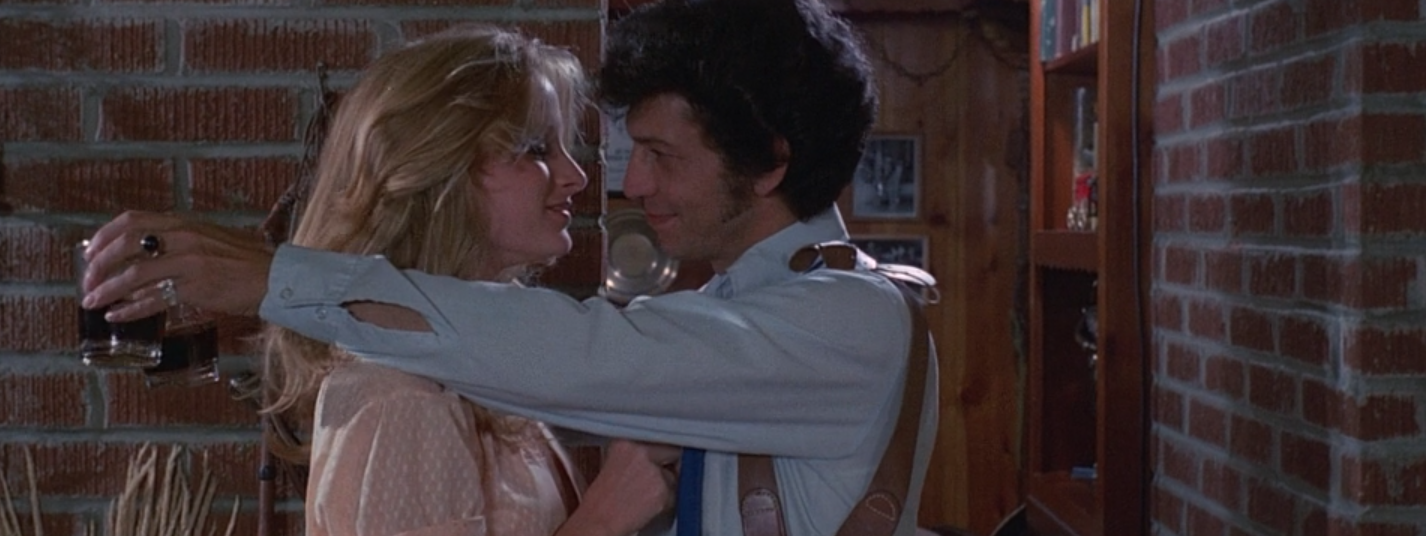
I should note that, as with the source text, there's a rampant racism at work here: all the African natives--except the queen--are depicted as savage childlike cannibals who respect only brute force (the whip). At the same time, we should always remember that this jungle is in the mind of a repressed virgin white man who's never been, and so projected his id onto its exotic natives. Well, isn't that what racism is, you say? True, I retort, but it's even a theme of this weird adaptation that only by expressing it can we exorcise it. Openly celebrating his racist evil and insane lust frees Marlow from its toxic grip. Once made conscious and expressed--as in art therapy--the repressed desire evaporates, the way lust evaporates in the minutes after orgasm. Finally, he can give himself a hug (above) and look, through his dilated pupils, towards the finally-revealed heaven. The repressive force within him is spent, the vile racist worldview can dissolve with a ruby slipper heel-tap.

At the same time, it wouldn't suit Marlow's character is to get all preachy and self-righteously racial activist now that he's seen some sort of light. What can even the most liberal of white authors know of blackness? To try and Stanley Kramer it up would kill the larger-than-life messiness of myth. Myth needs to be neither believable nor logical, true or safe, (nor -as here - even in focus or frame), PC or un-PC, what it needs to do is resonate below the line of consciousness, go deeper than mere truth can reach, provide a kind of trapdoor access to the basement of the mind, to open up the vents and allow for temperature equilibrium. Just as the African tribesmen surrounding Kurtz use ceremonial masks to express their demons rather than bury them, this primitive TV broadcast of Heart of Darkness spews forth an admission of racist evil and in the process exorcises it, temporarily at least, even though it can't really do anything with its liberated outlook.

That's why it helps in a way too that this production is so poor and overwrought --the totemic demon mask need not seem real, but almost something to laugh at, a cathartic confession rather than denial, the head of Medusa reflected in the Perseus shield of satire. So let us celebrate our evil and above all celebrate the ability to revisit weird-ass shit like Playhouse 60's Heart of Darkness, celebrate a humanity that would allow this dark plumbing of its darkest depths. It exhibits bravery in going--as my friends and I used to say--"for distance" rather than polish, decorum or clarity, for "riding the snake" rather than scorching it in terror, or containing it a terrarium. By contrast to its messy brilliance, our live TV events today are tepid musicals, toothless as a long-caged rheumy lion. We won't see the like of rough unhinged dream theater 'interpretations' like this Heart again, outside perhaps of "Le Bad Theater" on SNL reruns (2) and we will continue to suffer for its absence, just as the lack of male initiation trauma (3) it so resonantly depicts inevitably outs in everything from school shootings to alt-right trolling, and all the other sad last ditch gasps of boys who never found their hideous dark father's compound, and so never saw the sad end game of their own dark hypocrisy, or tasted the ecstasy of feeling their anxious flesh rendered by a thousand little beaks, until all that's left is skybound.

"even the jungle wanted him dead"
It's also on youtube!

NOTES:
1. "two-legged pig" also known as "long pig" =  human flesh. 
2.  though there was a TV movie version in 1993 with John Malkovich and Tim Roth,  it was faithful to the text to the point of sterility.
3. Initiation rites do exist in some modern organizations (frats, etc.) but outside of, say, the Navy Seals, they lack sufficient prolonged traumatic endurance for the facilitation of a true psychic change. The agony of child birth makes a mother of a woman, the agony of the initiation rite 'second' birth makes a boy a man. "No pain, no gain" is no mere gym mantra but a sad underwriter of all human maturity. Would it were otherwise!!

Thursday, February 08, 2018

Square in the Maenads: 68 KILL


Trent Haaga's darker-than-black noir comedy posits, early on, that even within the cartoonish, exaggerated post-grindhouse-fueled Alamo Drafthouse-bound renegade spirit popularized in the mid-90s by Tarantino--there are rules of engagement yet to be broken. Even for characters who--like the assassins of Banquo---are so incensed by the vile blows and buffets of the world they are reckless what they do, there are hot babe messes more reckless still. For hard-working squaresville lovestruck septic man Chip (Matthew Gray Gubler), roped by crazy hottie stripper girlfriend Liza (AnnaLynne McCord) into robbing one of her johns (of $68,000 - hence the title), that line of relative decorum is obliterated fairly early on, but... 

I can't say more, for to spoil even one twist or turn on this wild ride is to lessen its blunt force impact. Suffice it to say, for we fans of strong assertive women (those who score along the Hawks-Meyer GF spectrum rather than the 'strong-willed mother-type' Ford-Spielberg curve), this bonanza of badassery is--especially in the time of plunging markets and collapsing governments--something we desperately need. Why wait for a normal woman to be brutalized before turning savage? That, to me, is sexist, inferring a woman needs a man's cruelty to light her inner bomb's fuse. 

From hence forth let mentally remembering the numerical combination of your client's safe suffice as a sufficient excuse for unleashing your inner shredding and devouring maenad upon him. McCord is so turned on by his death throes it looks almost like she's inhaling his departing soul like a hit off the crack pipe.

Liza with her weird brother Dwayne (Sam Eidson)

90s ANTI-MORALITY RETURNS:

When I was around five years-old, I was--for a brief and intense few weeks--obsessed with the dubbed Japanese anime cartoon SPEED RACER. It wasn't because I loved it but because it was the only thing on, every day after school like clockwork. I watched it, but I hated the good guy, 'Speed', and hated his stupid monkey and mustachioed sidekick and their ridiculous Pizza guy striped caps. I found it unfair that the way-cooler bad guys (always in  black shades) never won a single goddamned race. I was too young to know the game was fixed. I kept sticking around because I figured just once the cool guys in black just had to get lucky.

Every day I'd await it on afternoon TV, sure that this one time the guys in black would win. My fury mounted as the weeks passed. 

Finally my mom, sensing my mounting frustration, explained the terrible truth - the good guy always won. The game was rigged. I felt sick to my stomach and never watched SPEED RACER again. 

I mention that memory to explain the euphoria that overtook me--and audiences around the world--25 or so years later, when the murderous outlaws of True Romance, Bound, The Last Seduction, Natural Born Killers, and Pulp Fiction started winning. Surviving past the credits used to be all but impossible for gangsters and murderers --it was a given they'd be shot to pieces or hauled off in chains. Beloved 80s-early 90s crime characters like Scarface, Baldwin in Miami Blues, Thelma and Louise, and Walken's King of New York had all had to die at the end - even though it was clear the cool directors hated this pre-ordained (by ancient censorial codes) necessity. In the early 90s, old ideas of moral code collapsed at the feet of Tarantino, Rodriguez, Stone, Dahl, Armitage, and Tony Scott. It was a victory not only for crime but for the haters of cliche. That killers always pay for their crimes was a rule made by preachy moralists who think audiences are too stupid to get that this is all just a movie, that 'rooting' for bad guys will make us go out and commit crimes - monkey see, monkey do. Showing cool gangsters living past the credits, reaping the rewards of their crimes, implied good faith in audience reactions. It's that same faith hat's paradoxically inherent in the low bar sense of morality we find in 68 Kill.

We don't get that vibe so much anymore, the feeling of cinematic killing as a kind of liberation from moral conscription --we're too crushed up in PC remorse. All our big screen killers tend to be pedophile shadow people now. Cinematic criminal sexuality is no longer 'fun' --it's a two-way prison, where a victim of childhood abuse grows up to abuse children. Crime has lost its sexy bubble gun snap. Sinematic violence is now 'felt' with a sickening bone-break chill rather than as a pop culture splash page. We had Spring Breakers a few years back, and occasionally a Tarantino film, but where can badass alpha bitch psycho monster hotties go to unfurl their random violent urge flags these days, I mean really unfurl them, not in some half-assed tough day at the office meltdown but genuine homicidal merriment? 

There was a villainess in Wonder Woman --all scarred up and ready to go--but then comes the cop-out: she turns out to be just a love-starved, disfigured chemist gone awry. Where are the Kali archetypes? Where is the Red Queen? Where is the Catwoman who revels in her diabolism the way Julie Newmar used to, rather than Anne Hathaway versions. the types that set about morosely stealing just to help her sister, or exonerate her record, or help some blind nephew go to Juilliard? Where are the Bridget Gregorys, the Tura Satanas? The Angels of Death?

Don't sweat it, man -- they're here.


Played by AnnaLynne McCord, main psycho stripper/killer Liza is a super confident, cash-hungry predator with a wild lion's mane of hair and a live-for-today attitude that's all the better for being underplayed rather than hammed up. She savors the death rattles of her victims rather innocently but seems to actually care about Chip, to forgive him his trespasses, to look forward to taking him out for a wild flight from Dodge with a stolen bankroll and maybe finally use the "L" word back at him. In her uninhibitedly sexual and violent way she could be who either Vanessa Hudgens or Ashley Benson from Spring Breakers grow into if they drop out of college and move inland to continue their life of sex and violent crime, becoming more and more nympho-homicidal, each taking in a cute lost puppy boyfriends who idealize them as perfect angels. Evoking the composed beauty of the femme fatales in The Last Seduction, GirlyGun Crazy (or more recently, Amber Heard in All the Boys Love Mandy Lane and Machete Kills), with the stripper-gone-legitimately-wild carnality of one of the go-go dancing drag stripper threesome in Faster Pussycat, Kill! Kill!, Liza is a keeper you'll want to bring home to terrorize mom with, or at least savor her every line of dialogue over multiple viewings.


And she's only one of a whole parade of amok, strong female alpha bitches to come: freed hostage Violet (Alisha Boe) lures Chip into a playful team sing-a-long to "Pop Pop / Pop Music", and later Sheila Vand (the lead in A Girl Walks Home Alone at Night) takes over as the psychotic emo chick Monica, the cooler-than-thou deadpan gravel-voiced punk alpha bitch ringleader of a small meth and prostitution and whatever else pays the dealer and landlord gang of trailer-dwelling nutcases, including great turns by Hallie Grace Bradley, who dryly impels Chip to go down on her in back of the convenience store in exchange for information on his missing car, and Lucy Faust as an expertly cackling young tweaker called Skinny. 

Vand's Monica is so good with that low register druggy southern drawl it's like she talks and moves via an inner green slime-soaked slinky tied to a high voltage electric hum. She alone would make the film a must. And like every other girl in the film, she can't resist messing with Chip's squaresville puppydog mind. 


We may roll our eyes at Chip's idealizing cluelessness, may wonder how he can take so many golf club swings to the head but still keep most of his teeth and all his eye socket structural integrity, but--and this is a hard thing to pull off--we still like old Chip because we see through his beaming eyes how golden and irresistible Liza's skin glows in in the morning light as she sleeps; how the sun filters through the colors of their head shop tapestry curtain blanket and brightens every hidden purple in her hair and kimono; how even her teeth and gleaming are her teeth (1). We feel his rage and confusion, too, because we know what it's like to be so suggestible (or I do, at any rate), but--unlike other fall guys Chip's been compared to, like whiny Jeff Daniels in Jonathan Demme's Something Wild or smarmy Griffin Dunne in Scorseses's After Hours or Peter Berg's hick with a too-good-for-this-town pretensions in Last Seduction--we don't consider his squeamishness to be cowardice or a lack of adventuresome spirit but the work of a crisis within his sweet nature--conscience grinding gears with his smitten rapture. He means well, but every new tattooed girl casting him a come-hither look is just another ounce of sweet kryptonite. Lovestruck by nearly every set of female eyes he sees, the only thing saving him from the latest femme fatale is the next, even deadlier one, waiting around the next bend.

That's why it's so important that 68 Kill (terrible name, great movie) came out the same year as Wonder Woman, The Beguiled, Lady Bird, and The Love Witch. It's like 1994 all over again but with the focus square on the women. Now the women don't have to even be sociopaths to conquer the terrain. Now they do it so surefootedly it's like all of feminism up to now have been as little effeminate 'eh-heh' cough.

Those films are all made by women though, whereas --like Rob Zombie before him--Kill's writer-director Haaga grew up in a trashy trailer park, and it shows, not in a bad way, but in a way that captures the scuzzy low-fi vividness of the scene, only unlike Zombie, he does it without our eyes ever feeling soiled by grim misogyny and torture porn. Haaga got his start writing stuff (and I use the word loosely) like Citizen Toxie, so you know he knows how to deliver thrills far outside the morality-taste spectrum that so blandifies his fellows (Zombie included - where the murdering white trash have thin little nonsmoker suburban voices and perfect dental work and the violence scans as mean-spirited misanthropy rather than breezy black comic fun).  68 Kill might be violent and trashy but it has a summery feel that says 'oh, lighten up Scott Tobias! (2) 

We're not in "reality' while watching movies. We're through the grindhouse mirror spectrum, where the colors are a little more vibrant (it looks like it was shot on actual 35mm film with popping colors and super rich flesh tones).  The score, by Frank Ilfman and James Griffiths, uses all sorts of twangy guitars and rumbling synths it evokes all the right past motifs: some dashes of guitar echo swamp haze, and a sense of love and joyful innocence continually revived and re-drowned in the saw mill molasses sea.

Either way,  if a trailer park in every neighborhood in the coming disaster-stricken country of ours means more crime movies like 68 Kill. I can only trust the fourth wave will recognize the strength behind its crudity rather than get so pious it drowns the neighborhood with the bathwater. To paraphrase Nigel Tuffnel, when a man sexually abuses a woman, that's sexist, when a woman does it to a man - that's social justice. Maybe that's not being honest about real female personae, but this is the movies, man. It's just drag. If we can't let our hair down here, we're going to go bald from stress. We used to be adults...we can be both NPR listeners and as aggressive and combative as the red state chimera. Sometimes, well, sometimes, if you're a real American, and maybe a liberal but not a total beta cuck, you got to look at your right wing Arizona-dwelling kid brother's gun collection over Xmas and, instead of rolling your eyes and waving pictures of dead schoolchildren, feel the heat of the cool, the thrill of the target range recoil. You gotta look at your bro and say, damn right, brother, damn right. After all, a lot of shit's gone down but we're still here. If America's gonna get it together we gotta learn how to enjoy each others' outlets. A little PCP-laced oregano, an AR-14, and thou. 

Whatever testy little snipes you may have about the right wing lunatic fringe, at least they know who they really are --they're killers. We in the blue states close our eyes to the abbattoir even as we grab the grass-fed fillet mignon. To quote German freelance terrorist Wulfgar Reinhardt (Rutger Hauer - 1981's Nighthawks), "we're not heroes, we're victims! " The white heterosexual man will not share his toys, he'd rather break 'em. So let's break him first, for he is the hypnotized toy of any Fox wily enough to shake a tail feather-covered snake rattle.

Further Reading:
Catty-Cool Susan Cabot

NOTES:
1.as with Rob Zombie's similarly comic-grotesque Devil's Rejects, the big give-away that these are actors, not real trailer trash, is their perfect teeth; but I think I speak for everyone when I say, thank heaven Rob let that detail go unfixed
2. If you check out RT or wheveer, a blurb from him pops up calling it nearly a de facto remake of After Hours [that] keeps the hostility and loses the self-deprecation, which turns it into an example of misogyny rather than an examination of it.  But Scott, your implying Scorsese's film isn't misogynist, which is absurd. Go look amongst thy Scorsese discs for a real live alpha bitch and see how far ya get. PS- Sharon Stone in Casino don't count (loud does not equal strong). But the ladies of Hagga-ville? I'm more worried about the fate of their drugs. Those poor suckers never had a chance.

Thursday, February 01, 2018

Ballin' the Jacks: TRUCK STOP WOMEN (1974)


Fans of high-energy strong female-filled crime films from the 60s and 70s by guys like John Flynn and Arthur Marks will rejoice to note that--slipping unobtrusively onto Amazon Prime after being unavailable on DVD for.... ever... rolls-- Truck-Stop Women (1974). One of the better films from long-working Mark L. Lester (Class of 1984), it features the always alluring, ferocious Claudia Jennings, in one of her best roles. It's an air horn hoot, good buddy, with everyone doing their best to deliver more than a mere exploitation truck stop movie, but not too much more. It has no interest in pulling off the highway of cheap goofy asphalt thrills and down into any tar-roof shack cul-de-sacs of working class realism or veiled commie sermonizing. All this Godfather-meets-Mildred Pierce tale of a matriarchal crime dynasty is lookin' to deliver is 90 minutes of speed, bullets, Jacobean betrayals, and bouncing motel beds.

The Mildred is Anna (Lieux Dressler), the owner/manager/big boss madame of a remote New Mexico truck stop / diner / motel / brothel / hijacking ring, and she makes Joan Crawford seem coy. Presiding over a loyal assortment of button men, mechanics, and good ole gal waitress/load hijackin' prostitutes, Anna's operation roars along so smoothly there wouldn't be even a story except her no-good triple-timin' daughter Rose (Jennings) is mighty tired of life as momma's main hooker/hijacker. Oh, and Anna's long-stable mob connection out in Vegas has been shot, and her territory is now up for grabs, meaning goombas galore are sniffing around for a piece. Anna can handle whatever sore thumb wop might muscle her way, but Rose is one piece who wants to git.... anywhere with bright lights. To her the idea of Las Vegas alone is enough to make her betray her own kin.  As Rose is her one weak spot, Anna's whole criminal empire might just topple off its axis.

When word leaks out about a hijackable load of mob-stolen securities stashed in the back of a cattle truck roaring past in a few days, both sides realize it's gonna be the deciding factor in who keeps the territory as whoever gets it can buy enough muscle to rub the other out of business. Anna would rather not rob from the mob, but what else can she do? Thus begins a whole web of betrayal and counter betrayal, as we never quite know which of the two women is on top, if they're secretly working together, or just how it's all going to shake out.


It all hinges on who knows what and whether anyone in Anna's outfit is dumb (or weakened enough by seductive strategies) enough to spill Anna's plan to Rose. Does Rose even know who in Anna's group knows the actual truth and who's been fed bullshit to spill? Consider Curly (Dennis Filmple above), a lower level Anna employee, trying to hold back information from Rose while ostensibly keeping her under wraps in a motel room. He's going to tell her everything, sure, but did Annie presume that would happen? How many layers deep does this go?

We're dealing with levels of intelligence and subtlety far higher than we're used to in shitkicking trucker romps. As with the two Godfather films it may take even a few viewings to piece out these advanced-level connivances, but in the meantime we can just enjoy the action.

But what makes Truck Stop work so well isn't just the impressively high-stakes in-a-low-way plot but the ingeniously-staged, earthy crowded diner scenes at Annie's truck stop. The joint is humming with interlocking life and there's a great, vivid sense of people coming and going, eating, propositioning, overhearing, coffee-refilling, sleeping and scheming, at all hours of the night and early dawn. We feel like we really get a full lay of the land there, it's a kind of paradise of vice, where the motel rooms all have secret cameras so Annie can watch her ladies (including Russ Meyer regular Uschi Dugart) and listen in while they pump the drivers for information on their trailer manifest (i.e. what to hijack later). 


What really sells it all though is the aliveness of Jennings, so good as the restless morally bankrupt Rose it makes it all the sadder to realize she'd be dead in just five years --victim in an accident off the Pacific Coast Highway (at age 30). Here she finds a good match in John Martino as the mafia-dispatched goodfella "Smith" for whom she serves as combination hostage, conspirator, and lover. He should be recognizable as one of Clemenza's button men in the first Godfather. Here he brings far more wit and character than you'd expect, even earning our sympathy on occasion, and has some great chemistry with Jennings. The pair know just how to play a scene, making it always just a little ambiguous whether they're really falling in love or just playing each other. There's a magical scene in their motel room together in the morning after some indefinite period of late night boozy bliss where they're getting dressed and drinking tumblers of morning whiskey, and we realize maybe there is no difference between acting smitten for a (criminal) purpose and being smitten for real with a criminal.

The actors both convey this complexly cross-hatched devious/ developing love/respect without ever tipping their hands to us or each other. Love and trust and sex in films like this often are just asides, Mulveyan narrative dead-ends. But really great hook-ups like this come built-in with a certain element of performance and possible betrayal. Alas, aside from the thing between Connery's Bond and Luciana Paluzzi's Fiona Volpe in Thunderball--it's hard to remember a post-coitus dressing/drinking/nuzzilng scene so full of commingled warmth and danger as we have here between Martino and Jennings. When you belive either side could plunge a knife into the other at any second, even though they just hooked up and are acting lovey dovey then you know it's a true meeting of equals.

And you believe he really does dig Rose. Who wouldn't? Jennings, sublime in all these scenes, really lets loose with all teeth and both hands in these scees, freely heaping abuse on his gross candy bar-eating trigger man as much as she kittens it up with Smith.


The third great element is the roster of great supporting cast of tough-as-nails women, longtime Anna employees, and their grizzled trucker friends, co-workers and off-on-the-road-again boyfriends, all of whom add a layer of real rootsy Americana sadness, the sort that hangs in the wee-wee hours of dawn (reminding me of the opening scenes of Some Came Running.)

That's not to say it's not Tarantino-by-Russ Meyer-esque grindhouse to its core, especially the scene where Anna pulls Rose out of Smith's pool room, kicking and screaming, throwing Rose over her shoulder like a bag of laundry. From there, an elaborate series of double cross counter-moves goes on, and if you're as left in the dark as I was as to who's got what plan underneath the other plan or why they're all meeting at a ghost town to split up the loot, well, sometimes it's nice to not be six steps ahead of the characters. Sure it ends tragically. You forgot it's a matriarchal truck stop hijacking/prostitution ring version of Shakespeare / Mildred Pierce? Crime doesn't pay - but it sure pays well until then.


Wednesday, December 27, 2017

Best of 2017: The Phoenix Scorches the Snake (Year of the Woman)


The age of the Woman has begun and there's no going back. Have they ever, aside from the last time, when Anita Hill and Take Back the Night got tangled up in The Rules-roosted third wave snottiness? That was just the launch pad, this time, baby, the outer atmosphere got penetrated and we're holding a solid orbit as decades of held-in rage is at last screamed out over the land like a purgatorial rain. The big Halloween costume pick of 2017 was a true WONDER, directed by a woman, and the best-reviewed film ever on RT is written and directed by a real LADY, and the coolest retro-feminist counter-intuitive mindbender since swingin' 71 was about a WITCH, and produced-wrote-directed-and costume-designed by a woman. Sure, there's been some newly iconic masterpieces made by men this year, but this list will focus on woman-helmed films, or movies with badass chicks in them, and TV comedy shows (cuz drama's too much a bummer in this unendurably bummer year, so don't wait for me to follow you deep into dystopian oppression. You heard me, MAIDS!) In short, Rejoice, I, a SWM, have affirmed your right to shine. Let the bitter misogynists jeer in frustration from the belly of their mom's basement, blind to that pathetic irony and therefore blind to it all. Ladies, it was your year, and if you find yourself sliding backwards in this next one, just ask a man to explain what you should do next, then sacrifice him to Kali. KALI!

PS - I finally made it to Judy Chicago's "The Dinner Party" on permanent exhibition at the Brooklyn Museum of Art. Here it was, a mere ten minute walk from my current apartment, and I haven't been... ever. It was a moving, spiritual experience, and clearly the right year for it, as the above rant makes clear. If you're in town, go, man, go... Kali gets a plate. Emily Dickinson gets a plate. Virginia Woolf gets a plate. Gets ain't the right word. They take the plates. This is the year they take all the plates


1. LADY BIRD
Written and directed by Greta Gerwig

Neither shying away from the romantic faux pas nor the cool little moments of triumph that come with growing up artsy but confident, here's a Catholic school girl movie that avoids all the tired (albeit necessary) sexual endangerment/obsession we get with all the 'women's coming-of-age' stories (the ones written by dudes). Gerwig allows us clearly autobiographical triumphant sing-outs like the take down of the visiting anti-abortion rally speaker, the brilliant and ridiculous aspects of an after-school drama club, the disillusionment and joy of teen sex. As someone who went to public school and lost my virginity at 17 to a drama club Catholic chorine who insisted on using both a condom and vaginal foam from Planned Parenthood but who is now an anti-abortion zealot, I can vouch that this is right up there with Superstar and at any rate way better than Little Sister or one of those things that seems cobbled together from contemporary lit adult education workshops more than actual life. This feels real, and tells the story, not of some 'average' girl buffeted by the winds of change in her rocky search for the right guy to surrender her freedom to, but of a specific strong-willed young woman, not quite as mature as she acts but totally free of anything resembling a cliche'd trait, a girl for whom the most important thing is not any one boy, but her own dream of going to New York to college instead of one of her local (state-subsidized) California options, despite her domineering-but-loving mother's protests. Lovingly filmed and acted, especially by star Saoirse Ronan, with brilliant vignettes and tiny moments zipping by too fast to stop and praise in any single viewing, its keenly observed connections between family members feels both well rehearsed and totally spontaneous, lived-in, and there's some dynamite sweaters and autumnal colors. It's an amazing achievement that fulfills the halo of stoner grace I saw over Great Gerwig as far back as 2009's Baghead, where she was unfortunately burdened by her inescapable mumblecore cronies, the various Duplasses, Partridges and Swanbergs, and later the self-indulgent and myopic (lately) Noah Baumbach (much as I love Bird I can't stand five minutes of his Gerwig-starred Frances Ha). Sure, Baumbach's ghost influence is to be felt here, but this is Gerwig's Live through This, her Exile in Guyville. It's the writing on the wall outside the gates of Eden, written in the blood of uncored apples.

2. MOTHER
Directed by Darren Aronofsky

(PS - I snuck this in sshh) One of the trippiest, wildest, most insane biblical fables ever. Even if you don't dig the symbolism, it's also a perfect emblem of its time, considering the Woman as Avenger and seamstress of life theme, or something. What gets me is the editing and pace- the seamless evaporation of time so that we never really notice the sea changes wherein a single night elapses from a few fans dropping by to a full scale riot is one of the most terrifying and exhilarating extended sequences I've ever seen, perfectly capturing the nightmare vibe of an acid test party where all these people you don't know show up, you're too messed up to get rid of them, your pad getting trashed, packed with people, tearing it apart, robbing you blind, rending and tearing, calling their friends to come over and help themselves, everyone ending up, writhing in a pile on the floor, the rooms get full of strangers, you can't even hide out in your own bedroom, and you end up having a nervous breakdown for lack of privacy, maybe you even call the cops on your own party, except you can't dial a phone in your stage. I can't go on because to explain it or try to nail it down does it a disservice. It's too horrible. It's beyond horrible, back into blissful, and it's weird, but it's not as sadistic or pretentious as some of Aronofsky's earlier work, and it's above all, the truth. It's the allegory we need, and Jennifer Lawrence, so terrible in her last few 'big' pictures, like the X-Men reboot, redeems herself as her generation's golden wild child. You'll never look humanity in the eye again after this, but Aronofsky is a genius, for all our faults. 


3. THE LOVE WITCH
Written and directed by Anna Biller

The drugs in this amber brew are potent, vibrant and rich, infused with an ingeniously stilted ceremonial acting style; thou cannot help but succumb to the film's cohesive look and sound, its adept deconstruction and Pagan rearrangement of the kind of pre-Quixote romantic Thoth Tarot blueprint for mythologizing reality into delirious love overload. Teen girls smitten with Disney and afternoon soap operas might imagine Love Witch while taking a mid-afternoon nap but never dream it could be a movie. Brechtian dissolution of the 'western eye' and a cohesive, eerily familiar beauty... Wait, is that even a sentence? Why am I getting so relaxed? What's in this flax, flaks... flask? I know now what love is, and it's fucking terrifying, but colorful, and Ennio is there. (See Bell, Book, and Hallucinogenic Tampon)


Directed by Kitty Green

Directed by young Australian auteur Kitty Green, CASTING JONBENET is a true story, on both levels, both the making of a movie about a real-life unsolved murder, and the meta making-of the recreation. Green kept the interviews and screen tests from the auditions by local actors culled from the Ramsey family's Colorado hometown, all with their own tangential connections to the events. The details of story unfold and the sidebars become the main content. Green's not after the truth but the elusive way truth vanishes in telephone game clouds on the horizon. Green trusts us to unpack the massive electric charge inherent in watching an actress audition by performing the mother's real life unconvincing (but possibly real) phone call to 911. Seeing more than one actress try to nail this weird ouroboros strip paradox is to realize an even broader canvas, the mutability of the truth along a mythological axis. Even if we've never heard the actual Ramsey phone call (and we don't within the film, nor do we see any actual images of the actual participants) we know the 'type,' and the child kidnapping/murder is a tabloid boilerplate fastened with adamantine bolts to the mediated public consciousness. Like jazz, the variations are endless but all recognizable as the same tune. (more)

5. WONDER WOMAN
Directed by Patty Jenkins

There's an ingenious long forward momentum sequence about halfway through this film --the camera trailing after Diana Prince (Gal Gadot) and her male escorts as they weave through the empty wastelands of WWI France to the front line trenches, past starving desperate civilians, wounded men, and beaten horses, the filthy trenches, across no-man's land, and into the hail of gunfire from an occupied enemy town. Diana's never really let loose before this moment with all her goddess strength until now when adrenalin and anger triple her capabilities. Flipping over a tank, leaping from roof to roof, she's someone we both identify with and admire through Chris Pine's haunting blue eyes. Her determination to find the literal Aires, God of War, seems at first naive; she presumes he's presiding over the launch of a German poison gas factory (presided over by a disfigured/masked female gas chemist, based on the [maybe] real-life French lesbian chemist who had her formula stolen by Fraulein Doktor) and her man presumes he doesn't exist, but he sure needs her help. And there's a valid point behind her singular focus, coming from a paradise free of men and machinery, the horrifying atrocities we've gone blind to in the interest of disaster triage. While the look, time, and feel indicate that perhaps the CGI crew were borrowing steampunk hard drives from Captain America the First Avenger, this is a whole other thing, gender reversed (with the man here the insider spy and the woman the innocent superbeing). It's worth noting that this is directed by a woman, and as such it avoids countless invisible gender-based subtextual faux pas. And Gadot is gorgeous all get-out, when she smiles which is rarely she lights up the world, but her intelligence and ferocity come first and Pine never dares condescend. We're so used to seeing the old devil sexism come creeping back in the subtext or in the performance (we know from The Mummy how passive-aggressive Tom Cruise would be in that role) but as Pine proved in last year's Hell or High Water, he's a superb actor--even when rocking a masterful German accent-- who knows how to step back and support other actors' big moments and here lets Gadot blazes luminous and unrestrained. With massively large and diverse London crowd and Belgian front crowd scene chaos, cathartic action and character growth, and a score that includes a mix of ripping electric guitars and bottom-dropped-out brass, it's bound for glory - not just a superhero film but a legitimate road marker on both a social and mythopoetic level, and not a single glimpse of our bloated new Bruce Wayne. Praise Athena!


6.a. THE LURE
Dir. Agnieszka Smoczynska 

It's a few years old but never released widely here, and so 2017 is its real debut, the year its Criterion Blu-ray released, showing it to everyday America for the first time, and what a gem it is, mostly. With a great look, an elaborately realized nightclub full of green and blue lighting, wove through with tracking shots dazzling enough to evoke Magnolia, Polish provac-auteur Agnieszka Smocynska delivers a knockout feature film debut. In fact, I was going to put it at #1 except for the bummer ending, which--though true to the myth on which its based (a variation of the same source material that gave us The Little Mermaid) leaves a bad feeling in the air. Considering the more progressive resolutions of Frozen and the under-appreciated Maleficent, it feels needlessly punitive, like Stalin kettubg the Warsaw uprising partisans get slaughtered near the end of WW2. Either way, it's got some great songs and a special shout out to Aqua-Man, in an early film appearance!

6.b. THE BEGUILED
Dir. Sofia Coppola

An endearingly-awkward mix of stiff period finery, natural/candle light photography, wildly disparate performance styles, lack of effective musical score (oh for some eerie drones ala There will be Blood), and downright sloppy editing, Sofia Coppola's Beguiled is reminiscent of late 60s-70s period pieces by Francois Truffaut, where the costumes never quite seem fitted or natural - more like a dress-up masquerade shot off the cuff with no sense of art direction or framing. But hey that's all OK, Sophia Coppola has always conjured feelings of being stuck in the 60s nouvelle vague in her Merchant-Ivory-Hal Ashby hybrid style, coaxing a female perspective from the raw materials of the boy's club around her, not well, perhaps but too wisely. Adapting the source novel more than the Eastwood-Siegel original film, her Beguiled has what Smoczynska's Lure lacks, a strongly pro-feminist Dogville-style ending, rather than some dumb 'throw your sisterhood under the bus for patriarchally-manipulated love' sacrifice, the maddening sort censors would have demanded in the 50s, or some 'maybe next season' promise of blood-soaked Atwoodian vengeance. At 90 minutes, it doesn't linger much longer than the average Corman horror movie before delivering the cathartic blow. The moral, like some bizarro mirror to Picnic at Hanging Rock: love and sex may soothe the savage beast, but he'll still wind up dead, roasted and plated on the ladies' banquet table before he gets a second chance to roar. 

7a. 68 KILL 
Written and Directed by Trent Haaga

The title is the only bad part of this wild midnight road odyssey of amok feminine carnality, this explores a terrain similar to Scorsese's After Hours or Demme's Something Wild but with far darker streaks of high-octane black humor, tactile druggy trailer park Spring Breakers wild women and Devil's Rejects-style methed-up sidebar freaks, as passive but sweet Chip (Mathew Gray Gubler) is roped by crazy hottie girlfriend Liza (AnnaLynne McCord) into robbing one of her sleazy clients (of $68,000) and going on the lam. It's never that easy of course, turns out she really exults in his death rattles, and soon Chip's on the run with a different girl, his first in hot pursuit, and it just gets darker and more darkly hilarious from there. I can't reveal any of the strangeness in advance as it's better to just roll with its crazy punches, reversals, and vividly etched sex-hungry madwomen - it's got the fuel of a dozen Faster Pussycat Kill Kill and Last Seduction viewings in its system, and evokes Tarantino when he still had darker shoot-from-the-hip noir edges. Haaga got his start writing stuff like Citizen Toxie so you know he knows how to deliver thrills far outside the morality-taste spectrum that so ensnares his fellows and despite its filthy darkness, 68 Kill keeps a fun summery feel (it's shot on 35mm or has a great cinematographer, or both) and a bravura turn by  Sheila Vand (the lead in A Girl Walks Home Alone at Night) as the psychotic gravel-voiced emo bitch Monica, and Alisha Boe as the sweet but equally psychotic Violet.

7b. GOOD TIME
Dir. The Safdie Brothers

This is a certain strata of outer borough living a lot of us 'aging hipster' New Yorkers don't really get to know anymore, not since the advent of cell phones made buying illegal drugs a "we come to you" thing not a "let's take a subway up to the shadiest section of the Bronx and see if that guy who knows that guy is still there' kind of thing. And as rents rise, the lower world dregs are continually pushed farther and farther uptown, and marijuana more and more decriminalized, it becomes hard to find them. That's why --even if your only connection to it all is a few week-stint palling around with your roommate's glomming townie boyfriend freshman year-- scenes like the one with twitchy Jennifer Jason Leigh desperately trying to shout her way onto one of her mom's long-canceled credit cards from the bail bondsman's office, or hearing a monologue from a newly-awakened car jumper swept up in Connie's drama (probably no better such recap montage since the one in  Rules of Attraction), like a whole separate movie in a quick flashback form, will kind of blow your mind. The Safdies capture the mix of slumming thrills and the way these sorts of hustlers sweep you up in their drama so fast that what started as you buying a dime bag and getting the hell back to your friends downtown winds up in you putting up your car up as bail for someone you barely know after running from the police through a neighborhood you don't recognize, with a head full of angel dust you didn't know you'd smoked and taking another of your dealer's friends to a hospital ER waiting room, hoping to get him admitted before the cops show up and you have to run all over again, and you're too young and/or naive and/or nice and/or stoned to figure out how to make your goodbyes and extricate you from this hustler's Jenga hodge podge of quick fixes before it topples down into handcuffs or a bullet.

7.c. THE FLORIDA PROJECT
Dir. Sean Baker

For all her ratchet tats, foxy Bria Vinaite is hellfire and ice cream in the sexiest cutoffs ever, so I'm content to watch her frolic and expose her wild children to danger (the "project" is a cheap residential motel near Disneyland inhabited by various transient families eking by week-to-week while their children run amok in the parking lot). I generally avoid 'social worker' movies, but I actually liked these kids since they're allowed to be so wild and untamed they conjure a rare and vivid primal force that no other age can e'er exhibit. And the cinematography and sun-scathed imagery is so vivid and arresting. I liked Willem DaFoe's protective but vaguely annoyed presence as the hotel manager, suggesting another form of 'great 70s dad' as a kind of peripheral game warden, keeping the lion cubs out of the cooler and away from poachers, but otherwise letting them do as they will.  I even liked the CPS people - who try their best to do their job and aren't far wrong in their diagnosis of endangerment and unfit motherhood: these kids are running too wild - starting fires and panhandling and setting themselves up for all sorts of troubles, but it's the summer and the gorgeous Florida skies have seldom looked more candy flip delightful. The hotel is overrun with deep purples and greens that vibrate against the clear blue in some truly breathtaking panoramas, as when a rainbow surreptitiously arrives overhead. The kids and Vinaite have great rapport - all are real forces of nature and every scene throbs with a vibrant resonant life, for better or worse. Scenes wherein she, realizing the CPS are coming to take her kid, brings her to a hotel open brunch bar ("Just walk in like we're guests") and we just see jump cuts of the kids ex temper prattle glimmer with something of the profound mythic magic we used to get out of Tennessee Williams. A masterpiece.


Dir Rupert Sanders

Too often these days 'flash mob opinion' seems to so warp the actual film; we can no longer see said film as itself, it's tainted. Hopefully not forever; in this case it's the damning label of whitewashing in the casting of Scarlett Johansson as Major, a character who started life as a Japanese anime. Too bad the admittedly-valid cause picked this one to make a stand in, as it's the most underrated and appreciated film of the year, and way shorter than Blade Runner 2050. To avoid any residual guilt over this issue while watching, see it on a Blu-ray with a Japanese dub language track and English subtitles. Hearing a Japanese actress speaking from inside ScarJo's shell will likely make all the difference, and fit the thematic subtextuality with a poetic eloquence the film might otherwise lack. At any rate, it shouldn't be made into such a pariah for doing what every other mainstream Hollywood film has ever done, cuz it's fuckin' amazing. And there's the best nurturing friend relationship between a hotshot hottie detective and her coterie of tough men cops since Stendahl fucking Syndrome! (full)
--
OK - Women Section over, with a vengeance - come down in the basement to hang with the boys and the mounted deer antlers.


9. DUNKIRK
Dir. Christopher Nolan

The fusion of Christopher Nolan's three-tier approach: sky  three Spitfire Hurricanes shooting down the Luftwaffe; underwater (drowning in torpedoed ships), and the surface. The boys are all trying to get back to Britain so they can fight another day. And the captain of the small boat on his way to pick up some lads while Hans Zimmer's propulsive minimalist drum and eerie industrial drone score is like one long slow build up to mounting dread that compiles disaster upon disaster with tick-tock momentum, foregoing all the usual pitfalls (one shudders to think the pompous, anthemic drivel John Williams would have brought), going for a thumping relentless heartbeat industrial drone that seems to fuse with the rivets of the boat hulls and the terrible thuds of bombs and torpedoes. Seeing it in the theater you can feel the thickening metallic thud of bullets and torpedoes against steel hulls. The camera bobbing in the flaming oil-slicked waves while troopers swim desperately towards one torpedoed ship only to find it's already capsized from an arial bomb before they're all the way there and the next trick is to not get caught up in the burning oil slick. Nolan's eye for putting us deep in the thick of the action makes it a triumph of foley work, with big rippling sound you can feel in your belly.

And above all what registers--and is missing from most war movies--is the vastness of sky and sea; even in the throngs of desperate men, in hundreds of thousands of evacuees, the beach still dwarfs them all. Choices are made and are hard: a pilot dooming himself to capture by choosing to run out of gas on the French side in order to fight off a diving Messerschmidt about to strafe a barge loaded with British and French wounded; grabbing a random stretcher and using at an excuse to force your way through the crowded dock to get on a hospital ship, sneaking under the dock and crawling onto the hull and in on a lower level when that plan doesn't work; and then the ship is torpedoed a mile or two out from shore, and back you go, if you're lucky. The way friendships are made on the spot, a matter of desperate necessity. Nolan edits on the military ratatatat beat so well you wonder what regiment he served in. And of course, you realize something about your own self in wartime, and the way heroes are not made, or born, but shot.

10. GET OUT
Dir. Jordan Peele

When white writers and filmmakers try to voice the African-American experience we run into one of two thorny morasses at the end of two distinct paths, in the first we fantasize--seeing being black as a kind of freedom and increase in soul power, cool, confidence, and badass gravitas (ala Tarantino) and wind up in the morass of black intellectual backlash; in the other we solemnly celebrate some idealized portrait of the noble, spiritual blackness triumphing over racism and sashaying forth into a sunnier tomorrow (ala Stanley Kramer) and wind up in the morass of boredom (via Oscar). In each we're objectifying and simplifying our perceptions in ways that make us feel freer or self-congratulatory, positing our own sense of superiority in each instance in ways we're mostly blind to. In Get Out, Jordan Peele shows us how liberal whites look to a black eye when trying either of these strategies and in the process we're compelled to admire the way the black spirit endures even being expected to seem grateful for white attention to white racism. You can feel this movie coming together years ago during some similar weekends Jordan Peele spent meeting his Italian-American girlfriend's parents for the first time, and dealing with a kind of smiling oblique racism, where his blackness is as a flag no liberal can allow to pass unsaluted while at the same time leading to undoubted tension along the old school Spike Lee pizza parlor lines.

THE THING WITH 2 HEADS
So it's keenly observed, and relatively new territory, for in Get Out racial identification erupts as a side effect, not as a direct focus. The conceivably objectionable idea of garden variety racism (i.e. a black man is sleeping with your hot young white daughters, doesn't that bother you?) is hardly broached at all here. We begin the film well past that, and before us loom a whole new set of hurtles. This isn't a movie about the white experience of blackness but a movie about the black experience of the white experience of blackness being experienced by affluent, liberal white people. It's that double meta-shift that makes the difference. Here the lead's blackness is not seen as some abomination or litmus test for white liberal acceptance but something far less obvious and more relatable and sympathetic. Not unlike Ray Milland grafted to Rosie Grier in The Thing with Two Heads, the overall message is that we can't ever possibly separate, we're merged and the only way to keep our heads on our own bodies is to gang up on terrorists, or North Korea, or in my personal Maryland camping experience from the early 80s, the Goatman.

As with his Comedy Central show, Key and Peele, the insight stems having a white mom and seeing the black-white divide from a perspective that's not quite all the way either one, coupled to a horror fan's familiarity with the way paranoia erupts from small, every day social occurrences and the way canny groups can obscure their evil actions by conforming them to the phantasmic outlines of everyday social paranoia. With Allison Williams (light years cooler than her character on Girls) rocking what are easily the sexiest bangs since Eleanor Friedberger or Chrissie Hynde and this is first time ever where a TSA agent named Rod (Lil Rel Howery) gets to be the good guy/cavalry --a tougher, more paranoid Arbogast / Dick Hallorann buddy initially assigned to just dog sit and provide phone call reassurance, he becomes the lifeline of all time, making us re-evaluate the TSA and our perceived indignities going though their airport checkpoints (where white people get a taste of what life as a black man is like).

Dir G.J. Echternkamp

This movie saved my life back in January when I was in the midst of a Trump-fueled alcoholic relapse. I came to it in despair, and in my despair it found fuel for a catharsis, and lo, I was reborn in the bloody joy that's always there at the core of our fucked-up nation. No matter if it's the food co-op co-op board protesting the political affiliations of their soy distributor, or the NASCAR beer-necks running up the sails, our great American craft of madness will find some fertile breeze to blow it. And then we'll set in on fire.

Evoking the great edgy fun pro-feminist approach of Corman slap-dash jobs of the past, this puts the man back into in the big leagues of the emerging realms of low-budget green-screen hipster sci-fi genre pastiche, ala John Dies at the End, Bounty Killer and Iron Sky. Don't even try to question why this kind of crunch car smash surreal green screen zip feels more real than most of Hollywood's gritty busters, that's just 'the future' talking and you're already in it. I bet even now, there's a difference between how you see yourself in your mind's eye (and the mirror with good lighting), and in a selfie. Don't listen to that selfie, son or daughter. Know that you look like everyone else in the rooms of your nearest beginner AA group, not some spectacular bleary-eyed butterfly. Floor it on through the illusions, jump that uncanny valley and fear no hard landing future, left or right, of the dial. Even if the next crunch you hear is your own hard candy coat cracking, thou wert only ever pixels. (full)

HONORARY MENTION 


Everything from
THE MARVEL COMICS UNIVERSE

You can argue all you want, superhero movies are the shit right now. You can't compare them even to the original comics, or any other adaptations --Marvel, especially, in particular the MCU (which is all of a piece and different than the universe occupied by the X-Men or the one with the apes). They are the truly enduring myths of our meta moment, especially for the alienated boys of the world, and the cooler women. Soaring with high concept wit but lacking the self-serious posturing of DC, Marvel hits every base required of great Jungian myth and do so with quips and succinct no-BS dialogue that make all competitors melt away. This year saw, finally, a good Spiderman movie, a hilarious Thor movie and a damn solid Guardians of the Galaxy. Marvel is so hot right now they could even do a woman-helmed movie with someone other than ScarJo or the Scarlet Witch. What about She Hulk!??? Take a chance Marvel, give the Scarlets a rest and go green...


There's a moment in WAR FOR THE PLANET OF THE APES where the main gorilla guy looks down at the captured human prisoners and his face has such an exact and miraculous mix of gorilla expressions met with human inquisitiveness, malice, curiosity, fear, and anger, it's like we're seeing the next stage in human evolution, the Uncanny Valley crossed, via a hidden rope bridge, via Darwin, with the profound bizarro force equivalent to when the first ape touched that black monolith all those years ago. Mark my words, history was made in that gorilla glance. The valley bridge shall soon be opened.

(TV)


THE MARVELOUS MRS. MAISEL
Created by Amy Sherman-Palladino
Amazon Prime

The quality of this eight part series is so high, the tracking shots and crowd scenes so sublime and intricate that the whole thing swirls with a high mix of Coen Bros Inside Llewyn Davis, and AMC's Mad Men, and all the loving recreations of the late 50s-early 60s era, when Lenny Bruce was getting arrested for using charged language. Every last dust speck of the Bleeker Street record stores and clubs are lovingly recreated, but unlike similar fetishist art director-cum-auteurs like Todd Haynes, Maisel's narrative line is never inert but instead flows like beautiful river. The violence is nil, the Big Life Lessons non, the laughs earned, the trauma naught, the charm high, the wit razor-sharp, the clothes heavenly, the lead actress Rachel Brosnahan staggeringly beautiful and talented. In her flawless dark red outfits, eyes alight with that distinctly NYC woman character that overflows the borders of gender prescription in such a way there's no stopping her, and though it's all very theatrical there's no musical numbers, unless you count classic period songs set to tracking shots so well choreographed they create something like a joyous earthy version of Kubrick. Even the pisher husband is sympathetic--to an extent-- and looks good without a shirt. The problems are all humorous without being overly-simplified yet it's not so subtle you struggle for meaning. It's so tight, from the interweaving camera that glides along through elaborate but seemingly breezy crowd scenes with the grace and panache of Midge herself, there's not a moment of dead space in the entirety of its season. Whatever all that other shit was trying to do, it's done right here.

BROAD CITY (season 4)
Created by Abby Jacobson and Ilana Glazer 
Comedy Central

Yo, these girls have electric comedic crackerjack chemistry, timing, and wit they crack open the borders of women in comedy and jab a giant stick through the eye of the basement trolls tweeting that women aren't funny. They may sometimes get roped into falling into some familiar sitcom-ish barrels, but overall they're the only ones to nail what so many 'young single ladies living just enough for the city'-shows try for - the type of girls who bite the big apple with the force of a steel trap, right through the core and out the other side, free of all liens, materialism and encumbrances. Whether howling with the witches in central park (including Diane Keaton) or shrooming through the West Village (some hilarious wiggling pop art animation), this was their year. They mostly got rid of one unbearably hammy roommate, now there's just one more who overplays and sends it all into a spiral only Billy Eichner could undo, but he was on Difficult People, so you'd need Hulu.

BIG MOUTH - episode 2 "Everybody Bleeds"
(Netflix)

One of the genius touches of this animated Netflix series is to have the emerging male libido appear to young puberty-stricken Westchester Jewish boys as a furry but friendly monster, a mix of Looney Tunes lion, Will Arnett, and one of Sendak's wild thing.  Episode 2 goes one better: the girl version, voiced by Maya Rudolph, suddenly erupts with the first menstrual blood of the lead girl, and it's a truly thunderous and terrific moment. We can feel this smart young girl's sense of self, her power and pain widening to encompass her sudden mix of pain, shame, confusion, anger, and then flow past her own bedroom in a primal cry that mom heeds on instinct only to be shut down brutally. Rudolph invests the voice with such from-the-hips force as she sweeps through her charge's bedroom, throwing out the tomboy baseball glove and declaring that now is the time to "listen to Lana del Rey on repeat while you cut up your T-shirts!" You feel the parameters of social acceptance for frank discussion of menstruation and bodily female changes erupt into public acceptance with a devastating primal scream that shatters and widens social reality itself. The feminine use of temporary raging insanity as a defense against the mood-crushing inescapability of menstruation is made tangible to even the most cliched macho dumbass. What's done cannot be undone. Also, Jordan Peele plays the ghost of Duke Ellington, counseling a possibly gay kid on the pansexual liberation in the jazz age; I forget if he mentions Billy Strayhorn, but does he really have to for this to get eighty stars?


RICK AND MORTY season 3
Cartoon Network

In a way I guess I'm lucky that my relative age-related social marginalization led me to not learning about RICK AND MORTY until the third season as I would have gone crazy waiting over two years for a new one to happen, with the first two seasons being only 10 or 11 eps each. Now it's all over and I have no choice but to deep freeze myself until season four finally arrives, presumably in 2020 or later. I'm already scratching my arms and wild-eyed grasping. I can't go on. I can only endeavor to forget. Isn't that, really, what 2017 was all about? The remorse of knowing our sci-fi ecstasy may well be behind us, thanks to a news channel more cruelly insidious than Goebbels and Radio Télévision Libre des Mille Collines combined?

The world is two separate paradigms now, depending on whether you watch Fox or MSNBC, or CNN or whatever else. One side still valiantly labors to keep facts straight and raise the alarm, the other preys upon the fault lines of paranoid white male consciousness until fissures erupt. When the president gets his briefings from the latter, we're truly in trouble. We may soon have no choice, change the channel and bask in the warm allure of denial, or go mad from the sluggish pace of clarity. Luckily, there's no hiding place better than the screen, and its accessible to all. God bless and deliver Robert Osborne to the heaven he so deserves, for he led us to ours.
Related Posts Plugin for WordPress, Blogger...