Monday, April 04, 2022

The Way Outsider: SHAITANI DRACULA

 
"Confusion has made its masterpiece." 
                                             - Macduff (Macbeth -Act 2, Scene 1 - Shakespeare)

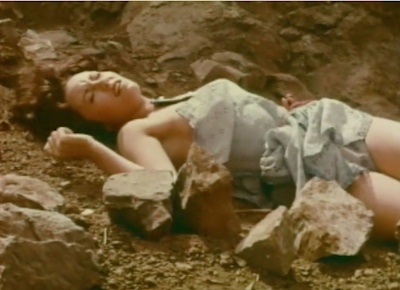
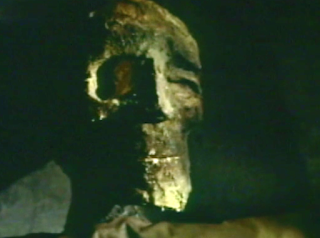
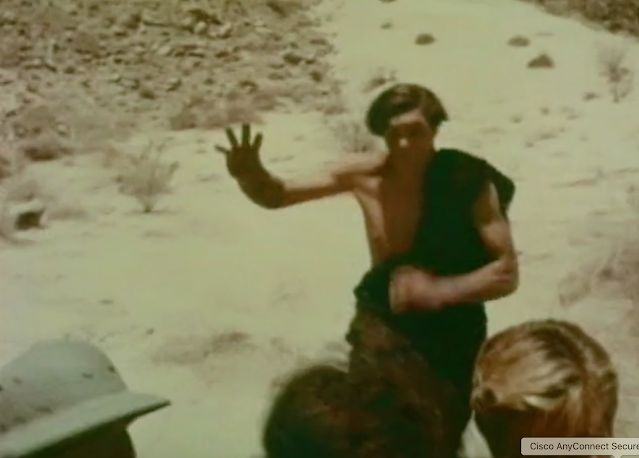
Man, my 12 Days of Ed Wood has won ray over schedule (this is only night 10), but I have an excuse: India's Harinam Singh and his 1999 (sometimes listed as 2006 since that's when it was discovered and shared and embraced by the weird film community) anti-opus Shaitani Dracula (English translation: "Satan's Dracula"):  Actor, director, writer, presumably editor, Singh is a one man band of cosmic proportions. He knows not how to focus a camera, nor tell a story, nor direct a scene, nor--for a single moment--be anything but wildly hilarious. This is anti-genius of the sort that makes Ed Wood's best seem woefully coherent. Hell, it even make the Turkish Star Wars seem like 2001. 

Consisting of mostly interchangeable set of blurry shots of monsters (dudes in masks, girls in plastic fangs and cut-out styrofoam cooler-lid wings) chasing people, the film pulses lightning, and hot girls cooling down in outdoor showers at night (fully clothed); dark cloud insert, lurches into daytime standing around by cars and girls arguing with dopey men. Crazy-lame howls and high-pitched titters, rain and wind effects fill up the soundtrack. Music and songs from old Bollywood classics start and stop in a random crazy quilt of overlapping and jarring noises and "booooo-oooo!" style spooky vocalizing.  Add mixed up time frames, interchangeable actors, inscrutable dialogue (none of his films, as far as I know, have ever been dubbed or subtitled into English), stir, rinse and assemble with a rusty splicer and a blindfold. The resulting mess can set you free. If you believe in madness. 

I know I'm not alone in my reverence. Diabolique's Keith Allison exclaims: "It is a film so far beyond the pale of anything we can recognize as a movie that one can hardly call it a movie. An experience, perhaps. Enlightenment." Dan Budnik of Bleeding Skull announces: "You can try to blink the crazies away but this film won’t let it go. It’s a child’s vision of a vampire movie that verges on a wet dream of epic proportions." And Teleport City declares Shaitani Dracula to be: "a film so bonkers on every single level that it has become a legendary work of art."  Wayne Butane exclaims "It's a perfect storm of filmmaking incompetence."  The Wood of Bollywood shall endure! 
Gaze into the eyes of your dark lord

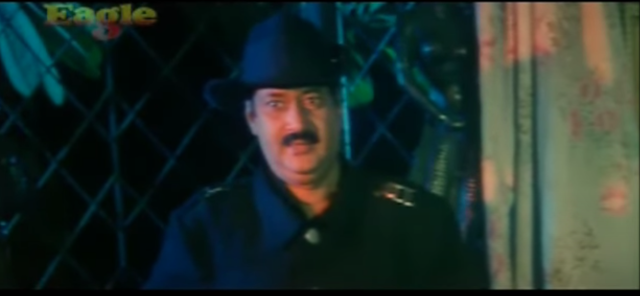
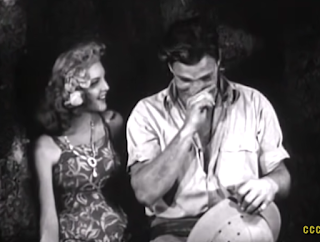
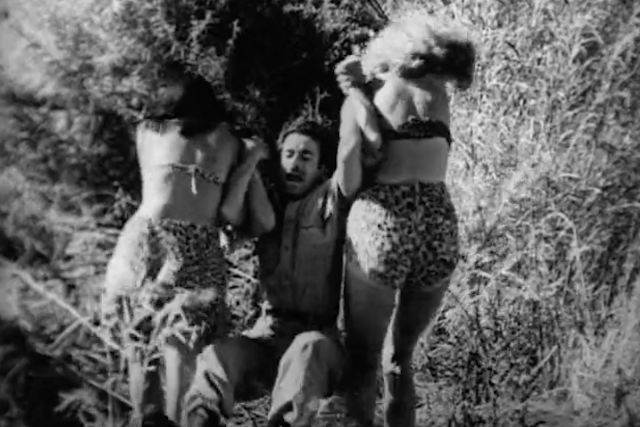
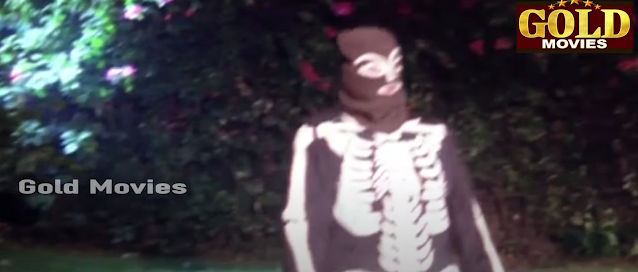
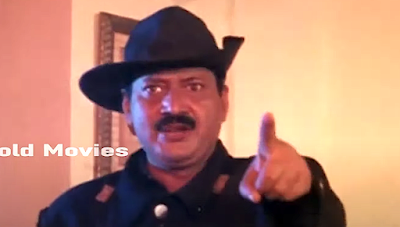
Singh himself plays the title role a middle-aged Indian man, ever-clad in a dark blue Union cavalryman's hat and coat (no cape, and no reason). With a jet black mustache, double chin, and twinkly eyes bouncing along on presumable cue cards to the left of the camera, age makes a lot of grand announcements--in booming echo--laughing maniacally and saying "Dracula" every other word, as if continually reminding himself and everyone else he's the star. He keeps his head centered in widescreen medium-close-up (ala above) moving slowly from side to side, giving the impression of being vaguely animatronic  Sometimes we cut to him wearing his dime store plastic fangs but he looks like he's always trying to spit them out (if you've ever worn them yourself as a kid, you probably get why).Most of the time though, is spent watching masked monsters wrestle with scantily clad young maidens while thunder crashes on the soundtrack, the horror movie archetypal primal scene stripped down to an eternal Halloween wrestling match. Stoop-shouldered men in skeleton sweatshirts and flea-bitten wolf costumes throw biker shorts-clad maidens to the ground for some air groping. 

Here's an example: a pair of lewd older male buffoons walk through an emptied park at nighttime and are gobsmacked by the sight of a gorgeous girl taking a backlit shower (clothed). They walk behind her making lascivious gestures but then she suddenly turns around in a wolf man masks (with spiky red hair) and bat wings. They run! Next shot they're leisurely climbing into a van, all relaxed with about five other guys, as if Singh needed a shot of them escaping so just filmed them climbing into the van to go home after an all-night shoot. 

That's OK. You either love this film instantly or watch five minutes and turn away. Some of us just want to look in his big Harinam Singh/Dracula eyes, his very plain and unscary house, his stable of pretty girls in tight biker shorts, his mix of "where do I put my hands?" self-consciousness, delight with all he surveys, and nervousness his crew is fucking up, i.e. failing, as usual, to keep him (or anything) in focus.

As yes, focus. It's a problem that occurs all through the film, a problem that even the most incompetent western directors usually master fairly well. In fact, if a shot is suddenly in focus, the question arises of whether it was lifted from another movie, replete with incorrect (stretched or compressed) aspect ratio. But hey! Singh is making a movie, or something, and he's stocked it with babes who have to do what he tells them. Heh Heh. And what he tells them, presumably, is to take lots of outdoor showers, in the park, at night, with their tight biker shorts and halter tops on; and that later they should lie still on tables while he paws at them like the Indian Paul Naschy. As with Naschy, it doesn't track as offensive since it's so naive, so unfiltered. I remember when that Farrah Fawcett Majors swimsuit poster came out. I was ten years old and hat it on my bulletin board opposite my bed.  I used to gaze at her longingly the wee hours of the morning, flushed with a strange, delirious desire I could not explain, an all-consuming child's first rushes of lust, the sort that as yet knows not of any attached release or fulfillment, or shame.
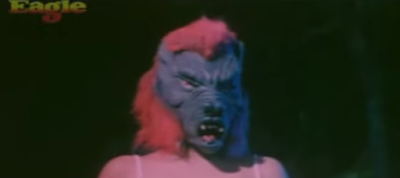
Focus may be a big problem, and narrative may or may not exist since I don't know the language, but none of that matters when the soundtrack is so richly insane. Thunder crash inserts bridge each shot; wind howls; inappropriate orchestral cues surge and retreat. Sometimes the sound kicks out altogether or we hear dialogue leaking over from some long cut clip. For songs we hear the same classic Asha Bhosle/R.D. Burman song (from an older movie) played twice. There is no dancing or lip syncing whatsoever during these moments though. The movie keeps going, with scenes of yelling. We get a startlingly in-focus shot of a very attractive and well made-up girl yelling at a boy who doesn't seem to deserve her. The shot seems lifted from another movie. When the music ends there's demented laughing, bowed saws, lurching drums, and high pitched giggling, like a man trying to do an impression of a girl doing an impression of a laughing mouse. There's also the lamest werewolf howl ever heard, with the voice of the actor cracking feebly over the high notes. 

As is often the case with Bollywood films, within every few sentences of Hindi spoken, some basic English phrase flits by, like "I think you're right!" or "you understand!?" or "are you possible?"(just as French ears might perk up when we say 'noir' or 'oui' or 'zoot alors!"). Magically, this keeps our English speaking ears alert for more. The result: a sweet structuralist decalcification akin to Godard or Antonioni at their most 'whatever'-est. 

Fans of foreign films know that the trick around 'subtitle alienation' is to listen to the language, trying to understand the words spoken, using the subtitles sure, but not just reading them like a book and forgetting to listen). In somrthing like this, especially since there are no subtitles at all, the English phrases are constantly tricking us into auditory hallucinations. Our brains hear English phrases where there are none, assembling words out of the gushing torrent of syllables the way we might see strange messages in the white noise on TV. That they seldom make sense is part of the rapture, delivering fractured haiku and random Mad Libs surrealism galore. "She had a cabbage to you," was one I heard a lot, also "Jazzercize my bag handling," and--my favorite-- "the ladies are not a salter to your Brenda Lou." (2)

After long nights of mayhem we cut to the cast of young people hang around the park in, standing side to side in a long row so the widescreen camera can get them all in the shot, a shot probably from some other film since it's actually in focus (or the camera man has night blindness). Then it's night and there they are again, camping out in the middle of a brightly lit public park.  Don't ask why the local officials and park patrols allow such things-- that's not your business. Maybe they had a permit. Maybe they didn't. Maybe that's something people in India just get to do, like hippies up in Golden Gate Park in San Francisco, only with more (a lot more) make-up.  And don't worry, there are only maybe four or two daytime exterior shots in the whole film so don't let the focus throw you kid. Most of the time it's night and there's no time to figure out what's happening in the blur onscreen before some girl in a red-haired wolf mask leaps out of the bushes, or Singh's Australian cavalry officer Dracula comes floating by, laughing maniacally with hands outstretched, camera wisely not showing what's under his floating feet. Though there are plenty of people around, women still  have a habit of wandering alone into the darkness. Or sleeping, sometimes with big lights right outside behind their tent, making it seems like they just pulled over to sleep in front of some random backlit green screen during an all-night film shoot. This allows all sorts of weird ghost like things to occur, including a goose, and a foreground looming face with a big beard, a kind homunculus / Tibetan demon / half-gypsy combination lit up in red leering out at the camera. Chilling! Then you realize it looks like a bearded actor/red gel lighting combination recycled from Singh's Shaitani Atma (1998).
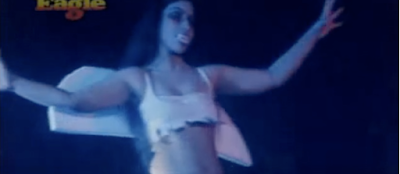
That crazy goose, though - no explanation.  Thank god, I don't think he was even trying to surrealist.

My favorite monsters are the girls in white with the bare midriffs (left) who sprout fangs, and badly-cut styrofoam wings and make little flying gestures with their fingertips, arms akimbo, wobbling uncertainly along, trying to keep their balance while standing up on AV carts (my guess) pulled along by people just below camera. 

 Though many are chased and mauled and pounced on, no one in film seems to actually die, nor bleed, and certainly no one comes back as a vampire, or seems to remember what just happened one minute to the next. At one point, while lustily rolling around on top of a nubile victim, our wolf man just stops, gets up, finds his wolf mask, which slipped off in the fracas, and puts it back on, camera still rolling, the girl patiently waiting for him to resume the scene. 

Rather than get up and go to the loo, Shaitani Dracula practically pees on itself with the desire to please, to deliver the kind of movie that can enjoyed in a blurry millionth generation dupe on a cell phone or in a movie theater so crowded with restless infants, chatter, and cigarette smoke that paying attention to anything longer than a single random shot or two is impossible. It's a movie that can be engaged with anywhere along its timeline. Slice off any two minutes of the film and you can grow a whole movie from the cutting. I doubt if there was script as such, just Singh running around giving impromptu directions while pulling feebly at the focus lever. Once enough chasing around the park occurs, enough layered laughing, howling screaming, and making wind effects have floated by, the expansive action constricts down to a long drawn-out, hilarious "fight" between the lead--a dishy lady in tight red vinyl halter top / biker shorts combo--and Dracula. There are lots of terrible fake punches. Her hot legs keeps dragging the camera down to them like they have a gravity no tightening of the tripod can forestall.  But then, in the middle of their climactic skirmish, he cuts away to a blurry shot of a guy walking aimlessly around in a skeleton hoodie. 

Why? We never learn, as we go right back where we left off in the ogling, cross waving, and the kind fake elbow jabs five year-old boys give each other after watching the 1966 Batman TV show. If that's the kind of thing you and your friends used to do at that age (as I did), you're liable to love it. It's ike sneezing out a chunk of your brain and finding a long forgotten breakfast cereal prize. What else, you wonder, might still be up there?

OTHER SINGHS

I've seen this film five times since my first viewing last month; I haven't pledged as much energy to his other films yet, which are viewable on YouTube in even worse shape. I did watch most of his Shaitani Aatma (1998) which seems like a dry run for the 'magic' perfection of Shaitani Dracula. None of them have subtitles on YouTube, but they don't entirely need them. The elements never waiver. A bunch of young people talking somewhere about the monsters, contrasted with monsters stalking and molesting the young people. That they are so enjoyable even without knowing the language proves their mettle. Without subtitles or dubbing it would be hard to stick with the average Bollywood feature, which is usually three hours long and suffers (in western eyes) from a tendency to bog down in soapy intergenerational melodrama, pastorale romance, and interminable and way-too-happy music numbers.  Harinam Singh's films clock under two hours and "focus" on what we want most: guys in monster masks chasing pretty people around through misty gardens at night while thunder strikes, wind effects howl, and someone goes "booo-OO--ooo." 

All that aside, like the average childhood recollection, folded into the mostly wholesome play violence and Halloween spookiness are some sexually unsettling moments. In one, we cut from some random scene into the middle of what is either a couple fooling around or the a kind of date rape. If you've ever been ready to leave a party and accidentally barged in on a couple getting busy in a bedroom where you thought the coats were kept, or something like, and you said sorry and closed the door and then later ib though: "Wait, was that woman trying to get away from him? Was she even awake, or so drunk she didn't know what was going on? Was their consent there?" You only saw for one second and then turned away and shut the door on embarssed instinct. What the hell do you do with this latent concern, besides nothing and then obsess periodically about it for the next 30 years?

But I wouldn't worry about that here. I doubt anything was even sexual, beyond all the leering and objectification. Anyway, why let it bum you out?

As Singh's voice shouts at the end of the film as the survivors walk out of Drac's house into the morning sun, "Ah-MIN!" 
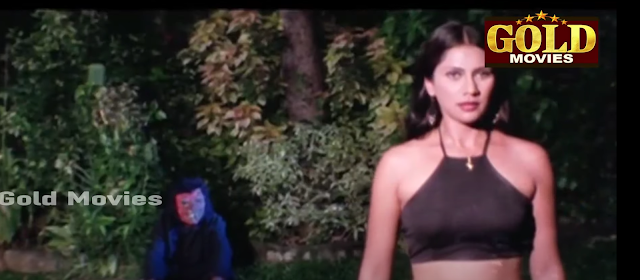

BAZIN + HARINAM = Post-Structuralist Ecstasy

The origin of mise-en-scene as a concept comes from Andre Bazin, the father of French nouvelle vague and auteur theory, who came of age in the movie houses of Paris in the wake of WW2. Hollywood imports--freed from six years of Nazi embargo--were once again flowing onto French screens, but very few had subtitles or French dubbing. These kids were so cuckoo for cinema they sat through them anyway. Being able to enjoy a film without having any idea what anyone was saying was to appreciate it as true art, as a system of images and music and sounds, freed from all the distractions of language. A film might be about a murder and greed run amok after a bank robbery, but Bazin and co. knew it was really about a bunch of male actors sitting around in a shadowy room. Freedom from language made guessing what came next impossible, with the result every film was 'new' the way it would be to a child who understands very little of adult conversation. After subtitles and dubbing came in, Bazin would keep this alienation affect alive by hopping from cinema to cinema, walking in on movies halfway through and leaving as soon as he deduced where it was going, thus to keep the sound and images 'pure' of narrative (and all the unconscious hypnotism such narratives induce).

Artists like Brecht and Godard thought to use this sense of narrative hypnosis against itself, thus to wake us up from the unconscious pleasure/anxiety spectrum of narrative into something like truth, the truth of the real that lurks outside the Platonic cave. The truth can help us wise up to the signs and symbols our brains rely on to keep us asleep. It turns out our brain's willingness to plunge forward into the warm goop of story (the shadows on the cave wall) can be turned against itself, like holding a mirror up to one's own inner Medusa, letting Pegasus escpape from her neck and fly us to freedom. 

Brecht and Godard do it intentionally, but when that carrot and stick style film reward/punishment dichotomy is derailed by incompetence (Wood, Singh), it's a heckuva lot more fun. We become wise to the mechanics of our own hypnosis and thus free from the anxiety of our age, in both senses of the word, even while indulging in delirious nostalgia. We're delivered to a place of childhood rapture when even a threadbare thrill contrivance like Bride of the Monster or the YMC fair's rickety spook show ride could thrill our imagination while making us laugh and see through the contrivance at the same time. To be sure, there are monster movies that employ the same cheap latex Halloween masks and ratty bear suits, fog machines and haphazard editing of Singh. But dudes in masks chasing beautiful Indian girls in skin tight lame shorts, or women in masks or fangs and wings chasing middle aged gross men? Never. It's so basic, so primordial, so mythic,  it lives in the same happy place we find when 'remembering' our favorite classic horror movies, happier even then our experience watching the films themselves.

The catch with Singh's and Wood's kind of supreme WTF incompetence is is that it cannot be faked or even attempted. It either happens or it doesn't. When normal people try to make an intentionally weird/surreal film it comes off as just hack posturing, like Modesty Blaise (1966), Boom! (1968) or Casino Royale (1967). But when an incompetent weirdo tries to make a 'normal' movie, it comes out like Plan Nine or Shaitani Dracula. David Lynch is the only American filmmaker to really crossover in both directions, but he's still has producers and investors who need profits. Sometimes, like in Mulholland Drive, he can cross over in such a way as he brings even the middle class and bourgeois audience along into the blue box abyss. But someone like Harinam Singh or Ed Wood arrive there in the opposite direction, leaving the bourgeois in the dust, which is always better. They're so good at estranging us from the narrative's normal symbolic order that our whole set of filmic expectations goes out the window. What is left is a kind of giddy lysergic freedom from the bonds of language. It's better than being either safe at home or lost in the unfamiliar. It's finding one in the other and vice versa- the world finally locks into place by falling totally to pieces. Thanks Harinam! You broke it and fixed it at the same time! Ah-Min! 

Shaitani Dracula is currently only avail in various quality transfers with large "Gold Movies" or "Eagle" stamps on the edges of the screen and with no subtitles; the best I've found so far is here.

NOTES: 

1. HBO, AMC, IFC and their ilk rely wayyy too much on the 'smash cut rut'- my phrase for when two people meet somewhere, seem to barely like each other, and then we smash cut to them in mid pre-orgasmic rutting in some car or bedroom, thus skipping foreplay and everything else, their eyes usually glazed over and distracted. It was eye-popping / disturbing when they started doing it in the 1990s with shows like Rome, Oz and the Sopranos. Now it's so overused it's a wonder kids know what foreplay even is. HBO, you broke our society! No wonder dudes are such a menace these days (for more, see The Rutting Season)

2, - Considering my connection to girls with the nanes Susan Salter (a girl I crushed on in my PA elementary school) to Brenda Wiley (the Central NJ killer who was cousin to a girl I knew in NJ) to Lou- the nickname of an old (NJ) girlfriend - it's like an Tarot I-Ching to areas of my earlier love life my unconscious probably wishes I was more interested in. Yours may certainly be different, but listen and see if you can't hear about the old Salter to your Brenda Lou, too. 

See also the Other 11 Nights of Wood, and Wood-esquery:

Thursday, March 31, 2022

Playing Card Flapping in the Wheel of Progress: BEAST OF YUCCA FLATS (1961)

HIPPOLYTAThis is the silliest stuff that ever I heard.
THESEUSThe best in this kind are but shadows; and the worst are no worse, if imagination amend them.
HIPPOLYTAIt must be your imagination then, and not theirs.
THESEUS If we imagine no worse of them than they of themselves, they may pass for excellent men.                                                 --- Shakespeare, Midsummer's Night Dream 
NARRATOR - Flag on the moon. How did it get there?
                                        - Coleman Francis, Beast of Yucca Flats

(Night 9 of the 12 Days of Ed Wood)

Not to brag, but those of us who were kids in the 70s had great imaginations. Forged in the banal eternity of backseats spent on long drives for hour after hour while dad chain-smoked, cursed the traffic and the radio blared static, our minds imagined whole movies we'd only heard about from start to finish. I remember taping a picture of Charlie's Angels to the back of dad's seat and pretending it was a built-in TV screen. Unless we had a super 8mm projector and a highlights reel bought from the camera store or the back pages of Famous Monters of Filmland, everything we saw onscreen was transitory, never to be rewound to 'check' if what we thought we saw was really there or not. If you missed it, you then had to take some other kid's word on what happened the next day until, maybe years later, it showed up again as a rerun (and the part you remember may well be edited for time and/or content so now way to prove what you saw wasn't there). From recess and lunch time synopses of the previous night's TV movies or shows, our minds filled in enough wild effects to make Lucas and Spielberg quake in their shoes. For us, movies were just the finger pointing to the moon. Our imaginations followed the direction and filled space with an array of monsters. 

Now, with CGI, we laugh at anything other than the finest finger, the most vividly rendered CGI moon. Our imaginations have shrunk from misuse, the way our brain's ability to produce dopamine shrinks when when addicted to opiates. That said, not all 'bad' movies (as in those that allow space for "our imaginations to amend them") are gems. Imperfect doesn't always mean endearing, Contrasting the totemistic ardor of beloved outsider auteurs like Cozzi, Wood, Ormond, and Steckler, are bottom line bores like Jerry Warren, Larry Buchanan, and W. Lee Wilder, fellas seem contemptuous of anyone who watches their films as anything but sleep aids or necking background. Films like The Incredible Petrified World, The Creeping Terror, Face of the Screaming Werewolf and Phantom from Space make perfect coma inducers when you can't sleep in some cheap motel and they show up  at the 4 AM late late late show. (1) Otherwise, there's not much meat there. 

But! There is yet another category, where the sublime is awakened almost despite the filmmakers' best efforts towards mediocrity. Sometimes we get the nouvelle vague child's eye surrealism and the coma-inducing flatline. Probably the best--maybe only--example is Coleman Francis' Beast of Yucca Flats. One can never tell if he's trying to actually make a good film or not. 

I hope I never find out.


"Touch a button. 
Things happen.
A scientist becomes a beast."

The first few minutes of Beast of Yucca Flats create a grim, sleazy claustrophobic atmosphere that runs counter to the rest of the film with its outdoor desert expanses. We hear the loud ticking of an off-camera clock, the cop of time's relentless nightstick strikes. A pretty young woman gets out of the shower, sits down on her single bed against the wall in a closet sized room, and get strangled, killer POV-style. The woman seems to not even know someone is coming at her as the camera POV crowds into the corner of her bed--so tight it's like she's caught on a glass slide. As we fade to credits the killer holds onto her legs and we see the bed starting to rock - leading to whatever weird rape-necrophilia sleaze one's mind can conjure in 1961 without waking the censor. Roll the opening credits! Let us never speak of this scene again, except to wonder if Francis shot it himself (not his style) or it was inserted later by some profit-minded producer/distributor who figured if he at least give the people something salacious, they might not want their money back. In a strategy no doubt gleaned from Godard's use of Bardot's derriere Contempt. (1), the film front loads the sleaze, get it out of the way, and then forgets all about it.  The result keeps us on edge for the rest of the film, slightly unnerved. 

But we're not here for promised salaciousness, we're here for Coleman's weird fractured poetic narration, the incredibly 'off' editing of scenes, and Ed Wood's go-to heavy, Tor Johnson. Here he starts things out as a Russian defector toting a flammable brief case with secret information on his nation's moon trip (we planted our flag first, but Russia had apparently dropped theirs from orbit in 1959). KGB spies intercept him at the airport, shoot his CIA escorts, chase him out to an empty field in the desert right before a nuclear bomb goes off. (he didn't see the "Testing Range" sign hanging in the weeds).  We know he took a hit because his brief case is on fire on the ground. But this don't stop no Tor!

No longer a scientist dedicated to "the betterment of mankind" Tor has become "a beast." who "kills for the sake of killing." The moon forgotten, Tor wanders around the desert scrub, strangling people with his meaty sunburned fingers like a combination Hulk and the mutant father from Barn of the Naked Dead. When he's riled, which is often, Tor waves a stick and makes dubbed "Yaargh!" noises (I think that's Coleman's voice dubbing him as well narrating). Soon two local police search for the killer of a couple on the rood, and end up shooting at the wrong man, a father trying to find his two "adventurous boys" after they get lost wandering around in the scrub. I guess that's the atomic testing ground? The sense of geography is not clear. It seems like they just dropped that bomb in the backyard field without telling anyone. 

The film is barely an hour long, at least ten minutes too short to be just an actual movie. And yet it feels like forever, despite the beauty of the rock formations that look like a drunkenly passed-out Willdendorf Venus. The main chase/climax---the only time it's suspenseful--doesn't even involve Tor. It's this poor dad being shot at by the deputy (Coleman) while running from Coleman's beloved little prop plane. In other words, there is no bad guy or good guy here, just dumb decisions and wheel of progress running over everyone in sight. 

Why this film is one of the 12 Days of Wood is not only cuz Tor Johnson but because the thunderous "Wagner with the DT's" library score, the same one Ed used for Plan Nine from Outer Space (and Ed's pal Ronnie Ashcroft used for Astounding She Monster). It's probably even literally the same album, like they passed it around. And "Yucca Flats" is, apparently, the name of an apartment complex Ed once lived in (making Ed the real beast?). Some of Francis' voiceover seems a bit slurred (!) and some of that Ed Wood madness is apparent in both the narration's associative leaps and the ease with which a big nuclear blasts erupt at any given time in any given place. 

The only debit: Francis lacks Wood's cock-eyed genius. If Wood wrote the script, Yucca might have more cult status. Instead, for Yucca to improve on repeat viewings, you need to surrender to it the same way you might surrender to Jess Franco or Jean Rollin, i.e. to be half-asleep from the start. It doesn't really work at midnight showings or the buds over for beers. It only works when you need to escape even the confines of comfort and retreat into a kind of holding pattern, void of all meaning and value. When you want that lack of feeling, when the smallest emotion could put you back into a panic attack, move to Yucca Flats. You can fall asleep to every night for years and never see the same film twice, or any movie at all, really. While Coleman's narration postulates that all the events you see onscreen are somehow linked to mankind's relentless scientific progress, what we see are just strange looking people running and shooting and waving their arms as they race around the middle of Southwestern scrubland or hang out at a small local airstrip (maybe the same one from Wood's Fugitive Girls? Either way, we know Francis must have a plane there; it's practically the star of all three of his films). 

Say what you will about Ed Wood, he had a sound man on the set, and a boom mic. Sometimes. And Criswell's narration was surging ever higher on plumes of uniquely Woodian giddiness and not striving for sociopolitical resonance. 

Still, Coleman's narration is pretty special: a weird series of fractured haiku that serves as a bitter existential Korean war vet drunk bitterness flipside to Ed's WW2 vet drunk rapture. With Coleman, you can be zapped by an A-bomb, or shot at by a deputy from an airplane, just for being alive. Francis' jaundiced view of 'scientific progress' seems to be that it's better to be either high in the sky or asleep in your bed. We agree. Be the one killing, not the killed. And if you're going to get caught in something, let it be a race for the betterment of mankind rather than the grinding wheels of progress, or the blast radius of the nuclear age.

His narration warped, deep, occasionally slurred, Francis' jaundiced outlook is rife with strange and abstract tangents that makes the Ed McMahon rants of Daughter of Horror seem like Raymond Carver. Furthering his bitterness, a girl is rescued alive from the beast. "She's still breathing," notes an officer zand then seconds later "doctors can't help her. Maybe angels, but not doctors." We don't see any noticeable change, she seems asleep. It's such an odd choice on Francis' part. Either she's dead or she's alive. In the Francis zone, she survives, only to die as soon as you mention doctors, with no noticeable change in either her or the the voices of the cops carrying her.

If you're up for it, though, Francis' voiceover is a thing of slow-action beauty, and perhaps influential on future filmmakers. Watch Yucca and then watch Guy Maddin's My Winnipeg back and you'll hear the same hypnotic repetitions of words and ideas, the same mix of sensationalism, poetry, and somnambulistic drifting. Sentences come back around like the shooting gallery ducks you missed the first time, clattering around on revolving wheels. With Maddin, it's the wheels of moving train taking him away from Winnipeg while he drifts in and out of sleep; for Francis, it is surely the wheels of progress, ensnaring everything and everyone while they're rousted from the planes and beds and sent staggering dazedly into the unceasing desert sun. 

One element that would have helped things along would be some indoor soundstage shots. After that opening, we seldom leave the glaring outdoors during the day (or day-for-night) but at least it's in black-and-white and well-preserved. At time it feels like we're looking at an Ansel Adams or Dorothea Lange desert photography book while wearing very dark sunglasses. Is it supposed to be (day for) night, or did the photographer put on a sun filter? The answer is just the howl of the wind, or is it a coyote? Either way, it's not on the soundtrack. Nothing is... except Francis' narration, the occasional gun shot or snatch of dialogue (never synced to lips) and that incessant Plan Nine music (its brassy stabs never once synced to the editing). Oh and the mom (Mrs. Coleman) occassionally coming in on the soundtrack with sleepy maternal utterances like "Coyotes? Don't you be playing with no coyetes."  And "come on."

There are so few indoor shots in Flats though, and so little in the way of foley/diegetic sound, you may get a little wacky after awhile. But Francis know what he's doing. Aside from the opening murder shot there is one more scene set in the top floor bungalow of one of the deputies, that makes us instantly feel calmer and sleepy, the image equivalent of Ms. Francis' overdubs:

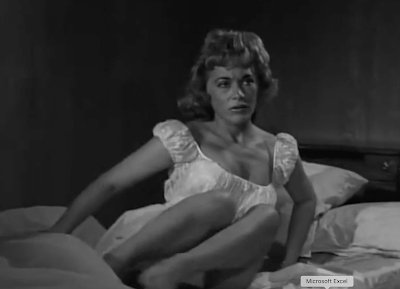
 It's the morning, the killer has struck; a deputy, Jim Archer, is roused from his morning shut-eye by a visit from the sheriff, irritating his sleepy wife, who  sits up and makes sure to show off her deep tan legs and cleavage (terrible bangs though). Clearly she's irritated at some unheard off camera instruction, complying only in the most passive/aggressively manner, the highlight of which is when she bends over facing the camera, so her cleavage takes up the bottom half of the screen, and half-heartedly feigns putting on pants. "See ya later honey" we hear a voice says, in that ghostly post-sync echo so familiar to fans of Doris Wishman. The wife scowls at her off camera exploiter, and gets back into bed, once again giving us a few precious seconds to dig those tanned legs. Would we could stay with her and go to sleep instead of going outside in the glaring heat to shoot at innocent men and climb mountains to nowhere. Instead we're back out amidst the yucky flats, the voluptuous curves, the rocky hills. 

"Vacation time - man and wife; unaware of scientific progress.

Their car pulls over on the road so the man is checking the oil or something, oblivious to the giant Swedish wrestler approaching; Jeff's scarred and meaty hands wrap around him from behind, killing him instantly as he barely even puts up a struggle, almost grateful to get his part over with so he can get out of the sun. We think surely "wife" sitting in the car, kind of nodding off, is next! 

Unaware of the scientific progress that has left her husband dead behind her, she's ready for throttling. We're expecting Tor to grab her from the front seat window and pull her out like he did with Mrs. Trent in Plan Nine, but instead his hands slowly emerge from the dark of the backseat! He reaches right through the rear view window and grabs her from behind; how did he get there? How could he reach right through the back of the back of the VW hood without the wife looking anywhere but at her cigarette?

Close-ups of the deputy Joe Dobbs picked up, Jim Archer (Bing Stafford) "wounded parachuting over Korea... also caught in the race for the betterment of mankind." Here is a man who never closes his mouth or opens his eyes--the horseshoe of hair around his slick bald head seems to be blowing backwards continually as if he spends a lot of time driving with the top down and never washes. We get a close-up so we can wince at his crooked teeth. We learn he's "trained to hunt down his man... and destroy."
 
Another family meanwhile is on the road. ("Vacation time. Man and wife. Unaware of scientific progress"). They stop at a gas station. The gas station attendant is lazy, cooked by the heat. but not thinking of moving to the shade Francis' narration sizes the guy up for us. Whatever wheel he's caught in or progress he's unaware of, well, count him out. 

"Boys from the city, not yet caught in the wheel of progress, now feed soda pop to the thirsty pigs."

It's  not clear why this guy keeps his pigs (and a captured coyote) trapped outside in a place with no shade in what is clearly blistering desert sun. It is clear this was never a movie meant to be studied this closely. It hopes you are paying, at best, moderate attention so you don't really notice these real life horrors (those poor animals), but just keep your eye on the playing card named Jeff Dubrovsky as he rattles every spoke on the wheel of progress. The reels of the film keep spinning, barely pausing to observe the passing absurdity. I could listen to it forever, dozing in and out of a pleasant Remeron coma. 

Erich Kuersten... dozing off... 
in a Remeron coma. 
Watching. 
Watching because Tor. 
Watching Tor wave his stick.
Erich with his Remeron, Tor with his stick,
a late-night paradise.  No wheels in sight, just mentioned over and over, revolving.

Finally arriving in his shady cave, Tor/Jeff throws a huge rock (which is clearly a real rock. Way to go, Tor!) and then shakes his fists at the sky like an old codger at those rascally kids. He's mad the dead girl he brought up there is gone (taken away by the sheriff) but since it's Tor he also evokes an angry infant. As Francs' narration might put it: The old and the new, all at once.
 
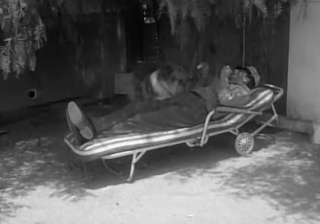
Rock thrown, fist shaken, Dubrovsky begins the laborious process of laying himself down on the very hard and rocky ground to take an afternoon nap. His reticence to just plop down onto the cave floor brings to mind how painful it must be to be Tor's sunbaked Nordic skin, smashed between a hot, rocky, pebbly/dusty surface and that immense wrestler weight, like a gentle cashmere sweater packed under a bowling ball. We feel bad watching a man of Tor's age, skin pigment, and girth, forced to stagger around under the blazing desert sun for hours on end. But we're here for it; we may as well make sure he did not sweat in vain. So onward: Tor raves; motionless mom stands, basket ever at the ready, relentlessly dad flees; incessantly Jim Archer shoots; cluelessly the boys wander. Having sought shelter deep in the recesses of Jeff's cave, we get the second best shot of the film when they carefully creeping past his sleeping girth out into the blazing (?) day/for/night sun. 

Anyway, that bit in the cave, the backseat strangulation, and the very last shot with the baby jackrabbit are alone enough to make Yucca worth it a thousand viewings over (it actually gets better around the fifth visit). It's classic Tor. Though the scene with him laying halfway on top of the dead girl could have gone all roughie/sleazy nut it's clear Tor is a very gentle giant, which gives the scenes where he's lustily lashing his radioactive lips while lying atop her a jokey playful edge. We never hear the sound so we don't know if his mouth is open because he's an insane lusty monster trying to kiss or lick her or is he just moving his mouth, presuming dialogue will be dubbed in later? She's supposed to be dead, or nearly dead. But she seems like she's suppressing a giggle, or a wince. It's clear both are just kind of jovially embarrassed by each others' closeness. 

Time to get out of here. First, a word on the wife: there she is (below), Mrs. Francis, standing cactus-like in the middle of the desert; picnic basket ever at the ready, forgotten by all but Coleman's camera, which does at least cut back to her occasionally. It never even occurs to her she can put the basket down. Maybe she thinks some average bear is going to rush out and grab it the moment it's on the ground? Even a hungry coyote smelling the food might bring some kind of relief to her awful isolation. 

"Vacation time. People travel east, west, north and south. "
Though his entire oeuvre was more than a bit bent by his joyless outlook on life, his natural affinity for the grotesque, and his utter lack of attention to filmic detail, this Luddite tale of an obese scientist turned into a ravening atomic Beast survives as his weirdest anti-achievement. - Alfred Eaker, 366 Movies.
We end the film with the the wife wandering alone and forgotten around in the scrub; the two boys are rescued in long shot with the 'officers.' Dad is still wandering with the 'neighbor.' The night, like life, crawls onward. Mom and kids are reunited by the cops but we see that only as some far off shadows. Francis isn't interested in that --his camera is up close as Jeff dies. Then the most curious thing: a fearless young jackrabbit comes up and start trying to get at whatever snack the dying Tor has in his shirt pocket. Gingerly, with the gracefulness of a tender giant, his meaty hand pets the rabbit, kisses it and then he is dead. This is life in Yucca Flats. No mercy for the loser. The cops and kids don't even think to put a blanket over him. Off they wander, the wheels won't wait. They can always find the corpse again tomorrow, one guesses, just by watching for the vultures.

These are the rewards to the few who made it to the end, those who used their stupefied bemusement to transcend reality, or those who just dozed off somewhere along the way. Or both. The beauty of the Coleman Francis' opus, is that you can do it all, while not doing a damn thing other than watching the wheel spin endlessly... until all is calm, and all is dark. 


NOTES:
1.  I remember a very disturbing opening scene from a film called Monster of Piedras Blancas, where a young couple sneak away from their friends to a nearby cave to fool around, but are surprised by a monster who rips off one of (or both of) their heads. Too disturbed to continue watching, we flipped the channel to either the opening song of Bikini Beach (I just remember a couple kissing while eating a long piece of red licorice, which seemed, after the decapitation and the girls pitiful screaming, to be extra horrific to my six or seven year-old mind, burning the juxtaposition into my childhood mind). Now going to watch Piedras on DVD, that intro scene is gone, was it not part of the 'actual' film? Like Yucca, the rest of Piedras Blancas seems very boring by comparison. The DVD even has the aftermath of the scene - the headless couple found on the beach but now we only see them from way up atop the dunes looking down. What happened?
2, I have them all. My whole life is spent in service of that cheap motel 4 AM feeling, waking up with a start and it taking several minute to realize where you are, why, who is with you (if any), what time is it (thus how soon before everyone else wakes up and starts with their mundane reality). Next, where is the bottle and how much is left? And finally, how much time you have to drink yourself back into a pleasant coma, watching some obscure 50s black and white science fiction movie on the local TV station and thinking "ah, this is paradise." and then be knocked out again when the people around you wake up, so you can pretend to be normal. That's my moment! 
++

See also the Other 11 Nights of Wood, and Wood-esquery:

Thursday, March 03, 2022

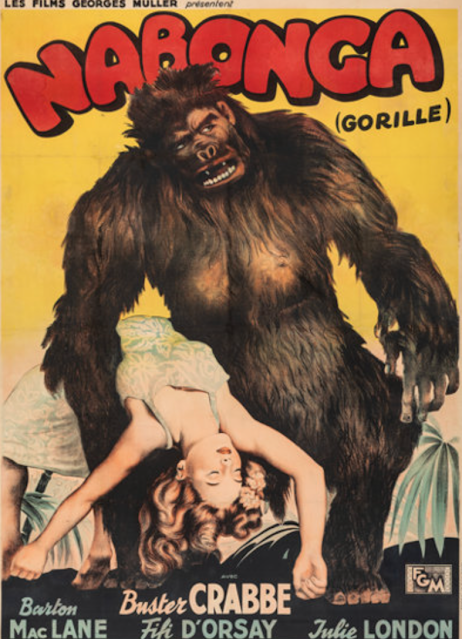
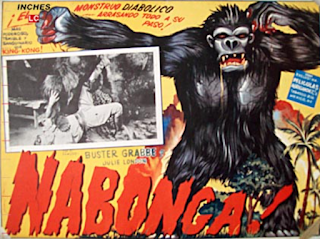
Noisemakers: NABONGA! (1944) , BOWANGA, BOWANGA (1951), EEGAH! (1962)


12 Days of Ed Wood, Night 8

Like everyone, I have a soft spot for old crappy, stock footage-jammed jungle movies from the 30s-40s (and sometimes 50s) but---as befitting the times--with a caravan of caveats: no children (that means you, "Boy"); no caged animals; no wasting time with excessive frolicking chimps (especially ones confusingly named "Cheetah"); no prey-favoritism (i.e. "Boy" rescuing antelopes from starving leopards); and above all no race-favoritism (Jane making Tarzan protect obviously bad white guys from indignant natives and/or disgruntled animals). I also dislike when a film wastes too much time on montages indicating a long boring trek through jungle heat, and arguments with suspicious native porters. Oh and I hate the ones filmed in color, unless the color is really well restored. I'm also not a big fan of Johnny Weismuller, truth be told and that dumbstruck blankness I see in his eyes. So what's left? 

Plenty, as it turns out, I love white women living as savage goddesses; the meta-clever practice of mixing new actor footage with older jungle stock footage; crocodiles (with alligators discreetly thrown in), real snakes and rubber snakes dangling limply from threes; witch doctors wearing goofy Egyptian-style hats, and cool native idols with jewels in the center of their foreheads...

And guys in gorilla suits! 

(PS - The reviews below all contain Spoilers, unusual for me, must be all the Forgotten Horrors volumes I've been reading lately. )

NABONGA!
Aka Gorilla!
(1944) Dir. Sam Newfield

First thing that strikes me with the potted frond PRC jungle "thriller" Nabonga is the quiet. There's almost no music at all, just diegetic jungle sounds ever present but low in the mix like white noise: distant howls of gorillas and lions, the calls of birds, the chattering of bats (?) stay a constant but sound far-off, as if we're safe in the cool of the reptile house during a hot trip to the zoo. Maybe that's the reason I'm such a fan of this terrible movie? I taped a truncated version long ago as a kid in the very early-80s, off a PBS show called Matinee at the Bijou, so maybe I'm biased. My brother and I watched it every night for months.

The story opens with a small plan caught in a storm over the Congo: an embezzler, the loot, his young daughter. It's going down! Hold on, dear! You can guess the rest. They crash. Little Doreen nurses a wounded gorilla back to health and it becomes her protector after her father dies. The girl will grow up to be Julie London. Samson (Ray "Crash" Corrigan) the gorilla, will make sure his stolen jewel fortune stays hers (not that it will do her any good out in the thick of nowhere) and that Samson kills anyone who comes looking for it. Or gets fresh, one presumes. 

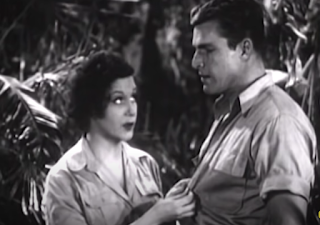
Flash forward ten years or so; there are tales of the "white witch" who lives in a "house with wings" in the interior, a rumor which will catch the ear of the Gorman (Buster Crabbe) the grown son of the disgraced financier who was accused of embezzling the funds taken by Doreen's dad. He's there to clear dad's name and the funds will do that, but a beady-eyed crook Carl (Barton MacLane) and his shady French partner Mimi (Fifi D'Orsay - right) overhear and follow along. Much skulking and fighting, shooting at dangerous animal stock footage, pointing at playful animal stock footage, and wrestling with rubber gators, ensues. Meanwhile, sweet Doreen clad in a sarong (made from the airplane's curtains), absently eats an apple, sweeps the dirt, plays with a monkey, and puts parrots on branches, as Samson protects her from passing predators. These two are destined to meet. And Samson will make for a pretty brusque chaperone. In short, sublime soundstage jungle thrills ahoy! 

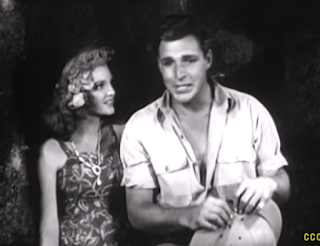
The only debit for me personally is that the soundstage clearly needed air conditioning -- most everyone is glazed over in sweat most of the time, especially shirtless Togo, the native guide Gorman rescues from various fates; Mimi is the second worst, dripping under her pith helmet, soaking through her mom-style safari shorts and dragging a clunky holster. (I'm not a big fan of high dew point movies). Luckily, for a breezy contrast, we have Doreen. With just a sarong and a flower in her hair, she's as if to the manor born. And yet, once they meet, Gorman doesn't even want to sleep with her. Even if Samson weren't listening right outside, fixing to bounce Gorman around the set the minute he lays a finger on her, Gorman's natural censor-mandated shyness would keep him pure. So Doreen fumes just like little Carmen in The Big Sleep, only with less thumb-biting. Something's got to give! The evil Mimi and Barton are closing in!

Sitting around next to each other on some jungle rock, Gorman mansplaining concepts of right and wrong while Doreen looks right through him, these two young low-key actors convey an almost Lake-Ladd Glass Key chemistry.  I love that she brushes off his manly ultimatums without even getting mad. With her pleasingly nasal rasp voice and sleepy-eyed 'Carol Lombard on half-quaalude' delivery is appealing.  Lines like "Father always wanted Samson to kill people," are tossed off as if shrugs, chilling the blood slightly, in a good way against the high dew point.  She may be just getting started in the world of men, but she's already cooler than at least one! Her future as the world weary chanteuse who will one day make "Cry Me a River" a ubiquitous anthem of hipster disaffect is assured. "It's only a thimbleful of a voice, and I have to use it close to the microphone," she said of her singing, "But it is a kind of oversmoked voice, and it automatically sounds intimate." It's true even here, inside a soundstage cave, at 18 , with a giant gorilla listening in. 

Crabbe's main strength as an actor meanwhile has been physique more than voice - but he too knows how to underplay, but here in Nabonga he doesn't have time do dilly-dally. Despite the attraction she feels for him, he's both a prick about wanting the jewels and amusingly nervous about Samson's constant looming, so he he needs to not alarm the gorilla or the censor, yet get her to turn over her precious family jewels? Uh uh. Luckily, Doreen just ignores his demand she "do something!" to rescue a snooping Marie from Samson once she arrives too near the cave. We see in him and his character that sense of intrinsic moral rightness that more often than not gets those around him killed or annoyed. In short, an evil white woman's life is worth more than a dozen good apes'. 

It's this rightness that trips him up over and over. Marie survives and then convinces Gorman to trap Samson in a cage to free up "his" access to the jewels. Of course Carl is waiting in the wings and it all leads to double crosses and a long fistfight. Carl lives just long enough to conveniently plug the poor ape a bunch of times, before getting what looks like his arm ripped off (the details of the rending are partially obscured by the flora), leaving everyone in the cast safely dead but our handsome low-key couple, now free of impediments (i.e. Doreen has lost her old protector so is no longer safe from the blessings of civilization.) It's a pretty tidy resolution (wasn't Gorman supposed to be shot?) but what are you going to do to in a film that runs naught but a tidy Newfield-hour?  There's not even time for a kiss at the end. The final close-up of the pair is spent mourning the mighty Samson while Gorman assures her going home with him to New York or wherever and giving up her only source of wealth means she's destined to be very happy. The low ebb of 'green noise' in the background, animal roaring and shrieking, seem to be saying goodbye, like being pulled out of a comfortable prehistoric sleep by a 20th century alarm clock. 

Uh huh.

PS- when I did a search for "Nabonga" on Definitons.net. The top result asked: "Did you actually mean napping or numbness?" 

The reptile house strikes again. 

------
BOWANGA, BOWANGA
(AKA Wild Women)
(1951) Dir. Norman Dawn

"Many weird stories have come out of Africa 
Some are the creation of man's imagination, 
Others are true. This is the story of a small 
hunting expedition" --opening narration

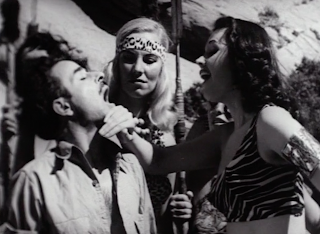
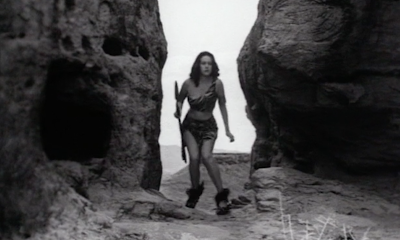
The most important thing to remember about Bowanga, Bowanga (aka Wild Women), a tale of male explorers finding an all-white female tribe in "Africa," is that it is not Wild Women of Wongo (1959) nor Prehistoric Women (1950) nor the 1952 Untamed Women (though Untamed Women is another title Bowanga sometimes goes by). Those three (lesser) films are marred by an irritatingly smug aura of 50s male entitlement and 'patriarchy restored!' cop-out endings.  Unlike them, Bowanga is  genuinely subversive, a refreshing saga of reverse sexism that plays it more or less dead straight. A better title would have been "the White Sirens of Africa," which is how these women are referred to (or 'The Ulama' by the frightened natives). As far as I know Bowanga Bowanga is a meaningless phrase unless it has some dirty connotation to the 50s raincoat crowd dreamt up by a lazy promoter. But whaddaya gonna do?

The key thing that makes it all work despite the plethora of lame titles, is the deadpan subversive approach. tSex reversal comedy may be in the cards, but the library score treats it all as a serious jungle thriller in that time-honored safari-stock-footage-packed B-movie tradition. Pleasingly familiar Bronson Canyon and shoreline scenery and sultry shots of sexy Amazons peering from behind trees, and/or linking up with giant apes, syncs surprisingly well with stock footage of frolicking orangutans, patient leopards watching from their hidden branches for the chance to strike, and--to add to the post-structural collage effect--bringing it to aa almost Fatal Glass of Beer level surrealist boil--North American groundhogs, owls and a moose. Best of all, the believably Amazon (i.e. big and tall), sexually aggressive white sirens are both ennobled and empowered by their self-government. Only one of their tribe still wants to go off with the men at the end, because she falls in love. The rest stay as they are, unconquered, laughing at the men's feeble attempts at manly authority.  When the handsome alpha male threatens to use "force" to resist her plan to sacrifice the other two men to the fire god, the tribe's intimidating leader (Dana Broccoli, who sounds like a drunk Zsa Zsa Gabor) she just bats him effortlessly to the ground, laughing. In order to spare his life by proving his 'stwong' status, one of the non-alpha men agrees to a fight to the death with one of the Amazons, leading to a battle of the sexes equaled only by the one between Deathstalker (John Terlesky) and Gorgo (Deanna Boher) in Deathstalker 2 (1987). Higher praise I cannot imagine.

Another reason Bowanga works: the men. The men in Perhistoric Women and Wongo are all dumbly handsome or comic relief, just waiting to either usurp the power dynamic and restore 'nature's way' of patriarchal dominance by the climax. The men in Bowanga on the other hand are are in legit trouble. They include handsome hero Trent (Lewis Wilson), a comic relief Italian called Count Sparafucile (Don Orlando), whose much less annoying than the usual comic relief on these expeditions (he sings opera!), and beta-male Kirby (Mort Thompson), who they find dying of hunger and thirst out on the plains. 

As usual with these films, when you find a wounded or parched survivor in the jungle, he tells you his story via a flashback of silent jungle serial stock footage (it is the law!), which in this case involves a boy (dressed like Huck Finn) and two native girls hiding inside a cabin while a giant python and leopard alternately try to kill them and each other. Somehow this leads us straight into the pointed spears of the Ulama.

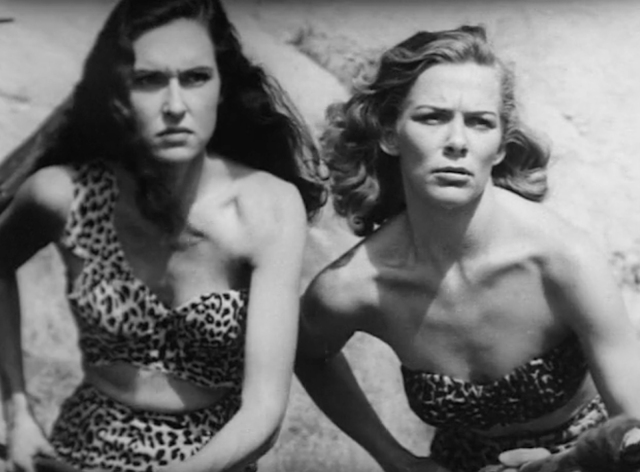
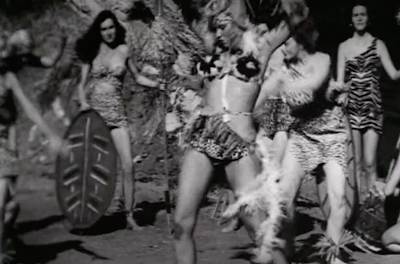
These men, first ga-ga-ing over the white sirens mentioned in Kirby's story are determined to find them, then just as determined to escape them once it turns out the "Ulama" aren't the pushovers they thought. Taking the men prisoner one at a time, the Ulama plan to marry the alpha male lead to the queen, and to sacrifice the other two to their fire god (it is the law!). During a tribal celebration replete with blonde drummers and a girl in a furry-tailed bikini doing an inspired shimmy (top). We also see the girls hunt (i.e. interlock with gazelle stock footage), sing by the fire, eat watermelon (was this movie an inspiration for Kansas Bowling's BC Butcher?) and bathe by a lovely waterfall (i.e. a back yard pond intercut with waterfall footage). 

There are some amazon movies where you can feel the resentment and seething distrust emanating from the half-naked girls towards the camera, hampering the idea that they are a strong bunch of Amazons. This is perhaps a result of some groping director or verbally abusive producer making the shoot a chore, eager to put the women in 'their place' lest the powerful women they play give them the 'wrong' ideas. But then there are movies where the filmmakers seem to genuinely love strong women, and the actresses playing them seem to be having a grand time, neither taking it so seriously it becomes a downer (like the 1967 Prehistoric Women) nor playing it so broadly it becomes camp the (i.e, the 1950 Prehistoric Women). The girls in Bowanga do it just right, playing it in a deadpan cool Switchblade Sisters kind of way, i.e. in on the joke but still badass.

That said, Bowangam Bowanga is not perfect: when we see a scene early on of a giant gorilla (Ray Corrigan?) holding hands with a white native girl as they stop to look at the white hunters, we're encouraged to hope this will turn into an Untamed Mistress/Bride of the Beast type of thing. Very exciting to imagine these girls protected by some big gorilla muscle ala Julie London in Nabonga. 

Sadly, that gorilla suit is never seen again. 

Anyway it's all over too soon to get mad, climaxing with a chase along the beach and a sudden use for the fireworks Sparafucile mentioned at the beginning (foreshadowing!). As the tribe begrudgingly salutes farewell from the cliffs, the three white men and the girl who helped them escape link arms, singing, and skipping into the sunset like they're headed off to see the wizard or dub Lina Lamont. 

Nobody is oppressing nobody. That is a miracle.

---

EEGAH!
(1962) Dir. Nicholas Merriwether (Arch Hall Sr.)
**/*

The 7'2" giant known as Richard Kiehl (the iconic 'Jaws' in The Spy who Loved Me) finds a great early role as a giant prehistoric man still living out in a forgotten desert cavern near Palm Springs. An anthropology professor (Hall Sr.) on vacation with his foxy daughter, Roxy (Marilyn Manning), wind up in the big man's cave, forced to deal with his strange hormonal urges. Her towheaded, apple-cheeked, gas jockey crooner boyfriend Tom (Arch Hall Jr) tools through the terrain in his snazzy dune buggy trying to find them. You can't get more early-60s regional California drive-in schlocky if you tried. Pitched somewhere between a goofy (but deadpan) comedy ala AIP's beach movies, and sci-fi/horror, there's doomed one-sided romance, fish-out-of-water comedy, dune buggy bragging, guitar crooning (Hall made this and other films to showcase his musician son), and an anthropological sexy nightmare.

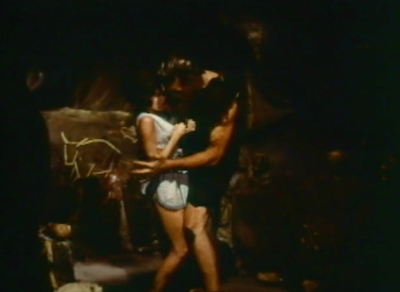
Events kick into overdrive when dad doesn't show up to meet them at the country club after his jaunt out into nowhere on the odd chance a caveman liveth.  Roxy and Tom eat up some time tooling through the desert sand in his ginchy yellow dune buggy. We learn Tom puts water into his tires so they get better traction in sand. Cool tip! What he's not good at, we can glean from Roxy's frustration with him, is "sealing the deal." She's a vacationing daughter of an academic, he's a scroungy gas station attendant with a guitar. That her dad even stands him is fairly astounding. Maybe he can tell there's not much to worry about--the couple spend the (day-for) 'night' around a (never seen) 'fire' after an unsuccessful day searching, the only relief from their strained lack of romantic spark comes from one of his not-bad Donny and Joe Emerson-esque sad-sweet song about some other girl, named Valerie. The song is OK, but it doesn't necessarily have the desired effect on her he intended. Before Hall can awake the next day, Roxy has been literally swept off her feet by lusty Eegah, who brings her back to his cave boudoir, luckily dad is already there, lying helpless with a broken collarbone, trying to establish basic communications (he's learned the giant's name is "Eeegah")

Unlike most hormonal monsters, Eegah is not necessarily bad nor is he good; he's merely a giant savage with no social conditioning and no outlet for his bristling hormonal urges (being all alone in his Bronson cave for way too long). So we spend quite a bit of time in that cave, watching, our jaws agape, as Roxy tries to keep Eegah distracted while immobilized dad shouts encouragement: "Keep his mind on something else!"

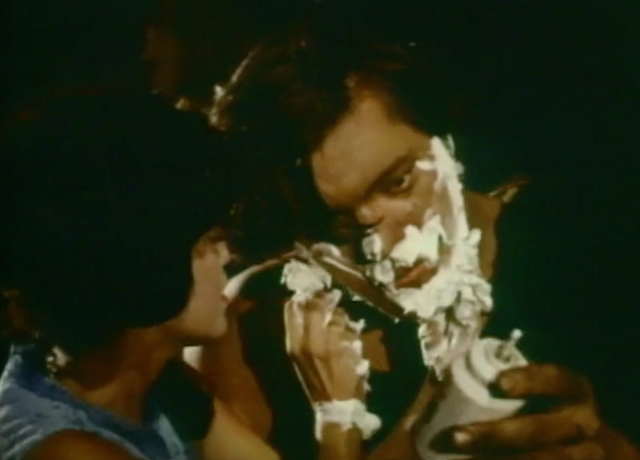
Hall Sr. really comes into his own as an actor in this stretch of the film, alternately flippant and consoling, with a nasal but resonant voice that evokes a slightly drunker Lyle Talbot (if such a thing is possible). It's also pretty clear he dubs Eegah's low end Popeye-esque muttering (which gives the two of them a kind of unspoken link, as if Eegah is some unconscious incestuous projection of his id, ala Forbidden Planet). To keep Eegah occupied, Roxy shaves off his beard (symbolism!), while singing "Whiskers." She makes eating, drinking, and sleeping pantomimes, and is introduced to the mummified heads of Eegah's ancestors Eventually, all out of distractions, the romantic music surges up as Eegah starts tearing off her clothes. Meanwhile dad can only yell: "Don't upset him!" 

Thus Eegah is succinct and potent in conveying the dangers of being a hormonal male who has not learnt restraint prior to the introduction of a sexy babe. All we men have to learn to reign in our desires, lest we become sexual predators before we can even graduate middle school. What makes it all the weirder is the uniqueness in the monster annals of this sort of scene, and the way it's set off against Tom's own overly shy lack of move-busting.  Alas, Eegah is just too big for his uncivilized nature not to be a direct threat to civilization, like an infant with the power to destroy buildings when he doesn't get his own way, and virgin or not, sex with a giant would probably be kind of a chore for a 'teenager' of Roxy's small stature, though part of her is still responding (that big shaven Kiehl jaw works its magic) -anyway he's sexier than the Creature from the Black Lagoon, depending on who you ask. 

Manning, bringing out the beast

Meanwhile, every time we cut from the cave and Roxy's nervous distraction tactics to the blazing sun with ineffectual Tom waving his widdle wifle around and yelling her name, a blare of ominous music plays up, as if he's losing his mind. Fans of his sneering psycho in The Sadist will wince at the thought Hall Jr. too may have lapsed back into savagery. I haven't seen The Sadist myself but I hear he's amazingly creepy, and watching Eegah! I believe it. With his pouffy hair and 'Michael J. Pollard hit by a shovel' face there's something about him where you would probably feel both relieved and terrified if he was dating your daughter. He seems psycho on the edges but dependable and respectful in the center, and in the best scene in the film, he rescues Roxy and her father, while Eegah chases the dune buggy, nearly grabbing onto the back seat several times, throwing boulders when the buggy gets far enough away down the cliff, all filmed from the backseat of the buggy to create a very realistic and scary stretch we'd see later aped in films like The Terminator. Good job, Mr. Merriwether! 

one of Eegah's relatives. "Say hello, Roxy."

Despite being a reliably goofy kick, Eeagah! also offers some real speculative insight about the existence of a race of giants in the antediluvian era (i.e. Goliath, Gilgamesh, Genesis, 6.4) Is Sasquatch just one of the old giants of old, the Nephilim, one who avoided the flood by staying in a high up cave, and who didn't sit still for a shave from the Roxy of modern civilization? (1) 

After her escape, Eegah, like Lobo with that angora sweater in Bride of the Monster, is left with a piece of Roxy's perfumed cloth to haunt him as he recovers from Tom's bullets. He even puts the cloth under the nose of his ancestral heads so they can smell her eligibility to join the family! Finally, lovestruck and hormonally locked-in, poor Eegah takes a drink from his sulphur spring (perhaps the key to his longevity) and then heads down the mountain, easily tracking her to the Palm Springs hotel lodge, where she and the rest of the cast seem to spend all their free time. Out back by the pool, Tom is playing with his band, singing a slightly more upbeat song with yet another girl's name in the title ("Vicky").  Roxy doesn't even notice him. She's missing Eegah ("I just know something's happened to him"). Dad, arm in a sling, smiles and says she's just like her late mother. Dad watches the kids dance and doesn't get it ("it looks like fighting").

Soon enough, it will be. Eegah is smashing his way through the restaurant, headed towards the country club pool, and he ain't no member. 

In case you can't tell I kind of love this movie. It's worth watching just to see giant Eegah beating up on Hall, throwing people like assistant director  Ray Dennis Steckler (there with his wife/star/muse Carolyn Brandt as extras) into the deep end, then ripping out the ladder, waving it over his head to smash on the gathered cops. Ah, it does the heart good. Eegah may not know how turn door knobs, or what the door sign that says "Ladies" means. But that's okay, Eegah! Girls love a big dumb savage, especially, like Samson in Nabonga, once they're safely dead so can be mourned rather than feared. Tom, you better step up your game! Dearly departed virile giant ape monsters done laid down the gauntlet! 

NOTES:

1. I was told by a spirit guide that the reason for the flood was that the watchers wanted to expunge the giants from the earth, but that some of them survived, those high in the mountains where the waters did not reach.  Hiding for centuries, they're immortal and able to move in and out of other dimensions to escape detection (the 'Watchers' turned off that feature in our DNA so we wouldn't be able to escape our time/space confines and be able to track them back to Mt. Olympus/Valhalla/Heaven, whatever, and try to usurp them) which is why we've never caught one or found a body. Already wild and untamable, the aeons have seen the giants revert back to precambrian savagery but they are still more advanced than us, due to more 'activated' watcher DNA than we're allowed. Make of that what you will, Arch Hall Jr.! 


See also the Other 11 Nights of Wood, and Wood-esquery:

Related Posts Plugin for WordPress, Blogger...