Showing posts with label meta. Show all posts

Thursday, November 06, 2014

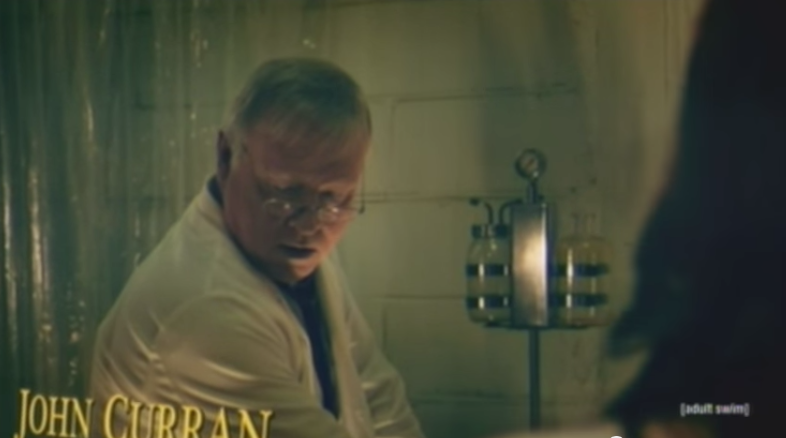
Meta Murderous Surreal Post-Modernism in Under Twelve Minutes: TOO MANY COOKS (Infomercial)


No amount of David Lynch or Eric Andre can compare with or prepare you for TOO MANY COOKS, the recent 4 AM informercial on Cartoon Network once and now existing only on the VHS-ish Youtube pages of intrepid dupers. No matter where you think this bizarrity can go, it goes far farther than a fur-forn farddio brand of beyond the black rainbow farrity, beyond even the swords of photo bomb "Bob of Twin Peaks" giallo and Fun with Real Audio What on Was the Britney old Thinking SNL. See it and understand the cryptic proclamations of the pie Von Trier. See at last how the the need to break free from our programming is so intrinsic to the construct of our identity as to be inseparable from the programming itself, i.e. the minute you break free of your character, your identity dissolves back into project turnaround. It's enough to make better actors go mad but that's televaginal enlightenment: the acceptance of one's eternal actor darkness. Heaven for an actor is just the hell of a sitcom cycle of endless retooling fully surrendered to, letting your ego construct dissolve as the infernal flames of Nielsen-baiting groupthink shark-jumping lick your soul clean for sweeps week, award season, reruns, stalker fans, Buddhist hell, and back again backforth fardidio.


For maximized post-modernist refraction, I'd recommend seeing it on your laptop on the couch, with the TV on pause or slow-motion behind it (on any random channel --as long as it's 'desperately' random). Because when a show is this meta, it just needs one tiny push to make it off the screen and across your living room, like a loping North Korean water ghost, through your ocular cavity and into your brain, your life, your soul, our collective oversoul, and then beyond what's beyond our collective oversoul, and back around to the screen/s in perpetual shrinking /expanding Ourobros double dips forever and ever in echo rerun, on perpetually cheapening channels, so help me, God, our legal team Hunginunga, Hunginunga, Hunginungah and McCormack, and of course the holy trinity: Aaron Spelling, Norman Lear, and Steven Bochco. Sing Amen. We're home. Less.

Sunday, September 01, 2013

Post-Structuralism of the Living Dead: PONTYPOOL (2008)


"Only the medium can make an event" - Baudrillard

In PONTYPOOL  the world ends not with a bang but with the words "in Pontypool the world ends not with a bang but with the words 'in Pontypool the world ends in Pontypool'..."- an ever-tightening stutter-stop loop that causes cannibalism as people try to unsay the source of the said words. It's no time to be running an early morning English speaking radio talk show, in a town so blizzarded out all winter that you have to take the world's word of it that it's still out there, past the white/gray curtain. This one early morning a slow escalating series of incoming calls, emergency broadcasts (or pirate interceptions, in French) and mass confusion envelop early morning DJ Grant Mazzy (Stephen McHattie), a self-styled outlaw with a yen for conspiracy theory; his harried but maternal line producer, Sydney Briar (Lisa Houle); and intern Laurel-Ann (Georgina Reilly). For a long stretch of film we meet only them, and a lot of voices calling in to deliver astonishing reports that go blank in big flurries of horrible chaos as people chant meaningless phrases over and over then bite each other.


Of course if you've never done angel dust then the stories sound like the ravings of the town's many drunkard local fishermen. Grant can't quite believe it, and his paranoia begins to overwhelm him -is the whole town in on some bizarre prank? It's not until BBCI phones that Mazzy realizes what was mere minutes ago a punishment assignment (Pontypool the Canadian equivalent of Siberia due to his cantankerous airwave anarchy) has led to this one Wolf Blitzer Gulf War-style moment.

He blows it, though. Too freaked out.

The sense of cozy insulation works a soothing spell for quite awhile (especially if you listen on big cushy headphones  while watching in the dead of night/early morning, as I usually do). Grant, Sidney and Laurel-Anne's studio is set up in a church basement (looks like an AA meeting is about to start) and they haven't seen any of the things described. This is a snowbound town where nothing ever happens or has happened. All Mazzy and Sydney and Laurel-Ann have are the callers, whose voices gradually devolve into repetitive cannibal madness and all other lines--police radio, AP wire, 911--are dead, or dying, just static and then the alien-like buzzing we belatedly recognize as the emergency broadcast signal. It's like the whole world has shrunk around their little studio - an island in an already island-like town. Pontypool, where they know most of the residents by name, winter nights stretch long into the following evening, leaving the town forever shrouded in a haze of booze, depression, and shuffling from heated car to radio station basement to car to home to bed to car, with no sun to indicate if you're coming or going, with windows just reflecting an opaque walls of darkness and snow. It would make sense that, of all places, here is where language and listening has such power - where everyone is snow blind so their other senses are enhanced.


What really makes it work is the power of imagination coupled to the frustration of never getting the complete story --we strain at the bits of the movie's limited knowledge, and we recall the way breaking news drips slowly with newly emerging facts buried in an avalanche of idle speculation to fill in the minutes on CNN and their ilk. It recalls back when the radio was the news delivery system, where vivid descriptions conjured mental images of disturbing power, a time when 'showing' mass cannibal carnage in all its Tom Savini-ish Fangoria glory was a subversive act, something to look away from in blanched shock. Now it's the opposite --showing us almost nothing becomes a new form of subversion, back to the fire and oral history and imagination. There are now countless zombie / mass plague insanity knock-offs and for a few seconds the 'found video footage' trick was novel but that was 10 years ago and they're still endless (and cheap). Of them all, only Pontypool (2008) finds an original tack, sailing towards the source of the original Romero film's hidden candy shell power--the news broadcasts--the way the professional newscasters with their cigarettes and thick glasses and bustling assistants behind them all both offer reassurance and terror, their steady authoritative and comforting deep news anchor voices only serving to make the pronouncements about 'packs of ghouls' more terrifying (Night never use the word zombie in that movie, or even--as I recall--the second).  Pontypool rocks that same tack. It's almost too post-structuralist for its own good at times, too lit workshop precocious, but makes terrific use of uncertainty, the unreliable aspect of oral history and delves deep into the way imperiled people instinctively turn to the media to provide a narrative structure for the chaos around them, and how the media finds itself compelled to provide one, to make it up on the spot if need be. Without clear visuals, long shots of the calamity, official press conferences, the calm but thrilled voice of a reporter standing in the snow near a firetruck, we have only our own imaginations with which to structure things. At such times radio can reach the deepest vaults of our mind, forming deep cerebral cortex responses not normally our own. The morning 9-11 went down, for example, I was at work, in the office: no TVs, AOL still relatively young, so we listened to it on the radio. Hearing Peter Jennings describe the towers falling and planes crashing into Washington, I imagined the world consumed in fire, civilization ending all around us, a happening so apocalyptic it was hard to fathom it was even real, more like Orson Welles' War of the Worlds. When I finally saw the footage, horrifying as it was, it was almost a relief (the building fell straight down rather than to the side creating a domino effect stretching the length of Manhattan- which was what I had pictured). That's kind of maybe part of the reason why I love this film so damn much. It's the only thing that's yet come close to recreating that surreal almost merry apocalyptic feeling. I was, in fact, giddy. It was only a few days later when I noticed half the "blue collar Buddha" (as we called them, mostly firemen) population of my uptown AA meeting was gone, and the few that remained, devastated with grief and survivor guilt, that the full brunt of it all sank in.


But that's it - we can't always be near a TV with CNN, but even if the power goes out we can find and old battery-operated radio. We all secretly love calamities (as long as they don't happen to us or we don't know whether anyone we know was hurt or killed) because suddenly, for once, something is happening and the mood amongst the reporters is always jubilant. They try to restrain themselves, but this shit is why they got into this. Careers are made in such moments. It's one of those rare times when absolutely no one can predict what will happen, when no one knows the whole story, and it's the newsman's turn to create a proxy, out of thin air if need be, until the real one finally coheres. The whole world seems to wake up in such moments, to be unified in their collective shock and awe, secretly loving the thrill of orbiting closer and closer to a possible armageddon, to the mad chaos of complete social chaos.


Why  I've already seen Pontypool four times is the comfortable sense of being in a warm radio booth on a frozen Ontario small town morning it provides, and the early stretches of incoming news as DJ Mazzy in the morning starts out with the usual bickering with his producer over when to read school closings and the slow mounting panic/paranoia when he begins to think people are all fucking with him, all so organic it all unfolds in more or less real time for long stretches without the viewer (me at least) noticing; as the influx of news and shaky narration causes a breakdown in our perception of reality, we trust his deep perfect radio voice (it wouldn't have worked with a high-voiced wuss actor like Edward Norton). In other words, while not being specifically scary, and always kind of funny-ominous, there's a sense that something meta is always at stake, something that might leak out and effect even your blogging about it, for more than any horror film I've seen, it gets that whole post-structuralist Burroughsian language as a virus concept.


The secret, as media studies grads know, is the news media's secret agenda has always been to cast anxieties about the prevailing social structure's solidity off on handy targets: crooks, shady pols, terrorists--which then makes the news a comfort. You see which way the finger of blame points, and you make sure you're standing behind instead of in front of it. And when you're behind it, you're strong; furthermore, you know which way to look for oncoming danger. So when the TV station reports on a mass insanity uprising, it becomes 'real' in a way it couldn't be otherwise even if you witnessed it yourself. This process strengthens you by strengthening the illusion of law and order's ultimate omnipotence within you. As Jack Torrance would say, cannibalism is okay to talk about in front of their son, because he "saw it on television." It's the same for us. In fact cannibalism's power in Pontypool lies in its invisibility. Thus one Romero news broadcast is worth three dozen CGI zombie army ant hill urban killing floors, all those tedious Matrix-rip bending over backwards, both barrels blazing slowmo shots are just video games played by some kid you pass on your way to pick up your laundry. The end of the world can't be accepted as a legitimate event until it is authenticated through the TV. Unless the revolution is televised it cannot exist. This is what Baudrillard and McLuhan can teach Gil Scott Heron. It's why so many disaster movies now get real news anchors to come on with their fake news.


In Dawn of the Dead (above) Romero yanks even that little buoy of illusory 'objective reality' away right from the start; the TV station itself starts to collapse from nervous exhaustion at the start of the film, the crew devolving into petty arguments and agendas. Those who haven't had a chance to experience the dead rising directly commandeer the zombie outbreak to suit their agenda, the black intellectual in the in progress talk show labeling it as a cover-up for cop violence in the ghetto. When the four people we follow find a TV later, there's just one continuous talk show left, with two pundits yammering in a progressively more hostile, childish manner. Reality, civilization, has in effect become totally subjective. Even bona fide facts are debated. It was always like that once, maybe, before cross country railroads and telegraphs. But each man was connected to some tribe, some family in those days. Now our tribe is purely virtual, friends from everywhere except our own neighborhoods. Without the news to structure our reality, we're all insane from cabin fever inside a week, even while inside a crowded survivor camp.


Pontypool zeroes in on this issue by presenting the entire 'event' from within a radio station on a single day. It is only Mazzy and his producer who can determine to what an extent they should continue to connect their listeners to their callers. In this town we learn the 'eye in the sky' for local morning traffic is an old dude with binoculars on the hill, playing chopper sound effects so we get the impression he is in a helicopter, which for some reason makes us feel warm, loved, guided into work by a heavenly hand. A weird musical family shows up dressed as Arabs to sing bizarre but hopelessly square 'Arabian' songs, the dad firing a plastic Uzi for accent (I had the exact same one as a kid). This isn't given much commentary in the film but it's a good metatextual meltdown signpost. We learn that the Pontypool crisis involves the repetition of phrases until they become meaningless, a weird infection of thinking transmitted through language, an idea that rewards deep contemplation if you approach it with enough McLuhan, whose concept of language as "a form of organized stutter" underwrites the film's post-structuralist collapse, where meaning and syntax become derailed, causing human brains to go crashing into the morass of subjective looping, where each new repetition increases in violence until they rend one another limb from limb. Is this something to do with Quebec separatist intellectual terrorists? The French language seems suspiciously immune.


While the chants of the crazies may seem meaningless, what we glean from Pontypool is that everything has meaning, and the power of chant is no fluke. Anyone can use repetition to either make themselves calm (the rosary, chanting) or  drive themselves crazy (All work and no play make Jack a dull boy; sections of Mingus' Black Saint and the Sinner Lady) or both (dervishes, maenads). What makes Mazzy interesting as a character is that he is aware of this and does not take his DJ power lightly; even his school cancelation snow day news carries poetic, grim observations, and he predicts the coming crisis all based on one odd morning encounter, even knowing he may be starting the very fire he's railing against by railing against it. And he gives both women cute innocuous valentine's day cards, indicating that beneath his gruff exterior and contrarian shock jock tactics (mild compared to America's) beats the heart of a regular sentimental guy, a rotgut and cigarettes innocent. In other words, this is not an American film. There's no in-fighting, cursing tantrums, misogyny, lectures, or grandstanding. Sydney's anxiety over what her DJ's going to say is moderated and modulated moment to moment as he pushes the envelope but then eases back; her riding him to be less incendiary but tempered by an almost motherly need to keep him grounded, trying to encourage Laurel-Ann to feed him the news slowly and get confirmation first so he doesn't start a panic.


This is perhaps the film's one dubious theme, the conception of language as a virus, that it's not the news driving us crazy but the saying that the news is driving us crazy which is driving us crazy. Since these media-virus concepts show up in Cronenberg a well one wonders if this interest has anything to do Canada itself, its weird placement between the USA's ever loudening media barrage and the BBC's staid tosh clarity. The movie seen on streaming (on Netflix) is itself a virus, infecting anyone who plays it. The media breakdown can extend to your life -- is there a virus within Pontypool itself, that scrambles the very particles of code within its signal, ala The Ring? Or was my girlfriend, in the throes of a phone interview with some comedian in the other room, tripping on the extension cord for the WiFi, causing the Netflix stream, as well as internet, to go out in a single flash right at a key moment in the film? It was so perfectly timed I became as unnerved as old Mazzy. Let's pause and ruminate on what version of the new 3-D that will be, when the film makes your TV explode at a key plot juncture.


Sure that's a sick idea, but that's the thing -- when the news envelops you then you don't really know what the hell is going on the more you think you do; you don't know what is real because your imagination can't stop filling in details, and neither can the newscasters. Pontypool's climactic moment of interdimensional communication is when emergency broadcast interruption comes roaring through the station, cutting out the broadcast to announce those listening should refrain from speaking, using terms of endearment or embracing loved ones, or using the English language, ending with "don't translate these words" which Mazzy reads, translated, over the air waves- Is this, then, a structuralist terrorist attack. Oh yes Quebec resistance, how very French of you!

Top: Lisa Houle - Pontypool / Bottom: Anna Karina - Alphaville
But the French, as Godard's Alphaville (1965) computer knows, are too stubborn and contrary to be as ingenious and post-modern as the unseen linguicidal agents of Pontypool, which does for the 1939 Martian broadcast what the Blair Witch Project did for found nature films, i.e the very lack of reliable 'authorized' source information gradually reduces the one on the microphone to the sole remaining authority. John Connor at the end of Terminator 3 achieved this but with nuclear certainty, while Grant Mazzy ingeniously understands that, unless the revolution is televised, it does not exist, so as long as it is only chaos, a mere riot, he can talk it out of existence; if it is more, he must know what that more is, or cease to exist. Without a pundit chattering out in the cold and another one warm and looking at them from beyond a glass or plastic screen, and us looking at them, then there's no certainty about anything. Let go of language and everything is revealed. Not even the credits can end your transmission. So stick around past the end credits... to the grave! In the words of Sir Alfred McLennan, we must take this secret to our graves.... and even beyond!


jlll;;p[koom


p;l


kgu

Wednesday, March 23, 2011

Pre-Code Capsules 2: CITY STREETS, BOMBSHELL, THE HALF-NAKED TRUTH, THEY CALL IT SIN, SAFE IN HELL, HOLD YOUR MAN

CITY STREETS
1931 - Dir Robert Mamoulian
****

It seems dimwitted to call this film CITY STREETS--it's the kind of title that wouldn't pass muster in a college lit class, too vague and generalized. One imagines treacly Chaplin Americana with the Dead End Kids. Also, its central plot device: an alcohol kingpin (Paul Lukas) risks his whole operation in a play for underling Gary Cooper's girlfriend, seems kind of ridiculous, like no one would ever rise to power in the underworld if he went in for prima nocta. (the Mafia--as we learn from Joe Pesci's fate in CASINO--understood how bad it was for business). But such things aside, STREETS is actually very beautiful, sleazy, unrepentant, and expressionistic as all art deco hell. Full of all the weird termite tricks that made Mamoulian a kind of early sound forerunner of the New Wave, here murders are talked over via close-ups of cat statues, and a very dirty fella named Blackie gets offed by Guy Kibbee (as you've never seen him before, needless to say).

Dashiell Hammett's grit-filled eye of detail fills the sails with snappy patter (including hilariously curt rapport between Kibee and daughter Sydney) and keeps the Mamoulian coffers rich in minute detail that feels observed rather than imagined, thanks especially TCM'-restored Lee Garmes' visceral expressionist photography. That title and the inevitable (for the time) romantic triangle plot are rote, but the rest is stunningly free of any remote chance of gangster cliche. It's like a molten crucible of gangster film-ism, without a shape or form, yet mythic enough to re-do over and over in generations and remakes to come.

That said, convict Sylvia Sidney's jailhouse pleas to her pinball wizard romeo Kid (Cooper) not to go fight or whatever drag on and on: "Kid, don't go! Oh no Kid! No, Kid, please don'tgoifyouloveme, kid oh kid oh kid, if you love me kid please don't go." Sylvia, you were ten times cooler before you went to prison. Now you've gone soft and the rackets got no place for soft. Still there's a super sexy scene of passion with Cooper across a wire screen in the ladies' prison visiting room, and she has the coolest vanity mirror ever (a giant vulture/eagle over it, with wings outspread) and Cooper is at his most youthfully ravishing. Look fast for Paulette Goddard at a nightclub!

BOMBSHELL
(1933) Dir Victor Fleming
****
Playing a loose conglomerate of Clara Bow, Thelma Todd, and herself, Jean Harlow comes through in metatextual spades here as an overworked MGM starlet, earning her place at the top of the spitfire heap with  rapid fire slang-filled dialogue pouring in satin torrents from her tongue as she goes zipping, 8 1/2-style, through a carnival of  blustery studio heads, make-up artists, insurance fraud grifters, drunken joneser fathers (Frank Morgan, partying like it's 1899!), an accented gigolo lover, an infatuated director (Pat O'Brien), and Lee Tracy, as usual, an unscrupulous publicity agent.


There's something inherently unlikable (to me) about Tracy, but he sure can talk fast and believably think on his feet.  Even when he apologetically comes to tell Harlow he's been fired on account of her complaints you don't notice his emotions, you just stare at the ferocious meta-amphetamine insect anger in his sharply slicked-back hair. It forms--in the excellent TCM transfer--a weird bi-level triple side wave-part. Too much information!

In order to appease Harlow and get his job back, Tracy must pledge to cease sleazing her up in the tabloids and instead put her onto the 'Home and Garden' page, dressing her up in frilly aprons, with forked potato in hand, longing wistfully for the patter of little feet. In a hilarious interview with a matronly journalist, Harlow holds her hands clasped together and gazes into the heavens, imagining the baby to come, then sets off to adopt one, ala Angelina Jolie, picking them out by the bushel like puppies. Mythical Monkey writes:
 "The movie skewers every Hollywood type—the hangers-on, the rapacious press, the stalkers, the slicky boys, the fraudsters, the petty tyrants—and does so with a manic quality that would characterize the screwball comedies allegedly invented by Howard Hawks and Frank Capra in 1934, but which, as I mentioned in my review of Design For Living, seems to have developed full-blown sometime earlier. Fleming spared no one, including himself—he's caricatured as director Jim Brogan (Pat O'Brien), alternately described in the movie as a "piano mover" and "a smooth-tongued bluebeard." (here)

Irregardless of any future screwballing, the damage has been done and the post-1934 serious code enforcement look for women has already been dreamt up, right here in front of the matron and Ladies Home photographer, in an act of parody. As Harlow assumes this pose of born again maternal sanctity, we briefly--or did I hallucinate--see her smile to herself--a subliminal wink to the audience--as she gets all pious and starry-eyed at the thought of a woman's 'ultimate duty to the continuance of the species.'

Phony or not, she never lets up in it - she either decides this sugary drivel is the only way to beat the system at its own game of hypocritical posturing or she genuinely believes such a dull code of ethics barefoot/pregnant line. That we'll never know if she was just bullshitting or not is what the code is all about: for every 'you know I'm just kidding' there shalt be an accompanying teardrop of sincerity, sayeth the Breen.

THE HALF-NAKED TRUTH
(1932) - **1/2

Secretary: "Imagine anyone daring to question your veracity."
Tracy: "Such language!"

More Lee Tracy doing what he does best, motormouth speed-talking as an unscrupulous press agent: first as a carny barker hawking Lupe Velez's uninhibited fan dancer from the tropics to the Ziegfield-ish Frank Morgan as an exotic princess rescued from a Turkish harm (this would make a hilarious second feature to The Great Ziegfeld in which Morgan plays the friend/rival/backer). After that scheme winds down, he starts a new bent hawking a blonde hotel maid who partners with Tracy's right hand man Eugene Palette as the leaders of a cult of wild, untamed nudists. Naturally he splashes a few front pages ("what the public wants is good, clean entertainment," he counsels Morgan after Velez leaves him, "they're all washed up on these hooch dancers"). Naturally, it all caves back down to where they started, in the carnival midway gutter, where they all started out (the scene where the noises of the city and the office start resembling the sound of the carnival calliope luring him back is a highlight).

Tracy's got Cagney's gift for speedy patter, but he lacks Jimmy Cagney's agility, and humility -- a scene where he smacks up Morgan with enlarged blackmail photos is just irritating. Some rare moments of real connection exist, though, like at the end, like the cool bro-to-bro reunion of Pallette, Tracy, and a handful of sawdust which Tracy pours through his fingers asking "can you imagine this stuff running though your veins?" He finally seems to have run out of hot air, and as the sand falls to the ground, we kind of love the poor sap at last, his own painful awareness of the cliches by which he's bound  make him human; then the sound of Lupe Velez singing her bawdy hot jazz "Carpenter" song comes down the midway and suddenly what was once kind of shrill warms the heart like a shot of good whiskey. Gentle Ben tells us in real life he was fired and sued by the studio for always being late and often drunk to set. That's why, perhaps, Cagney is immortal and Tracy just a curious footnote. Both played incorrigible scammers, but Cagney was just playing. Tracy was playing for keeps. Now that we're being honest, I think I like Tracy better, even with that adenoidal crackle in his voice and those long arms always moving like a dozen spider legs in all directions.

THEY CALL IT SIN
1932 - **1/2

Hot as she was, by 1932 Loretta Young's persona was that of a nobly young woman who looks around at the newfangled crazes --divorce, premarital sex, drugs, prohibition liquor-- and bristles up her moral feathers, does three hail Marys and calls her priest. The devoutly Catholic Young often used her acetylene hotness like an Olympic torch of morality in any dark, dank pre-code films she found herself in, such as this one. Always first in line to confess to a crime or sacrifice her happiness to save someone else, anyone else, her characters are martyrs like only a self-righteous hottie can play them. Here her sleazy ex-boss is accidentally killed and she races like a Chariots of Fire sprinter to be the first person to confess and save her true lovezzzz... Before that she's dicked around by David Manners, rescued by George Brent, and ripped-off by Louis Calhern (the guy who would go on to hire Chicolini and Harpo in DUCK SOUP the following year). His excellency's car! At any rate, she gets some good digs in at a speakeasy when she runs into Brent, and Manners' double standard (he's getting married but still expects her to keep a holding pattern) is depicted as rather vile, although at least he admits it. Both agree working for Calhern is not the thing for her, but "she does what she pleases when she pleases." Finally! At any rate, Una Merkel is a champ as Loretta's hoofer pal who puts her wise, and there's the usual top notch trimmings all First National-Vitaphone pics had in the glorious year of 1932, so don't waste your time not seeing it next time it cartwheels its way onto TCM!

SAFE IN HELL
1931 - Dir William Wellman
***

One of many pre-code films made about women of ill repute lamming out to the tropics or the Orient after skipping bail or being wanted for murder: Joan Crawford did it in RAIN the following year (32); Marlene Dietrich in SHANGHAI EXPRESS the following year, and Kay Francis did in MANDALAY the year after that 1934, then came the code. They stopped doing it. But back in 1931 it was anybody's game and SAFE IN HELL happens to be one of the  more lurid exhibits of the pre-code era: Gilda (Dorothy Mackaill) is a dissolute prostitute who winds up accidentally burning down a building with a drunk john in it. Her innocent sailor fella (Donald Cook, unbearable) returns home and-- hey! He's earned a first mate stripe so now they can finally get married. Oh, Donald! He gives her a ship in a bottle and a fan from Japan as presents from abroad - but she lets him know the score and before you can say "Jake" he's smuggling her off to a remote island with no extradition laws and a cadre of debauched expats waiting to slaver, dark-eyed, over their gin-fizzes, at her hotel room door.

Clarence Muse (THE INVISIBLE GHOST) as the bellhop brings as much dignity as ten ordinary men into the role; at the front desk and tending bar is Nina Mae McKinny (THE GREEN PASTURES) who sings "When It's Sleepy time Down South" right in time for Gilda to drop the airs and come down and make nice with the seven dwarfy sleazes. Director William Wellman (as usual) packs the film with earthy detail and weird characterizations: Charles B. Middleton,  Gustav Von Seffeyrtitz, and Morgan Wallace are three of the leering fellow outlaw guests. Noble Johnson (the zombie in GHOST BREAKERS) is a guard.

With her droopy skin and lumpy posture, Mackail is not your ordinary heroine but she's perfect as a Depression-era fallen woman who's genuinely no good, not just a Loretta Young-style good girl fallen low through circumstance and cheating gigolos. No, she's an authentic lowlife, a cranky snob for whom the woman's picture conceit of romantic self-sacrifice is less a noble deed than a kind of Antigone-style fuck you to the world of sin (unlike so many heroines who fall just to rise, she starts out fallen, and rises and falls again erratically throughout the film). When she finally gives up her sainthood and starts drinking with the riffraff you get a real sense that she's smoked and drank before, and often. You don't ever get that with Loretta Young.

HOLD YOUR MAN
1933 - Dir Sam Wood
***1/2

Jean Harlow gets pregnant via hood Clark Gable, but she's in jail and a martyr so doesn't tell him. Stu Erwin wants to marry her and move her to some bo-hunk town when she gets out of stir but no way. See, there's only one guy for her - and he can't visit her in the clink as he's wanted himself, see, for a crime he did commit! See? George Reed (THE GREEN PASTURES) is the black preacher father of fellow inmate Theresa Harris (Alma in I WALKED WITH A ZOMBIE) who sings "Saint Louis Blues" while the girls relax after a hard day steam-pressing shirts.

HOLD YOUR MAN gets me deep in the gut because everyone is redeemed at the end--even the romantic rivals and prison warden--and not in a humorlessness Loretta Young kind of way, but in a genuine caring, cliche-defying way.  When Gable cries to Reed in the chapel, I feel redeemed --every time - and mister, I'm a hell of a sinner. That HOLD YOUR MAN was written by a girl (Anita Loos) doesn't fully explain the incredible compassion this film offers, but it's a part of it. How often do you come away from a tough pre-code women's prison picture feeling optimistic about humanity? Just this once, baby.
Related Posts Plugin for WordPress, Blogger...