

"Me...love 'dead'." -- Monster (Bride of Frankenstein, 1933)
If the rest of the media universe is playing it safe and cuddly there's at least two chunks of media that strike a deep unnerving chord of the 'real' in the last few weeks of 2011: Fx's American Horor Story and that found-Americana video for Lana Del Rey's one song, "Video Games."
Passing the 10 million hit mark, inspiring the usual countless remixes, the song+video+singer taps into a nerve of sadness and loss that has the authentic feel of a drunk night IM-ing friends you never hooked up with while you thumb through stashed photos of exes. Watch the video ten times in a row and you can get that feel even at work, sober, IM-ing no one. A lot of people seem to think she has no right to be sad, though, and there's a huge internet bloglash (read Awl's "Who's Afraid of Lana Del Rey"). Lana Del Rey's hot lost little girl from 1965 look -- the thick hair, Julia Roberts lips, black eyeshadow, vintage dresses and paisley headbands-- make her come off like Evan Rachel Wood in THIRTEEN now grown backwards into her own grandmother, dating a hot young rocker incubus who's always on tour, leaving her alone but 'safe' in our care, we being the ghost of a lover long dead (so she'll only see us smoldering, never old or charred). We don't have to worry about Lana's deep sadness overwhelming us via a real relationship because we're just ears. She's just a hot mess friend, and she doesn't even exist... she's a ghost in the machine, like Samara in THE RING. She even looks like Hayden, Ben's 19 year-old ghost ex-mistress in American Horror Story!


So what does this broad have to do with American Horror Story, specifically this week's episode, "Smoldering Children," where (Spoiler Alert!) we find out Violet, the lost little daughter has been dead since a few episodes ago when she overdosed on pills?

Everything. It has everything to do with it.
Look at Lana's photo above, with the cigarette and white dress. She could step right into any David Lynch film and be either in the flashback to the early 60s or a current retro hipster with ironic collagen, either way she's an American ghost story ready to haunt your iPod. The photo above is the kind of thing you find when cleaning out your deceased grandparent's room. Who is that beauty? And suddenly you realized you swooned, just a little bit, for your own mother. Lana Del Rey may just be playing dress-up but she nonetheless radiates a sadness that's not fixed in any one generation. It's not even sexual. The sexier she tries to be, the older she becomes. Creeping through decades like vintage clothing and DNA, she flutters in slow motion, like a mighty flag outside a semi-abandoned post office being slowly walked past by a funeral procession for a returning Vietnam vet.


For comparison, let's look at another pretty, lost, augmented little girl who is talented, driven, and also trying to be re-born, in this case as a sitcom star, Whitney Cummings. Her self-titled show comes on after The Office (read Meghan Wright's solid recap here), the key time slot for any current sitcom, which is how it's drawn my indignant attention. Am I the only one who is suspicious? No.
In "Understanding Screenwriting," Tom Stempel writes:
In Whitney, Cummings plays the title character. She is living with her boyfriend of three years, Alex. They make jokes. They are afraid of marriage. They go to a wedding and make jokes with their friends. Whitney dresses up as a nurse to seduce Alex and he ends up in the hospital. They make jokes. Most of the jokes are variations on material from Cummings' stand-up act, and so the show falls into the trap of a lot of sitcoms based on a comedian's act: all jokes, no story, no characters. Half an hour of this just gets tiresome.Part of why this show is doomed can be summed up right in the above paragraph, particularly one sentence "She is living with her boyfriend of three years, Alex." - what kind of dumb idea is that? Has anyone ever done such a thing? Be wary of Whitney and her conspicuous displays of enjoyment. She misunderstands the fundamental basics of romantic comedy. "Tiresome," indeed!

The most fundamental comedy truth is that a couple is only cute when they are not quite together - either always about to hook up--the will they or won't they of Sam and Diane (Cheers) or Bruce Willis and Cybil Shepherd (Moonlighting) or Fox and Scully (X-Files), or Ross and Rachel (Friends)-- or already hooked up before the show began and are now just friends (Jerry and Elaine on Seinfeld). All but Seinfeld gave in to audience's demands of seeing the leads hook up and get married or live happily in congress, and viewers dropped off like flies once they got their wish and the wish didn't make them feel how they thought it would. Smart shows know in advance this is doomed to happen. The exceptions to this rule being shows like Mad about You where the stars are either older with children or otherwise not sexually desirable - it sounds shallow, but simply put - Whitney is too hot to have a boyfriend.

As I've written before, the original 1970s Charlie's Angels was ingenious in this regard. Aaron Spelling wrote the book, which we now open to examine the reverse case of guys like Ashton Kucher and Howard Stern. As long as he was married to older Demi, Ashton had some gravitas --his flirty douchebag qualities were tolerable, even amusing. He's in the process of now of realizing the extent Demi's presence kept him from getting Sheen-level skeevy. And, as long as he was married and unable to 'do anything' with his morning regimen of strippers, Howard Stern was funny and edgy. Once the chains were off, that edge was lost. Without his wife listening at home with a grain of good sport tolerance, Stern became just another skeevy guy using fame to bed a string of gorgeous young ladies he'd never get on genes alone. Similarly, as long as Hannibal Lecter was imprisoned he was terrifying; escaped and free and he's suddenly just another dude trying to get a piece of the action. Similarly too, monsters in horror movies - the more clearly we see them, the less scary they are. Thus we see that in TV and movies, its potential that's exciting. The practice never measures up.
Thus, the tortured misery of married life in AHS makes all Ben's yields to temptation exciting. Once the wife is gone, however, giving into those temptations becomes mere softcore boredom, Hannibal instead of Silence of the Lambs --hence his heroic resistance, as I wrote about last week. This week he got his reward: he even got to vent his rage on the tormentor of his wife, the evil Tate!

Tate is an ideal representation of the 'absent lover'--the animus, the 'all-potential/no-practice' object of desire, the incubus -- in that he is actually dead - and his grisly past makes him a 'bad boy' in ways we never want to compete with. He's like Lana Del Rey's lost rockabilly guitarist come back from the dead to demand beer and fidelity. If you listen to the lyrics of Rey's songs you get that she's trying to become that same dead dream for her listeners. They are words bound to have any video game playing bad-girl loving boy blushing at the thought he just might be able to hook up with this doomed, sweetly tragic, DSM-IV type of lost little girl:
"Open up a beer /
and say get over here /
and play a video game."

The Lana Del Rey-approved bad boy would bring lots of cool drugs; the Whitney boyfriend would not. That's the difference.
The 'bad' boys who encourage you to skip school, drink beer and play video games -- they don't come any badder than Tate (he'd bring angel dust or crystal meth) and so in a way we can respect him because he is evil and yet he still loves Violet and protects her and that's what makes his loving relationship work on TV, a loving relationship that would creep us out otherwise. Paradoxically then, It's only because he is truly evil that he can be sympathetic. We identify with Tate as viewers because like us (in our dislocated viewing space) he is dead - like Edward in Twilight is dead, or Spike on Buffy. Our perspective as viewers (we can move through walls and time and infiltrate up close even the most intimate moments of characters without them ever seeing us) mirrors that of the watching dead, for who else but the dead and the viewer have such omniscience?
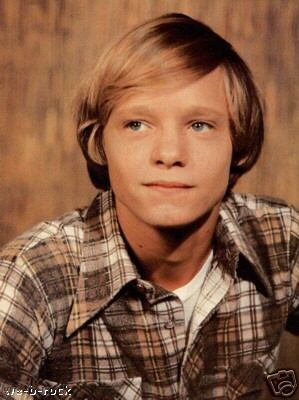 |
| Lance Kerwin, 1977 |
In AMH, there are advantages to being dead: Violet will never have to go back to school, for example -- no report cards come in the mail. But at the same time she's not entirely sure a life playing cards with Tate is the answer to all death's prayers, or so it seems by her coldly bemused response towards his devotion. In a way she's already 'cooler' than Tate just from knowing him, while he--deprived from knowing himself--becomes like a solved level of a video game -- why go back to playing on it when you've moved up?
Perhaps what is happening to Violet in death is the same thing that happens to us watching Whitney: without obstacles and uncertainty, the ultimate emptiness of our coveted prize comes into focus. The only reward for our struggles is temporarily forgetting what a disappointment the goal will be should we achieve it. Violet's love was wild and Brontë-esque when it was forbidden by her father but now that she literally can't escape Tate's devotion, her love is like a lion in a zoo that on the one hand is grateful to not have to always be threatened by starvation when they fail to make a kill, but frustrated by lack of goal-oriented movement.
 |
| Frances Farmer, 1891 |
What does matter is that, like Lana Del Rey and very few others, Violet has chosen darkness. Now she dwells within it, nevermore to return to school or write a resume or sit, bored, on the bus. We can hope the same thing won't happen to Del Rey in 'real life' but the other options are grim as well. Based on the hot young musical prodigies that have come before her--Fiona Apple, Liz Phair, Kate Bush, Tori Amos, Bjork, and Alanis M.- there's a very real danger she will get 'quirky' or slick or try too hard to cram in as many jarring chord and tempo changes as possible to every song on her next album, and eventually even become a surgery addicted gargoyle or a seducer of hot young boys half her age, like Jessica Lange's eternally sexy Constance.
(PS - See CinemArchetype 14: Puella Aeterna)
At least we'll always have that first album, song, or movie. We'll always be able to marvel at JL's youthful sexy sizzle in 1981's POSTMAN ALWAYS RINGS TWICE. We don't want to lose our Violets or Lanas, but we lose them too when they get married and have kids. We don't want them grow up any more than we want them to die. We don't even want to keep them just how they are for that matter, but we have no choice. We can only watch and listen to them from our Lazyboy graves, aging and decaying while they stay eternally young, even if it's just for that one damned haunted song.


I love this. Thanks for articulating for me why I was violently allergic to the show Whitney. Loving your review of AHS.
ReplyDeleteEric, I'm doing a year-end round-up of the blogosphere - what would you nominate from your own work for best of 2011?
ReplyDeleteI am fairly out of the loop with pop culture so I hadn't heard of Del Rey, American Horror Story (well I'd heard of it but didn't know what it was), or Whitney - for the better in the last case, apparently. I can't check out the video at the moment but I'm intrigued. I was going to ask if she's related to the singer from Mulholland Drive, but I see it's Del Rio not Del Rey. Oh well...
Have you heard David Lynch's Crazy Clown Time?
ReplyDeleteIt's After The Goldrush filtered through AHS, Hotel California,and Lana Del Rey....
Something is happening here.