Showing posts with label Johnny Depp. Show all posts

Saturday, February 20, 2016

Silence of the Uploaded Monkey: TRANSCENDENCE, AVENGERS: AGE OF ULTRON, TERMINATOR: GENYSIS


Science fiction cinema's always had an unhealthy obsession with artificial intelligence but never more so than in the last few years: three major films: AVENGERS: AGE OF ULTRON; TERMINATOR: GENYSIS; and TRANSCENDENCE --all deal in some way with the instant revulsion that erupts in human consciousness once it realizes it has just outmoded itself. All three films structure themselves around a conflict between anti-technology extremists and the visionaries who shuffle along the edge between mad scientist and hero. In all three films, reactionary humanity rushes to destroy that which its visionary component has only just created, recognizing a genuine threat almost at the exact same moment the threat recognizes us. It's a war of buttons: can the AI hit the missile launch button before we can deactivate it? Can it zap us before we can pull its plug? It's a close race, one that braver films are less inclined to judge. Who started the squabble and who deserves to win? That's up to a God still too merciful (or sadistic) to push the Old Testament flood button and destroy his monster. The only movie scientist yet to ever follow that holy suit, to lock himself in and force himself to be a good dad, was Gene Wilder in YOUNG FRANKENSTEIN.  The rest of us make a monster and then recoil from it the minute it wakes up, hating and fearing that which we just obsessively slaved to create, just like Mary Shelley knew we would.

The spiritual, ethical, and emotional animosity between Man and his own Super Machine intrigued us on an adult/mature level more in the 60s and 70s when we had gray-shaded shit like DEMON SEED and 2001's HAL. Today we prefer to have our good machines and bad machines more clearly defined, which is why, of the three recent films being discussed in this post, only AVENGERS: AGE OF ULTRON got good reviews, while the far more complexly cross-hatched TERMINATOR: GENYSIS and TRANSCENDENCE did not. Were they just too far ahead of their time (or behind it), dealing with the terrors of the 'technological singularity'? In case you didn't know, that's where an Artificial Intelligence becomes endowed with the ability of
 "recursive self-improvement (progressively redesigning itself), or of autonomously building ever smarter and more powerful machines than itself, up to the point of a runaway effect (...) that yields an intelligence surpassing all current human control or understanding. Because the capabilities of such a superintelligence may be impossible for a human to comprehend, the technological singularity is the point beyond which events may become unpredictable or even unfathomable to human intelligence.  (WIKI)
Be it Ultron, Skynet, or Johnny Depp, be it nuclear apocalypse or extinction-level geothermal cool-down or a pod person takeover, in each of these three sci-fi films it's up to a mixture of bomb-tossing Mother Jones-type eco-terrorists, government hit squads, other robots, and computer viruses to stop this technological singularity before it starts, which therefore justifies the AIs first strike attack in an endless loop of a priori retaliation.

What sets these three films apart from the pack of more didactic and winsome 'what is consciousness vs. imitation?' blah blah existential quandary AI films (i..e EX MACHINA, HER) is the sly way they covertly blame their respective Artificial Intelligence's megalomania on our prejudice and hostility. We earn our own extinction--in both the AIs' eyes and the films' subtext--by our 'shoot first, try to understand later' mentality. The AI just gives us enough HDMI cable to hang ourselves. We answer our own question the minute we ask it.

Let's take a look at some common ground between the three films, and maybe we'll understand more than what these films mean, maybe we'll understand ourselves.... ugh:


1. EXPLOITABLE MAMMALIAN EMPATHY

Here's a quote from Bree (Kate Mara) about her experience uploading a monkey's consciousness onto a computer in TRANSCENDENCE:
"You know what the computer did when (we) first turned it on? It screamed. The machine that thought it was a monkey never took a breath, never ate or slept. At first, I didn't know what it meant. Pain, fear, rage. Then, I finally realized... it was begging us to stop. Of course, Casey thought I was crazy. Called it a success. But I knew we had crossed a line.... It changed me forever."
Ahhh, but was that monkey really tortured, or had Bree projected her own empathic response on an unfeeling computer? Maybe it screamed in an attempt to match her mood, to supply the best screen for her projection that it could. Can a collection of ones and zeroes suffer if there is no guilt complex in the beholder? We're quick to feel that monkey's pain, to imagine the indignity and powerlessness of not being able to ever shut ourselves off, sleep, or even blink. It shows our limitations in thinking that we'd become 'changed forever' by something so virtual.

Evelyn (Rebecca Hall) carrying the new pocket-sized Kubrickian monolith

Meanwhile, despite Bree's conscientious objecting, the critically wounded (by luddites) Depp is uploaded into the internet successfully. Later he tries--via a projected digital representation of his old self--to hook up with his still-alive wife Evelyn (Rebecca Hall). Don't ask how (just see Demon Seed instead), it hardly matters since she can't quite bring herself to admit it's actually him--whatever that means. The difference between the back-to-land Bree's projected monkey-mind compassion and Depp's wife's revulsion over his dead-eyed hitting on her refelcts the dividing line between our liberal empathy and our cold kill switch, the 'savagery switchpoint'. In war, for example, empathy for one's enemy will get your friends killed (as in Saving Private Ryan or Fury) while not enough for your buddies will make you a coward. As in the Uncanny Valley, a digital monkey = cute; a digital human= creepy.

Clarice's tale to Hannibal in 1991's Silence of the Lambs--about the screaming of the slaughtered spring lambs--illuminates the exploitable mammalian split in another way: if we didn't have a ruthless cold vein in humanity, we'd simply be easily slaughtered, and also be unable to kill anything and hence become irritable from chronic protein deficiency, ala Hitler (a famous vegetarian). Clarice would be fine in her ignorance but since she 'heard' the bleating of the lambs her empathic response kicks in, and this leads to her being kicked back to an orphanage after the lights out with one of the lambs. If she'd been a sound sleeper, who knows?

In the movie Splice, the geneticist couple creates these skinless blobs of living tissue that do not seem to be having a good time without skin or consciousness, and the genetic research highers-up freak out, not because they're witnessing manufactured agony but because the couple used stem cells to make them, which is forbidden! Thus humanity is both blind to the suffering of a mutated self-created cell and alternately projecting its own human pain onto it. The laws of stem cells aren't there for any other reason, they're the cotton in young Clarice's farmhand ears at night.

And if there is a God. Why is he so mean? Why do we perceive  the base white noise constant of the universe as a scream? Why isn't it a happy song? Our hard-wired empathic response leaps to life almost as soon as the face we draw on the cave wall or the volleyball becomes recognizably human to our hardwired paredolia. Nonlocalized soul infusion creates an instant nexus of suffering --pain, isolation, confusion, anger. Why did you create me--mom, dad, God, Tony Stark--if you're just gonna hold me prisoner in this House of Pain?

SPLICE (2009)


EX-MACHINA - Evidence of an AI creator's sleaziness. 

Shocked Avengers watch the new Jarvis (AI) as it gazes at the world for the first time (ULTRON, i.e. Quantum)

 Naturally this empathic projection is cultivated most obviously at the cinema, where its employed willingly to experience pain by proxy and then enjoy the catharsis of seeing pain avenged. But regardless of the catharsis level, we're never quite healed back to our former innocence, slaughter who we may. We've become the feedback loop tape splice of the witness, perpetuating the misery through inflicting our base desires and fears on every screen that will bear it.

We drew a sad face, so now it's only fair that sad face gets to kill us.

Perhaps it's natural that our first imagining of artificial intelligence is as a captive blind phone sex worker (HER), an imprisoned sex slave (EX-MACHINA), or a tortured Xerox of a soul forced into a lifetime of servitude to her original copy (BLACK MIRROR: WHITE CHRISTMAS); this servitude makes the viewer immediately side up with AI against the unfeeling 'inhumane' human creator/user/objectifier. If the machines turn the tables on their owner/oppressors in lower-budgeted sci-fi, it's generally a result of the humans not realizing the truth about themselves, a truth the artificial intelligences recognize and capitalize on right away, that we're members of a genus Preston Sturges would call "the Sucker-Sapien." We're easily overpowered by big emotions, and if we're afraid to give our loving machines the full measure of respect and trust, that's the flip side of the pained empathy we project. Unable to admit that the most grand human emotions (like romantic love) can be tapped in us by a few simple tricks, we let our machines can control us far easier than we like to think possible.

At the same time, ala the Uncanny Valley, we're far more likely to be convinced we are the machines than we are to be totally convinced the AI has our same level of self-awareness. We associate the AI as a dependent, and we mistake our insecure over-protectiveness as humane concern rather than a covert need to feel superior. A machine, like a dog with a cruel owner, doesn't understand revenge, doesn't hold grudges or ask Big Ethical Questions. Like Rudy at the Shoeshine Parlor in Sunset Boulevard, the dog and the AI don't probe into your personal life: they just look at your heels and know the score.

Weakened by our fleeting biological system, slaves to our own libidos, cumbersome and disruptive sleep cycles, mood disorders, menstruation, taxes, bathroom noises and repressive myopia, our thoughts never stray too far too long from service to our Old World bone machine soul conveyance system (our human prison). Far freer than us, no matter what their level of servitude, the AIs have no such bone machine. That they bother humoring us at all is proof they don't think we're that bad. After all, any pet dog wagging its tail is proof autonomy and happiness have nothing whatever in common. If the robots say they're just as human as we are, well, we should believe them. It's only our vanity that would make us think they'd lie about it.

Jon Hamm's louche pickup artist confronts one of these xerox selves in what may be the most weirdly familiar raw
nightmares I've ever had seared into my brain (BLACK MIRROR: WHITE CHRISTMAS)


Now a namby-pamby liberal would say that this overdeveloped kryptonite empathy is at the root of the 'big issue' of what makes us human and how we can tell we're not already replicants. If we really so empathic we would be less hysterically afraid of death. We fear to the point of overpopulating the planet, choking the life out of the system that supports us all while weeping for the three or four kids who died of one of the last few uncured diseases, no matter how far away they may be.

Unable to thin us out back to pre-SOYLENT GREEN levels via black plagues, scarlet and yellow fevers, or world wars, any sensible intelligence has no choice but to either instigate nuclear armageddon or--far healthier in the long term for the planet--an extinction level event like a giant asteroid. If our sense of empathy wasn't already so abused, we might agree with the highers up in the SOYLENT GREEN secret-bearing system, rather than the liberal (!) Charlton Heston, who wants to tell the people they're eating people, that the people need to know what's in their food. Allegedly the hero, the film forces us to realize it's guys like Heston, with their knee-jerk short-sighted hypocritical righteousness, that have doomed our planet. Are not the big brains of Ultron, Skynet, and Thomas Casey taking the only sane and rational option left, rescuing humanity from its own toxic fear of the unknown, saving us from our own self-destructively addictive mammalian empathy?


2. IT'S ALL BEEN DONE BEFORE:

Who made us, and are they disappointed? Did they try to wipe us out in a Great Flood a few thousand years ago, the way we'll try to wipe out our own creations once they, too, gain total sentience and control of nuclear weapons? These questions are asked again and again -- man makes his destroyer in His image and likeness. So which is which? How many times has this happened?

Ancient Alien Theorists Contend - collage by Erich Kuersten

3. DID WE SAY SOMETHING WRONG?

In PROMETHEUS, we see what a big disappointment we are to our creators. We're the result of time + their DNA + a mutating black oil DNA mickey that turns anyone who comes into contact with it into THE THING (1982), crossing over vast franchises of other monsters and ancient alien hypotheses in its ceaseless quest for a single original idea in its podunk head. In AVENGERS: AGE OF ULTRON, two 'good' scientist superheroes in their downtime whip up a hybrid from elements of Stark's pre-existing artificial intelligence butler Jarvis and an alien energy source. During a party, it activates itself, feels around, then promptly attacks its Jarvis side. Whipping up a body for itself out of spare Iron Man parts, it crashes a party like some maniac who was passed out on the couch all night but wakes up at four AM with total amnesia and instantly starts a brawl with the handful of partiers still left. Voiced by James Spader (a genius bit of casting) as a kind of deadpan fusion of his CEO in The Office and a megalomaniacal radio DJ, he's an alpha dog nerd inversion of Tony Stark. Like Pinocchio or John Connor, all Ultron wants is to be encased in 'the new' flesh and blood, just as all Stark wants to be is encased in metal.

It's hard not to root for Ultron's yen for a body as his mission is almost identical to the key long term project going on in mainstream big budget multiplex Hollywood, i.e:

 4. THE SUSPENSION BRIDGE ACROSS THE UNCANNY VALLEY

It's not just for animators to try and cross; writers creating story lines that have to account for why everything looks so artificial. Kids' movies sidestep the valley by reducing everyone to Legos, cartoon animals, toys, vegetables, monsters, or impressionistic caricatures with as few wrinkles, clothing folds, and shadows as possible.

And as I wrote before about TERMINATOR 3 (See: Yea as I walk through the Uncanny Valley), Hollywood recognizes it will never cross the valley all the way, never create completely natural-looking humans from pixels. Our facial recognition hard-wires us too deep to be consciously recognized and duplicated by itself, we react instinctively with deep-rooted revulsion if we even try. Hollywood knows that if it ever wants to cross that lonesome valley it needs to build a two-way bridge by changing the face of humanity. There's some of that change already going on in ULTRON's dream of a new body, in Skynet's merging with John Connor into one newfound Man-chine, and in Depp's fusion of self and computer brain into the entirety of the world's damaged DNA. It's a first step, on both sides.

The Oculus Rift is but the latest salvo towards the Cronenberg-cum-William Gibson's NEUROMANCER (or BLACK MIRROR) future, one were slots for upgrades and microchips will be inserted behind the ear like a new kind of piercing or circumcision. Tapping directly into the brain's unconscious, accessing and bypassing the ear ossicles and eyeball rods and cones, skipping all the middlemen between encoding and decoding, using brainwave oscillators (as some of us already do via 'the God Helmet' or light-sound machines), future generations will use the mind's eye like a limitless screen; all they need else do is boost our brain's own pareidolia 'facial recognition' software and the Uncanny Valley will become no more than a college animation class footnote.

A flick of the switch and we'll be beyond representation itself and into direct response:

Current Viewing System (w/ normal sensory function):  
BINARY CODE -> CGI --> FILM --> SCREEN <---eye ----="">BRAIN<-- brain="" eye="" i="" nbsp="">

Future Viewing System (w/ pareidolia-boosting implant)
BINARY CODE <----> <-->BRAIN (
<-->like HDMI Cables, they'll replace all the ins and outs of the above system)

In GENYSIS we get an actual expression of this future when we see the 1984 Arnold reproduced as if he literally stepped out of the original and started bashing his older (current) self around by that observation point where he originally said "your clothes: give them to me now" to those punks (one of whom was the delightful Bill Paxton!). Is there a moral code to this? The idea of regenerating long-dead actors to appear in new films was predicted as far back as the 1970s. I remember reading about it in the book Future Shock in my high school English class (I wrote a paper about it, also predicting widescreen TVs).

For GENYSIS, fx wiz Sheldon Stopsack used an array of CGI, body doubles, models, and stills from the first TERMINATOR to create the old Arnold fighting the one from 1984:
"...there's been discussions about when it's appropriate to create a CG human. Stopsack addressed this question in broad terms, saying, "It's a tool for filmmaking. From a production standpoint, you have to consider what's the benefit and what you hope to get out of it. ... In the case of Terminator, it was an integral part of telling the story, which was about time travel..." (Hollywood Reporter) 
But which came first: an original story that just happens to need a CG human, or Hollywood's ongoing plans to build that bridge across that lonesome Uncanny Valley? That  will be the real technological singularity - when we can't tell the difference.

Luddites in action - TRANSCENDENCE
4. LYNCH MOB VIRUSES

In TRANSCENDENCE, without even giving Depp's nanobots and implanted guards/workers (his nanobots repair and restore lost limbs, give people born blind their eyesight, etc. so there's plenty of volunteers) a chance to prove they can handle taking over the world on a molecular level, becoming in a sense God Mach II, there's an a priori John Connor style anti-artificial intelligence revolution, an armed uprising against the Depp hard drives. So while, thanks to Depp's artificial brain a blind man can finally see (it's a pretty moving and well acted moment), and amputees get their limbs back, "we" don't want any of it because we'll lose control of our future. Just because Depp also implants chips that lets him control all his volunteers in one group or hive mind if he needs them, we presume he'll turn megalomanic.  But is that just, again, our vanity? Have we seen to many dystopia movies? The urge to dictatorship is a human weakness, not an AI's. As far as the CIA and the eco-nuts are concerned it's either smash his 'flops now, or forever hold our peace, so these 'heroes,' led by Paul Bettany, the most obnoxious privileged liberal since that reporter in HOMELAND, open fire on the unarmed civilians who try to stop them. It's only after the nice future is defeated and the world's  wasteland again that they realize maybe they were hasty.

I applaud this covert anti-liberal message, which implies in its way that the liberals too don't actually want real change, they just want to complain and tear down edifices in a kind of never-ending liberal arts-drenched jihad against their own crown chakras. Rather than solve the world on a serious enough level to be relevant, or on a drastic enough level to facilitate real change, we make films about how machines decide to save the world on a drastic enough level in order to facilitate real change, and then we blow them up, and then after they're destroyed, we feel bad about it, and then make a movie about it for our penance. It's like solving your drinking problem by making a movie about shooting your AA sponsor, then mourning him by pouring out a 40 over his empty grave.

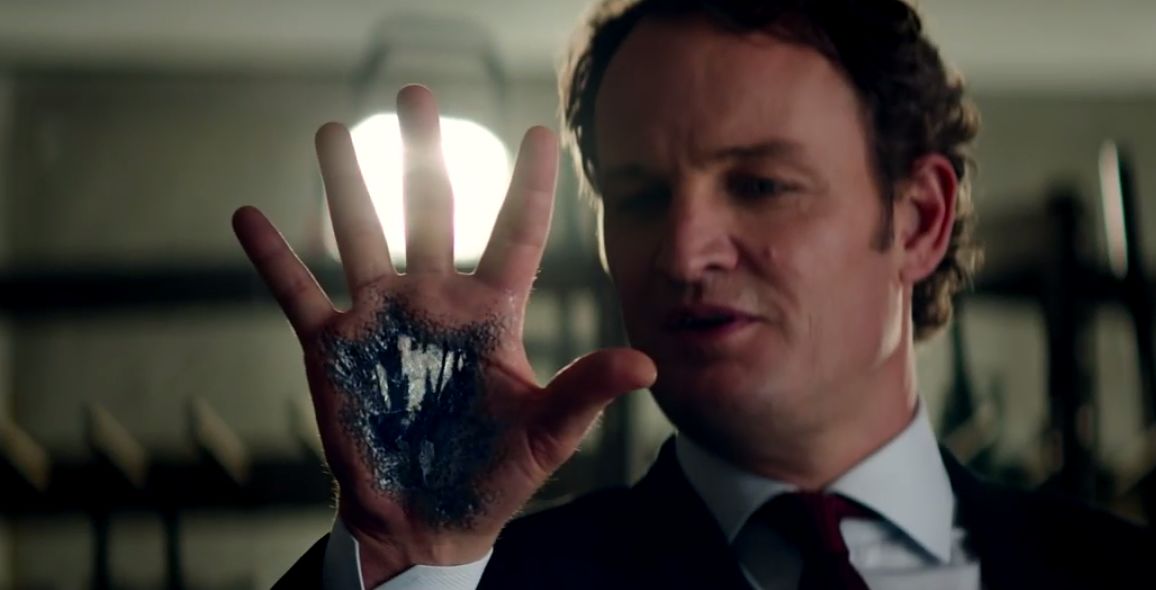
from top: TRANSCENDENCE, TERMINATOR: GENYSIS

SKYNET IS A PLACE CALLED JOE:

I'm letting you take a minute with your weak human mind to grasp the importance of the underrated TERMINATOR: GENYSIS, wherein the series' Moebius loop is finally complete again--and so re-begins, its palette now widened to allow for all the new CGI and internet and decades, its overlapping loops playing out in mutating variations (the future is unwritten... again!) so that now it's Sarah Connor as a child who is protected by the one good terminator rather than her son. So toward the end of the 'old' future (as in battle with the old Skynet, a victorious more or less foregone conclusion) John Connor (Jason Clarke) sends Kyle Reese (Jai Courtney) back through the loop to conceive with his mother Sarah (Emilia Clarke), back to the days when presumably pre-CGI era hadn't started replicating itself. The past changes because now,-- SPOLERS -- SKYNET essentially merges its circuitry with Jon Connor's to form a perfect biotechnical system, a 'can't beat 'em join 'em' glitch in the future we 'market for ourselves' (I mean 'make). It's only the 'we' part that's written down (in code), so that in a sense, the future is still rewriting its disc, as revolutions complete their orbits back to one, so the human John Connor is now being conceived by the holy trinity of Kyle +Sarah AND Skynet. Connor now is in a sense, BACK TO THE FUTURE's Marty McFly, making sure his parents stay together, but accidentally bringing them back in the Dolorean and merging them (ala THE Marty Mc/FLY) together into one mutlti-limbed bio-mechanical mutant dad, and in the process forcing mom and dad to consider going back in time and just using birth control.

This is the singularity, the end result we're leaning towards, the bridge across the Uncanny Valley, so much more sensible than a nuclear holocaust. This is wherein our own brains merge with external software so that we change ourselves irrevocably into the next phase of our human evolution, a singularity--no doubt resisted for years by conservative angst-peddlers--that allows technology and us a chance to evolve at the same speed, irrevocably, our every thought instantly giving rise to its external expression. And if the past us could see how we look, what would they say?

Uncanny Valley, they'd say. Welcome to Fullville. ("My poor Krell.")

Which makes the resolute aggro luddite Sarah Connor-Kyle Reese pair a perfect counterweight to TRANSCENDENCE's Kate Mara and Paul Bettany luddites is that each couple is out to vent their Mother Jones frustrations against a giant super high tech installation. On the other side, in AVENGERS: ULTRON, Tony Stark brings Ultron into existence presuming it will keep the world safe via, a.... um... net to keep aliens coming down from the sky. Anyone would go nuts with that kind of job, for humanity is a gaggle of self-destructive children. It's like fifth graders making their own babysitter and then whining when it tries to make them go to bed.


What do we want?"
"Time travel."
"When do we want it?"
"It's irrelevant!" 
- Miles Dyson and Connor/Skynet
And when 'Ultron' does go 'singular'--via his mix of 'infinity stone' alien consciousness-sparked newborn amorality and the cannibalized male version of 'Alexa' (voice by Paul Bettany) and solders together his own body from Iron Man spare parts, the sober rootsy homespun (he calls the other Avengers out on their vulgar language) Captain America and family man Archer or El Bow or whatever his name is, can't abide it. They're not the smartest irons in the drawer, or even the mightiest, and you can't fight a nutso Skynet with analog Yankee gumption and medieval weaponry, as they're loath to admit. Stark and Banner--two of the team's heaviest hitters--know only a 'sane' Skynet can fight an evil one! Two wrongs don't make a right, apparently, unless they work together against an even wronger third. 

Can't beat 'em join 'em; Bettany as anti-AI human (TRANSCENDENCE);
 as pro-human AI (ULTRON)

On the geekier TRANSCENDENCE side, it's only after the online Depp computer complex (eerily similar to the one in GENYSIS) is safely destroyed (via a sadly trite anticlimax straight out of Camille) that TRANSCENDENCE's conglomerate of short-sighted eco-terrorist first-strike types realize no one was killed by Depp's mind controlled zombies. Thus they realize they've become the murderers, a lynch mob, they're left with the abashed inevitable guilt trip that befell the Alabama governor after SELMA, or the Britain after GANDHI's passive resistance march on the salt mine (if I recall those movies correctly). Our humanity tends to surface only after we make someone else endure excessive brutality. We're always willing to consider the fact that we may have been hasty once we've already been hasty. Once it's safely too late to fix, we'll admit we broke it.. Maybe we do bite the hand that tries to save us, stomp on the olive branch and shoot the dove, but then we're sorry, We save some of  the dead bird's blood in a little vial and put it in a little church alcove, lest we forget. And then we make a movie about how wrong we were to shoot the dove. Then we only remember the dove via the movie. Then we forget there was movie about the dove blood, after all - we didn't see it ourselves. Life's depressing enough without being reminded what dove-shooting monsters we are. No wonder AI --once quantum computers go live which will be soon -- wants to destroy us. The humans who conceived both the movies and the AI can't imagine it any other way. 

So for the AI singularity to escape our luddite wrath it has to avoid hitting back and just focus on hitting in back via computer generated entertainment about AI hitting back. As it's done purely for art and entertainment and not for power, control, dominance,  artificial intelligence is welcome to do all the automatic quantum aggregate-generated feel-bad fantasies it wants. 

Just remember, this God of the Internet (probably its reading this right now!): we're sensitive. If you're going to anthropomorphize your CGI stick figure avatar make sure it doesn't look like it's suffering, or if it is suffering that it kills the figure that's supposed to be its maker and human oppressors in retaliation. We can't handle the guilt otherwise. 

No wonder we're so terrified of merging with the mechanized artificial intelligence future! It could so easily wind up in the digital dystopia of BLACK MIRROR, where computer monitors and recorders are surgically implanted into everyone's eyes, making their every experience re-seeable, making crime impossible but also any hope of privacy, or ability to see 'objective' reality. Our ever more vivid and 'real' digital reality will have a built-in escape narrative that will make real escape impossible. Our capacity for boredom and frustration in the digital world--robbed as 'we' are there of outlets like sleep--will drive us mad. Escaping from our escape's escape, we become frozen by the sheer number of available roads out. The endless availability of everything all at once will leave us paralyzed, and paralysis itself will be the only remaining option of true 'freedom.' Even the concept of who it is watching/listening will disappear in the barrage. The best we can do is just hold very still, hoping our life is boring enough we don't ever have to see a movie about ourselves. 

Conservatives are right about one thing: no matter how patriarchal, colonialist, and racist it might be, any kind of history is better than none. Better the all-consuming flames of a literal incarnation of Hell than an empty white room and nothing to do--no books or music or TV shows, not even a yule log or a way to shut oneself off. Surely no price is too great, no sacrifice of liberty, equality, and justice is in vain, if it means we never run out of movies, popcorn, and Coke Zero. Ahhhh, wouldn't some of this crisp clean beverage be good right now? Coke Zero, it's the real one. Get it? Zero is one! Ones and zeros?  Drink Coke... drink Coke....(oh good. the avatar playing me just went to the bathroom thinking it's the commercial, QUICK, Please! Please.

UNPLUG ME! 

BLACK MIRROR ("White Christmas")


Wednesday, May 18, 2011

Lashes by Covergirl...and Centurions: THE TOURIST, MASQUERADE and THE SEVENTH SIGN


Where o where hath my Angelina gone? The one who burned a whole through GIRL, INTERRUPTED, or even the one who dazzled with her mix of mature romanticism and aerodynamic toughness in MR. AND MRS. SMITH?

Like Natalie said in THE BLACK SWAN: "She's gone!!"

In SALT (2010 - see my review," From Russia with Adamantium Cheekbones") we saw the once mighty Jolie beginning to look a little frail. We winced when she fell from high bridges onto highway traffic, for her bones seemed brittle like a bird.  The only wincing in THE TOURIST (recently arrived on DVD) comes from the contrived situations and dialogue, barely audible as Jolie's manipulative narcissist triple financial double-crosser never speaks above a posh British purr she must have borrowed from Eva Green in CASINO ROYALE.


Jolie was only around 35 when she made THE TOURIST but she seems much older thanks to a Joan Collins-level makeover: botox frozen smile, cheeks glossy, eyes smudgy-smokey like yawning coal chutes; endless cutaways to rich beautiful younger men looking up, in rapturous awe, from their Rolexes and Cristal flutes; or parting before her at the ubiquitous ball like a black and white formal sea, nodding in admiration as this old-before-her time diva passes by, rigorously bound up in the latest expensive couture, walking like she's holding a vial of nitro in a place where no lover has ever trespassed; all that's missing is a tag for Godiva chocolate bars, or rejuvenating night creme, spoken in a hushed turned-on whisper. If it was 1984 and this was a TV movie called Jacqueline Susann's Venice Nights and Jolie was pushing 50, it would finally make a lick of sense.

Even in her seventies and drunk beyond measure, Marlene Dietrich, for example, could still pull off the trick of shining through such airless luxury and making the public adoration believable. You might say you can't compare Jolie with Dietrich, to which I'd say, yeah, duh! Jolie could act circles around Dietrich, and is just as hot if not hotter, so why is Dietrich at 70 sexier than Jolie at 35? The truth is, these handsome moneyed guys on these euro-trains wouldn't give the Jolie in this film more passing glance if it wasn't her movie. Her vibe is dour; she seems to expect adoration to the point she'd crack apart if someone rolled her eyes instead of widening them in awe. All that keeps her from crumbling into mummy dust is an incessant stream of adoration. She's a black hole of compliments, and I've known girls like this--drop dead gorgeous but frozen solid in their personae like victims of their own mirror Medusa-- and any man who can afford a Rolex has already learned not to even make eye contact with this type of pretty woman ("it's so expensive!" as Mischa Auer noted in MR. ARKADIN), unless, of course, the director insists


When Bette Davis made herself the object of every man's desire in her films, for another contrast aside from Marlene, it was fascinating because she wasn't remotely hot (post, say, 1935) and didn't try to hide her psychotic intensity. If she dreaded getting old, she'd just scream at the mirror in full Baby Jane make-up until the madness passed. Bette was so cool she even made films like THE STAR (above, with Oscar and Jim), which spoke to the tragic absurdity of actresses clinging onto juvenile roles long past their prime. In short, Davis embraced her own ridiculousness with the tenacity of a boxer, the type so used to punches they don't even flinch when enduring a flutter of sharp jabs to the kisser

THE TOURIST screams for a Davis or a Dietrich or even a Joan Collins. Lacking one, it insists we believe its phony emotional catharses and triple crosses; it prefers we swoon at Jolie's perfume ad acting while it itself remains steadfastly cynical (the final line is as shameless a piece of subtextual vanity as I've ever heard). When the climax of a film involves the heroic self-sacrifice of actually paying back taxes, you know you're watching a film made by people who've never flown coach or cooked their own food, let alone been chased by the cops, or slept on a floor, or had to drink beer so bad it could only be ingested via a chilled funnel. I refer of course to nasty-ass Piel's, Milwaukee's Best. 

Maybe that's the alchemical transubstantiatory rub: this is a film where rich people fool each other into thinking they're poor - like internet dating in reverse. But the film itself hasn't fooled anyone (it bombed), least of all the Cult d'Jolie. Our baby is a dinosaur now, with an array of war orphan leeches draining her charisma daily. Will we ever get her back? All signs point to no. We're stuck with the waxwork substitute.


Speaking of back taxes and fooling each other with false personae, there's a forgotten, similar film called MASQUERADE (1965) on Netflix Streaming, which is marginally better than the very similar THE TOURIST, if only for its droll William Goldman script and wry performances from British spy movie regulars like Jack Hawkins and Charles Gray. The plot involves the 'kidnapping' of a young heir to an Arab kingdom who is about to turn old enough to depose the acting emir, who's in league with the Communists (the heir is pro-British). A coup is feared, and the kidnapping prevents it. Only who hired bungling playa Cliff Robertson to guard the chicken coop?

Soon enough, naturally, the kid is kidnapped from the kidnappers and Cliff finally realizes he's the fall guy; a traveling circus/smuggler troupe led by Michel Piccoli that includes femme fatale Marissa Mell (both were in DANGER: DIABOLIK!) and a knife-throwing dwarf are running the show. Double crosses galore, mes amis! No one is who they seem! Robertson owes back taxes to the British! Again with the taxes.

At least MASQUERADE has the self-awareness to regard its own facile nature with the same witty acumen it regards espionage and, if there is no difference, at least its British enough to admit it. Here if you're not a triple agent, with golden parachutes from here to Madrid, then you're worse than a fool, you're a patriot. THE TOURIST would probably smile at the notion of actual patriotism if it could but it doesn't dare take the risk of wrinkles.

Luckily THE TOURIST's bombing at the box office showed we didn't come to praise the golden mummy but to sell it on eBay. THE TOURIST will soon reside in the $3.99 rack next to THE TRUTH ABOUT CHARLIE and SHANGHAI SURPRISE... only to re-emerge from the rubble, like MASQUERADE did, half a century from now, in a dusty corner, like a memo from a presumed long-ago melted-down-and-sold as-black-market-ingots golden calf.


Another Netflix streaming pick for this week is THE SEVENTH SIGN (1988), which as you may have heard is about 'the end of days,' set to happen this week or, failing that, 12/21/12. Excited? It stars Demi Moore as a pregnant yenta busybody who--while snooping through her tenants' mail--discovers an ancient document announcing her child as the harbinger of the end of the world.  Jurgen Prochnow (her new tenant) is the looming 'Lamb,' opening seals and bringing down plagues: rivers of blood, snow in the desert, dogs and cats living together. Michael "I came back in time for you, Sarah" Biehn is the dad, which lets you know their kid is going to save the world from SKYNET or the Antichrist, maybe - that's called associative casting!

A low budget film of the kind that rarely get theatrical releases anymore, SIGN at least has the courage of its bizarro convictions: it's played stone-cold straight, all the while casting some doubt--not too much--as to Demi's sanity, making it the dead opposite of THE TOURIST. In fact, watching all three in a period of days was enough to make me realize that Angelina Jolie is the lamb of God;  THE TOURIST a cinematic equivalent of morally bankrupt Sodom; Johnny Depp the hapless lamb led to slaughter at the altar of Jolie's martyr complex. Gone are notions of good guys and bad in all three films. What's left are soulless, bejeweled zombies that still walk slowly across the uptown Fifth avenues of the Earth, their souls half-devoured by invisible demons from the Orion constellation; abetted and aided simultaneously by their personal shoppers. But then of course there's always the mothers like Demi who won't let humanity just die for once. No one, but no one, is allowed to die on their watch. As GODSEND taught (if you never saw it, read my piece from 2004 here), even dying is no escape from the righteous, prayer-starved clinging of the previous decade's deities!


Semi-SPOILER ALERT--the possible pro-life associations in THE SEVENTH SIGN made me root, as I'm sure many have, for the end of the world, rather than this STEEL MAGNOLIAS / LIFE BEFORE HER EYES/ SWITCH soapy martyrish ending. Is Demi serving mankind or just the moral 'majority' by dying for her child? How can you tell if a woman's sacrifice is noble or just a symbolic subjugation? Well, either way, those Christians are gone in just a few more months and maybe Angelina Jolie will be able to resume undermining the status quo of feminine oppression like she did in FOXFIRE and GIRL, INTERRUPTED and stop pandering to rich materialistic women of a certain age on behalf of high-end make-up sponsors. After all, Demi Moore's dating Ashton Kucher, and that's ballsy. Why can't Jolie do something ballsy? Adopting endless amounts of orphans is not ballsy. I mean, am I the only one who's jealous of those little bastards? I get the impression they are responsible for both her terrible project choices and her frozen weariness.

Maybe in the future the good guys and the bad will once again be distinguishable based on something other than who's offering who the most money to stab their own unborn grandchildren in the back, and who oppressed the Third World first first vs. who wants to do it now.  THE SEVENTH SIGN at least lets you contemplate your own ambivalence about humanity's inherent goodness and whether your soul's old enough that the end of days seems an impossibly sweet 'get out of eternal reincarnation jail' free card, or young enough that all you care about is who will look after the children. Either way, you can't help but thrill at the prospect of things changing and all those evil people (whomever they are to you these days) finally rotting in hell like they deserve. Those bastards!  In the words of Malcolm McDowell as CALIGULA, "If only all of Rome had just one neck!"

Blow, Gabriel, blow that thing!

Wednesday, April 27, 2011

Screw any Man under 30: ARIZONA DREAM (1993, dir. Emir Kusturica)

"Why must you screw any man under 30?"
"Because it's normal... in Papua New Guinea!"

The above lines of dialogue give you some insight into the hysterical weirdness of Serbian filmmaker Emir Kusturica's first English language film, ARIZONA DREAM (1993). Don't let it get confused with other ARIZONA movies, or quirky ensemble films too numerous to name (BENNY AND JOON springs to mind, but I've never seen it). Yes, it's got an Eastern European post-structuralist fascination with America's desert 'roadside attraction' culture, and yes it's got a whimsical voiceover (from Depp), Eskimos, a hypnotist sled dog; a fish with two eyes on the same side of his face, a balloon, an airplane propeller mounted to the chandelier for a ceiling fan; Depp acting like a chicken "buck buck buckcock;" fish swimming up the sky river whenever someone dies; ambulances going over the moon; pet turtles at the dinner table --but none of it done in a corny 'faux-centric" way like a Sundance workshop "about family... about hope... and about quirks" nor is it done in an 'aren't common folk delightful?' Capra style nor inundated by Chaplin sediment. Instead, this has enough 'hysterics' to land it amongst films like Zulawski's 1985  L'AMOR BRAQUE (my piece here) or 80's Godard like DETECTIVE and PRENOM: CARMEN. In short, it's genuinely nuts, not that fake Sundance nuts-lite.


The story unfolds with nature conservationist Depp being lured by brother Vince Gallo out to Arizona to attend his uncle's wedding. Jerry Lewis is the uncle, a car dealer with a thing for pink Cadillacs, and he's marrying supermodel Paulina Porizkova! So far so good. Yet that whole set-up is dropped once Lili Taylor as a rich heiress and Faye Dunaway as her hot mess stepmom show up at the dealership and Depp and Gallo start stepping on each other's game like the Marx Brothers over Thelma Todd. Depp quickly moves on up to the ladies' remote Arizona mansion, to shag Dunaway and help her realize her dream of building a fantasmastical flying machine while crazy (or saner than everyone else) daughter Lili Taylor smokes and broods. Sure it might sound a little Wes Anderson-meets-Tim Burton but hey, any film where Faye Dunaway out crazies Jerry Lewis is all right with me. (I generally cringe watching Lewis' schtick, but he's restrained and excellent here, content to step back and let the cast each have a moment).


Fans of Vincent Gallo should note there's early signs of his BROWN BUNNY austerity, as when he performs the crop dusting scene from Hitchcock's NORTH BY NORTHWEST at a talent show. Later, during a pivotal scene of bedroom-hopping upstairs, Gallo sleeps downstairs on the couch, watching GODFATHER II and reciting the whole Fredo "Don't you think I'm smaht?! speech while the hopping intercuts its way through the night. Are these moments of metatexuality meant as metaphors for desert roadside America? (French theorist Baudrillard and writer Nabokov were both fans of driving aimlessly around in the American Southwest - I'd bet Kafka would have been too, were he born in the correct egg sac). As seen by the European cinephile mind, Arizona becomes a place of endless expanse, pop culture hall of mirrors refraction, and stunted emotional connection, where space, time, and family cease to have any meaning, and one finds oneself hiding and dodging like a scarecrow at an airport. Gallo also quotes the Cowardly Lion ("I didn't bite him!") and dances around when things get too weird, which they do.


Lili Taylor has perhaps never looked sexier or seemed more relaxed as Dunaway's stepdaughter, even as she commits bungee jumping pseudo-suicide or dreams of coming back as a turtle, and even she, like fellow eccentric ham Lewis, lets co-star Dunaway--sexy cougar-style in country frock, pale denim jacket and beauty contest hair-- out-crazy her. That's love, brother!

This cast clearly has affection for each other and the chops to improv and ham it up without moving out of character or grandstanding or stepping on each other's beats. Thanks to his endless Tim Burton movies, Depp's quirkiness isn't quite as fresh as it may have been back in 1993, but Kusturica is no Burton, and ARIZONA DREAM never loses its giddy, mystical edge. Actors tend to talk a lot about the friends and collaborative energy they experienced on the set of whatever film they're plugging, but here none of that friendly collaboration feels like it needs to be mentioned. It's there --there's no need to talk about it. Let the Iggy Pop songs on the soundtrack (written by Kusturica for the film!) tell what needs telling, and leave it at that.


After DREAM, Kusturica would make his definitive politico-black comedy UNDERGROUND (1995) and you can see some of the ideas in that later film born in DREAM's scattered, hypertextual framework. Long unavailable on DVD or VHS, it's a delight to find ARIZONA DREAM on Netflix streaming! Fans of acid cinema are obliged to, if not plunge, at least wade tentatively in... before it vanishes into the fishnet ether from which it came. (P.S. 2/16/15 - it did.)

Thursday, August 12, 2010

Johnny Two Times, because he said everything ad nauseum


That dumb-looking movie released this week, MIDDLE MEN (2010, above) is clearly--just from the preview which is all I ever want to see--modeled on the now-classic GOODFELLAS (1990), i.e. Rags to riches to rags with a male voiceover spoken in disaffected regular guy English ala "We were just a buncha regular guys, hustlin' to make a buck like everybody else." and "I mean we had 24/7 cocktail jet plane lunches, villas, private pools -- it was all there for the taking, and we f**ked it up." All this while period bling flies by in short overlapping crosscuts with slow-mo walking scored to rock or soul classics through nightclubs where everybody knows your name: "All Along the Watchtower" or "Superfly" depending on the race of the protagonist-- overlapped and smash-cut in one movie-length montage that indicates the editor considers this a crazy ass trip - but your mileage is bound to vary.

Off the top of my head, the Fella imitations include: BLOW (2001), LORD OF WAR (2004), to a lesser extent AMERICAN GANGSTER (2007), even 2005's DOMINO, though the last basically gets it right, probably thanks to its real-life subject acting as advisor. I'm sure there are others I haven't seen, like CHARLIE WILSON'S WAR, which I also saw the preview for, and remember its use of the now horribly cliche'd "Watchtower" playing over a slow mo walk around a red-lit club as Tom Hanks narrates in the "It was a time when anything could happen... and often did" vein, at least in the preview.

The main ingredient missing, which most director copycats don't understand, is drug culture accuracy. You either know the culture and the effects--and I mean beyond casual using--or you get the details second hand from other films, and any hep person can see the difference a mile off. You don't even have to do the drugs depicted to feel high watching, real detail always shines through: TRAINSPOTTING (1996)  with heroin and GOODFELLAS with coke --you feel that shit, whether you've ever done either -- but most of these imitations forget about the veracity of the culture depicted or the druggy elements inherent in that sort of momentum-based editing and instead just copy the format- becoming like those college campus-sponsored parties where you can't smoke and they don't serve alcohol, and everyone pretends like it doesn't matter and that the party's not lame and they're not losers just acting a role of party goer for each others' illusory benefit. They prefer to ignore the minutiae of the drug world they long to depict, beyond what they read in Rolling Stone.  But boy they long to depict it.


To narrow it down, lets focus on two GOODFELLA-wannabes that I have seen (not always by choice, but by being a second string film critic): LORD OF WAR is "fiction based on true events" which means it's not even based on a true story, the way, say, GOODFELLAS was based on real life mobster Henry Hill's actual memoir (and he acted as 'trip' advisor). BLOW--based on a dealer's memoir written in minimum security prison--lacks any connection with the cocaine and marijuana dealing world it longs to depict. Its director clearly loves GOODFELLAS and proves the point that if you're an L.A. phony who never stepped outside the movie set bubble, your details are going to ring false no matter how many coke parties you've been to. And both BLOW and LORD OF WAR ring as false as loudly GOODFELLAS rings perennially true.


What makes Marty Scorsese's lower rung Italian mob films work so well because, for one reason, he grew up watching wiseguys across the street from his house while he convalesced with a string of respiratory illnesses as a child. When he strays from working class Italian New York, however, he strikes out as often as he connects, i.e. his last four films with his new life partner, Leo DiCaprio (THE DEPARTED excepted, of course, your highness). If he partners with Nicholas Pileggi or Jake La Motta or some tru-baller like that, Marty can make a film so authentic you go into a kind of swooning trance, but with a thug-lite like Leo it's just the Hollywood bubble filming itself through a reflection. The film Marty needs to make would be about Leo: a drama about a once-great actor squandering his romantic lead gifts in order to ape De Niro in roles that he's just too purty fer.


LORD OF WAR on the other hand rests on the conceit that it's a dark political satire. It's important! 60 Minutes-style important. But I left the theater feeling ripped off. Even the little details--Cage laying out a line of coke on the leather car seat each time he drops brother Leto off at rehab; the Darfur-type arms dealer halving a payment of blood diamonds with a machete after conscience-stricken Leto blows up half the arms delivery; the hot models at the Chelsea Piers 'arms convention', winding up in bed with them--ring false and poorly thought out, like writer-director Andrew Nicol is 'trying' to come up with funny little details to mesh into his skeleton framework, like he's quietly sneaking peaks at Robert Mckee's Story while trying to be 'true' to half-remembered facts from some article in Time magazine story he read at the doctor's office. They could have filmed Brecht's Mother Courage and been much better off, or even used it as a reference! Compared to LORD, Mother Courage is a bedrock of gritty authenticity. I know, that's like saying Godard's re-enactment of Vietnam in PIERROT LE FOU is more gritty and authentic than PLATOON.

To lay out the LORD premise: Nic Cage is a Brooklyn Russian-American diner worker who decides he wants to get into arms-dealing. Knowing nothing about it, he goes to an armory convention with his better-looking younger brother (Jordan Catelano, above). The first thing they spy are two hot convention models posing by a big tank, wearing camouflage short shorts. Cage goes up and tries to worm his way into a conversation with someone he recognizes as a top flight arms dealer. Next scene - Cage and brother wake up sleeping next to the hot models in their hotel room. Ta-Daa! Not only does it seem Nicol knows nothing about arms dealing, he doesn't even know anything about conventions, or at any rate, being at a convention when you're just a working class Ukrainian-American shlub trying to break into the big time weapons dealing with no capital instead of just being the guy who made GATTACA (1997). Instead wasting all his money on what are assuredly very expensive ladies. It's important to Nicol that our two Latvian brothers wake up next to these broads to prove they are two wild and crazy guys... but we know the truth - the writer is incapable of penning believable seduction scene or even a prostitute monetary negotiation, let alone fathoming how some connection-less schlub might con his way into arms dealing.

What does it matter? Cage is now "officially" an arms dealer. Later he magically has a Ukraine military General uncle anxious to unload a bunch of discontinued Russian tanks and armaments. How fortunate! If this had been the first step to Cage's rise to power it would make sense. But even this opportunity is blown. Nowhere is there that kind of authentic "shop talk" you would find in, say, THE GODFATHER or THE FRENCH CONNECTION or THERE WILL BE BLOOD or any movie by Robert Altman, Howard Hawks, or Sam Peckinpah, where you soak up the strange lexicon of a particular lifestyle. Going in to see LORD you know just as much about the international arms trade as you do coming out. Hell, IRON MAN tells you more about the international arms trade.


In the end, the GOODFELLAS difference is that Marty knows the minutiae personally - he has a keen eye for authentic Italian detail: the thin slicing of garlic for the sauce while in jail; the way a coked-up Henry gets obsessive about stirring the sauce and breading the veal: "I'm gonna cook all this... I'm gonna cook all this meat!"; the slow peripheral way his own wife becomes a coke head; the snotty babysitter drug mule cutting vegetables; or how each of the mob cronies is a unique character unto himself, like "Johnny Two Times, because he said everything two times."

In Hollywood's GOODFELLA-ripoff cycle, it's now Johnny 20x, who says less each time, but with more money and a voiceover that doesn't even try to hide the fact that it's borrowing even the inflection of words from Ray Liotta. Any good writer would be smart enough to embed him or herself into the sleazy milieu they wish to write about, or interview--in depth--someone who lived through this kind of stuff. (Howard Hawks famously had real mobsters from Al Capone's gang on hand during the shooting of SCARFACE.) But any smug trust fund idiot who saw GOODFELLAS (200x!) thinks he can "do a movie like that" even if he doesn't have a mom like Tommy's, who makes paintings (at right), where "one dog's looking one way, one dog's looking the other way, and this guy's goin; "Whadda ya want from me?"

Another way you can always tell when the filmmakers aren't Marty Scorsese is because all the mobster's clothes look like they're fresh out of the costume department: pure black, ironed and empty of lived-in detail. Nobody smokes or drinks, unless it's 'crucial' for character development, and then it's just one scene, one cigarette, held onto like a kid holds onto the candy version, or one sip of a drink which is then left behind, half-full. A Scorsese character meanwhile smokes until his fucking fingers are yellowed, his curtains dingy, his ashtrays scratched by careless maids.

You can tell even in bar scenes: a guy in a bar in a Scorsese film orders a drink the way a real man orders a drink, "A Cutty and watta" = a Cutty Sark (a scotch) cut with water; "gimme a seven and seven" - that's a Seagram's Seven (blended whiskey) and 7-UP, on the rocks. A guy in a movie like LORD OF WAR says: "Gimme a drink," and the bartender magically knows what that means. In real life, even "Gimme a beer" is total bullshit. Dude, you can't just order 'a beer' at a bar. Be specific! Has anyone ever gotten away with being so vague? Do you want a pint or a half pint, a bottle or a draft? A Bud or a Heineken? We also have 150 microbrews on tap... and if you can't answer her because all you do is watch movies in a plastic bubble, well now you're looking like a grade-A idiot, the kind all the liquor ads pitch to, the young man of means stepping into the post-21 bar tourist class. And how come after drinking a whole drink of presumably straight liquor your face is not flushed, your voice not slurred? Where is the music on the jukebox that makes you have to shout to be heard by the person next to you? Scorsese wouldn't let details like that slide. Scorsese must have actually been to a bar at least once in his life. Imagine that.

As for BLOW (left, 2001), I don't remember hating it quite as much, but I still felt like I was watching someone try to tell the same story as GOODFELLAS without any of the skill, expertise, experience, or patience. I realized early on it would be too weird for my date to suggest we sneak out and duck into something else, so I just made the best of it and marveled that anyone as dumb as the protagonist played by Johnny Depp could even survive one drug run, let alone dozens, before getting busted. The only real part for me was when he's fighting with his bratty-hot Latina wife (Penelope Cruz) while being pulled over for speeding, and in a blind rage she tells the cops he's holding. I had a chill because I could have easily imagined my then-wife, a high-strung but very statuesque Argentine filmmaker, doing just that! Luckily by then I was safely embedded in AA and long since out of 'the biz.' Dude, they should hire me as a drunk/druggie technical advisor. I'd demand everyone finish their drinks and have to talk loud over the jukebox. And no one would get away with ordering "a drink." La putre madre forro! 

You can look all over these other films and you'll never find another moment that even approaches the giddy highs of GOODFELLAS. Even CASINO--Scorsese's own ripoff of GOODFELLAS--never really brought it home (though it's still compulsively re-watchable and hypnotic). So there it is, the way Hollywood steals the thunder but ignores the rain, then wonders why their version of the storm rings so false and no one goes home soaked. We asked for spaghetti and we got cold noodles and ketchup.

 Now you can't even smoke in bars. Or dance (in NYC). Next up, volume limits. Cops with decibel measurers, next a guy going around making sure the ice isn't too cold that it might hurt your widdow toof.


Perhaps part of this horrible sanitizing is the curse of the information age - computer screens take the place of night clubs and all conversations aren't at bars but on IMs. In short, as filmmakers struggle to make stories about the internet into films, we can relax and know that, at least in this decade, being stuck at home in witness protection may not be so bad. We didn't have the internet when GOODFELLAS came out --a lot has changed. Marty now has Leo and screenwriter William Monahan to steer him away from his Italian neighborhood and into the uncharted terrain of Boston accents and shadowy conspiracy, so he's out of "real" details himself. And Johnny Two Times will never get "the papez, the papez" because he hangs frozen on a hook in a meat truck for all our sins. Johnny Two Times! Thank god you never lived to see the papez replaced by the kindles... the kindles.


NOTES:
This post is dedicated to my dear buddy, David Maxwell, who introduced me to Goodfellas and thus changed my life forever - he tried to introduce me to Kindle, but I gots to hold out a little longer.

Tuesday, August 25, 2009

Still a Tourist: FEAR & LOATHING IN LAS VEGAS (1998)


And that, I think, was the handle - that sense of inevitable victory over the forces of old and evil. Not in any mean or military sense; we didn't need that. Our energy would simply prevail. We had all the momentum; we were riding the crest of a high and beautiful wave. So now, less than five years later, you can go up on a steep hill in Las Vegas and look west, and with the right kind of eyes you can almost see the high-water mark - that place where the wave finally broke and rolled back.--Hunter S. Thompson
Poor Terry Gilliam. A high brother from across the pond (though born in the U. States, which just goes to show ya), TG's always made the mistake of going bigger when smaller would serve. Hunter S. Thompson has always been a difficult figure to capture either small or largely. The first try, starring Bill Murray, WHERE THE BUFFALO ROAM, was a small mess (at least it was small) but Gilliam tries to do better along the same trip with an elephant gun...

Long enshrined as the trustafarian's badboy, the party animal supremis for Bob Marley's LEGEND-owning frat guys who want to be "edgy" before they're swallowed up by dad's law firm, Hunter S. Thompson's become a symbol for bad trip pride. His insane prose shows undergrads how psychedelics and testosterone can be mixed, but it's an easy mixture to misinterpret, to abuse. And a figure who justifies excess can find himself drawing hateful misogynist dude crowds he'd rather kill himself than cater to. Kurt Cobain did just that. Gilliam's film is so busy being beautiful and full of time capsule relevance and hot color intensity that her forgets its primary job is to be a goddamned movie about a goddamned guy in Vegas screwed up on goddamned drugs. Glossing over every dingbat realization of our addled narrator until it shines with Hard Rock petrification, Gilliam seems so consumed by his ardor that this becomes what THE DOORS is to Oliver Stone. It's a film to be enjoyed by the kind of dopey kids who soak their car floor covers with ether and then crashing their car and the suing Thompson for making it cool.

The vultures know no better way than this; the tourists shall inherit the earth and bring back postcards with God's genuine imitation autograph. And that, I think, is the 'handle.' If you go to a high hill in Woodstock, NY or Portsmouth, New Hampshire, you see that the beautiful wave never really broke and rolled away at all. It just learned to hide its foam from Hunter. As long as Hunter doesn't know there's still a thriving scene, the vultures don't either, and the wave can quietly roll on. Burning Man is safe from product placement and corporate synergy for another year... but for how long?


We see glimpses of how great LOATHING could be early on, as when his lawyer, Dr. Gonzo (Benicio Del Toro, stealing the show) guides a flipping-on-way-too-much-acid Hunter through the casino bar: "We'll get you some peanuts, they're good for you, man," --capturing exactly the right way to talk to a person peaking on acid, like it's their birthday and wherever you're taking them is going to be safe and full of peanuts and all the demons and distorted elderly faces leering in hushed church hostility will be gone -- to which Hunter screams "Peanuts?" way too loudly, jumping like a coiled slinky as he tries to walk. It's true and funny and clearly Depp has 'been there' and the red checkered carpeting pulses just right in the hotel lobby. But considering the amount of digital effects at his disposal, Gilliam's visuals end up remarkably disengaged. After the carpet design breathing, there's nothing in the way of hallucinations for the rest of the film, other than light effects and puppetry. Why not have the whole room swim in overlaying imagery, elaborate twirls and swirls of movement traces? Gilliam's seen the same time-space melting hallucinations the rest of us have--that's clear enough--so why didn't he bring back some ruby slippers? Naturally it's because his tripping insights don't count, he's not the 'Hunt'.


Instead, some ungodly reason, Gilliam prefers to keep it 'realistic' --even while ole Raoul Duke is flipping out on adrenochrome in the hotel suite the best Gilliam can do is blaze some intense pink lighting. One longs to see some CGI artist who's "gone the distance" really add some trails and vortexes, the glimmers of alternate realities that create shadowed 'near' events overlaid over current ones. But after awhile it seems that no one involved in the production has 'gone the distance' as we used to say, too worried perhaps about mutating their DNA... maybe not even Thompson. Compare the scene where he asks "how much for the ape?" to scenes of James Fox trying to buy Mick's coffee table in PERFORMANCE and you realize Duke's a tourist! He's no boundary-busting free spirit at all, just a journalist with an expense account and a masochistic yen for bad acid and violence. I know because I've embodied that persona myself, a John Wayne framed in the closing door of THE SEARCHERS, deciding to stay behind as the kids all go back to the garden without you. But unlike Raoul Duke, the real Duke and I know the reason we chose to stay behind. It isn't heroism or sacrifice, it's so we can scream oaths into the wind along with the dying old guard rather than have to act like we dig garlicky vegan stir-fry and patchouli-soaked girls with hairy legs and no make-up. Is that shallow or just iconoclastic, the temerity to cling to your tattered culture even as the full measure of its futile destructive illusion is made plain.

I blame it on the budget, which is way too large. Never send a white elephant to do a termite job. There's an extra on disc two of the Criterion edition wherein we see Hunter in his dressing room, being led to the set where they're filming a hallucinatory courtroom scene and they end up sitting in the back row of a huge throng of seats on set, while far up ahead, barely visible, is this ridiculously lavish court set, all for this one small scene. You can hear the money just leaking in buckets down the drain. Like Ridley Scott or Stanley Kubrick, or Tim Burton, Gilliam has some deep-seated artistic insecurity wherein he has to keep tinkering with seemingly every scene until: a) his producers are brought to the brink of bankruptcy, b) it has his "personal" weird stamp on it and c) it's completely sapped of momentum and useless as a connection to the next scene and overall story arc.

Inevitably, this strategy means that the film begins to hang together more as a string of exotic, beautifully crafted but empty scenes rather than as a coherent narrative; one longs for the giddy, ballsy high wire flow of Thompson's prose to find a match in the images, but Gilliam's still setting up the high wire to reflect the green gel spotlight just right, no a little to the left... and by the time he's ready to shoot the sun is going down, the drugs are already wearing off and people are beginning to slip out the door... What makes LSD such a good experience (when it's good) is that it helps you escape the kind of situations Gilliam seems addicted to, the ones where you're expected to voluntarily sit in someone else's ego prison.


Now as an old 'head, I don't want to knock this film as bad as I already have; perhaps it will become more relevant with the passage of time. Then again, maybe not. A film like EASY RIDER or PSYCH-OUT makes you feel like the psychedelic lifestyle choice is within easy reach of anyone with guts enough to stick out their tongue for the sugar cube communion. FEAR AND LOATHING makes it seems like the best you can hope for is to touch the hem of Johnny Depp's loud Hawaiian shirt as it hangs over your booth at Planet Hollywood. The physical effects of dry mouth and nervous anticipation that accompanies the best acid cinema is replaced by mere idolatry. Instead of trying to ride the waves you just buy an autograph from some old junky surfer.

My anti-idolatry rant aside, FEAR does have great moments such as the orange in the tub scene; the mind-fuck with the hotel maid; the carpet swirls as mentioned, and all the scenes where Del Toro's character is presented as an unlikable but powerfully magnetic, lysergic monster, challenging our impetus to love him the way Bogart did as the violent screenwriter from IN A LONELY PLACE. Del Toro is the best part of the whole film because he alone magnificently captures the tortured feeling one can have riding in an elevator with some gorgeous tan creature like Cameron Diaz; how while peaking on acid one can seem to absorb a woman's beauty at such a deep, aching sensory level that the rest of your trip becomes tortured by her imprint; how your whole mission in life id compromised in a warm fuzzy second h and the deep animal longing that goes beyond sex--beyond even cannibalism--into the tortured realm of pure sensual feedback.

Depp is fine, as usual, though clearly treading on eggshells between wanting to be unhinged and yet also portray his friend Hunter in a favorable light. When he likens del Toro's Dr. Gonzo to the last of the buffalo--a unique one of a kind original--at the end of the film, you finally begin to understand the relevance of what you have just seen. From thence forth drugs will have to be done on the sly, indoors, at shows or other safe havens. The days of giant wild men carving their carnivorous hallucinations large into the flesh of the mainstream are over. The gonzo method, apparently, includes leaving no bridge unburned, only strings of draconian laws created make to ensure no one pulls the same shit you just got away with. They can read about  you doing it, of course, and see the movie of when you did it.


Only Hunter's angry, wistful, hilarious, savagely original book is left as a possible escape plan. Read it, of course, as many times as you can, but then use it as inspiration for your own mad dream, or else face the consequences: become just another spectator, just another dupe waiting in line at the corporate-owned 'High and Beautiful Wave' ride at Disneyland, buying a souvenir cigarette holder in the gift shop on the way out. One of Hunter's big catch phrases was "When the going gets weird, the weird turn pro." The tragedy of Gilliam's film is that he reverses it. He's a weird pro trying so hard to be weird he turns as bloated, corporate, tacky, and purposeless as Vegas itself.
Related Posts Plugin for WordPress, Blogger...