Tuesday, October 18, 2011
Halloween Essential: THE BOOGIE MAN WILL GET YOU (1942)
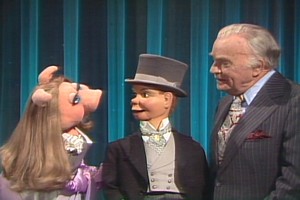
Straight horror was considered ill-timed during the war, but horror comedy was OK - get 'em laughing at the boogie man and the eggshells don't crunch quite so loud underfoot on the way home. If only an attempt by Columbia to mimic Arsenic and Old Lace, then a Broadway hit, THE BOOGIE MAN WILL GET YOU would be pedestrian fluff--and most critics dismiss it as just that---if the script didn't rock in a way so deadpan it take many viewings to truly savor. That means that you must come to terms with the shrill hamming of Larry Parks and "Miss Jeff" Donnell in the Brad and Janet roles. It's worth any effort to get both Boris Karloff and Peter Lorre, bouncing off each other with perfect comedic timing. Clearly, we're meant to share their bemused disdain for Bill, the high-strung little pisher of a romantic lead (Parks). He's shipping out to war but first has to square up with flighty ex-wife, Winnie (Donnell) who just bought the crumbling old inn where mortgage-strapped Karloff is brewing atomic supermen in the basement and two old character actors round things out as the resident 'cook' and 'pigkeeper.'
Ever-angered at his own co-dependent need to save her (he thinks she's gullible), Parks' is like a high strung little wire--one of those shrimpy 4F guys Hollywood had to use to patch the holes left by all the A-1 recruits and draftees. It's clear Winnie does need saving (heavy clocks and sideboards nearly fall on her quite often) but she doesn't think so and regards Bill as a tiresome nuisance, though he eventually proves his worth. Visitors to the inn include two doubtful state troopers, a crazy 'human bomb' escaped Italian POW, and the always delightful Max Rosenblum as a powder puff salesman ("like what ya dab on ya kissa"). Lorre is the town magistrate, sheriff, and the notary public who arranges the deed to be signed over and eventually joins Karloff in his superman brewing (the failures are stored in a cold morgue room off to the side. Parks and Winnie set about the renovations, and hunting for possible shadiness and it's all so good, so right, you get the vibe you might remember from when dad's away for the weekend on business and mom lets you stay up extra late and makes popcorn.
If you've seen ARSENIC, the film version made two years after BOOGIE MAN, you know that Parks' equivalent would Cary Grant's Mortimer Brewster. Grant uses the same high voiced morality and exasperated protectiveness as an excuse for avoiding sex. Recall how Grant keeps his bride waiting at the cab while he tries to quickly send his homicidal aunts off to "Happydale," like they are the ones who need it. Parks at least seems to want to have sex at some point, and is willing to do the Bed, Bath, and Beyond route if that's what it takes to get there. Winnie has his number ("Bill," she asks romantically, "don't you ever get tired of yourself?") and it's all understandable because men were hard to find on the home front back in 1942. They better look 4F if not in uniform, and not get too lucky with all the single girls drifting around in zombie fugue states between the sexy bookstore girl in The Big Sleep and the tranced-out Monogram brides of Bela Lugosi in The Corpse Vanishes and Voodoo Man.
The catch is that, just like we root for Grant's crazy aunts in Old Lace, we root for Karloff and Lorre here way more than Parks. First the "gruesome twosome" spar with each other, old neighborhood enemies (Lorre owns the mortgage) but they then form a bond with Lorre helping Karloff turn passing salesmen into electro-powered supermen: "He will destroy Berlin! He will throttle Tokyo!" Meanwhile, the ghost of Unkus ("The last of the Mohicans!") keeps emitting unearthly yowls in the day-for-night exteriors, and a portly 'balletmaster' snoops around the grounds and deflecting knife attacks from the crazy old lady housekeeper with his whalebone corset.
The dialogue is deliciously archaic throughout, as if a drunken Vincent Price was mocking passages in some old Victorian novel. Someone had a good time writing this, and the actors ride that spirit. Lorre gets a great glint of mischief in his eyes and Karloff riffs on all his past and future mad scientist-cum-daffy but lovable old duffer roles.
There's lots of great little bits I love and can quote by heart: Lorre's kitten, which he carries in his coat ("she has an amazing affinity for crime and corruption!") and his easygoing way with handling all the magistrate duties required in this strange 'historic' town is consistent with the Norman Rockwell divided by Chas Adams political allegory of the moment, reflecting the way social order and governmental fixedness dissolve on the home front when the bulk of the brains and brawn are occupied elsewhere. Authority and energy streamline themselves, for survival's sake; capitalist money-grubbing is put on hold in favor of a kind of can-do socialism America shuns both before and after emergencies. At such times as war, petty tyrants can grab the throne and force true noblemen to turn outlaw and rob the rich and give to the poor in Sherwood. Or in this case, to help the war effort by taking 4F door-to-door salesmen and turning them into super soldiers!
Karloff and Lorre bring out the best in each other. One of the big tragedies of cinema is that Karloff wasn't released from his Broadway contract to do Capra's film version, though the rest of the cast all got to (west, that is). Karloff instead made this film, almost as consolation, once the show was over, and Raymond Massey stepped already into his shoes on ARSENIC, making all the jokes about "he he looks just like Karloff!" completely confusing -not that he did that bad a job, it's just that Karloff would have nailed it and no one would ever accuse anyone of looking 'just like Massey.' Not just for that reason but I prefer BOOGIE to the film version of ARSENIC. There's a lot less repetition and whinnying sexual anxiety and a lot more Lorre and Karloff. That means, in other words, more Halloween perfection, despite its relative sunniness (Capra got to use real night, and you can feel the difference). Put it on a double bill with Roger Corman's THE RAVEN and your Halloween shall be neither Karloff and Lorre-less no mit aus heiterkeit!
Tuesday, October 11, 2011
SHINING Examples: Pupils in the Bathroom Mirror
Caught THE SHINING (1980) for the 18th or 10th or 100th time Tuesday (!) and noticed new things (!) as always--the vast disconnect between the members of the Torrance family; how badly each is trapped in their own unconscious minds' grips; how the Overlook's trans-dimensional gravity widens the space between them into uncrossable gulfs. I also realized how a post-structuralist malaise hangs over the Overlook, making even normal job interview blather cryptic and enriched with mantra-like repetitions which I have to assume are a meant as vain buffer against the madness of irrational experience. Of the entire cast, only Shelly Duvall's perky mom uses words in a direct, emotional manner, and everyone but Danny thinks she's a rube because of it. I also gleaned new insight into cabin fever and the archetypal meaning of the bathroom. So come with me, neighbor, I don't want to be alone. Trying to retrace steps is as dangerous as going forward.
Cabin Fever is something we know very little about since scientific inquiries into its nature are difficult. The presence of the scientific observer alone is enough to stop it from manifesting. Checking on an isolated subject's door with a questionaire in hand can either snap the subject out of it, or put the knocker at serious risk. This is because the condition infers a complete collapse of the social sphere. Without anyone to bring the subject back to a consensual reality, the sufferer can't tell the real from his imagination. The visitor can be misinterpreted as any kind of demons our unconscious can dredge up. Because the space of the hotel is so vast the Torrance family each falls into a separate madness. With no direct link to the social order present to keep them anchored--whether to each other, the social order or linear time/space--they dissolve into the archetypal time warp created by their own unconscious minds; like an iPod that must erase its current contents to connect with a new hard drive (they're not called 'torrents' for nothing!) Danny is erased from his body altogether, to be replaced by his talking finger, Tony. Jack--in his writerly determination to not be 'a dull boy'--is compelled to literally sever his family ties so he can escape into the past. Shelly's inability to get a 'normal' response from either of the Torrance males drives her into hysterics, and when even her ability to check in with the Rangers station for a dose of consensual social reality sanity is cut off, there's no new hard drive waiting to fill her memory. For whatever reason, her social connection won't erase, leaving her alone to witness the full horror of the Overlook.
Consider their example in light of the quintessential cabin fever victims: the Donner party (mentioned by Jack during the family's car ride) who spent months starving and shivering in clumsy brush sheds, buried under mountains of snow, weakened by frostbite and starvation, with only some human remains for food. Several of them lost any semblance of 'sanity' simply because the situation itself was without any 'anchor' of space/time and social strata. In such a situation, sanity becomes a burden, an anachronism. We can read the accounts of the survivors, but it was not a time wherein people waxed on about their mental states, unless they were novelists or well educated.
In a way the relationship between Bowman and HAL in 2001 is reflected in THE SHINING, with its random markers "Tuesday" and "8:00 AM" indicating the complete breakdown and meaninglessness of time. There are no weekends in space, or at the Overlook, no intruding signifiers of social order for your madness to wriggle against. No alarm clocks. No recourse, except to kill any person whose reality might contradict your own.
Post-Structuralism - The second thing that stuck out this -nth viewing of THE SHINING was the constant repetition of 'tour guide' language: Jack and hotel staff (and later rangers via short wave radio) hide behind repetitive phrases ("sure looks like a lot of snow, over") and Jack especially clings to this repetition in his avoidance of any real commitment to his writing - his mantra of All Work and No Play make jack a dull boy functions as the endgame of a long string of repetitions heard throughout the film. Avoiding any genuine emotional connection to his family, Jack 'hides' in language, depending on his post-structuralist 'wit' for melting away the terror of any unsignified remainder that may come his way. But eventually, these mantras all fall by the wayside; they are feeble tools compared to the vast arsenal of symbolic language employed by the unconscious.

Note that the ghost bartender Lloyd (right) appears at Jack's big moment of crisis - when Shelly Duvall accuses him of hurting his son and Jack goes a little mad in outrage. Here he's wasted five months not having a single drink, out of some dorky fatherly guilt, and all for nothing as he's accused of hurting Danny anyway. His language finally breaks up a bit from the mantras and he mutters he'd sell his soul for a drink. There Lloyd is, without a word. Salvation and destruction all tied up in a single bargain. His statement "I would sell my soul for a drink," is perhaps the only 'true' thing he says, and as such constitutes a deal-done in the saying; the devil springs right up with full bottle service. Jack's eyes widen and bug out as he talks with Lloyd and the other ghosts, but he never dares ask anything like "are you real?" for that would risk sounding as square as his wife.
The Bathroom - Ground zero when it comes to realizing the drugs are kicking in. Check your dilated pupils in the mirror; freak out when you close the medicine cabinet and see a figure standing behind you, or a different background than the one you came in with; the toilet looms alien with its gaping porcelain maw of porcelain and swirling reflective light-off-the-small-square-tiles serpent scale vortices. This is the place of hair combing and judgment and bereavement, vows made to never drink tequila after wine, and last looks before you return to the merciless world of co-ed living. It is the place where coke moves from the tip of someone's car key into your nose, or you sneak cigarettes, or find the gun taped to the back of the old-fashioned toilet. We all surely know the 'boost' we may get when we break from our navigation of precarious social situations and retreat to the mirror of the bathroom to check our hair and psych ourselves for, and recover from, the million and one pressures, anxieties, and rewards, of social interaction. Here we are able to reconstitute our ego, a little mini-resurrection. The bathroom is where we go to delude and denude. We are allowed 'privacy' there, so can be naked without shame. And, as the hotel Overlook is so immensely private, the bathrooms in the film (there are two) are therefore double private, the haunted bath nook in room 237 is even a room within a room within a room, so triple private--so private that there is no difference between its reality and the realm of pure unconscious, and the tub is in a nook at the infinite point, for yet another layer--the mirror in the mirror room at the end of time in 2001. Time and language drift away in the solace of the gleaming fixtures and tiles, which correspond perfectly with our visualizations of the the drainage portal that lurks at the bottom of our souls, between our own unconscious and that of the universal collective, which is always waiting to back up the pipes and flood the room.
| From top: Psycho, 2001, The Holy Mountain, Twin Peaks: Fire Walk With Me |
I've always felt if therapy wants to be truly effective it should take place in the bathroom. The room wherein the dancing dwarf speaks backwards in David Lynch's Twin Peaks is 'kind' of like this bathroom, a little less functional--like the outer lounge antechamber in swanky hotel ballroom bathrooms where you adjust your bow-tie at weddings and the dancing dwarf brushes your shoes and has a basket for tips and speaks in some indecipherable language. The beginning of Jodorowsky's THE HOLY MOUNTAIN takes place in a similar kind of bathroom/ tiled space, as the shaman shaves the heads of two women acolytes. This latter example evinces a superb understanding of the fantasmatic - with the hair shaving representing a complete identity melt (see also Kubrick's opening haircut sequence in FULL METAL JACKET) as an essential rite of passage when undertaking the trek to total self actualization and surrender.
In a Jungian analysis Jack's room 237 bathroom scene is something straight out of Hansel and Gretel - with the bathroom as the gingerbread house. Jack is a nervous but horny Hansel, the initial stern leggy sexiness of the female apparition is his candy. The breadcrumb trail in this case is the maze-like paths of the carpet and hallways that seem to pull him, like a magnet in slow dream time motion, towards the the woman, who is old witch and leggy candy rolled into a one-two switch. In Jung's lexicon, this old witch is the undernourished and most cranky shadow/anima, the 'wrathful deity' in the first bardo, the flip side of the peaceful deity / sexy young woman. Jack should have read the Tibetan Book of the Dead.
To get back to cabin fever, anyone who's been to the psychedelic mountain will surely have some chills of recognition in 237, for the room itself has cabin fever-- everything is slowed like clockwork and, without a 'majority' rule of perception to block the infinite with their tunnel vision reality, it's as if the Overlook is a galaxy and 237 bathroom is a black hole, through which one is drained into the pipes of Aboriginal 'dream-time.' One moves through the pipe and comes out of Marian Crane's open dilated pupil in PSYCHO, or out of the pistol barrel fired into the camera of Mick Jagger's brain at the end of PERFORMANCE. This small black hole slows down the world around it in an inescapable clockwork pentameter; hypnotic in its steady unwavering mechanical rhythm; it is the earth, the sun, and the wheels within wheels revolving in 2001's spaceships or Ezekiel's wheels in the sky. The drones on the soundtrack work to achieve this revolving sense of hypnosis, as does the slow, dreamlike movement of the camera and actors, the repetition of certain words over and over as a tool of hypnosis - "gimme the bat!" for example, becomes a mantra, as does 'redrum' and 'my responsibilities' and "Danny! Danny boy!"
Post-Post Structuralism - In my past viewings I've found her unbearable, but I came to respect and like Shelly Duvall's character this time around. After all, she does knock her husband out with a bat and then lock him in the pantry. She defends herself with a knife and eventually triumphs over him in every respect. She fucking kicks his ass! Her kid may be a nutcase and her husband a smartass but Shelly manages to keep some kind of grip on things even as she herself begins to see the apparitions. I was particularly aware of the wincing of the men over her gushing naivete during their initial tour, and it's that which clued me into the post-structuralist aspect: "This may be the biggest, most beautiful place I've ever been in!" she beams. The men wince at her guilelessness. Jack would never admit the Overlook was the biggest place he'd ever seen, lest he look like a rube whose never left Denver--and in part that's why he got the job. But its Shelly's kind of uncomplicated normality that survives cabin fever, not Jack's cynical melting clock-style evasiveness.

You see, you see Jack plays the game wherein all language is double filtered, repeated and used as a distancing tool, a way of negotiating one's way through matters too vast and complex to adequately sum up. For those who operate in this 'adult code' any gushing or exclamatory phrase pollutes the bond that acknowledges the power of the unspoken and is therefore evidence of immaturity --the domain of the squares, i.e. the wives who don't get invited out to drinks or the kid who knows you're tripping at the art opening and has to tell everyone so you can't 'pass' for sane as you would like. "You know he's tripping, right?" - "Shut up Max, I don't want them to know," -- "why, are you ashamed?" But tripping you can't even process the word ashamed, it's only that your enhanced depth perception has now been pinned down to a mere drug signifier to which most people have only one response, to rapidly move their hands back and forth on either side of your head and say "you're going down a tunnel whoosh whooosh!"
For speech to be 'successful' as indicative of one's adult insider status -- too cool to care, as it were-- said speech must circumvent and sidestep and 'double-time' its actual meaning, and protect the sublime in fields of repetition and banality. (Max should have said "Did you know he's not tripping? Isn't that wild!") The words Ullman speaks to Jack during the interview, for example, he's clearly spoken before, but he trots them out like a favorite old horse around a familiar well-worn track. The past murders are mentioned with the 'customary' tact and Jack reacts in just the way one would ideally react, without real thought or emotional surplus. Compare his reactions to someone who attempts to be 'earnest' when faced with a similar situation, and you know I'm thinking here of the meetings between Barton Fink and Lipnick (read my thing on that thing here)
![]() |
The only way saying something is great without making it less great is if the great thing has moved safely into the past - which is part of why the bourgeoisie prefers their artists long dead before they honor them. The artist was great but can never be great in that moment. (Jack is finally happy when he is 'already dead' and appears bottom center in the 1921 photo (above) his arms contorted like a Satanic puppet.
Jack triumphs because he never weakens in his mastery of repetition in language, he's like a horror icon version of Warhol. In repetition only does language prove an equal to direct experience, and only repetition can actually 'enhance' direct experience by hypnotizing the conscious mind into a state of strictly observational stasis. Approached via mantra, by removing one's focus from the realm of the symbolic, by repeating a single word over and over until it loses all meaning, the obscene dimensions of the real are suddenly exposed. Say it enough times in a row and even the word 'beauty' becomes a hideous, trumpet-like mass of snouts and tentacles. Better just wait in the bathroom until these tentacled noises have passed into rusty memory and silence removes your last few senses like barnacles and all tomorrow's parties are safely receded in the tide.
Wednesday, October 05, 2011
Unironic Ventriloquist Radio: YOU CAN'T CHEAT AN HONEST MAN
![]() | ||
| "They say any idiot can write a book, if that's true I'm their boy." |
On another note: thanks to the anonymity of the web, mixed media collages that used to qualify for stuffy grants from arts foundations and take years to finish are now set up in seconds by freshmen college kids on their laptops who may have no idea how meta and post-modern they are by watching TRANSFORMERS on mute with a Mash-up remix of Pat Boone and Beyonce playing on their iTunes as a substitute soundtrack, all totally without any idea they can try to connect the interwoven symbolic meanings of it all and discover the joys of post-modernism for a media studies thesis. Meanwhile there are music documentaries or biopics out there that don't even have the rights to the music of their subject and so use muzak that sounds 'roughly' like the band. Authorship as a commodity thus shifts and feints and ducks back through an endless maze of duplication, collage, licensing, advertising 'rips' and adaptation. And you have pop stars now who make their songs on thin square pads and their concert performances consist of them sitting onstage with their little box, and pressing play, and then bravely extending their right hand across the bar for their cash while bewildered kids, too hip to complain, dance uncertainly. Maybe Andy Kaufman would love it... for awhile. I'm Emperor's New Clothes about it.
Because it's all been done already.
![]() |
| No hay banda! |
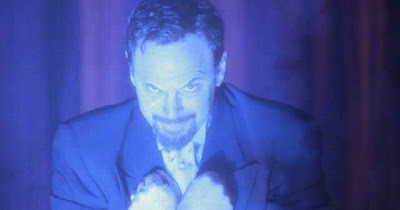
In the golden age of radio the 1930s-40s (before TV took over) everyone in America knew the voices of comedians like Fred Allen, Jack Benny, Edgar Bergen and Charlie McCarthy. The best material resulted from pretend feuds between them, which provided lots of insult gag opportunities. There was the original east-west rivalry in NYC-based Fred Allen vs. LA-based Jack Benny and one between Charlie McCarthy and W.C. Fields. The latter was more complicated as Fields didn't have his own show, was an established film star, and Charlie was, well, a hunk of wood with a shy not especially charismatic Swede attached. If aliens one day pick up our radio signals in space, some of the first things they hear won't be SETI, but these old radio shows still flying out into space bouncing around in the void, and they'll probably scratch their heads, especially over Edgar and Charlie. A ventriloquist on the radio? What were those Hu-Mans thinking?
I got into old radio shows as a kid in the 70s after hearing THE SHADOW Sunday nights on PBS's radio station, which I received on my little clock radio. This was the closest thing, aside from an actual film projector, one could get in the 70s to a VCR. Being able to listen to creepy shows like Inner Sanctum and The Shadow in my bedroom, all the lights off, put the hook in me, and the comedy was reassuring, especially if you were an avid watcher of Bugs Bunny cartoons, then in constant afternoon rotation, as guest voices from those shows constantly showed up, betraying their origins (i.e Foghorn Leghorn based on Senator Claghorn in Allen's Alley; the dopey buzzard based on Mortimer Snerd; Mel Blanc a regular on the Jack Benny show, etc). Still seeing Allen, Gildersleeve and Edgar Bergen and Fibber McGee all for the first time in this one old movie gave me the creeps. It took a long time to forget about that unpleasant frisson and just enjoy as I had enjoyed in my innocence...
![]() |
| The Siamese twin Hilton Sisters in Freaks (1933) |
![]() |
| Edgar Bergen and two animate objects |
My first viewings of Bergen's big starring feature debut with WC Fields, YOU CAN'T CHEAT AN HONEST MAN (1938) were from an old afternoon UHF TV show, sped up and edited for time (and racism) as they used to do in those days. It was great on a fuzzy small TV screen, the uncanny valley was less uncanny, and I saw it dozens of times and became quite familiar with its comedic rhythms. Years later now, on DVD, the film is stretched back to normal running time, so it seems to move super slow, with dead air moments. Now the picture is super clear and scenes I've never seen have been restored, and now McCarthy's uncanny automaton qualities are much too pronounced to ignore. His close-ups seem like some home movie some devout pagan idol worshiper would make for Andy Warhol... if Warhol was into puppetry.
Fields' scenes were often shot by Eddie Cline, separately from Charlie's, helping the timeless-strange aspect along as Cline had a much better knack for ramshackle comedy than the film's official director George Marshall. Also helping is Field's obvious alcoholism: he staggers through the film in a zig-zag, avoiding the major 'marks' the way his character avoids the process server, preferring to run through his litany of old circus impresario gags from THE OLD FASHIONED WAY, SALLY OF THE SAWDUST, and so on, rather than engaging directly with the material before him.
It's a smart movie because, as a narrative, YOU CAN'T CHEAT AN HONEST MAN is pure hokum, old hat even in the silent age. And as a romance, it lives and dies in the soft dulcet 'real' voice of Charlie McCarthy's handler, Edgar Bergen, and some anonymous wartime heroine, playing Fields' daughter, bravely trying to seem not creeped out by the fact her love interest can't let go of his wooden 'buddy' even to hold her hand, yet he wants to marry her although he only met her a few hours earlier. Ick. Luckily the scenes with Larson E. Whipsnade doing his timeless but 'off' carny acts (subbing for the bearded lady sharpshooter, etc) are hilarious, like a jazz solo springing off the crusty familiarity of the tune (like Coltrane riffing on "My Favorite Things") and the weirdness of the overall film pays off in a skewed three-prong textual dissolve:
'Textual' Prong #1 - Meta - CHEAT is a relic of a bygone age and I love it largely for my own memories of what was going on in my life (the first warm glow of drink, that golden nectar) when I first taped it, a day I stayed home sick to edit out the commercials and then felt guilty all day as my mom stink-eyed me from the kitchen. I've seen it dozens of times. Dozens. That guilty depressed feeling staying home was almost totally wiped out by years of drinking to it late in the AM, but now that I'm sober that stain remains, and now that it's on DVD and I'm on meds, I get all the various stages of 'me' viewing its earlier 'home-edited' edition as well as this new one. The film's hokey datedness encourages such long term relationships - each new viewing holds surprises.
Prong 2 - Sub - The Brechtian-reflexive schtick with the creepy dual come-on of Bergen and McCarthy to Vicky. Charlie's telling Edgar to tell Vicky he loves her and wants to marry her before he has even kissed her (he can't kiss her because Charlie would be stricken mute, or else Vicky would hear Charlie in her molars). And Fields lamenting when a native steals the cork out of his lunch or daring you to guess whether his lines are intentionally or unintentionally fumbled or written that way.
Prong 3 - Inter - The nostalgia of the early Americana circus film was once a huge part of any sawdust-covered five cent cinema's rotation, especially in the silent era: there was always a sad clown played by Lon Chaney or Wallace Ford, who loves the acrobat but she's under the thumb of the abusive strong man; there was also the rich kid scheduled to marry a stuffy heiress but loves the waif; a poor kid romance 'meller' of the "I'll pay the rent!" variety that careened around the country in Fields' heyday: it's this corny schtick that Fields grew up watching and acting in (he was a long time circus juggler) which he is here lampooning.
In other words Fields is parodying genres of film that most of us have never seen nor would we want to. Most of them are deservedly long gone. HONEST MAN is a 'parody' of the sawdust-soaked cliches of Fields' youth, the innocent abroad with his hankerin' for the city (as Fields lambasts in FATAL GLASS OF BEER), the rich but loveless family of snobs Fields' daughter is willing to marry into if it means getting the circus out of debt: it is not just a parody of turn-of-the-century wealthy snobbery, but of Hollywood's past depictions of same, including Fields starring silent vehicles like SALLY OF THE SAWDUST.
Small wonder then, that Edgar's competition for Field's daughter's hand is the aptly named Roger Belgoode III. The scenes of class clashes and chaste romance were mockable cliches even in the 1930s, and this third prong represents that intertextual nostalgia the film carries for the lost era of full-length bathing suits, opium pipes, theater organs, and flagpole sitters. Back in 1938, this cornball stuff was their That 70s Show.
CHEAT also grows less stilted once Fields sends Bergen and Charlie adrift in a hot air balloon and they discover Mortimer Snerd has been sleeping in the basket. For some reason, Snerd eases the creepy affect from all the McCarthy close-ups. Watching a puppet open and close its mouth while Edgar talks to himself, phrasing the set ups to his jokes in such archaic language they could only hold punchlines on the other end ("Is you mother living yet?" - "No, not yet") is less creepy for some reason once there are two puppets interacting with Edgar. It helps too that there are no other people around, especially not a girl. It helps too that Snerd is supposed to be dead-eyed and moronic. It's because he's an idiot that this hood-eyed hunk of wood is more relatable than the shark-eyed Charlie.
This was Edgar's feature film debut and he seems nervous and shy. Talking in an effeminate little whisper he's too dependent on his dummy to become a 'leading man' who can believably engage in romantic relations. He would make more films and get a better sense of a separate identity, but here he seems naught but a shadow. Expecting a girl to give up a cozy rich scenario to save her dad's circus in order to fall in love with this split subject wreck is so unreasonable it's kind of insulting.
No wonder then that Bergen is such a perfect foil for Fields... on the radio. Similarly mired in a defective ego ideal --the liquored-up charlatan, Fields can duel Charlie with pithy one-liners and simultaneously neither actor need even be 'present' -- Fields stays in his cups and Bergen in his dolls - what their duels have, then, is something beyond acting, a multiplication of interlocked archetype slitters right up there with eerie totem pole sacrifices we see in films like THE WICKER MAN or England's Guy Fawkes effigies.
![]() |
| Fields in one of his many ingenious disguises |
The ultimate difference between Fields and Bergen (now that I'm sober this seems especially glaring) is that while they both effectively hide in plain sight through deceptive means, one is multiplied and the other divided: Bergen's deception is 'thrown' (external); Fields' is 'drunk' (internal), Fields slowly vanishes down a beer tap drain while Edgar multiplies like a hydra until he's neither here nor there, but solely in the interaction between here and there. The romance between Edgar and Vicky is therefore as creepy as incest, since it automatically infers a menage a trois with an inanimate object and ensures you can only marry half a person - and kissing them for any length of time essentially strangles their Siamese other.
The main love relationship Fields has in his films by contrast is always a chaste paternal one, with a daughter or niece since he is in effect already happily married to gin which doesn't talk but rather is consumed utterly, so Fields in a sense is always in the process of sneaking away in plain sight, drinking his 'other' back into the void, and then being drunk in turn; he mutters to himself under his breath like the very air around him is his dummy, and everything he does or said he had done or said before ("Dragging my canoe behind me!") in his other films is done and said again. As all drunks repeat their stories and sentiments endlessly, so too does Fields repeat his stories and bits from film to film to his straight men, be they A-list stars, poker tables, cigar store Indians, hick extras, or oblivious family members absorbed in their own petty breakfast gossip. So in a sense Fields has an open dialogue not with an external totem of himself as Edgar does, but with a ghost, a half Fields referencing a 1/4 Fields, and so on... until he's so infinitesimally small he becomes bigger than all creation...
Monday, October 03, 2011
Vandal in the Wind: OVER THE EDGE (1979)
"I'm sorry about your son - sorry he was on drugs!" -- Doberman
Walking home from work, fall day, Cheap Trick's "Surrender" came on my iPod and whisked me back to New Grenada, 1979... walking home from Knapp Elementary; "Let's Blow Up the School" was the movie I filmed in my mind; I didn't even need a camera. My own imagining of the carnage ignited a tingle up and down the spine. Eventually, I forgot it, grew out of it, focused my rage on playing war games in the back yard with the kind of realistic (black or grey, not orange) cap guns that are all but illegal now. But the inchoate pyromaniac manic fury of my elementary school years roared up from the depths on that walk home from work: "Surrender." Maybe surrender to the system, maybe to the urge to destroy it. Sure they had conformity then too, but it was out of fashion. Desire for destruction was healthy in the 70s; we kids were allowed freedom enough to see the full extent of our prison. And if we wanted to smash our heads against the bars, mom didn't even make us wear a helmet.
That raw, powerful, dangerous, sexy thrill of running 'loose' seems absent in the kids of today, as gone as the analog hiss of old eight tracks. My hiss is gone too. I'm old, man. So why do the kids today seem even older? Is it the cell phone addiction? Has the virtual so taken over their lives they have no time for actual destruction?
None of us knew about either film in 1979 of course, nor did we know that the arrival of the 1980s would signify the end of all our freedom, the arrival of AIDs and paranoia, etc. All references to explosives in schools would become verboten (unless portrayed as odious villainy rather than anarchic rock heroism). HIGH made some drive-ins but we were too young to go to them; EDGE was quietly shelved for being too dangerous. It found its audience later, on VHS and cable. I myself stumbled on it via a TBS afternoon screening while loafing around at my parent's house after college. It was 1991 by then; I was unemployed, alcoholic, bitterly single. At first I thought it was some dumb typical after-school special of the era. By the time it was over I was drunk, crying with joy and triumph --the real me was back!
The kids in OVER THE EDGE are somewhat older than me in the same time frame, but not by much. I remember the Farrah feathery style of the girls' hair, I knew the long haired blonde boys, the badasses in their red bandannas--both the bullies and the kids who would protect you from the bullies--and how to maneuver--all without paralyzing fear or insecurity. I knew air rifles and 'punks' and firecrackers, and catching fireflies and pillbugs and crayfish and all the other animals now dead from the DDT used to stop the Japanese beetle infestation. I loved Ms. Zackon, my 4th-5th grade teacher with her hand-knit shawl teaching my 4th-5th grade combined class (the 'artsy' kids --as opposed to the 'gifted' kids who had their own combined class). Zackon had Kate Jackson hair and had us sit in circles and listen to 'Free to Be You and Me' and watch 16mm projected science fiction shorts about the collapse of the environment and the dangers of conformity and overpopulation. We knew about strangers and not to accept candy or get close to their cars, otherwise, play ball!
If we ruined freedom for the kids of today by wasting that freedom on petty vandalism and games of doctor, well, sorry about that, boppers.
Or at any rate, the older Vincent Spano types ruined it, not me and mine. EDGE opens with him shooting out a cop car windshield, setting a whole string of escalating events in motion: first Sgt. Doberman's routine harassment of the first two kids he stumbles across: Carl (Michael Kramer) and Richie (Matt Dillon). Richie's mom's cool and takes his side but Carl's dad instantly presumes it's all his son's fault and then has the rec center closed the next day when some big Texas investors visit the town, leading to a near-riot.
The escalation of kid resistance in retaliation to the mindless parental authority crackdown is truly galvanizing. When the lost poetic soul of the film, Claude (Tom Fergus), is busted by Doberman after the kid who sold him the hash rats him out, the reprisal against the rat is the first real shot across the bow, but it leads to Doberman's killing Richie, and from there onward in escalating disaster until even catharsis is pushed too far.
In EDGE we see it all, and we see it all slowly being taken away: cigarette smoking privileges being revoked as a reprisal against school vandalism; Claude thinking he's taking speed to help him with a test but realizing it's actually acid and we in the audience being trusted to know the difference and to be knowingly bemused and sympathetic rather than clueless and appalled (presuming we've all been there, in that Bosch moment); Vincent Spano with his mook sidekick delivering a pre-emptive squealer beat-down; Matt Dillon with his real pistol and preteen rebel smirk.
Free from the urge to bow to parental rule-making hysterics, the kids in this film know the thrill of breaking and entering, the sting of unjust police harassment, the frustration of only sporadically open rec centers; promises of bowling alleys and theaters all yanked away at the first sign of economic instability; first feints at sex that are the result of affection rather than hormonal lust, an affection about to be steamrolled into cookie-cutter post-Porky's exploitation; great rock on the bedroom hi-fi giving way to crisp but strangely soulless synth pop.
The parents in this film never bother to think about whether or not the 'trouble' some of these kids are in has any basis in fact, or what defines 'trouble' -- they're still getting over the fear of being 'in trouble' themselves. "I don't have to tell you how deep... in trouble... some of these children are," Jerry says as if lecturing a bunch of kids caught shoplifting while addressing the concerned parents in the emergency PTA meeting.
Any kid who's ever been hassled by petty cops like Doberman (above) knows the deal. He considers you dangerously strung out on 'narcotics' if he catches you with a sliver of hash. He chases you on a high speed pursuit if you throw a narc-rat-fink kid into the pond ("a kid who tells on another kid is a dead kid"). He doesn't understand the difference between keeping a community safe and declaring war on children. He mistakes protecting citizens with insisting free souls surrender to the same illogical boot heel of anxiety and voter-appeasing restrictions of liberty that have him so cowed and surly, so eager to flex the only power over others he has.
Most of us who grew up harassed by these types of LEOs just get over it and move on. We understand and forgive the hopelessly entangled process by which genuine democracy lurches blindly around the seesaw of freedom /experimentation and remorse/ repression. Kids shouldn't have to understand, or forgive, this surrender. Parents may just seem a little weird, as Cheap Trick sings on the soundtrack, but if they give themselves away, it's just because they know there's no real escape, only symbolic evasion, what the 12-steppers call 'a demographic.'These kids may be fucked up and angry but they're mainly bored, and who wouldn't be? They aren't archetype cliches cobbled together for an after school lesson about drug abuse, vandalism, guns, and curfew-breaking. They're real. Stuck in the isolated hypocrisy of New Grenada, trapped by the world, by parents and cops and teachers all of whom push and prod in directions handed down by rote, they are awake in a town that's asleep, and the best the town can do is try to control them by making waking up illegal.
This is my generation up there: captured right at the point where the 70s turned to the 80s, the William Macy suicide center of BOOGIE NIGHTS, the dawn of the crackdown on our freedom to live in the moment and create our own tribes, our own interlocking separate society.
But.... we didn't need freedom anymore once had cable and VHS. We stopped talking about movies we had seen or heard about as if fireside gossip, and just rented them. When those abstract shapes on the music cable channel on Claude's bedroom TV are replaced by the 24-hour music video channel MTV (in 1981, two years after this film was made), we no longer needed to sneak out the window and seek a party. Video killed the radio star... and in the process snuffed out any motivation for genuine 'real time' anarchy.
OVER THE EDGE changes the usual math of the parent-kid divide by siding itself with the kids... all the way, and allowing us to exult in the little moments of true rebellion, even if they are ultimately pointless, which is a total reversal of most after school specials: Richie standing on the hood of Doberman's car as he tries to haul off Claude; the retribution against the Leif-y narc; the kids locking the parents in the PTA meeting, etc. --it's all cathartic as hell, but then as the cars in the parking lot erupt in flames and the kids rage Lord of the Flies-like we start to become afraid of ourselves for the primal inner wild child joy of seeing the school--the kid equivalent of a soul-deadening prison-- destroyed. We fantasize about blowing up the school, but when we actually blow it up, we see the ugly core that drives that fantasy. We devolve along the Hawksian axis all the way out of ONLY ANGELS HAVE WINGS and find we've been running amok in the climax of MONKEY BUSINESS with the drugged Cary Grant as the painted savage preparing to roast his rival. By then it's too late to save the baby in the boiling bathwater; the wild chaos of death and anarchy tails childhood idealism like a dogged detective and the reactionary rabble roll over everything like a tide, shedding the old skin of the country as they come ripping through the amber waves like a sloppy surfboard Erica Jong zipper.
Today the juggernaut of parental outrage has slowly been gaining steam anew as it roars forward into the new world of cyber-bullying, teen online suicides, and a million forms of new veiled draconian rubrics, from being ignored to micro-managed with nothing in between. We all knew the catch-22 as kids in the earlier eras-- in order to convince your parents you were really depressed and needed to see a shrink you had to commit suicide successfully.` Similarly coming home traumatized from bullying was just 'adjustment' and ultimately a lesson in learning to stick up for oneself. Now--only now--after this string of suicides--are parents admitting maybe there might be a problem with the way inter-child harassment---extortion (for lunch money), assault, sexual harassment, stalking--is tolerated, or was. So now, metal detectors and routine searches, kids expelled for just pointing a finger and making a gun sound.
Too late. When the cat's out of the bag, only then, do parents outlaw cat-bagging, and by the time the justifiably furious are done smashing things, and the crazed parents done erecting new 'freedom-enhancing' restrictions, it won't even matter which side was wronger. The repressed will be off to erupt in a new dimension, a new location, and the restrictive laws will just hang there like a coastline of empty straitjackets, waiting for the next wave of kids, who shouldn't have to wear them --they didn't do nothing---but you'll make these kids put them on anyway won't you, mom? Just in case. And so good for their posture!
Looking back over THE EDGE now, sober and "serene," it seems that the ultimate factor that destroys New Grenada is the refusal of the parents to admit that the base of their pyramid will probably not widen, and that their kids can't slow their own maturation to suit their parent's stunted growth rate. Nowadays kids grow up big in tiny domes, cracking the roofs on their backs. Maybe I'm jaundiced from growing up free with no roof to worry about. Now I can only watch the film, hear the song, and know that one day, we'll walk in the rays of a beautiful sun, Matt Dillon shall move on and create modern indie junkie cinema with Gus Van and Francis Ford Coppola. Motorcycle Boy will live! But we, Mr. Claude, and Mr. Richie, we belong dead. We who have burned so very brightly, but not to last.
Subscribe to:
Posts (Atom)