Tuesday, December 20, 2011

Best Films of 2011 (and 5 Worst)


Was 2011 the year 'movies' broke... in half? And hydra-like those halves doubled back to wormy life? More and more media downloading and portable small screens means more viewing options and reasons to 'wait for the video' and--with their bedbugs, $$$ ticket prices, contagion-level coughing, popcorn that leaves you nauseous for days, uneven heating and cooling systems, out-of-focus projection, flashing peripheral blue texting lights all around you, and uncouth nostril breathers / talkers-- theater experiences are no longer as peerless as far as 'the best way' to see a film, especially with anamorphic Blu-ray and giant HD TVs with colors so beautiful and rich with deep blacks you can't even see where the screen begins if you're watching it in the dark (and if your TV has it, for god's sake turn off 'motion tracking'). American Horror Story is the best thing out there but does it really count on a movie blog? I've been covering the show the last few weeks because, simply put, it makes me tremble with excitement the way few other movies did this year. Was there anything comparable on the big screen? Anything transgressive and wild and unpredictable? Where was the 2011 BLACK SWAN, ENTER THE VOID or THERE WILL BE BLOOD? The closest thing was a wild rough 16mm job by Calvin Reeder (below left) that's not recommended to children, or adults, but those of us who don't qualify as either will love it... handle with tongs.

I am nonplussed by the sight of bourgeois darlings like THE ARTIST and HUGO which might be well crafted but are so enraptured by the magic of the movies they're like narcissists staring at their celluloid profile in the mirror for anywhere between ninety minutes to three hours while their white elephant Oscar hopefuls craft each frame towards a specific 'feel'.

Personally, when I see an image of some kid in a theater, the light from the projector reflecting on his or her rapt face, I wince. Of course we believe the filmmaker is in love with the movies, we don't need to see him depict himself seeing us seeing him through the eyes of a child. It's the most un-ironic self-congratulating self-reflexivity to see 'us' through a filmmaker's eyes (unless we're crying and super hot and able to recognize the image as a portent of immanent doom, like Anna Karina in MY LIFE TO LIVE or about to be killed like that cute chick in MESSIAH OF EVIL). A true movie fan doesn't even like to exist at the movies! We go to escape the mundane image of ourselves. We want to just vanish into the screen, leaving only a popcorn bag and a scarf behind. The last thing we want to see is some middle-aged movie brat's idea of what we look like sitting there, in awe of his (never a her) 'gift.'

Now that 2012 is on us, and the cinema is attended only by people hoping to encourage us to keep going back by their example, our cinema's great depressives (i.e. Lars) turn to issues of endurance and deliverance, the approach of Planet X and alien invasions, and/or presenting clear examples of why humanity deserves what's coming. There are not one but four films dealing with the apocalypse of human memory - CONTAGION, ANOTHER EARTH, MELANCHOLIA, TREE OF LIFE; and there are not three but five cathartic uprisings or eve-of-destruction skaters: SUPER 8, X-MEN FIRST CLASS, BATTLE: LOS ANGELES, and RISE OF THE PLANET OF THE APES. In the latter, my #1 favorite of the year, Andy Serkis establishes himself as the premiere Spartacus for our rat-in-a-cage era. Meanwhile footage of the great Angela Davis rises from the basements of Swedish TV studio's to show how no amount of brutal miscarriage of justice and imprisonment can keep a noble spirit down, while MELANCHOLIA's Justine (Kirsten Dunst) shows how even a beyond-expensive wedding can be the most brutalizing of incarcerations.

Many films I've written about or seen in 2011 deal with a new idea of The Father, replacing the mom as the go-to single parent for the moment: the sheriff single dads in TWILIGHT and SUPER 8, the scientist single dads in RISE OF THE PLANET OF THE APES and X-MEN FIRST CLASS, and don't forget Odin, Nick Fury, Nick Ray, the fathers of modern psychology Jung and Freud. 2011 was the year we said goodbye to all of them, and I said good-bye to mine as well.

RIP, James Kuersten --you were some kind of a man, and a great 70s dad...

1. RISE OF THE PLANET OF THE APES
dir. Rupert Wyatt

He moved us as Gollum, carried us as Kong, and now as Caesar, the super-intelligent ape survivor of inhuman experiments and concentration camp conditions, Andy Serkis blows our minds right out of the movies.  Serkis is the true Peter Lorre of his time, maybe even the James Dean, certainly with his level of sensitivity and Brando's savagery. Moving from the loving care of scientist Franco to the harsh ape penitentiary run by Brian Cox, Serkis' Caesar expresses all the silent screams, the terror and abandonment of the first day of school, that scar even the oldest and freest of adults. In short, RISE FROM THE PLANET OF THE APES is the best movie about man's horrific inhumanity to the creatures in his care since OVER THE EDGE! It's a film I feel will resonate one day as the turning point-- not just for ape evolution but for CGI 'humanity.'

Also, from a fringe science standpoint, this movie explains human evolution and its little alien-enhanced 'spark' of language/intellect better than any bible or textbook. It's no accident 2011 was also the year ISLAND OF LOST SOULS finally came out on DVD. We're meant to cheer our own demise in RISE, the way we cheered the demise of Dr. Moreau in SOULS, and I say that's fine. Let it go, man, let it go like Justine lets it go in MELANCHOLIA. The apes know what their doin'. We'll get it right next time! Some day, yeah, when the world is much solar flare brighter and we learn that no amount of scientific progress justifies torturing even the smallest of creatures.

2.  MELANCHOLIA
dir. Lars Von Trier

"Von Trier dives into the abyss that Terence Malick only wades in to his knees in, drops a dress and calls it art in the other 'big' film of 2011, TREE OF LIFE.  Both link 2001-style classical music-scored space visions with inter-personal relationships and the forthcoming apocalypse but MELANCHOLIA's tale of a woman's depression coming to life in the form of first a wedding and then a world-destroying planet is the suicide note to TREE OF LIFE's faded funeral notice. TREE mourns my dead father but MELANCHOLIA comes for me, and the son of my unborn son, and the ground beneath our unborn feet..." (more)

3. TREE OF LIFE
dir. Terence Malick

My friend Max tried watching this and turned it off after 45 minutes, "life's too short," he said. And that kind of sums up the film's message, appeal and problems. How you react will depend a lot on your mindset and maybe the size of your TV. I saw it in 'enhanced' in the theater, after having just heard about my father's being at death's door, and so I cried a lot throughout and took comfort in its sense of eternity and fleeting memories and great 50s dad style patchwork stream of consciousness (my childhood occurred in the 70s, but close enough).

But when I wasn't crying, I was also smirking at the epiphany-ridden classical music score and the typically Malick use of poetic, whispered inner voiceovers that read like a mash-up of your grandma's poetry collection... (more)

4. THE BLACK POWER MIX-TAPE (1967-1975)
Music by Questlove

In the basement of a Swedish TV station it waited, until now... when America has enough distance to perhaps confront it all as almost as objectively as the Swedes could. The black leaders interviewed tell a rational, sane story and it's all scored by Questlove effortlessly evoking the soul and funk of the era and moving slowly into the alienation of crack and the urban drum and bass of the 90s. There's a lot of time spent with titans like Angela Davis, whose towering intellect and 'fro beg the question - when? When will they do an Angela Davis biopic? (And if they do it better star Angela Bassett and not frickin' Halle Berry).  More than anything, MIX-TAPE makes a fine addition to many of the other films on this list in exposing America's tendency to boast of its freedom even as it orders six new cages off Amazon. America, conscious of its freedom but unconsciously a callous self-righteous oppressor of African Americans, women animals, trees, sex, smokers, dancing, oceans, drug users, women, scientific facts, and the romantic yearnings of its own children.

5. SUPER 8 
dir. J.J. Abrams

I was expecting a STAND BY ME-meets-IT CAME FROM OUTER SPACE style swamp of triteness and overbearing John Williams strings but the Spielberg-produced, JJ Abrams-directed SUPER 8 is surprisingly effective, especially if you were a kid making Aurora monster models, HO scale B-17s, and your own super 8mm science fiction films in the 70s-early 80s. Abrams keeps Spielberg edgy and Spielberg keeps Abrams human and all the cliches are gone: the fat kid (Riley Griffiths) doesn't have chocolate all over his mouth and is actually smart, ambitious, even Carl Denham enough to incorporate all the disasters going on around them into his film's mise en scene. The lead (an impressive youngster named Joel Lamb) doesn't stutter around the hot girl or let his dad bully him and he makes having lost his mom in an accident seem believable instead of convenient.

The alien is a pleasing if unoriginal composite of all the aliens ever created by either director but it's the 'first love' story aspect that sends SUPER 8 over the top into greatness: Dakota Fanning's sister Elle, with her ironed flat long blonde hair and too much make-up, has the sad thousand yard stare vibe of Veronica Lake in THIS GUN FOR HIRE. Dragged semi-unwillingly into the super 8mm  production as the hero's concerned bride, her rehearsal of a tearful farewell at the train station is so moving and strange it marks her as a star like the audition scene in MULHOLLAND DR. marked Naomi Watts or THE FRENCH LIEUTENANT'S WOMAN marked Meryl Streep. Somehow, seeing a great actress get into character and seem to change before our eyes lets us truly appreciate the artistry and intensity necessary and we swoon. With her Trans-Am driving, possibly abusive shithead father guarding her like a certain kind of a hawk, Elle reminds me of a doomed poetic girl I loved when I was her age, but she slept with my Carl Denham-esque super 8 filmmaking partner instead. Elle brought back those memories to the point I began to feel quite haunted (see: a Girl Must Have her Ghost).  The score gets a little too John Williams-ish at the big climax, all but doing your agape jaw wonderment for you, but it's by Michael Giacchino, not Williams and is thus not near as overbearing and feeling your every emotion for you, and that in itself is some kind of trans-dimensional miracle.

6. THOR
dir. Kenneth Branagh

The older brother in cinema is a lost art as our boys are stuck at what Joe Campbell would call the beginning of the hero's journey - the process of moving from boys to men, seeking the wild man at the bottom of the soggy lake, etc. Never arriving at their goal, our heroes never reach the next phase, the next mythic journey, which is the older brother-- the third age of man, the lover, sighing like furnace, the rainbow bridge between childhood and adulthood, neither teen nor tween, instead of trying to bum-rush being a boy into being father, the king. In short, THOR's process is unique compared to the heroes journey as reflected in other Marvel comics in that he's a man - with a burly physique and regal walk and a self confidence many yards removed from the insecure Peter Parker or smug narcissist Tony Stark. Chris Hemsworth resonates as a guy who looks like he might be fixing motorcycles while listening to Metallica one minute and ruling Asgard the next. And for that alone, the film is awesome. Kenneth Branagh, you are redeemed in my eyes.. Add Natalie Portman and Kat Dennings as two hot astro-physicists (below) guarded only by the flimsiest of Wilkinsons, stir in an Iraq war subtext (with Hemsworth as Bush Jr, Loki as Dick Cheney, the Frost Giant as Saddam), beautiful and elaborate Valhalla art decoration and attention to minute detail on a mythic, intertextual (references to the Hulk and Stark mixed in) and personal (great hipster comic relief from Dennings), and my heart is hammered!


---

7. THE ORGEONIAN
Dir. Calvin Reeder

A landmark debut of high 16mm film strangeness in the Alice in Wonderland / limbo / post-apocalyptic / dream world / experimental mode, without half trying, it joins the ranks of works by David Lynch and Herk Harvey in the nightmare logic pantheon, but with the tactile American flannel shirt dread of Coscarelli and Carpenter as a backdrop. With it's droning electric guitar score and refusal to explain itself or offer any stable reality to warp, Reeder's film turns to the groundless ground previously inhabited only by Eraserhead, and then goes deeper down into the muck, attacking along the fault lines between avant garde 'le bad cinema' and psychedelic Xtreme horror; waking reality and nightmares and a grunge-tinted road movie. Iit's Dementia AKA Daughter of Horror if it wanted to be Twin Peaks: Fire Walk With Me on a Plan Nine budget and instead took too much acid and wound up stumbling through Carnival of Souls in search of a Michael Frost psychotronic spice grinder; then it became a panic movement Easy Rider x Repulsion retooled as a Dali nightmare in flannel by Alejandro Jodorowsky. (full)

8. IN THE CAVES OF FORGOTTEN DREAMS
dir. Werner Herzog

Mixing fourth wall breaking documentary analyses with his usual monologues about dreams, Herzog may be in danger of becoming his own cliche, but the key word is 'own.' If you didn't catch this in 3-D you can get the picture from the wide angle lenses that comb through the surrounding French countryside like it's the opening sequence of THE SHINING. The 30,000 year old cave art itself is mind-blowing: the animals are drawn so that they overlap and merge perfectly with the fissures and cracks of the cave walls and Herzog brings home the idea they were drawn to seem like the first movies, limbs and horns waving in the flickering shadows of primitive man's fires --and the result is a spookily contemporary. The first moving picture, recaptured in 3-D after a 30,000 year hiatus, this be the serious HUGO.

9. BRIDESMAIDS
dir. Paul Feig

"This earns huge props in its skewering of the rampant materialism and bourgeois oppression that's encouraged and indulged in the name of a 'magical wedding.' Props also come via the peerless improv naturalistic dialogue especially between SNL goddesses Kristen Wiig and Maya Rudolph. It would make a great double bill with MELANCHOLIA! Even if her motives are self-centered and/or lifted from MY BEST FRIEND'S WEDDING, it's damn heroic to see Wiig trash the bridal shower the way Anne Hathaway never could in RACHEL GETTING MARRIED. "(more here)

10. RANGO
dir. Gore Verbinksi

Leonard Maltin gives this animated lizard tale a ** rating, citing the visuals as too dark and ugly. That's like bashing BLADERUNNER for being too rainy! (I think he gave it ** also). Apparently Lenny is prejudiced against reptiles like he is against women (BLACK SWAN also gets **) and moral ambiguity tied to shocking violence (TAXI DRIVER - **, the 1983 SCARFACE - *1/2), all of which is my way of saying RANGO is the s****t!  Like Gore Verbinksi's RING remake or his PIRATES OF THE CARIBBEAN films, it's worth watching just for the art direction alone (the barroom with its deep black shadows and dusty card sharps particularly), and Depp's lead vocal characterization exposes the neurotic narcissist at his own inner mumbling monologue core, and that takes guts, as does the CHINATOWN framework. If this movie had a Pixar stamp on it, the critics like Lenny would all be gushing. 

WORST:

1. Worst example of doing too much with too little and simultaneously vice versa:
SUCKER PUNCH - the only redeeming feature of this film is that it makes the equally underfed 'hottie abuse victim hallucinating at understaffed mental hospital' John Carpenter film of the same themes, THE WARD, look awesome by comparison.

2. Worst film to see in a theater during flu season:
CONTAGION - As pleased as the film is with its all-star casualty list and clever 'the virus is the star' framing, Soderbergh's film never deigns to answer the big question: is it really such a loss to lose 90 million people? It's barely a coin in the bucket. Shouldn't our reckless population growth be allowed its own herd-thinning safety valve, almost as a built-in protector for humanity's ultimate survival on this over-crowded planet? Since the disease is the star, we really don't 'feel' these deaths, so there's a strange moral neutrality at work here; all Soderbergh is doing here besides showing off how clever he frames disparate threads is making you never want to spend two hours breathing the same air of a sniffling multiplex audience ever again. Seriously I actually yelled at the guy behind me to go out and get a drink of water or something before I had the usher quarantine him. (more)

3. Most unforgivably artsy mix of pretentiousness and naïveté:
TREE OF LIFE - Sure, it's also one of the best films of the year, but on a basic level it's still self-important pseudo-spiritual wankery and Terence Malick is still just a great cinematographer desperate to convince us that should be enough to justify his godlike reputation. Too bad he's still falling back on those damned shots of hands waving over rippling fields of wheat. If I was his film teacher I'd tell him he wasn't allowed to use hands waving over fields of rippling wheat anymore, ever! For his own good, but also mine, the world's and the wheat itself. (more)

4. Most glaring example that Kevin Smith is not the Terry Southern of our time:
RED STATE.  
 
5. The film that killed my love for the 'Cute globe-hopping super assassin goes off grid' genre  - HANNAH
 After SALT and all the other poptop Bournes of late, one would expect the fairy tale symbol-drenched HANNAH to bring something new to the table, anything to warrant its existence, and aside from some odd casting choices--Cate Blanchett with an unconvincing southern twang, Erik Bana channeling Jason Patric--some good wintry atmosphere and a winning performance by Soairse Ronan, there's nothing but ultra cliche'd chases and battles to keep us 'riveted.' Some really lame plotting and strange rationale makes the whole film seem to evaporate only a few paces behind itself, so by the time you reach the end, there's nothing but the white snow of the opening credits to remember, and the distinct feeling someone just sold you an empty box.

Thursday, December 15, 2011

"These Bad Boys Mean Business" - TWILIGHT: BREAKING DAWN Vs. FACING EVIL with Candice DeLong


 The real life Clarice Starling, Candice DeLong (above) was a high profile FBI profiler for 20 years. Seeing her on Investigative Discovery's Deadly Women and Facing Evil (Friday nights!) is to see a still button-cute but steely-eyed brunette whose brittle but compassionate demeanor is tried and tested in the forge of crime solving, poring over testimony and evidence against, and motives of, homicidal women. Interviewing them on on death row in a style as intimate as a Barbara Walters, Delong guides their story from childhood to the moment the trigger is pulled or knife inserted and sanity left behind. Before that moment they were just normal people but once the first shot is fired or cut is made, their whole world--and that of their victim--has now forever changed. So here they are, in jail for life. And it's all because they let a man (almost always) blur their own private line between good and evil.

Facing Evil
Their stories follow a general similarity of a vulnerable woman and a predatory, usually older schemer. On the surface, this undeniable facet of our modern mediated life validates some of the feminist concerns about the Twilight series --that it glamorizes abusive relationships, encourages dependence on older men and encourages leaving conventional reality behind for the fascist bubble that love and submission create. And once you switch --get bitten or bite as it were --there's no going back.

In this fourth film, Breaking Dawn Part 1, Edward tells a story of his days hunting and drinking the blood of 'molesters' (before he became a 'vegan' - drinking only animals). A flashback to a London screening of Bride of Frankenstein (1935) cements him to a lineage that dates back to the first big wave of Universal horror films, offering a kind of hatchet burying with classic horror fans for whom Twilight is an embarrassing abomination scarcely deserving of its horror genre keywords. He tells Bella this story perhaps implying that his kind are in a sense, truly evil, in that they are predatory against humans. Whether they curb their habits, only drink bad guys (like Dexter or Anne Parillaud in Innocent Blood), or only hunt deer, they're still evil, i.e. sociopaths. Maybe that's the true difference between staying out of jail in civilization and survival in the wilderness. Predatory instincts ensure the latter, but the sharper one's skills in the latter they are the harder becomes the former. For a killer not to kill, it's like me not killing whiskey bottles... a crime against nature.

It's on this tenet, however, that the romance in Twilight works (way better than just the guilt mongering of Anne Rice). A romantic fantasy animus (demon lover)  like Edward in the Twilight series and a real life (young handsome male) murderer are, based on this tenet, indistinguishable. Like sending love letters to Richard Ramirez or Ted Bundy--the thrill of bad boy danger tempered is by the impossibility of their release--the saga of Bella and Edward is similarly based on thrills and danger welded to 'safety' (he protects her and keeps his urges in check) and denial (he has no sex organs or corporeal presence): there's no nagging wife to dispose of first, but there are... other things... that make their story conflate with the prison nurse who shot a guard to help her bad boy escape, over which comes DeLong's memorable words (approx.) about the nurse's love for hot prison guys in their interview: "You liked the bad boys. But these bad boys mean business."

I love the first three Twilight films (well, let's just say, I'm at least 'fascinated' by them) but Breaking Dawn is a huge let-down, like what might happen if Ramirez finally got out of jail to marry one of his pen pals, and he turned out to be old and bald and fat and a convert to Christianity. The problems with Breaking Dawn aren't as bad as that, but herewith are summed up in the three M's: Maturity, Martyrdom, and Music, and the one saving grace against all three-- Disillusionment:

1. Music: Instead of Carter Burwell's trippy electric guitar in the first film or the nearly nonstop flow of emotional sadcore songs that ran like a nightmare chorus through the next two, we get a lot of listless minor key piano that occasionally breaks for tired croons from Christina Perri and Bruno Mars. Blechh. Part of what drew me to the first three films was the way the music stirred long dormant druggy love vibes inn the blood, the kind of deep sense of thrilled longing that Bella Swan clearly felt moping around in her bedroom. When the pop songs finally sneak into this fourth installment, they all sound the same--lots of flat tweedy male neo-folk harmonies-- and lack any kind of legitimate sadness, except in the most perfunctory of Urban Outfitters Americana hipster harmony kind of way. The first songs were chosen for mood - these are chosen--I don't doubt--for corporate synergy.

 2. Maturity: Whenever a teen series moves out of high school and into marriage you know you're headed for trouble and that's why I maybe forgive Dawn a little bit more than I forgave, say, season four of Buffy. The theater I saw Dawn in was freezing cold (broken heater) and that made the extended, strange marriage ceremony both better and worse: time slowed, half the ceiling was dripping and exposed, presumably from a burst pipe; the cherry blossoms onscreen seemed made of ice, and the dream of the 'death-size' wedding cake froze my blood, literally. For a second I had a sense of overwhelming fear that Bella was already dead and marrying Edward be like the scary climax of Psychomania! And I was dead, too.

And of course the cast is in real life maturing all the while, and though the year/s since the last film have been kind to Kristen Stewart and Taylor Lautner: posture and facial feature definition and a sense of gravitas are all up several points, Pattinson just seems washed out like he's being overly CGI airbrushed like Courtney Cox in Scream IV.

Still, in general they have all avoided the pasty hungover look that dogged the aging Harry Potter gang, and I loved the awesome selection of fully sketched-out 'relatives' of the Cullen clan at the wedding, all gorgeous and interesting and probably worthy of spin-off films. Their glowing eyes and Goth-but not too Goth-off-white dresses made me desperately want to be at that wedding, and made me think I already had in weird 'teenage dream I still remember fondly' kind of way.

Break: If you're still unclear why/how this series is so popular, let's examine the still below:


Note the purple and violet color coordination that's been the key behind the luscious art design since the first film, and the way these two cute vampires fuss, with their centuries of beauty tip expertise, over this 18 year-old slacker with her hunched over posture and vaguely mannish profile. As a viewer your identification locus moves in three directions if you study the picture, mirroring the three components of consciousness:

   1) Bella: cute but frail and human, easily-led (ego)
   2) Vampire helpers: examining our human weakness from their superior position (super ego)
   3) The Gaze / mirroring / metatextual subjective position : the unborn child's free-floating ghost, eying Bella's womb like a tired wanderer eyes a warm, toasty Motel 6 (id)

In a sense, it's perfect just as it is, this preparations for the wedding. There's nowhere to go but down. After a certain point no amount of stalling and pretty baubles and nice scenery will help when it's down to you, it all comes down / to you / in your nakedness; facing the end point of desire's long trip down the river Niagara, when the three aspects of consciousness are forced to face the three unconscious aspects, the sides of self you never even knew were there, the ones hiding at the bottom of the lake, like evil sea wolves!


3. Disillusionment: That said, Jacob (Taylor Lautner) shows up and steals the film halfway through the wedding reception, bursting with lycanthropic life, sweeping Bella off her feet and right away from the paler-than-the-wedding-cake groom. Jacob's derisive scoffing that her and Edward's honeymoon will be a sad sick joke-- his incredulity that Edward 'hasn't told her yet,' --implies some massive sterile impotence on the part of all vampires that makes the 'waiting til they're married to have sex' aspect suddenly seem like a sad con job. Once that ring is on her finger, the fact that this Ken doll has only a plastic absence in his pants will no longer be something she can protest about.

Sure enough, after this long beautiful wedding scene and lengthy travelogue to this exotic secret honeymoon location we in the audience are as as jet-lagged as Bella (and frozen to death in an unheated cineplex). We'd been expecting some serious fireworks, and instead Edward drags her down to the middle of nowhere, just to be by the beach, and feebly tries to humiliate her because she's not mad enough at him for leaving her bruised up from the roughness of his, how you say? lovemaking? Ah yesss.

In the film's best scene she looks down at him while he sits on the smashed up marital bed, not a gentlemen of vamping anymore but a self-sabotaging undead toad, a loser with weird teeth who's spent three films postponing this inevitable de-pantsing because he is, 'ow you say? A fraud, like all ze Kens!

 Thus we come to the realization that those people who wait to get married before fucking are perhaps either terrified they'll be terrible at it or else completely oblivious to the tenets of Lacanian psychoanalysis and/or Buddhism. Having sex before marriage is like getting your head out of the clouds and into the dust and grime of who's turn it is to do the dishes; the longer you stay in the virgin white clouds the more your sink fills up until the dishes are so dirty and so numerous that you can't even find the sink, or the soap... and you run from that sink, don't you, Bella? But now you're chained to it!

So while Bella and Edward's flatline honeymoon is not what we want to see it's what needs to be seen for the film to have a larger meaning than just button-nosed girl promise ring erotica. Rather than giving us the trite softcore displays of conspicuous enjoyment we only think we want to see and which would, in the Lacanian sense, collapse both Bella's and our own identification construct, they give us the truth, the awareness, the realization that the whole grand mythic aspect of their love would be lost if a happy-ever-after truly arrived. As long as she's miserable we can still safely identify with Bella and enjoy her squirming from our hidden masochistic perspective. Once she's 'well laid' as it were, she becomes no longer our misery-loving company but a threat to our enjoyment. We are, in other words, the cockblocking DUFF.

 A key moment is at the Rio airport where Edward makes arrangements with a Brazilian pilot for a private jet home because he's learned she's pregnant... with a demon baby! The impression Edward creates as such a hip, rich, happenin' dude in his cargo shorts (he can speak fluent Portuguese!) is denuded by the nonplussed way Bella regards the whole thing from her passenger window in the nearby cab. By now, Edward's brand of 'I'll take care of everything' is recognized by her, finally, as mollycoddling. His Victorian/compulsive need to keep her co-dependent is based more on his own insecurity and self-loathing than on any truly chivalrous impulse. So, like the women interviewed by Candice DeLong in Facing Evil, Bella is waking up out of a brainwash by a bad boy.

The thing is, the real time-serving inmates interviewed by Candice are 'made' into killers through this same brainwashing technique. And Bella technically will let Edward make her into a killer (a vampire) but she has chosen it in advance of all his brainwashing; she is drawn to the darkness, and her bad boy actually tries to keep her out of it. It's not the sex of the honeymoon she really wants, for without death, what do you have? Sans petite mort? Vous n'avez rien!

4) Martyrdom - Bella indirectly uses martyrdom--the oppressed feminine's ultimate trump card-- to force Edward into finally letting her become the undead wraith she's always longed to be; like Steel Magnolias in reverse! The only way to get Edward to finally turn her, to 'kill her,' is via the pretext of sacrifice, rather than a personal and morbid self interest. Of course it's annoying that this all has to be in service of a pro-life subtext, but, if you follow the 3rd wave feminism all the way down to the twisted roots you'll see it drinking heavily from the abject underground stream of pregnancy and rough sex--the twin magnets of darkness no amount of feminist rationale can brighten.

So let me ask you this, my Jezebel coterie: If a woman starts out independent and chooses to be overwhelmed by the male other is she betraying her gender, even if its by her own choice? Is she allowed to examine the paradox of being free through surrender? Is she allowed to choose a deeper darkness than even death or prison can contain?

Steel survivor: Won't get fooled again.
Accusations of Twilight being pro-life as a whole are evaded by Edward being so pro-abortion, hating his own semi-dead unborn child (as opposed to the doofus husband from Steel Magnolias for whom the sick wife seems little more than a baby wrapper). Meanwhile Bella's refusal to give up her fetus even as it's killing her is seen as foolhardy by everyone but herself... and part of it isn't just her connection with the child but her wish to die and be reborn as a vampire, which Edward would clearly postpone indefinitely (naturally since once she's turned he will lose his power over her). In other words, her choice is based on her own desire to die, and her connection to her baby, sans any desire to please or obey her man's selfish edicts. So in the end, feminists and pro-choice types alike go snarling back to the Exit of this film, both ill-served by the myth they cautiously hoped to adopt. And those of us who seek genuine subversion recognize it in this very sly Antigone-like renouncement.

It is, after all, only a myth...

But... that's not quite right. Something can be 'only' life, but never 'only' a myth. The danger of ignoring the true nature of the mythic archetypal unconscious--of presuming the mythic dimension has no power other than cheap entertainment--is that you leave your unconscious with no avenue of conscious expression, so it festers in your pressure cooker subconscious until it explodes in sudden violence or bad boy brainwash submission.

 This is a sad, Freudian truth seen all too well through the pale blue eyes of Candice DeLong on Facing Evil. Without an archetypal context by which to recognize the big bad wolf when it came pawing at her basket, the Red Riding Hoods DeLong interviews were easy prey. Maybe they never learned to read, or their dads were fundamentalist zealots who refused to let them hear the story (telling her Red Riding Hood shouldn't be allowed out without a male escort, and the hood should cover her whole face like a burka!), and now they've paid the price. Haters can sneer at it, feminists can rear back and bare fangs, but girls currently immersed in the Twilight world will all grow up knowing how to recognize wolves when they see them. The bad boys they meet will just seem 'sooo fifth grade', only slightly less outre than ponies, or those phallus-free Ken dolls.

But those red riders who don't have a wolf to chase them in their youth can never grow out of the need for one, so they become the wild-eyed deer in the headlights-types that the bad boy wolves can spot from a mile off at any bus depot. Instead of knowing a devil when they see one these mythless runaways are instead themselves are only seen, and sucked... first through lupine head trips, then into murder, then through Candice DeLong's icy vampire eyes and back out into the hell paved by Christendom's good intentions.

Friday, December 09, 2011

A Girl must have her Ghost: AMERICAN HORROR STORY: "Smoldering Children" & Lana Del Rey: "Video Games"


 "Me...love 'dead'." -- Monster (Bride of Frankenstein, 1933)

If the rest of the media universe is playing it safe and cuddly there's at least two chunks of media that strike a deep unnerving chord of the 'real' in the last few weeks of 2011: Fx's American Horor Story and that found-Americana video for Lana Del Rey's one song, "Video Games."
Passing the 10 million hit mark, inspiring the usual countless remixes, the song+video+singer taps into a nerve of sadness and loss that has the authentic feel of a drunk night IM-ing friends you never hooked up with while you thumb through stashed photos of exes. Watch the video ten times in a row and you can get that feel even at work, sober, IM-ing no one. A lot of people seem to think she has no right to be sad, though, and there's a huge internet bloglash (read Awl's "Who's Afraid of Lana Del Rey"). Lana Del Rey's hot lost little girl from 1965 look -- the thick hair, Julia Roberts lips, black eyeshadow, vintage dresses and paisley headbands-- make her come off like Evan Rachel Wood in THIRTEEN now grown backwards into her own grandmother, dating a hot young rocker incubus who's always on tour, leaving her alone but 'safe' in our care, we being the ghost of a lover long dead (so she'll only see us smoldering, never old or charred). We don't have to worry about Lana's deep sadness overwhelming us via a real relationship because we're just ears. She's just a hot mess friend, and she doesn't even exist... she's a ghost in the machine, like Samara in THE RING. She even looks like Hayden, Ben's 19 year-old ghost ex-mistress in American Horror Story!


So what does this broad have to do with American Horror Story, specifically this week's episode, "Smoldering Children," where (Spoiler Alert!) we find out Violet, the lost little daughter has been dead since a few episodes ago when she overdosed on pills?


Everything. It has everything to do with it.

Look at Lana's photo above, with the cigarette and white dress. She could step right into any David Lynch film and be either in the flashback to the early 60s or a current retro hipster with ironic collagen, either way she's an American ghost story ready to haunt your iPod. The photo above is the kind of thing you find when cleaning out your deceased grandparent's room. Who is that beauty? And suddenly you realized you swooned, just a little bit, for your own mother. Lana Del Rey may just be playing dress-up but she nonetheless radiates a sadness that's not fixed in any one generation. It's not even sexual. The sexier she tries to be, the older she becomes. Creeping through decades like vintage clothing and DNA, she flutters in slow motion, like a mighty flag outside a semi-abandoned post office being slowly walked past by a funeral procession for a returning Vietnam vet.


For comparison, let's look at another pretty, lost, augmented little girl who is talented, driven, and also trying to be re-born, in this case as a sitcom star, Whitney Cummings. Her self-titled show comes on after The Office (read Meghan Wright's solid recap here), the key time slot for any current sitcom, which is how it's drawn my indignant attention. Am I the only one who is suspicious? No.

In "Understanding Screenwriting," Tom Stempel writes:
In Whitney, Cummings plays the title character. She is living with her boyfriend of three years, Alex. They make jokes. They are afraid of marriage. They go to a wedding and make jokes with their friends. Whitney dresses up as a nurse to seduce Alex and he ends up in the hospital. They make jokes. Most of the jokes are variations on material from Cummings' stand-up act, and so the show falls into the trap of a lot of sitcoms based on a comedian's act: all jokes, no story, no characters. Half an hour of this just gets tiresome. 
Part of why this show is doomed can be summed up right in the above paragraph, particularly one sentence "She is living with her boyfriend of three years, Alex." - what kind of dumb idea is that? Has anyone ever done such a thing? Be wary of Whitney and her conspicuous displays of enjoyment. She misunderstands the fundamental basics of romantic comedy. "Tiresome," indeed!


The most fundamental comedy truth is that a couple is only cute when they are not quite together - either always about to hook up--the will they or won't they of Sam and Diane (Cheers) or Bruce Willis and Cybil Shepherd (Moonlighting) or Fox and Scully (X-Files), or Ross and Rachel (Friends)-- or already hooked up before the show began and are now just friends (Jerry and Elaine on Seinfeld).  All but Seinfeld gave in to audience's demands of seeing the leads hook up and get married or live happily in congress, and viewers dropped off like flies once they got their wish and the wish didn't make them feel how they thought it would. Smart shows know in advance this is doomed to happen. The exceptions to this rule being shows like Mad about You where the stars are either older with children or otherwise not sexually desirable - it sounds shallow, but simply put - Whitney is too hot to have a boyfriend.


As I've written before, the original 1970s Charlie's Angels was ingenious in this regard. Aaron Spelling wrote the book, which we now open to examine the reverse case of guys like Ashton Kucher and Howard Stern. As long as he was married to older Demi, Ashton had some gravitas --his flirty douchebag qualities were tolerable, even amusing. He's in the process of now of realizing the extent Demi's presence kept him from getting Sheen-level skeevy. And, as long as he was married and unable to 'do anything' with his morning regimen of strippers, Howard Stern was funny and edgy. Once the chains were off, that edge was lost. Without his wife listening at home with a grain of good sport tolerance, Stern became just another skeevy guy using fame to bed a string of gorgeous young ladies he'd never get on genes alone. Similarly, as long as Hannibal Lecter was imprisoned he was terrifying; escaped and free and he's suddenly just another dude trying to get a piece of the action. Similarly too, monsters in horror movies - the more clearly we see them, the less scary they are. Thus we see that in TV and movies, its potential that's exciting. The practice never measures up.

Thus, the tortured misery of married life in AHS makes all Ben's yields to temptation exciting. Once the wife is gone, however, giving into those temptations becomes mere softcore boredom, Hannibal instead of Silence of the Lambs --hence his heroic resistance, as I wrote about last week. This week he got his reward: he even got to vent his rage on the tormentor of his wife, the evil Tate!


Tate is an ideal representation of the 'absent lover'--the animus, the 'all-potential/no-practice' object of desire, the incubus -- in that he is actually dead - and his grisly past makes him a 'bad boy' in ways we never want to compete with. He's like Lana Del Rey's lost rockabilly guitarist come back from the dead to demand beer and fidelity. If you listen to the lyrics of Rey's songs you get that she's trying to become that same dead dream for her listeners. They are words bound to have any video game playing bad-girl loving boy blushing at the thought he just might be able to hook up with this doomed, sweetly tragic, DSM-IV type of lost little girl: 
"Open up a beer / 
and say get over here / 
and play a video game."
Dude! She likes beer and video games and guys in fast cars! She's not singing "Come meet my family  / earn a six figure salary / your stupid video games can wait until after you do the dishes." In short --Lana del Rey is the type of girl Whitney is trying to be, but as Yoda says, there is no try, especially when you bring your boyfriend along with you to Dagoba, because he decided to invite himself, and hang in the background and glower jealously as you and she talk and flirt. He throws himself into the scene like a pile of dirty laundry. You invite her to your island, he invites himself, no one likes him or asked him. But you ask her to come and you open the door to whatever skeevy Hep-C carrying jailhouse tatt-cokehead douche she can't say no to. Look at him in that pic above! He's got a glazed stupid look in his eyes and they're too close together, like piggy eyes, with that long anteater snout between them. We want to kill him. The only way we wouldn't is if he actually brought some drugs or beers with him to our island, instead of just mooching ours.

The Lana Del Rey-approved bad boy would bring lots of cool drugs; the Whitney boyfriend would not. That's the difference.

The 'bad' boys who encourage you to skip school, drink beer and play video games -- they don't come any badder than Tate (he'd bring angel dust or crystal meth) and so in a way we can respect him because he is evil and yet he still loves Violet and protects her and that's what makes his loving relationship work on TV, a loving relationship that would creep us out otherwise. Paradoxically then, It's only because he is truly evil that he can be sympathetic. We identify with Tate as viewers because like us (in our dislocated viewing space) he is dead - like Edward in Twilight is dead, or Spike on Buffy. Our perspective as viewers (we can move through walls and time and infiltrate up close even the most intimate moments of characters without them ever seeing us) mirrors that of the watching dead, for who else but the dead and the viewer have such omniscience?

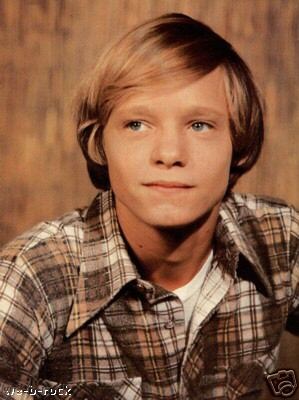
Lance Kerwin, 1977
And so, are we not all in love with ghosts one way or the other, just as we are in love with the movies or music, which are all just ghostly traces? I remember being ten years-old and dreaming of holding hands, kissing, and walking around my old Lansdale PA neighborhood with Kate Jackson (that's all I knew I there was to do at that point), and all my friends seeing us and being super jealous. Jackson appeared on this show James at 15 as a woman who befriends runaway James (The Tate-ish Lance Kerwin, left) thus enabling huge fantasies for boys my age of running away to live on the street with this cool older woman... to escape, as it were, from the terrible onslaught of adult responsibility and social castration that only the city, or death, can bring. I still grieve over Kate. That shit never goes away. Fuck Lance Kerwin. Still, at least he seemed col, running away and shit. Imagine if he was a straight-A moron who played soccer or something. He'd be unbearable.

In AMH, there are advantages to being dead: Violet will never have to go back to school, for example -- no report cards come in the mail. But at the same time she's not entirely sure a life playing cards with Tate is the answer to all death's prayers, or so it seems by her coldly bemused response towards his devotion. In a way she's already 'cooler' than Tate just from knowing him, while he--deprived from knowing himself--becomes like a solved level of a video game -- why go back to playing on it when you've moved up?

Perhaps what is happening to Violet in death is the same thing that happens to us watching Whitney: without obstacles and uncertainty, the ultimate emptiness of our coveted prize comes into focus. The only reward for our struggles is temporarily forgetting what a disappointment the goal will be should we achieve it. Violet's love was wild and Brontë-esque when it was forbidden by her father but now that she literally can't escape Tate's devotion, her love is like a lion in a zoo that on the one hand is grateful to not have to always be threatened by starvation when they fail to make a kill, but frustrated by lack of goal-oriented movement.

Frances Farmer, 1891
Jessica Lang's character understands this in AHS and her final bit of cruel torment to the disfigured burning man shows her Dietrich-like insight into his masochistic condition. She's giving him what he needs, knowing anything less than torment and heartbreak would destroy him.  It doesn't matter if she really loves him or not, as long as she denies she loves him, he'll keep going...

What does matter is that, like Lana Del Rey and very few others, Violet has chosen darkness. Now she dwells within it, nevermore to return to school or write a resume or sit, bored, on the bus.  We can hope the same thing won't happen to Del Rey in 'real life' but the other options are grim as well. Based on the hot young musical prodigies that have come before her--Fiona Apple, Liz Phair, Kate Bush, Tori Amos, Bjork, and Alanis M.- there's a very real danger she will get 'quirky' or slick or try too hard to cram in as many jarring chord and tempo changes as possible to every song on her next album, and eventually even become a surgery addicted gargoyle or a seducer of hot young boys half her age, like Jessica Lange's eternally sexy Constance.

(PS - See CinemArchetype 14: Puella Aeterna)

At least we'll always have that first album, song, or movie. We'll always be able to marvel at JL's youthful sexy sizzle in 1981's POSTMAN ALWAYS RINGS TWICE. We don't want to lose our Violets or Lanas, but we lose them too when they get married and have kids. We don't want them grow up any more than we want them to die. We don't even want to keep them just how they are for that matter, but we have no choice. We can only watch and listen to them from our Lazyboy graves, aging and decaying while they stay eternally young, even if it's just for that one damned haunted song.

Thursday, December 08, 2011

Pre-Code Capsules 10: DAMES, BEAUTY AND THE BOSS, THE DARK HORSE, SVENGALI, THE MIND READER

DAMES
1934 - ***
Unlike breezier and more trenchant selections from the Gold Diggers series, the Busby Berkeley choreographed DAMES suffers from a hefty share of hick humor. As the allegedly fuddy and assuredly duddy Uncle Ezra, Hugh Herbert's giddy titter has not gone quite gold with age. One of those sexophobic millionaires who likes to form abstinence societies, Ezra promises to award his rube cousin-in-law Guy Kibbee ten million, provided he refrains from tobacco and alcohol and behaves according to fuddy custom during Herbert's stay in New York. Kibbee's wife, Ezra's cousin, Zasu Pitts seems uptight enough with her spindly walk and wavery voice, but Herbert is way too hiccup-ridden to convince as a reformer. Much shrill bowing and scraping ensues, especially since the daughter is Ruby Keeler, which means her beau is Dick Powell, and neither is about to bow and scrape to some old world reformer when there's pettin' in the park to be done.

WC Fields might call this "a double bargain..."
Ezra's also a hypocrite who cries for Dr. Silver's Golden Elixir whenever he gets the hiccups, apparently oblivious to the fact that it's 77% alcohol. And thus vice, as it so often must, takes the long way around, through the pharmacy, to penetrate the guarded heart of the morally uptight.


Small wonder - DAMES came out in 1934, the year real-life versions of Uncle Ezra killed the spirit of louche cinematic insouciance in its cradle, i.e. ending the pre-code era. While Busby undoubtedly detests Ezra, it's no fun watching him suffer; we came for breezy laffs and psychedelic dance numbers not Tea Party-style hysterics. It's too close to home, man. Too relevant.

Meanwhile the fact that Ruby Keeler and Dick Powell take a ferry to Staten Island to sing while they're supposed to be bringing some of Dr. Silver's Golden Elixir to Uncle Ezra, who is hiccuping nonstop,  and driving Zazu and Kibee into a frenzy of anxiety, leaves an odd aftertaste in the minds of we sensitive viewers, as does seeing Powell get ripped off by a sleazy producer. Joan Blondell is the much wiser chorus girl who gets her hooks into Kibbee for the show's budget while on a train to the city from upstate.

It all comes down to Herbert hiring some goons to trash the show, forgetting he did so and getting smashed on the Elixir, which at last is found, and though it all ends happily enough, Herbert's sour attitude lingers in the mind. Thank god he gets arrested, takes a shine to Blondell, and announces he has officially given his old fashioned moral code the raspberry. If only...

The songs include "Dames" and "I Only Have Eyes for You," which gets real post-modern meta with the opening of the number taking place in the crowd outside the theater and winding up on the subway -- it takes on the feel of an SNL opening sketch with the host running backstage or out onto the Rockefeller Plaza as the cameras follow him out of the studio. It can be very confusing until you remember Busby bows to no man when it comes to blurring the fourth wall. As typical with him, the show within the film is a hundred times more like a movie than the stagy off-stage action. Soon Ruby Keeler is shooting up through a hole in a giant eye, and there's psychedelic flower leg shows, the fogeys are having a blast guzzling 79% alcohol-by-volume elixir (that's 158 proof!), and profits, publicity, and credits mercifully ensue.


BEAUTY AND THE BOSS
1932 - ***1/2

 Warren William is in his lascivious wolf prime as an Austrian business tycoon who avoids the temptation of his secretaries by firing them if they catch his eye... then inviting them to stay for drinks and arranging to keep them as mistresses. In his own way he's a Prince Charming forced by expediency to be his future bride's fairy godmother, doling out pink slip glass slippers and six month salary stipends instead of ball tickets.

Enter a Cinderella to make George Bernard Shaw light up, the button-cute Marian Marsh (Trilby to Barrymore's SVENGALI the same year). A worker of the starving class, she's super efficient and methed-out on hunger. Showing the same ease and playfulness here that she had with all those long bearded old painters in SVENGALI, Marsh gets taken to Paris on business and transforms into a wide-eyed jubilant sprite in a sexy evening dress. David Manners as Williams' brother tries the earnest pretty boy approach to win her; Frederick Kerr ("Here's to the house of Frankenstein!") tries the lovable duffer approach; but only Warren has the louche captain of industry approach this Ayn Randy popinjay craves. She even gleans tips on being sexy from one of Warren's other mistresses.


You can tell by the breathless dialogue pace, continuity and its relatively few sets that BEAUTY AND THE BOSS was once a play - so think Lubitsch in froth and Hecht in pace and wit, Shaw in satirically pro-capitalist philosophy and Brecht in the unflinching depiction of how a starving waif gladly becomes an office machine automaton if it means eating regularly. As in SVENGALI, the great Anton Grot did the sets.

Marion Marsh and wolves (Top: Beauty and the Boss / b: Svengali)
SVENGALI
1931 - ***1/2

There's three reasons to see this weird, lilted pre-code: John Barrymore's florid hamming as Svengali; Marian Marsh's sweet face and alabaster beauty as Trilby (cute in an oversize Parisian officer's topcoat) and those crazy Anton Grot sets. The latter includes super wide doors, a nicely dilapidated Moroccan night club and Parisian rooftop miniatures seen in an extended crane shot from Barrymore's eyes to Trilby's apartment. For all its stodgy slowness, SVEN has a special magic, if for no other reason than these three ingredients mesh so wondrously off-kilter. Svengali clowns around with his Leperillo-ish companion one minute then sends a foolish housewife to her death in the next. Killing makes him hungry apparently so he heads over to do some mooching off Paddy and the Laird, more humor, then stealing Trilby and proclaiming her mouth has a roof like the Parthenon! Billee (Bramwell Fletcher) is her earnest, naive young wooer, smitten and thinking of marriage until he sees her posing in the nude for Paddy and his painter brethren, at which instance he runs away in horror. Good riddance! As Barrymore's later, similar but faster-talking Oscar Jaffee might exclaim with a finger-snap, "That eliminates the lover!"

Barrymore's great of course, but even for fans he relies an awful lot on his old schtick of clutching his heart with one hand and extending the other out before him like he's trying to find the light switch in the dark, crying "Ack! Ack!" as if embodying the soothsayer in the Passion Play.  (More)

THE DARK HORSE
1932 - **

Allegedly a sharp political satire about a random rube (Guy Kibbee) picked by shady power elites to run for New York State governor they can manipulate, THE DARK HORSE is really more a bitter polemic against impulse marriage. Warren William is the ingenious PR man who sways the hick vote with a lot of dopey PR stunts, but is also dogged by a vicious ex-wife (Vivienne Osborne) who hounds him for astronomical alimony and a scene of him trying to stall having to pay her, then trying to come up with the money, all while his patient secretary Bette Davis fumes on, drags and drags, despite going down in the thick of a typically busy Warner's extra-staffed campaign office. This ex-wife later tries to seduce Kibbee into a frame-up of the "love nest... with singer" variety to help Williams' opponents, and it all weaves back into forcing William to remarry he evil Osborne. At Warren's right hand all the while is Frank McHugh, wryly observing that Kibbee's "a sure thing for Klu-Klux Klan vote" when he sees Kibbee fleeing the love nest in his long johns.


Funny for sure, and disturbing, but that lengthy scene at campaign headquarters with the ex-wife having a tantrum and threatening to call the cops if WW doesn't cough up four hundred smackers for alimony is not what Warren William pre-codes are all about. We don't like seeing him be the victim. And Kibbee's not as endearing here as one would expect. He's playing the stupid hick a bit too broadly, flashing his terrible teeth and awesome belly like we didn't notice them the first 12 times. We get it, Guy, you're a four star rube. Meanwhile Davis has a pretty thankless role as Williams' current girlfriend and right-hand woman. She's still good and spritely... but really --WW borrowing money from his own secretary to pay off his gold digging impulse-married ex-wife? It's not right we should have to see that. Bad enough the production code would pull half his big bad wolf teeth in just two years, for the time we have, he should be left to run wild and howl at the moon unfettered by his past bad choices!

 THE MIND READER
1933 - ***

Williams starts out a sideshow dentist but he and his pal Allen Jenkins get a load of a fortune teller on easy street...and Chandra the Magnificent is born! Jenkins is right to be aggrieved when "Chandra" falls for a gorgeous local girl (Constance Cummings) whose mother 'loses' her handbag to Jenkins' nimble fingers. Williams marries the daughter, even though she's clearly not too bright since she falls under the spell of a cheap carny hack so easily.

With the spooky subject matter and lupine Williams as its star, THE MIND READER should be better than it is; silly bits of plot waste time when the real story is in the dialogue (rather than the action) which runs counter to the grain of the approaching code. Jenkins makes a good case for why it's better to rule in hell than slowly starve to death selling fuller brushes in a desperate bid for moral character, but Williams is still trying to reform! Why? It's still 1933, after all, no one is making him! Jenkins meanwhile gets a posh chauffeur job and pays the other drivers for addresses of where the husbands are cheating on their wives and passes the dope to Williams, who tells the ladies of the husband's infidelities from his ball, and everyone cleans up but the husbands, who are soon coming in to see Chandra themselves, with murder on their minds.

In the end, Williams turns to drink and reveals his tricks onstage, disillusioning and slur-sobbing uncontrollably to the assembled rubes, "I've broken my home!" Williams playing drunk is like James Dean playing drunk in GIANT--in other words, doubly slurred to the point of true incoherence. And the crowd roars!


While it may sound like a second thought tackiness, tasty insights into the lurid lengths men went to get laid in the 1930s are coded in chocolate and sprinkled all over the salty dialogue in THE MIND READER, saving it from being too contrite. When Williams originally says he's going to marry Cummings, Jenkins asks, "Legally?" If you wonder what that means in pre-code parlance, it's where--as seen in WAY DOWN EAST (1921)--you dress a friend up as a preacher so your girl thinks you're legally wed, then you fuck and run before she gets wise. Just more grisly evidence of the fall-out from archaic double standards. There's also prohibition repeal references (FDR was elected in '33 and immediately lifted it): Jenkins gets the best last word as his pal heads off to Sing Sing: "Sure is tough to be going away just when beer's coming back." Amen bruddah. Some guys snooker others with a phony rap (like fortune telling), some guys let themselves get snookered by a screwy dame who's in turn been snookered by phony bourgeois morality. Prohibition ending is like letting Williams know he played himself falling for the oldest con in the book, temperance, the accursed!
Related Posts Plugin for WordPress, Blogger...