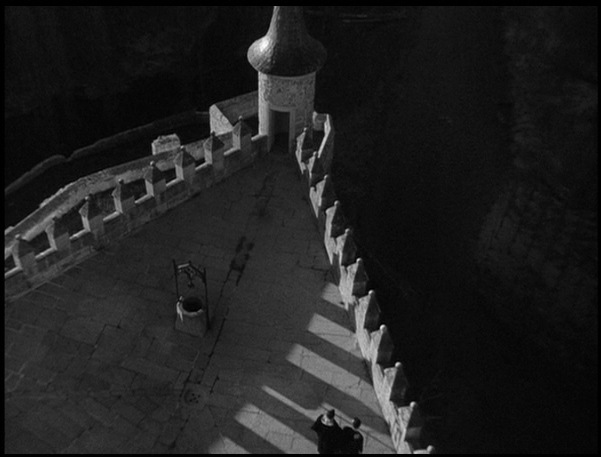

(1933) Directed by Alfred E. Green
****
You never know what classic author's film adaptations are going to ferment into wine and which to vinegar after they're buried for decades in obscurity then exhumed for TV, but the pre-code steamy and existential South Seas commonwealth sagas of W. Somerset Maugham--a flood triggered by the iconic success of RAIN (1931) have become a very potent, tasty wine and THE NARROW CORNER is the good stuff you keep for yourself during dark nights of the soul. Why is it so forgotten while the self-absorbed forgotten man whining of something of a similar existential decadent modernist play/film like THE PETRIFIED FOREST is so lauded? Leslie Howard's suicidal rambling in FOREST smacks today of self-pity but Maugham characters's dead-eyed stare into the riptide--where life is wrest from us as a berry from a branch by a half asleep Mexican gardener--is admirable, heroic, and damned hilarious. Cheers! Tape it and save it forever.

Meanwhile a debauched doctor (Dudley Digges) also aboard ship tells his trusting Chinese servant how many (opium) pipe loads he'll have every night, to 'ahem' unwind ("seven pipes tonight... no more, no less,") rendering him useless at critical junctures but leaving him always self-effacing, droll and unblinking as he stares into the void, his opiated brain alight with the zonked poetry of a Eugene O'Neill or Tennessee Williams-style poetic, existential drunkard ("Regret nothing. Life is short, nature is hostile, and man... is ridiculous.") He's the type of character who no longer exists outside of classic modern plays, one borne of the WWI trenches and dogfight skies, the drink a prayer for the dead all ready; hurrah for the next who dies mentality. It's a mentality we've lost in today's climate, and frankly I blame nanny state morals and the turn away from manly gravitas that is the result.
There's also William Mong (above) as a mean old Swedish sea captain, boasting to fellow salty dog Arthur Hohl that he used to pilot slavers, and that he wants to gut his son-in-law (the eminently guttable Reginald Owen as a professor, idling for years with a translation of some obscure Portuguese poem); Sidney Toler as the agent who secures the passage; and Patricia Ellis as the lovely daughter engaged to lunkhead Ralph Bellamy. He's such a good soul that Fairbanks decides to go decent, and that just makes things worse! Still, you can't argue with the beautiful Hollywood exotica scenery and sense that once upon a time it really was possible to buy illicit passage away from the long arm of the law, even if you immediately found the same old troubles when you got outside its reach, but the lack of educated white people around the islands made it easy to make friends with those you stumbled on. There are very few movies that really get what it's like to be desired by women to the point you're constantly pissing offEE rivals and winding up in disputes between roommates and husbands. Don't ask me how I know, but I do. And so, clearly does Maugham because, NARROW CORNER gets it super right. 'Bros before hos' then becomes the golden rule, and I also love Fairbanks' character is named Fred and Bellamy is named Erich. Fred is my own real brother's name! Eight pipes tonight, no more, no less!

WEST OF BROADWAY
(1931) Dir. Harry Beaumont
**1/2
Here's a curio starring former-matinee idol John Gilbert, caught like a fly in the amber of the sound era: when he tries to sound manly and tough he just sounds hung over, speech halting awkwardly like he's sending a morse code S.O.S. in the spaces between the words of his dialogue, hoping his buddies off-camera will translate and rush... to his aid... with a flask. In the early sound equipment days they were taught to take long pauses and say words... clearly. It's like he's counting director-mandated seconds between the words.
 But it's worth seeing for the brave way Gilbert captures the art of the shaky rebound. His character comes home from the Great War,E hero with four bullets still in him, to find his fiancee Ann (Madge Evans) not there to meet him, and instead off with some slime ball. He laughs it sardonically away but it hurts and she's gorgeous and his hired rebound girl Dot (Lois Moran) is merely "pretty in a trashy sort of way." "Dot the I and cross the Ann," he says, while introducing them to each other at the (I guess) the only swanky nightclub in NYC. "Double cross." Rueful stuff!
And it's worth it for the sly way the waiter says "your package sir," and slips Gilbert a fifth wrapped in a white towel, low under the table at the club, so the cops don't see it, and for the sleazy, no holds-barred details of Dot's life as a hired girl who's brave enough to refuse Gilbert's hand-out (she and her girlfriend owe ten days' back rent) even as she notes to her friend that at Gilbert's party there were "hands all over me" and then gropes herself in a resigned way to illustrate.
But the best part is poor Gilbert's shakes the morning after he marries the hired girl (oops). I don't think I've ever seen Saint Vitus dance so accurately rendered. And for her part it's great when Dot takes over as woman of the house and gets all racist, barking at the Chinese cook, or sprawling out in a wicker chair to shoot the shit about Jerry with his high class friends, like she owns the place (hired girls who get married to drunken playboys in black-outs are always either ruthless gold-diggers or good girls awaiting redemption, seldom are they neither). And when he tries to quit drinking the cowboys are singing outside and suddenly you tap into RIO BRAVO's scene where Dean Martin almost takes a shot of whiskey while the Mariachi death song plays down the street from the jail. As Dot, Moran is a little firecracker but her pal is no Joan Blondell, and when we see Gilbert ponder whether or not to keep her after their marriage's been annulled you feel he's genuinely tapped into that ambivalence Frank Sinatra had with Shirley MacLaine in SOME CAME RUNNING. But Gilbert, he was almost all the way tapped out, and it shows. Man, those shakes are something else.
And Gilbert's a good enough actor to use his personal desperation in a scene: you can feel his desperate stiff upper lip trembling as he finds out Ann's moved on. She could be standing for his entire female silent film fan base, which was once universal and then nonexistent. Like Barrymore's drunken has-been in DINNER AT EIGHT, he's a classic case of an actor's pain and his character's bleeding into each other, the pain of being smart enough to know when you're outdated, when your matinee adoration is all wound up, and you're too drunk to find a new illusion, and seeing the only way to go is down, so might as well get drunker and plunge into the void like a cock-eyed W. Somerset Maugham kamikaze. All else is vanity.

HEADLINE SHOOTER
(1933) Dir. Otto Brauer
***

THE CROWD ROARS
(1932) Dir. Howard Hawks
***
The cars are game and Cagney's explosive, but it's kind of tough to care because it's not like racing cars really contributes anything to society, and mainly its because he's also such a shit to his women, i.e. the groupies of the track.. He's a race car driver who tries to warn his little brother off of the loose ladies he himself runs around with (like Joan Blondell); they're good enough to shag, but not to marry, and the brother is of course all ready to take the first girl he meets at face value and propose before bedding etc. But so what? It's Ann freaking Dvorak, who wouldn't want to marry her instantly? What's Cagney's problem? Well, all that fades when one of his buddies dies in a wreck and the race keeps going, so Cagney starts to smell his old pal frying in the blaze every time he drives around the bend, around and around and around...Sure, that's enough to put anyone off his feed.

Maybe? Maybe nothin'!

TOP SPEED
(1930) Dir. Mervyn Leroy
***
An early sound comedy-musical (with most of the music numbers cut) starring the rubber-mouthed comedian (the millionaire willing to 'adopt some' with Jack Lemmon in SOME LIKE IT HOT), and a daring chronicle of the years before the Depression, this is a last gasp of college letters and class resentment. The passing era of sexual repression lingers in lines like, "I'm so modest I won't allow lamb chops on the table unless they have those paper pants on." Both suggestively lewd and comically moralist, the film sums up the only sane response to the draconian, near fundamentalist level of sexual repression endured under the watchful eye of hotel detectives, chaperones, and social reform-minded wives of the era, who did their damnedest to make premarital sex impossible. Herein we also learn the origins of now forgotten phrases like "over a barrel" (it's a protean kind of CPR given to drowning victims, put them face down over a [lying on its side] barrel and roll the person back and forth to pump the water out of their lungs) and "counting sheep" (apparently it was a big fad like Atkins is today, and Brown explains it complete with hand gestures). And since 1930 was such a 'scandalous' time, well, it was very easy to be scandalous. Just being caught in a hotel room with a woman not your wife could earn you a public flogging, and from thence we get those boudoir comedies of sneaking around fire escapes in one's underwear, hiding under beds while the house dick peers through the keyhole. It's hard to get that kind of naughty steam going in our more permissive age, but here's a world where men can't show their torsos on the beach and have to wear full body swim suits. It explains a lot... about Saudi Arabia.

Oh, but we'd have to get married first.