Wednesday, February 24, 2021

How the Hell Was Won: DEMONOID (1981), CRUISE INTO TERROR (1978)


INTRO: THE ORIGIN OF SATANIC PANIC

Blame it on the foundation-rattling popularity of The Exorcist and Rosemary's Baby if you want, but the 70s was occult down to its bones, wilding out adults and children alike (if we were too young to see them in the theaters, we caught them edited on TV). The devil was--all through the 70s--kid-friendly but legitimately powerful; he carried a current of underground electric jouissance that connected our elementary school playground gossip chakras in a unified field of ouija boards, vividly recounted movie plots, slumber party telekinesis and deep dish absorption of TVMs like Don't Be Afraid of the Dark, Crowhaven Farm, Horror at 37,000 Feet and the discussed in this issue, Cruise into Terror. The uncanny magnetism of the neighborhood covens often depicted in these films acted as a sort of tribal mask obscuring the mysteries of adulthood, which lax (in hindsight?) parental guidelines enabled us to often witness firsthand, even with inflexible bedtimes preventing us from seeing many of these films to the end (denied closure, I'd lie in bed and dream the endings, and lurid and dark those endings were, way more lurid and far darker than the chaste denouements rattled off by a half-asleep mom the next morning). 

I forgot to mention the preponderance--as holy children's writs---of scary 70s paperbacks. These were so important because if you saw a movie either on TV or the big screen and you loved it, you had to accept the fact you might never see it again. The only way to 'own' it would be to buy the novel or soundtrack album (or the bubblegum cards). The child of the 80s could have his mind blown by the 'horror' aisle at the video rental store, but for the kid of the 70s, it was the supermarket checkout paperback rack that promised the 'real' scares, the ones accessible to us if only we could understand them, the language just a hair out of reach (I learned to read and write basically reading and studying Peter Benchley's Jaws, which is a far dirtier novel than you'd think, replete with an affair between Mrs. Brody and the Richard Dreyfuss character--I underlined all the bad words). We'd stand, hypnotized, by the beguilingly cryptic occult covers, that underground jouissance current snaking right into us, while mom blithely shopped.What an encouragement to learn to read, asap! 

That all changed in the 80s, of course, when we could rent stuff far too gruesome or sexual to have ever even graced out TVs before; novelizations died away for the most part. But today... now... these final days, for some of us, The Car,  Beyond the Door, and The Devil's Rain and The Legacy, and their comparatively gentle shocks, abide, luring us back through the door of nostalgia and into the tactile, safe pre-CGI world that seems so much more dangerous for being so much less overtly threatening. 

DEMONOID 
(1981)- Wr./Dir. Alfredo Zacarias
*** / Prime Image - A+

It might technically be from 1981 but if you melted down a 70s shelf full of occult paperbacks, doused the result up in a mix of R-rated nudity and gore, then shellacked the result in a TVM patina, Demonoid would be the result., Here we have at all, packed into a 92 minute thrill ride: a severed hand racing around, possessing one person after another; a black cop arresting a rich white lady on a trumped up charge then driving her to the plastic surgeon; crazy train/car chases involving possessed victims all eager to cut off their own hands; subliminal flash cuts of the severed hand's accompanying demon; dazzling fashion juxtapositions (such as mixing hardhat and high heels); absurdist dialogue ("You either cut off my hand, or I'll kill you!"); Stuart Whitman as a Catholic priest doubting his faith (replete with half-hearted oft-vanishing Irish accent), and a whole TV mini-series worth of crazy twists and ridiculous contrivances welded into 92 nonstop minutes full of ABC Friday Night Movie-esque innocence that makes the moments of nudity and goofy gore all the more startling by contrast. 

But best of all, for bad movie lovers like me, are the scenes of talented actors trying to be convincing while wrestling with a rubber hand. No one beats this hand, apparently, as its demonic aura affixes quickly to whomever it gloms onto, making its next host instantly both evil and inexplicably driven to sever their own hand and, if possible, offer it to Samantha Eggar on a silver tray. She "set it free" when she accidentally opened a passage to an ancient devil altar in her husband's mine. I love that Eggar just 'knows' it's her husband Mark (Roy Jensen) who was burned beyond recognition in a fire (with Haji of (Faster Pussycat, Kill Kill fame) and then burst out of his fresh grave because he's possessed by an ancient demon's free-range hand. Eggar seems surprised though, when the priest doesn't believe her right off but she proudly assures him: "I'm not leaving until I destroy the hand!" This is all in the first night. Burnt Mark cuts his hand off via the car door of the cop called to investigate, who immediately drives off and the next day punches up Whitman the next day in a "friendly" sparring match before arresting Eggar and forcing her to watch him force a plastic surgeon at gunpoint to cut off his hand --with no anesthesia. It just keeps going and going, until an on the run plastic surgeon falls off a moving train and the hand decides to jump ship by forcing his wrist under the wheels to cut itself loose, then hitching a ride by grabbing the axle of the passing train. 

The movie has barely begun and we're already in such fucked-up awesome territory we can scarcely believe it. Helped no doubt by the pace set by no-nonsense Eggar, who skips about three reels of denial and slow build-up by just realizing right off the weird situation and getting on with it.

Devoted readers know I'm a fan of evil mummy hand movies, especially Hammer's 1973 gem  Blood from the Mummy's Tomb (the best of the many adaptations of Bram Stoker's 1903 novella "Jewel of the Seven Stars"). This is kind of a Mexican-Spanish Inquisition riff on the same story, but with the tomb discovered accidentally and the hand being far busier and more or a central player. The giddy flavors of De Palma's The Fury are here too, coupled to some of the spiritual tropes of The Exorcist. It's got it all. And don't forget the Oliver Stone movie The Hand (also 1981) with Michael Caine. People must have thought hand movies would be "in." 

Dopey Stuart as the priest can't believe any of it --even God's holy power seems beyond his belief system, just like old Father Karras ("how can I be of service when I have such personal doubts?" he actually says) To differentiate, instead of running track like Karras, Stuart works out at the local boxing gym. As the hand makes its rounds, its chosen hosts get so frisky--even after being burned down to their skeletons--that you can't help but applaud the reckless high-wire idiocy of it all, reserving eye rolls only for the half-assed soul searching of Whitman's continuously wrong-headed padre (does he really think a security detail --a pair of cops in their car outside her apartment---are going to protect her from a disembodied hand? ("What are they gonna do?" quips Eggar, "arrest it?"). 

Eggar is perfect in the role. Smart as a whip and never totally scared, only horrified. When she widens her round Irish eye in horror they shine right through the spiderweb spiral ironwork (top) from which she watches Stu blow-torch his hand while staring at her in an impressively unwavering, shadowy leer (below), it's as if great and terrible acting meters merge in the gas tanks of some tailspinning biplane and somehow keep it aloft for whole minutes after it should have crashed. Richard Gillis' uneven score at times evokes the ominously advancing synths of John Carpenter; at other times it's fairly generic TV cop show suspense of sub-Herrmann strings, but it's perfect for the times and mood in which it works (i.e. 70s TV movie on 80s drugs), covering many abrupt tonal shifts and sublimely meshing with the nice cinematography, the sporadically shocking gore, bad actor handiwork (!),  and the environs of the different victims.  So fear not, and take a ride down the left-handed path.... to terror! 

------speaking of evil-confronting 70s priests, check out:

CRUISE INTO TERROR
(1978) Dir. Bruce Kessler
ABC TV movie - **1/2    

Here's a Friday Night TV movie nearly every kid remembers from the tumultuous year of 1978 on the then relatively hip ABC. I think I just got braces on or wisdom teeth out or had a throat infection or something as I have a memory of excruciating oral pain and lovely pain killers in alternating currents, which elegantly gelled with Cruise's narcotizing mix of cushy Love Boat drama (sunny poolside bathing beauties, sunny Caribbean scenery, mature sexual situations amongst a guest list of has-beens and TV actors) and 70s occult obsessions (Bermuda triangle, satanic possession), and King Tut (The "Treasures of Tutankhamun" exhibit was making the rounds of US museums and really dominating pop culture of the moment, leading to Steve Martin's big hit). All anyone remembers now is the amazing child-size breathing Egyptian sarcophagus. That's the kind of surreal WTF image that sticks with you and--incidentally--brought my whole family into gales of laughter.  Clearly some writer/producer had dropped acid at the exhibit and stared at Tut's sarcophagus a little too long. Whatever the reason - it's odd, and odd is good, Add an ominous synth version of "Dies Irae" as the theme (predating Wendy Carlos' version in The Shining by two years) and you have a memorable night in with the family, on drugs and oral discomfort.

Memorable, but I'd forgotten the title for years. I had to wait for Google to build its search engine up to the point that I could at last find it just using the search words "small breathing sarcophagus on a boat 70s TVM." (I'd been doing that on my Classic Horror chat boards since the mid-90s, to no avail.) It was worth the wait, though I wish there was a Warner Archive DVR or some such thing the way there was/is for Bermuda Depths or Horror at 37,000 Feet (the film incidentally fits between them in terms of watchability), if for no other reason than the scenery, underwater treasure hunting, and attractive women gamboling to and fro on deck. It would be great eye candy for a lazy Sunday. It's still worth seeing, even all muddy and smudged, but only as long as you have that nostalgic twang for its era. 

The cast are.... familiar and pleasant, if unmemorable. Robert "Charles Townsend" Forsythe is the hieroglyph-reading missionary priest on a cruise with his sexually frustrated, lingerie-wearing wife (Lee Meriwether). Noted archeologist Ray Milland is headed for sunny Mexico to prove his theory that there's an Egyptian tomb there. There is a handsome and mysterious physicist named Matt Lazarus (Frank Converse), and first mate Dirk Benedict (Starbuck on Battlestar Galactica). The captain thinks the boat will have problems, but is told it will ship out without him, so, all aboard / they're expecting youooh.

Yes, there is some bed-hopping (Starbuck is very busy) and sunny days spent scuba diving in beguiling bathing suits. But what is the strange curse hanging over the ship, causing accidents and freak encounters, some fatal? One of the near misses is a harrowing encounter between three lovely snorkelers and a "vicious" shark (actually a harmless 'blue', which any self-respecting child of the late-70s knew, for reasons I'm sure you can intuit). Then, the ship breaks down and leaves them anchored in the middle of the ocean, conveniently right over the spot where archeologist Ray Milland needs to dive for his missing Egyptian tomb, thanks to 'Matt Lazarus' recalculating Ray's figures. The tomb he's looking for is actually sunk below the waves, "two degrees off our present course!" Captain Andrews (Hugh O'Brien) can't say no since they're stuck there anyway, and now everyone wants to dive for the treasure and be rich! Freak storms and accidents abound. but hey. It's not like they're in the Bermuda triangle or anything.

Oh and I almost forgot --ripe for some Love Boat style ship corridor crawl of shame cabin-creeping, the guest roster includes several cabins full of foxy ladies and hot-to-trot wives whose husbands are either frigid (Forsythe's priest) or too focused on work (Christopher George's wheeler/dealer stock broker) to give out. There are more than enough to go around: Lynda Day George (Christopher's real and fake life wife), Stella Stevens, Lee Meriwether, Jo Ann Harris, Hilarie Thompson. All hot and bucking at the seams, looks like the Dirk has to step in again with more late nights working as--in the code used by him and the captain--"the 'entertainment committee.' 

That's one reason  70s TV movies are so fascinating, and remain so-- their sexually liberated prime time zeitgeist. This was a time handsome, virile men could rebuff the sultry come-ons of foxy ladies without judging them one way another. And players like Dirk Benedict's first mate aren't depicted as sleazes in need of canceling so much as guys doing their manly duty to please the perfectly acceptable and natural desires of the female passengers. If, in our current climate, you think that kind of adult sex-positive maturity can't possibly be true during prime time, catch any episode of Love Boat, where the crew are all basically  by expected to bed down with the guest stars -- it's practically part of the job. Mainstream America had what Alexander D'Arcy's gigolo piano teacher in 1937's Awful Truth call "a continental mind." AIDS would end that party rather abruptly, but for now - it was the prime time equivalent of 'pre-code.'

The acting by and large though, isn't the best. As reverend Mather, Forsythe struggles just as much with seeming like a prude as he does with seeming to understand hieroglyphics ("It's a serpent-headed bird!"), Recounting the fate of those sorry and/or dead archeologists who opened Tut's tomb and woke the "curse of the pharaohs," his demands that the passengers not "mar that tomb!" can't help but draw laugh. Just like any buzzkill censorious reverend of the Somerset Maugham era, Mather seems determined to steer this vessel as far away from interesting and titillating as he can get it. On the other hand, at least he's not also having a crisis of faith like Whitman in Demonoid or sulking and making shitty remarks like the mighty Shat in 37.000 Feet). Keenly aware of his limits as an actor, Forsythe never tries to hide himself in a 'performance' --which is to his credit, if not advantage.

And anyway, his priest is soon proven right. No sooner has the baby sarcophagus come on board than the cast is going full greedy savage, arguing over where to sell the booty and how to split it; the evil spirit growing in strength the more bad vibes it sows. First its ruby eyes start to glow, then the whole sarcophagus breathes. We never even see it open! What is inside it? We never find out. It's never opened. Its ruby eyes flash and cause sudden storms when someone tries to damage it, spooking everyone not under its malevolent sway. As more and more of the cast become sensually liberated agents of evil, the film gets funnier and freer. When Thomson snaps at her mousy friend Debbie (Jo-Ann Harris) for being too scared to even shoot a flare gun up in the air, it's supposed to be the effect of the ancient evil at work (as in Exorcist) but it feels more like the effect of good, liberating shrooms. 

So does a sudden contempt for weakness and morality and unreserved attraction to earthly delight and fiery power make one evil, or just cool? Countering Forsythe's bland gospel is Milland ("I do not believe in biblical fantasies!"). and the captain (Hugh O'Brien) who tries to explain all the deaths and storms and ship failures as coincidence. There's no arguing with a closed-minded skeptic, and sometimes that's a good thing: "There is a devil --it's in here, all of us, note the captain. "His name is greed, fear and all of the ugly things we can never face." So deep, bro. He even has a fancy poem to send us all to bed in a cautionary mood:

There is a devil, there is no doubt,
but is he trying to get in us
or trying to get out?
Gee dad, why can't it be both? 

The 70s will all end soon enough, the age of Pisces gone deep to Davy Jones', where it began- splattered like a glass goblet on the sidewalk outside the Dakota. (1).

But was the evil of libidinal malice vanquished, or was the good of libidinal freedom stifled? 


=====

Some Other Good Occult Movies of the 70s:
1. The first Dakota death-- Terry Gionoffrio in Rosemary's Baby in 1968 (a fiction dictated by reality) to Lennon in 1980 (reality dictated by fiction) - in each case a metatextual rupture - the devil's favorite kind, before 80s Satanic panic hysteria effectively drove him underground, back under the rug of our collective unconscious, the covens replaced by a sea of slashers, just as the paperbacks were replaced by video rentals

Saturday, January 02, 2021

Fuest in Show: THE FINAL PROGRAMME (1973) aka THE LAST DAYS OF MAN ON EARTH

 
What to do about Jon Finch? He can look as wan and bloated as any British drinker but when the dialogue and co-star is right, boy oh boy, he's like a prime era Peter O'Toole (in richly Shakeseparean, commanding voice crossed with a delightfully dissolute feyness) possessing a young Jim Morrison's dandy jaw line and heroic drug intake. Robert Fuest's dark, freewheeling, and--for a long time--hard to find British sci-fi satire from 1973, THE FINAL PROGRAMME (distributed stateside by Corman's New World Pictures as The Last Days of Man on Earth) is finally here in a stunning new transfer. Now we may marvel and swoon over Fuest's beguilingly surreal production design (he's the man behind the Phibeses), Finch's alcohol-enriched roaring, literate energy, and a roster of sublimely-etched side characters. Marred only by the occasional groan-worthy satiric jabs at consumerism's future ouroboros vanishing point (the world's supposed to be ending, but the budget can't afford crowd scenes or anything too dystopian, so we have to take Finch's word for it) and a kind of disappointing resolution, it's worth checking out for the game and hearty. 

Taking leaps of adaptive liberty (I'm told) with Michael Moorcock's countercultural touchstone (in Britain) novel, it's the tale of libertine military hardware collector and helicopter and (off-camera) jet pilot Jerry Cornelius (Finch). After a native funeral up in Lapland for his genius billionaire father, Jerry makes immediate plans to resolve inheritance disputes with the other heir/s by dropping napalm on the ancestral mansion and jetting off to some private island with his sister (it's implied they've some weird incestuous connection). So first he needs the napalm; that means running around London, meeting eccentric arms dealers played by future Raiders of the Lost Ark villains, and so forth. In the meantime, feeling some strange passive-aggressive urge to be helpful, Jerry agrees to help the three of his father's Quentin Crisp-ish scientist cronies locate the "final" computer program that dad was working on. See, it's on a disc or a tape now hidden deep in a safe inside a vault inside a safe room inside the family's heavily burglary protected mansion which has been activated by his evil drug addict brother-in-law. To retrieve it, Jerry teams up with the scientist's sexy androgynous computer programmer Miss Brunner (Jenny Runacre). She has the endearing habit of literally absorbing her lovers and/or anyone whose knowledge she seeks to possess, like a sexy amoeba (we never see it though, too expensive I imagine). This titular program involves a kind of 'new human' androgyne, the unifying of Miss Brnner and some Italian pretty boy waiting in the car. This is supposed to bring about the savior of the new dawn-- a self-replicating perfect hermaphrodite human --the best of all man and woman have to offer -- a fusion of two brains--two genders-- into a single all-knowing being that can finally formulate and answer the ultimate scientific question.... why? and what the hell are we even doing here?


Sure, like so many films of the era, its quixotic attempt to be both sociologically satiric and counerculturally hip invariably results in crossing over from dangerously subversive into datedly campy at times, but only because there are so many cool elements in place, the uncool stand out too sharply (i.e. imagine the fusing Dr. Strangelove and Myra Breckinridge). Superfluous cameos like an ineffectually mugging Sterling Hayden as eccentric arms dealer Wrongway Lindbergh ("the Wrong way is the right way!") reek of that late-60s trope wherein familiar older stars trying to fit into the counterculture by showing up in kooky cameos, like hookah-smoking caterpillars or pothead CEOs. There's also proto-twee bits like Jerry and Miss Brunner flying up to Lapland in a balloon (rather than the more expensive Phantom F4, which Jerry supposedly owns and mentions frequently, but which of course the budget forbids). There also massive gapes in the narrative weave which a good editor could have either trimmed the dead ends or filled in the blanks: Jerry's quest for napalm (he pronounces it "Nepal-m") goes nowhere, and the rescue of his strung-out sister from his junky brother Frank's druggy clutches never really pans out or makes sense. We never really even see the sister until much later, so any inkling of what kind of strange incestuous reason he has for wanting to liberate her from Frank is left unexplained. 

In other words, like Breckinridge's director Michael Sarne, or Candy director Christian Marquand, Fuest is his own worst enemy, making one bad artistic choice for every three good ones is still failing in the book of enduring cult films. Like those past near-misses, Programme has some genius stretches where you think all the film has to do is stay on this roll and it's going into your top ten, then it fumbles it Paranount pre-code Marx Brothers savagery for smirky 60s sociopolitical jabs, like a restaurant where wine and alcohol comes in dehydrated cubes (Jerry orders French toxic river sludge, demanding to know 'which bank' it was culled from) or a Laugh-in style one-line gag-filled pinball arcade where Jerry meets his stoned napalm connection (Ronald "Why don't you, ah, tell me where the Ark is....right now?" Lacey). 

But luckily, while Myra and Candy ultimately wind up as draws, for Programme the cool outweighs the cringe: in addition to the brilliant playing of Finch and Runacre we have Basil Henson, George Coulouris, and Graham Crowden, matchless as the three older scientists who follow Ms, Brunner around; their deft worldly comedic rapport makes up for all the elements that seem to be missing.  Far from the usual stuffy bowler-and-brolly types we'd expect to be harrumphing in the background or the dreaded reverse (that Richard Lester-ish style of conservative faux-hipness), this gaggle of older scientists manage the hitherto impossible - each being cool and individual while functioning as a cool ultra-dry comedy team together. As aging scientists unconcerned with the surface flash, they deliver all the straight facedness required to convey now-or-never urgency for a complicated experiment that's beyond mad/daft and that needs to be executed at a certain, looming time. The result is the perfect level of 'is this supposed to be funny or not?' ambiguity.

He is... nefarious

Perhaps the only film that comes close to Programme's weird mise-en-scene and storyline is 1971's Hammer film Blood from the Mummy's Tomb. In that film too, we may remember, a strident dominatrix-y intellectual badass female (Valerie Leon) runs roughshod over trios of stumbling old men scientists (George Coulouris and Aubrey Morris appear in both) while teaming up with a fey amoral aristocratic hipster (James Villers instead of Finch) to bring about some earth-shattering prophecy by ushering in a new kind of woman. just as did Leon in Blood, In Programme, Runacre handles her carnivorous authority with cool throaty confidence and instantly establishes a deep in-the-moment sultry rapport with Finch's Jerry, one cool young super genius sexy cool titan to another. One can't help but wonder as to what a great Lady Macbeth she would have made opposite Finch in Polanski's 1971 film instead of Francesca Annis (though she was perfectly fine). It's their scenes together--and her beating up Jerry's brother (in-law?), the manipulative junky Frank (Derrick O'Connor)--that really crackle. 

Overall it's a film free of villains, unless you count Frank, who's taken over the family estate, setting all the futuristic alarms and traps --including psychedelic light attacks ("designed to cause pseudo-epilepsy:), elaborate inflatable tunnels (a mix of a carnival bouncy castle and Corman's Masque of the Red Death), poisoned gas, and poisoned needles shooting out of walls while the siblings shoot at each other in weird homemade futuristic air guns (just to be extra weird, perhaps?)

But all of that is fine with me because of the cocky actorly rapport with Runacre and Finch as these kind of super-cool amoral hedonist next-gen scientific wits in fabulous clothes and --in his case--a kind of foppish arrogant feminine elegance; hers, a Bowie-esque androgyne sexy-cool. With her tousled orange hair and natty slacks and his too-tight black velvet blazer and black nail polish, they're a superb-looking team, like they've spent a lot of time improv --they're destined to entwine! 

Hint: Fans of Hammer films (and their ilk) might recall Runacre as playing a great insane red-dress wearing schizophrenic Folies Bergère dancer in the same year's The Creeping Flesh.


Taken all in all it for what it is as well as what it isn't, you may groan a bit but you also may just enjoy Fuest's wicked sense of design style (the underground Lapland Nazi submarine pen and other futuristic sets evoke fond memories of Fuest's work on several Avengers episodes and the Egyptian tomb interior of his Dr. Phibes Rises Again). I kept thinking I wanted to live down there, on that glorious underground submarine pen, and get drunk with these people ("The classic sanctuary fixation" notes Ms. Brunner), that I too may wind up safe and sound after the last days, well-rested, drunk, and ready for the new dawn.

Note the empty burgundy bottles behind them while brainstorming in Jerry's flat. His freezer is empty except for hundreds of McVities' Dark Chocolate Digestives. I can really relate. This is how cool bachelor pads really look but are never seen anymore.

Navigating the family mansion's "defences"

Monday, December 21, 2020

The Swirling Mists of Chor Yuen: 70s Shaw Brothers Wuxia II: SENTIMENTAL SWORDSMAN (Trilogy) HEAVEN SWORD AND DRAGON SABRE (1&2)


There are seemingly hundreds of old Shaw Brothers kung fu and wuxia films on Prime. If you watch enough of them you can, in fact, begin to distinguish directors and sub-genres that fit your exact likes and go on your own massive Shaw Bros. bender. Me, I avoid the post-5 Fingers of Death types, full of sweaty young bald dudes smacking each other around and going through their shame/training/revenge arcs in overlit small villages, with nary a female marital artist in sight, only a tavern maid who the young bus boy saves from ruffians, and then his family pays the price later, etc.. These are usually dubbed in English, rather than subtitled as they translated more internationally. That can get annoying as you begin to discern the voice of the same nasal Brit doing all the male characters, like a half-assed Frank Oz (you know who he is when you hear him). Me, I prefer the more esoteric "swordplay thriller" wuxia, from Shaw Brothers, in the original Cantonese with subtitles. Many are full of gorgeously-lit nights, rich with elaborate decor, expansive sets, swirling mists, and strong female characters as deadly as their male counterparts, if not more so.

The best and weirdest of these are usually directed by "Chu Yuan" (aka Yuen Chor - I'm not sure why he's always Chu Yuan in the credits, but then Yuen Chor everywhere else). You know it's a Chu/Chor when an old woman triumphs in a fight to the death with three experienced male martial arts heroes (as in the climax of The Proud Twins) and it's believable (she's from the badass all-maiden Pa Mei clan--and she kills or beats up any member who 'strays' off the virgin path). His ouevre is also stocked with dazzling swordplay, wire-aided spins, jumps and kicks, recurring characters (from well-known Chinese myths and novels, apparently), period fantasy garb where everyone is dressed like gossamer princesses (even the men), and plot points that generally avoid the tedious barrages of picaresque peasant suffering, government corruption, betrayal, prolonged crying jags, etc, in favor of cool supernaturally-tinged mysteries awash in Bava-style gel lighting, and that celestial mist. 

Sometimes the food is poisoned by smiling princess or the "Devil Grandma" and everyone is challenging each other to duels in the dead of night with magical weapons, finding hidden kung fu manuals, and drinking themselves to death as plum blossoms shed their snowy petals in a slow cascade against the gorgeously obsidian soundstage night sky. Heroes wander from one beautiful background to another as they seek to level up against the one or two higher-ranked swordsmen. There's seldom any vengeance to seek, beyond some ancient grudge of the hero's teacher or parents passed on to the next generation, who often fall in love instead. The villains are generally sophisticated gentlemen or ladies, often masked since they're someone close to the hero (twist!), and the battles tend towards almost Leone-level cool (Leone is clearly a big influence on Yuen Chor, to the point that in many films hero Ti Lung walks around in a Clint Eastwood pancho). Hawksian professional courtesy, old school gallantry, Bechdel test-acing and standing around acting cool are all Chor staples. making him kind of the Howard Hawks/Mario Bava hybrid of Shaw Studios. In short, sublime. While other directors as busy showing the brutality and corruption of a nasty emperor, shirtless exterior training montages, and final sweaty showdowns, Yuen's wuxias are launching strange invincible light-shooting weapons, drinking the blood of giant serpents, and attending big showdowns under soundstage setting sun amber glow over everything, beautiful as any real life magic hour, if not more so. It all swirls together to create a rarefied neither/or space that evokes the essence of a dream.

Since Shaw studios cranked out so many films, so fast, they wisely kept all their sets standing across numerous soundstages, all connected to each other so some fights take place over long tracking shot through ornate plum blossom-filled gardens, temple ruins, secret lairs all aglow in foggy green and purple gel spot lighting, waterfalls, cliff face alcoves, little green water pools in the rock, meditation chambers, secret caves, ancient ruins, bamboo forests, indoor/outdoor restaurants, brothels, gambling dens, palace reception halls, booby trap-filled hallways, clan meeting halls, thief-filled roadside inns, and mystical fox ghost dens, all in a single scene. While the more fight scene-centric kung fu-style films seem to forego beauty in the name of athleticism, the Chu Yuan swordsman thrillers all keep the beauty and mystery on par with the dazzling if balletic (at times) swordplay. They also add dry wit, and elaborate charade-style plots where one mystery reveal tops another, and every setting has its own colorfully-named gang of killers waiting in ambush (was The Warriors a hit in Hong Kong, too?). Swordsmen heroes uncover elaborate murder plots, protect invincible weapons, search for lost siblings, discover long-missing kung fu manuals (and attain the mystical powers therein overnight), and--above all, seek a duel with the one opponent who can finally give them a fair fight. Some of these champions and villains have chi of such power the practitioner glows red and shoot rays of light out of their palms. 
Really, there is nothing their equal in any other country, period, or genre. 


Here are some of my favorites (all on Prime), and of course, check out my round-up of more fantastical supernatural based wuxias from my last big wuxia bender: Wild Wild Wuxia!

 THE SENTIMENTAL SWORDSMAN 
(1977) Dir. Chu Yuan (aka Yuen Chor)
***
Sentiment is not always a plus in the martial arts world, or so the bad guy--the evil Plum Blossom Bandit--says to the venerable ace swordsman hero Chi Lu-hsiang (the venerable Ti Lung) after praying on his sense of honor and loyalty. Now in self-imposed exile from his wealth and lady love, the venerable Chi Lu just coasts around the country, knocking back jugs wine, pontificating Taoist-drunk style in that 'talking to the air' Ti Lung way, and slowly getting a Doc Holiday-style consumptive cough. Since he's ranked the #3 in the martial arts world, poor Chi has to duel constantly with up-and-comers trying to make a name for themselves, but our Chi Lu would much prefer to gaze wistfully at the plum blossoms and just watch the world go by 'cough'. He drinks because his one true love wishes she was with him instead of the husband Chi Liu gave his everything--lands, girl, house---to out of gratitude for saving his life ten years ago, like a prize-ass chump. Or is that --like many alcoholics (myself included)-- he'd rather drink to to numb the pain of losing his only love than get the love back, even if she's right there, pining for him in lonely solitude? If that sounds like Geoffrey Firmin to you, then, cheers, old man! It maybe sounds like me, too. We'd rather drink over losing you then have you back. It is the way of the holy drinker. 

Other cool characters include the beautiful, vain badass Lin Xanier, proudly bearing her status as "the whore of martial arts world, " offering to marry the man who finds and kills the Plum Blossom Bandit, thus drawing all the horny martial artists on the top twenty list to a grand brawl. She's contrasted with the modest beauty of the sad (sober) creature Lin Hsin-ehr (Li Cheng), pointlessly sweeping up Chi Lu's empty courtyard, for no conceivable reason, waiting for the man she loves to return to his own home, the beautiful estate he gave up out of his woefully misguided sentiment to a 'friend' he never should have trusted. 


The ironies compound: despite the title, Chi Lu doesn't even carry a sword, preferring to parry with his fan. He bats his opponents around with it, blocks strokes with his fan (folded), and when he gets tired, just whips it open, wizzing some of the darts out of the folds, killing his foe instantly via at least one to the neck, the opened fan bearing the words: "Little Li's Darts That Never Miss." Who would want to duel with a guy who does that? Isn't that cheating? Either way, he's doing a lot of killing with those darts --a bunch of martial arts social climbers have been duped into thinking he's the Plum Blossom Bandit (who, incidentally, throws poison plum blossom darts and dresses like a pink ninja). Luckily a young bumpkin wanderer-- the irrepressible Ah Fei (Derek Yee)-- shows to cover Chi Lu's back. Other bad guys include a fake plum blossom bandit, a despicable old member of the 'Seven Incredible Men' who poisons Li's wine, and a doctor who notes that "Nothing is better than drinking to death" and then cures Master Li... with another glass of wine! You were poisoned by wine and the cure is more wine!" I love this doctor. "Why would trivial matters such as life and death get in the way of drinking?" he asks. Lu gets it; he keeps drinking though his consumptive coughing (or is it an ulcer?) and though he gave up everything to another man; he'll never give up dinking, not for anyone! Even his own survival! What a heroic swordsman! 

Under Chu Yuan's direction, the rich atmosphere and expansive shadowy, mist and water-enshrouded indoor/outdoor sets keep the eye continually seduced, like cold wine down a parched throat after walking out of the hot sun into a chilly lounge, with just the right amount of wit, mystery, exotic atmosphere, emotional sweep, and Sergio Leone-style cool dude posturing to keep one's attention through the barrage of confusing plot reversals.


THE RETURN OF THE SENTIMENTAL SWORDSMAN
(1981) Dir. Chu Yuan (aka Yuen Chor)
***1/2

"There is no truth in the marital arts world - only dead people, gold, and fame"

Correctly considered one of the few sequels better than the first, laden with swirling mists and plum blossom evenings ("they've bloomed too soon," notes Ah Fei "and will die sooner."), Return of the Sentimental Swordsman has an almost mystical reverence for alcohol coupled to savvy awareness of the process of alcohol addiction (and evocations of Rio Bravo and My Darling Clementine). Rather than the previous film's Plum Blossom bandit (the masked pink ninja villain of the first film) it's the real plum blossoms that count here, seen at night, under softly falling snow, amidst tiny waterfalls and glowing lanterns, with mist rolling over the ground--if you have a good HD TV with deep blacks it's probably one of the most beautiful soundstage-recreated gardens you'll ever see. There's so much beauty it even lures the still drinking and coughing titular swordsman Chi Lu (Ti Lung again) back home, where his lady love lives now. alone, still hoping he'll finally come to stay at his own house. But Chi Lu is also looking for trusty Ah Fei, who's been missing from the martial arts world for awhile. Hopeless Ah Fei! Turns out he's cohabitating with that slutty martial art groupie Lin Xanier (Linda Chu), that "whore of martial arts world" from the last film, and has become a tranquil nonviolent early-to-bed health nut! Oh, Ah Fei!! Spending his days counting the plum blossom blooms, blinded by love and tranquilized by the drugs Lin spikes his tea with at night so she can sneak down to the whorehouse and whoop it up with the head of the Money Clan! Wake up, sleepy Ah Fei!

Once he finds out, heartbroken Ah Fei plunges into alcohol addiction and winds up imprisoned in the Money Clan's brothel, groveling around on the carpet for a drink as the prostitute's laugh and pour wine down onto his face, deepening the connections to Rio Bravo, especially at the climax when Tung Li's lady love brings Ah Fei his old clothes and sword after he's finally sobered enough to join his old friend in a duel at Summit Mountain. The duel is set at dawn, and the Money Clan leader's golden robe looks great in that artificial early light as the red sun pierces through the mists and trees, the sky gradually getting brighter as the duel wages on.


While the echoes of Rio Bravo are clear, there is also evidence of Yuen Chor's aforementioned familiarity with the Sergio Leone westerns: various Morricone-esque electric guitars and weird rhythmic strains erupt during big duel and its lengthy staring contest interludes.  As with the first Sentimental film, there might be one too many frustrating melancholy exchanges between Chi Liu and his glum platonic but still patient love, but the scenery is gorgeous and Yuen knows how to parlay the need for fighting and jostling amongst martial artists into an endlessly fascinating series of sword battles, exchanges of midnight coolness, honor, and last words, all amidst the blossoms and delirium tremens. Fights flow endlessly but never monotonously. Each is better than the last. More slow motion than one might expect for a Shaw Brothers film. But hey. It doesn't get any sublimer. 


----

PERILS OF THE SENTIMENTAL SWORDSMAN
(1982) Dir. Chu Yuan (Yuen Chor)
***1/2

Perils of the Sentimental Swordsman skips the mopey romantic sudsy drama of the previous two films and works as a stand-alone adventure, with Ti Lung's consumptive wanderer Chi-Liu (Ti Lung, looking kind of like he's been drinking for real and, with his flowing blue gown, use of a girlish white fan for a weapon instead of a sword, and hair done up in a tiara thing with ribbons, reminds me a bit too much of a girl I rolled with in the early-90s.) pretending to turn outlaw in order to infiltrate the 'Ghostly Village,' an interdimensional, extradition-free settlement accessible only via a disappearing cloud bridge!' Undoubtedly the coolest of all Yuen Chor's Really Cool Places, evoking the fox ghost realm in Full Moon Scmitar (1979) coupled to Bat Island (seeable in another Chi-Liu Hisiang stand-alone adventure, Legend of the Bat (1978- there's non-HD DVD floating around). I love that the first thing the Charon-like guide shows you after he leads you across  the bridge to the Ghostly Village is the liquor store: "Hell's Cellar: do you need to buy any wine?" Chi-Liu's fame ensures he gets handed a gorgeous little pad, with a servant ("this is a blanket") but you know there's no time to party or chillax. He has to find his contact (for awhile we're not even supposed to know he hasn't turned bad for real- the whole first 10 minutes are very confusing). The mincing gay stereotype who looks like Joe E. Brown emceeing Cabaret" and seems to sense something about pasty, girlish Ti Lung that maybe even Chi-Liu doesn't know about himself, fan and light blue gown and ribbons aside, but it would suddenly make sense why avoids going home to the girl he loved who's waiting for him still, and the whole pink plum blossom bandit thing from the first film... hmmm. it's all clicking. 

Meanwhile, love may be blooming between the "The General"? a badass gambler/party animal and the  irrepressible Lo Lieh; and maybe between a mysterious guy in black who follow Chi-Liu to the Ghostly Village after trying to kill him and a cute girl who grew up there but doesn't know who her parents are since everyone in the village remains incognito to each other. Turns out the masked 'phantom' who runs the place is organizing a revolution out in the real world, so the 'ghosts' can all come back to 'Earth' without fear of incarceration. You better believe Chi-Liu's got work to do.


The thing is, who else is a spy for the throne and who isn't? People try and confess being a spy to out each other, so who can you trust? Meanwhile some real ghosts fly around in an immaculately green-lit mist-shrouded haunted ruin atop a nearby hill.  Spending a night up there after another lost bet, Lo Leih does the old slapstick ghost comedy bit, trying to eat food but every time he turns around because of a noise, a sneaky ghost grabs whatever he was about to eat and then disappears before he looks back, etc. etc.  Sure it's a tired cliche, but the scene is all bathed in Bava-esque emerald green light, diffused by the Chor Yen-trademark mist. The sword fights are fine as usual, but it's really the spooky elaborate beauty of the sets and eccentric characters I vibe with most, and why this is one of my top ten Shaw Brothers films. Evert scene is filmed inside the big Shaw soundstages, beautifully lit, always dark or at dusk/dawn, that golden magic hour glow washing over the mist and cherry blossoms. And the mincing has to be forgivable in the midst of all that sublimated subtext. I love the colorful never-ending parade of villains--like scruffy old drunken scoundrel Dugu Fei, aka "the Handsome Loner, also known as 'the one who disdains his kinfolk." Whoever did the subtitle translations deserves a lot of credit as they seethe deadpan wit yet never condescend or pander. And this time there are no exterior shots, and very few daytime shots! Everything occurs from dusk to dawn, magic hour to magic hour, aka the time of ghosts, eddying through the gorgeous swirling mist, exploding tombs, gambling dens, reception halls, and those Shaw Brother's interlocked gardens/apartment/gardens, vast soundstages bigger than most city blocks, every corner and space planned and gorgeous, the mist whirling vape-nados wrapping it all in a sublime Bava-esque atmosphere that's like crack for film lovers with deep blacks on big screen HD TVs.  

-----------------

HEAVEN SWORD AND DRAGON SABRE
HEAVEN SWORD AND DRAGON SABRE 2
(Dir. Chor Yuen AKA Chu Yuan)
*** 

Good luck keeping up with the byzantine plot of this strange two-part affair, especially since it kind of starts in the middle of some presumably-massive novel by Louis Cha. I think you would have had to read it twice to figure out what's happening as we whizz past one crazy fight, betrayal, running off with the child of my enemy's mother's secret lover who is really my uncle, or maybe my father, and you were raised in secret to exact revenge for the revenge your brother took 20 years ago after believing a possible lie about who your real father was, etc. I don't think it's taken from the same source material, but it help to have seen The Battle Wizard before diving into this opus, as it borrows a lot of elements, but kind of cuts it down and throws in more monsters. Both have a hero thrown over a cliff landing in a special, nest-style oasis where he mends his wounds and finds ancient power in eating or drinking the blood of hot red frogs or giant pythons and maybe a secret kung fu manual in a hollowed out tree. There's also Hsueh-Erh Wen as a snake-handling venom-loving girl (!) in each so, yeah, maybe the same source, or maybe serpent girls are just staples of HK fantasy movies (fingers crossed)

Once all the background stuff is presumably made clear, the film finally picks a time and place and slows down enough we can follow. Dashing young hero (Tung Shing-Yee) seeks to find out who's behind his foster father going crazy after an evil monk killed his family and planted seeds of dissent against the Ming clan with all the other schools. The two titular magic blades are--when brought together--possessed of some dynamic magic that can unite the clans and give their owner lethal power, as usual, but they really don't figure that prominently. Mostly there's a long series of clever poisoning tactics, perilous journeys and crazy compromises made to retrieve the antidotes, forbidden romance, hair-raising rescues, apothecaries where heroes heal for years a t a time, interrupted weddings and old friends becoming bitter enemies and vice versa. 

One of the most endearing traits of these Chinese epics is the prevalence of female warriors, and female-led. fighting clans like the Er Mei, the ladies-only counterpart to the males-only Shaolin Temple. At Er Mei they keep their women sharp and ready for ultra-violence by forbidding all  contact with men (they take an especially harsh view of pregnancy). Here the Er Mei clan is led by a rigid white haired old super Buddhist nun with super deadly kung fu schools, who kills the girls who transgress, and eventually passes the reins to the secret love of the leader of the Ming clan, which makes his rival in the other clan super jealous, and around and around. 

The first film flows much better as the focus stays on young Tung-Shin Yee, curing himself from a Buddha's palm wound inflicted on him while a child, growing up under the protection of a renowned pharmacist who tries every cure in the book to keep him alive. All this will lead him to the promised secret cliffside oasis, eating the red frogs, finding the secret manuals, saving and taking over the Ming clan and getting to the bottom of all the grudges that have led to their being unfairly blamed for all sorts of calamities inflicted by their accusers. It climaxes in part two with the very long but awesome 'Gang Ming Summit' --everyone from each clan showing off their skills, feats of strength and airing of grievances (ala Festivus), sometimes to the death, repairing friendships, reuniting famlies, and--of course--killing, a combination breakdancing battle, Kumite (ala Bloodsport),  HR-mandated encounter group and meditation retreat, just with more swordplay and slightly less backstabbing. And since the good don't kill the losers in the inter-clan duels, that's how you know who's actually good. 


At the end, even the villains may well take note of the power of the Amanita Buddha by renouncing their past, shaving their heads and joining the Shaolin monks in humble contemplation. Glory to Amitabha! I kind of love that for an ending as it vibes with my own saving through the power of AA. Glory to the higher power as you understand it. 

All is emptiness...All is emptiness. (and a never-ending supply of old Shaw Bros movies, always a click away)


 (ps - I'd still lick the red frongs, if you know what I mean--McKenna forever!)

Friday, November 06, 2020

Welcome to the Zugsmithery: SEX KITTENS GO TO COLLEGE (1960)


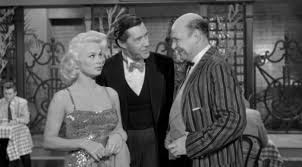
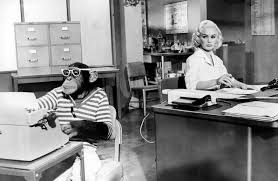
If you don't think film critics can make mistakes, consider the terrible reviews given the sublime SEX KITTENS GO TO COLLEGE, a C-list 1960 madcap comedy about the effect a knockout blonde who also happens to be a super genius doctor of medicine,  psychology, and physics (plus ten other degrees) has on a small town college when she arrives from Vegas to assume the role of dean. Hired by "Thinko" the computer/robot who is "never wrong!", she's clearly qualified so why is she causing such a stir? Just because she happens to arrive in the body of "the Tallahassee Tassle Tosser," Mamie van Doren?. Often billed as being to Jayne Mansfield what Jayne Mansfield was to Marilyn Monroe, Mamie underplays with such calm authority that even those who sneer and deride her 'type' would be impressed if they could leave their male sexual panic at the door. Not only can she can carry a film, she can stay cool and grounded, and almost believable as a photographic memory and 13 doctorates-having genius. No doubt she is the right woman to lead this cocakamamie college into the "space age!" She 
can give you the page # of any given text. In short, Thinko is not wrong; she's qualified above and beyond the rest of them. The sparks fly because no one can handle the fact of her hotness. This inability is never depicted as anything but 'their' problem, and reflects perhaps the irrational hostility of critics (similar to the unearned scorn heaped on Myra Breckenridge.) 

And she's not the only asset: a stunning Tuesday Weld is the college's hitherto raining beauty queen. (she accuses Van Doren of "making every other woman in the world feel flat-chested"). Weld has been trying to get lumpen football star "Woo-Woo" (Norman Grabowsk--a kind of Rick Moranis crossed with a Sherman tank) to swing for first base rather than just srtriking out in a stuttering virgin panic. Trying to help Weld out, Dr. Mamie gives him some good counsel --just one of the surprising moments van Doren handles with a sensitive aplomb, yet hitting all the right comedic notes ("boys with nicknames are usually sensitive"). No wonder Woo-woo ends up falling for her instead of Weld, but it hardly matters much. There's too much else going on for anything to reach that kind of climax, as the film slowly builds to one of the stateroom scene-style 'everyone onstage' madhouses. Even Maila "Vampira" Nurmi is around, though stuck in the role of a sexually frustrated lab assistant, ever machinating to help undercut MVD's sexual status. Her presence alone lets you know you're in the right place.

Oh, oh that Mijano --in a nice color photo
(I couldn't find a good Sex Kittens still that does her justice)

For all Van Doren's range, the secondary romantic lead, Mijanou Bardot (Brigitte's sister!) basically steals the bulk of the sex appeal as a very low key, underplaying version of a sexually voracious Russ Meyer-style exchange student, fout to bed a cross-section of ze American male for her term paper ("what you call ze 'social sciences.") Her forthright availability is the stuff of semi-terrified fantasy. She ends up zeroing in on a "real live Chicago gangster" in the form of Allan Drake as "Legs" --whose grounded 'strictly business' semi-reticence is met with sultry /academic urgency ("Do you want to set science back thirty years!?") He and his pal are there to lean on this guy "Thinko" whose been gambling rather too successfully. Though far from the most interesting of the Mad style cacophony of crazy characters, Drake's rattled "Legs" becomes more interesting purely through his gradual reciprocation of Bardot's unswerving affection, and vice versa a--like some Anna Karina anti-heroine--she even joins the gangsters' side ("Boo-booom Boom! Ventilate him!" and "This dialogue, pure Roaring 20s, no?!")

"I"One of the most possible people you'll ever meet."
"One of the most possible people you'll ever meet" 

And that's good Legs comes around and conquers his sexual panic. Hey, you'd be surprised how many normally red-blooded American males can't handle a beautiful girl suddenly throwing herself at them like a freight train. A man might fantasize all through his pained adolescence about such moments, but if one actually comes--and Lacanians know this all too well--his reaction isn't aggressive cool, but panic; he starts to stutter, spills his drink, and before you know it, finds himself running away, covered in sweat, desperate to get home and begin his lifetime of self-reproach over this one blown opportunity. To go from tortured adolescent longing for this golden chance to tortured adult regret about blowing it is almost a rite of passage; hopefully one can glean the message: the unconscious half of yourself is a spiteful anima out to keep you for herself. 

This is the comedic gold mine understood only by a chosen few in the comedy business. College can be visualized as a zone where fantasy and desire reign free - written by and for people who have only been there in passing, but who looked at all the girls and thought 'man if I was in college I could score with all these chicks,' In this film they suddenly they have to put up or shut up.  The women--namely van Doren, Weld and Bardot--have all the brains and assertive libidos, and the men are reduced to terrified deer in the headlights. Such is the Russ Meyer-esque vein mined by Albert Confessions of an Opium Eater Zugsmith in the long-derided Sex Kittens Go to College. 

L-R: Tuesday, Mijanot, Mamie
I don't have all the answers; I have no idea why this awesome comedy gets such a bad critical rap, unless male critics are too threatened by the idea of a genius bombshell who's not evil, passive, materialistic, or moronic. As of this writing it has a 2.2 on imdb. and Lenny Maltin gives it a BOMB ("don't say you weren't warned!"); Glenn Erikson says "Compared to Sex Kittens, Otto Preminger's Skiddoo is a profound statement on the human condition." An uncredited imdb writer calls it "one of the most legendarily worst films ever produced." But I say, if you've been to college and like to get wasted and love the films of Russ Meyer, Ed Wood, and Roger Corman, and you used to read Mad and Cracked as a kid, then at least consider checking out a film where all those things are rounded out to the uncommon denominator. I think a lot of these low budget zany comedies get a bad rap, especially if they don't have big recognizable directors (like Frank Tashlin or George Axelrod) so that critics can guess how they're supposed to respond. This isn't a guffaw style comedy, but how often did we laugh reading Mad as kids? Half the time we didn't even get the jokes. There were satires of films far too dry and adult for our interest, like The Sandpiper and The Man in the Grey Flannel Suit.  In that spirit, let Albert Zugsmith be your Alfred E. Newman. 

The Zug was strange figure who could go from producing films like Orson Welles' Touch of Evil, and Douglas Sirk's Written on the Wind, to directing unclassifiable strangeness like Confessions of an Opium Eater, The Beat Generation, and Sex Kittens Go to College. He also produced Russ Meyer's Fanny Hill!  If you don't see that list is all connected, then you need to learn so very much about the spirit of revolutionary cinematic anarchy in the service of sexual stimulation. (Behind me right as I wrote that phrase a Quaker Oats commercial said "Where new normals are created.") That's the beauty of the Zugsmith touch. Watching Vincent Price sailing madly down the sewer towards Frisco Bay oblivion in Opium Eater for example, leaves us more questions than answers: is it a horror film? A white slavery expose? A surreal odyssey worthy of Bunuel? 

It is all that and more, for you have entered the Zugsmithery. 

The simple fact is, there are so many things to zero in on here in the Zugsmithery that if one element annoys you, there are ten more to delight or flabbergast. For me the most glaring and annoying element in Sex Kittens is Martin Milner (the supposedly hip jazz guitarist who had to have weed planted on him in Sweet Smell of Success) as the college's PR man / sexist hysteric. Talking fast in a kind of high-voiced style, sort of imitating Cary Grant at his most flummoxed in Arsenic and Old Lace, Milner tries to steal scene he's in, as if he's feeling the need to give the film a square 'white fall guy' center to ground the antics, i.e. he's the Tony Randall or Tom Ewell, there to link the film to every other banal "sex" comedy flatlining on big screens around America at the end of the 1950. Rather than letting the women own their scenes, Milner lets a kind desperate flop sweat swell his own lines until they rain all over their lines. He might come out a few yards ahead of Eliot Reid's smarmy detective in Gentlemen Prefer Blondes (1953) as far as worst male counterpart to a busty 50s-era comedic titan, but it's mighty close. 

There's one other caveat: I also don't like the cop-out patriarchy-triumphant ending (SPOILER ALERT!), when Mamie hangs up her shingle and goes back to Vegas to continue her tassle-tossing, so that Milner can romance her without feeling threatened. When she says, after giving up on her academic career, "for the first time I feel like I'm really using my brain" one wants to track down writer Robert Hill and beat him senseless with a rock-filled bra. (I feel the same way at the end of Beyond the Valley of the Dolls when smarmy, worthless David Gurian is accepted back into the fold and the murdered lesbians are blamed for their own deaths.) If there's one thing I loathe in these 50s-60s big screen sex comedies it's these young men with clean cut hair and a pipe and an unearned lordly air, as if they believe the Madison Avenue plastic fantastic wave that tells them they--by virtue of their educated SWM status-- have the right to re-enforce patriarchal homogenization when it begins to weaken. Sure, not all these guys are insufferable but the ones that are, like Milner and Reid, becomes more insufferable with every passing day of my work's sensitivity training. Ugh! (Of you can't get enough of my ravings on the topic, check out: CinemArchetype 13: The Skeevy Boyfriend. and Vanishing Caloric Density: The Queen of Outer Space.

 Luckily, there's a kind of masochistic 'turn the audience into feminists' critique going on here, as in Blonde Venus we may not like that he wins in the end, but we're clearly meant to root against the squirmy male who uses the conservative values of the reigning social order to help put a woman in her place for the crime of outshining him in every department. If we come away pissed off, at least we can credit the film for stealthily agreeing with us. We can't help but cheer when she dumps a conga on his head then pours a pitcher of water through it onto his head. Even if she apologizes later, and asks "do you find me... desirable?" so that we roll our eyes and snort derisively, Zugsmith gave us our moment. And we'll never forget it. 

To make certain we know where Zugsmith's sympathies lie, balancing out Milner's forced hysteria there's wondrously wry turns by Jackie Coogan, 'borrowing' W.C. Field's chicane drawl wholesale (even making a Professor Quail-style landing) as the college's key financial supporter, Admiral "Wildcat" McPherson; and John Carradine--proving he isn't limited to shady butlers and secondary Draculas--as a debauched science professor.  We knew Coogan had the comedic goods cuzza Fester, but it turns out Carradine is adept as hell at deadpan Mad Magazine-style comedy, as one of Mamie's firm supporters. Like everyone else except Milner and Nurmi, he's unthreatened by her mix of sex appeal and brains, calling her "a positive vision" while helping her into his faculty-packed jalopy (her chimp sidekick sneaks into the rumble seat) for a night of buzzed carousing (or a "simple homespun country fun"). Destination: "the Passion Pit," the college's local tavern.  To overcome any further doubts as to her qualifications as either genius, Vegas showman or star stripper, Van Doren hypnotizes the gathered faculty and Pit patrons to join her in a crazy rhumba (Conway Twitty watches, and then sings). As she puts it, "this is war and I'm out to wake up the troops!"

Thankfully, no amount of stage show antics can dampen the benevolent and respectful ardor of these older men, who are--essentially--too debauched to be troublesome (the greatest libertines never mash or paw; they won't say no if you make the first move, but otherwise lean in only to spook away the unwanted johnnies). Ah, the vantage point of age and experience! 

Cameo parts and great lines float around ("I'm a selectman of the church!" rants the cop who arrests the admiral when his morality is on the ropes); Charlie Chaplin Jr. is a bewildered fire chief; the imposing and magnificently bullhorn-voiced Babe London arrives in town representing "the Paddy Pad Brassier for the larger figures gal"  - At the end when heading off once more into the great beyond, London drops the ultimate microphone: "You people don't deserve Paddy Pads! I'm taking my brassieres to Europe where they'll be appreciated!"

And over all, it's one of those "What, me worry?" fantasies where all the women are stacked and leggy, but smart and aggressive, and the men more or less idiots. But when you have Coogan and Carradine dancing at a bar, how bad can things get, no matter how much Milner dashes around like some kind of universal chaperone (telling Jayne "You are a bit much for a growing boy to face at nine-AM in the morning.") or the flash-frozen "Woo Woo" mopes and Moranis-izes? Sure, the ending is total chaos as all the disparate parts come together in a big science lab/classroom climax (with the gangsters and Thinko finally squaring off) but at least half the gags hit home and if you don't really laugh, well, one of the beautiful gals is usually onscreen to rest your eyes on while you wait for the next zany character to come tumbling into the scene. For all its faults, I think I like it better, as a whole, than either Beyond the Valley of the Dolls (which has an icky homophobic  subtext) or The Girl Can't Help It (which has an icky Tom Ewell smarm). Sure it's not as good as Lord, Love a Duck but what is? Even that's not perfect, though it sure is Milner-less.

The question is, does Sex Kittens link up with Opium to delineate and auteur style for the Zugsmith? Maybe not, but it does indicate a termite interest in veering from audience expectation and letting the sewer carry us where it may, no matter how far afield from the norm. If Vincent Price were to show up, waving an opium pipe as he sails past on a Chinese character floatation device, on his way to Dr. Goldfoot-fame, we might well be convinced. Maybe you you can't pin high hopes on it, maybe it's not any better than 1962's Invasion of the Star Creatures but if you can tolerate that (and I can) you should know there's plenty of the old galaka-zoom and maybe even some ring-a-ding dinkiness to be found at the Zugsmithery. Best of all, there's full-bodied and nuanced performances from Bardot (casually carnal), Van Doren (sensitive and balanced - she talks, not shouts, further stranding  Milner in the ham flats) and Weld (less to do than in Duck but still ravishing with her spot-on deadpan comic/sexy-fusion alchemical acumen). The three girls, especially Van Doren and Weld (they remained fast friends), project a kind sisterly, lordly benevolence, riding herd over the male students like a college sex-com Red River. Even with the cop-out coda, this baby is going places, maybe even all of them at once. Follow the lead of professor John Carradine and Jackie Coogan instead of the dopey Milner. A girl with youth, brains, education and hot blondeness is not a threat, a goal, or an object, but a great drinking partner. Let her prove it, and hang on tight. 
 

Related Posts Plugin for WordPress, Blogger...