Showing posts with label Vincent Price. Show all posts

Wednesday, October 29, 2014

The Mephisto from Missouri: THE RAVEN, COMEDY OF TERRORS, TOMB OF LIGEIA, HOUSE ON HAUNTED HILL... etc. (Blu-ray review)


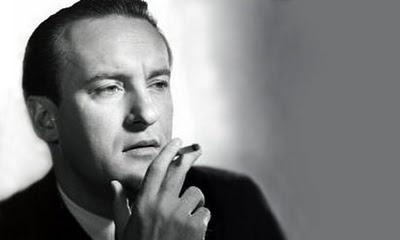
Eyes and voice a purr of delight at his own ghoulishness, Vincent Price made the grim stare into the Poe-Lovecraftian void as cozy as a fireside flanked with sleeping wolfhounds, and last week the Shout Blu-ray set Vincent Price Collection II dropped... like the gallows' floor, like the guillotine blade, like the axe on the neck of the turkey. Hear his legion of eternal fans gobble it up!


Forgive my gauche similes, for part of what makes Price such a treasure is his contagious sense of macabre humor, the obvious fun he has in playing evil rather merely just trying to appall. His luxuriant voice finds worthy dialogue in the classy but sensationalist Poe-Matheson-Towne scripts for Roger Corman, for whom Price would become like what De Niro would become to Scorsese, or Monica Vitti to Antonioni, i.e. the alchemical miracle when an actor and director merge into one mind to form some magic third element, a form of lightning that could zap a film into life around a star like the earth around its molten core, building up a wondrous mood with little but candles, camera, and cobwebs.

This second Shout Factory volume of Price Blu-rays only has two examples of this lightning planet-building: The Raven and Tomb of Ligeia, add in Jacques Tourneur-directed Comedy of Terrors, and William Castle's House on Haunted Hill  and the set is still an instant essential. Extras include Corman commentaries, interviews with screenwriter Richard Matheson, and--as with the first set--those lovely lyrical Price on a staircase introductions made by Iowa Public Television for a series of weekly Gothics from the 70s.

Shout's remastering of the AIP films for Blu-ray lengthens and deepens the image, saturating the palette with deep dark reds and greens, glowing amber and inky opaque blacks; firelight reflections glisten on maroon velvet drapery. Every gossamer strand of the cobwebbed covered gates, every brush stroke of Bud Shonberg's twisted portraits, every shade of the psychedelic paint swirl credits, is now aliight with new fire. Maybe it all adds up to little else but classic horror fan crack, but no matter how threadbare the situation, Price's aesthete air of mephistophelean delight never wavers. Price fans I bid thee: Pounce! Thy prey has alighted. 

THE RAVEN
1963 - dir. Roger Corman
 **** (Transfer: A+)

A personal October perennial, this loose comedic 'adaptation' of Poe's poem has reluctant sorcerer Vincent Price longing for his Lenore on a dark and stormy night, reading forgotten lore until Peter Lorre (bloated but hilarious) as the raven interrupts his moody brooding with a request for aid. A brother sorcerer of lesser skill, Lorre tells Price he was turned into a raven by Dr. Scarabus (Boris Karloff)--whose castle is right down the coast (Big Sur!). Scarabus killed Price's master sorcerer father in a duel years earlier; what he doesn't know is that the lost Lenore (Hazel Court) is alive and shcaked up with Scarabus as well. Soon Price and Lorre are dressed and headed off to Scarabus in Price's carriage, along with a young Jack Nicholson as Lorre's son Rexford and Olive Sturgess as Price's cute daughter. Hilarity and sorcery ensues!

The Blu-ray remastering is jaw dropping --as different from the old MGM DVD as beautiful soothing night is from shitty gray-ass day. Corman's vast and impressive sets now shine and breath in their vastness (all the castle walls and furnishings from past Poe films are here; Corman just built more as he went, so by the time of The Raven the castle is a vast sprawling Gothic maze). On the old MGM Midnight DVD, the distance between walls made the dark look always looked kind of brownish and washed out, but now every flicker of the big fire pit glows in a new hauntingly lovely greenish gold reflective light and the blacks are oceans deep. The Les Baxter score at times errs on the side of Disney cartoonish (I'd love to be able to re-score these films, the way Baxter re-scored AIPs Bava imports, only taking him out instead of putting him in) but this is still pure uncut Halloween delight, so you might as well bring the kids, by which I mean depressed lovelorn college sophomores reeling from too much bad acid, as I was, catching this at the Student Union while a sophomore, and needing desperately at the time to return to the Gothic chambers and forgotten lore of childhood, wherein every fairy tale was grim but comforting, especially when goosed up by Price's melodious purr.

In the land of the damned Price is as the soothing balm of Ativan.

THE TOMB OF LIGEIA
1964 - Dir Roger Corman
*** 1/2 (Transfer - B)

Definitely one of the better and more unnerving in the cycle, this capstone to the Poe-Price-Corman series, and that's thanks largely to a ripping script by Robert Chinatown Towne, who captures Poe's horrified eloquence via elaborate double-blind metaphors, which Price then rolls through like a velvet serpent, waxing--for example--about how he wishes his rotting mind could be wrest open as easily as the cabbage thrown at Ligeia's trickster spirit animal cat. "What else is madness but belief that inwards does not exist?" Now don't get me wrong, I love Richard Matheson, who wrote many of the earlier Poes for Corman--but over repeat viewings his dialogue tended towards repetitive arguments between a young man refusing to leave the castle until he gets the truth and Price withholding it as long as possible, as if waiting for the censor to go to bed before the torture devices and elaborate Poe musing might be brought forth. Towne, on the other hand lets the rich existential musing flow freely, with lots of off-camera dialogue flowing over dream-like images (Rowena climbing the abbey stairs while Price talks of madness to his barrister; tales of his father told to Rowena over long shots of their honeymoon wanderings), trusting the audience to get the metaphors even as they triple and quadruple back on themselves to obscure their tracks. The result is that Price's natural eloquence is finally unchained, which is good, because he's also sans mustache, as he was in the first in the series (Usher) which I find as unnerving as the dreary English countryside daytime exteriors. I do like his steampunk wraparound shades but Poe should never see natural light--especially not England's wretched gray skies. I prefer Corman's soundstage-bound Poes, which eschew reality in any form. Proving my point, this is one of the worst color-graded HD transfers - with many scenes still uncorrected / bleached out and very light grey blacks, unusual for the deep deep dark the better transfers offer (like the gorgeous liquid blacks of Pit and the Pendulum in the first set). Maybe it's the cinematographer going for a kind of wan, washed look ala Huston's Moby Dick but I think the color restorers on the disc just ran out of energy when they saw those skies. Who wouldn't?

Meanwhile Price decides to go a different route too, and plays his mournful Heathcliff de Winter-Rochester without any of his usual velvet flourishes. But as a result we can't fathom why the piercingly self-confident English Lady Rowena (Elizabeth Shepherd) would want to marry such a sullen, naked-lipped poseur. Rowena is such an awesome fully-awake British heroine that it's hard not to be mad at Price for treating her so evasively.

All that said, Price still runs the Poe gamut and has a great time despite his possessed air. Dig his excitement during the hypnosis scene, convincing Rowena she almost caught a butterfly! The old Price hamminess really comes through then. Shepherd also does a great audio commentary, though it's with scholar Constantin Nazir, who irks me in daring to suggest Poe wasn't as big an opium addict as legend says. (Nazir, I think, hasn't really either soaked up Poe's druggiest work OR done opiates, let alone read Poe ON opiates, which is to truly understand just how laudanum-soaked all Poe's most memorable work is, and I mean that as the highest of compliments). Meanwhile, Nazir interrupts Shepherd's inimitable on-the-moment observations by lumbering through some Price letter gushing over her. Dude, who cares? We can read it later. Oh if only she was with erudite raconteur David Del Valle instead! Instead the great DDV gets the FLY and LAST MAN ON EARTH films, and folks like Nazir and Stephen Haberman take the Poe films (perhaps to not overlap with the DDV interview with Price?).

Either way, Shepherd knows her shit- able to rattle off a vast list of Corman proteges, and to describe in detail her method, in that great resonant deep purr of lordly confidence only British women seem to have.


The whole film itself, in fact, even more than the story, makes a a grand metaphor for drug addiction and alcoholism. I relate to the whole 'having a will beyond death' with Lady Whiskey as my Ligeia, feeling her call every time I walk past a liquor store window display, or the beer aisle at the grocery store. No mention is made of drugs in Ligeia, but the resemblance to Price's big breakthrough role, as a drug addicted lord in Dragonwyck, is as clear as the story's resemblance to Jane Eyre. The whole last act is like being a wife shut out of her husband's addiction, his weird nocturnal dalliances. When she finally breaks into his secret chamber and learns the vile truth, we see the cool pad we've been missing, and then all that's left is ye olde collection of Corman burning and collapsing wall shots - that old familiar roof caving in and her agog horror.

Meanwhile, Towne and Corman leave it deliberately open-ended as to whether there really is a spirit of a willful real life woman floating around, or if he's just a paranoid necrophiliac trapped in his late wife's post-hypnotic suggestion--and then they take it to the logical conclusion, which so few other writers do--of getting us to the point where we understand finally that there is no difference, that reality is subjective, that Satanic panic, dreams, hypnosis, and reality are all just slight neurochemical adjustments away.

If the tree falls in the woods, but we hear it like a tolling bell, it's probably our alarm clock. A fitting final thought perhaps for this series that plays like one bizarre extended dream.

COMEDY OF TERRORS
1963 - Dir Jacques Tourneur 
*** (Transfer: A)

People aren't dying fast enough for poor Price to pay both his wine bill and keep his Victorian era funeral parlor 'afloat' and he's nothing if not a man of enterprise, i.e. a true American, so he does what needs to be done: thin the herd of rich idiots clogging the streets, boosting his rep for prompt arrival time at their chamber door.

This film used to give me a massive headache with all the nasty bickering between Price and his buxom wife, her off-key caterwauling, assistant Lorre's baggy eyes and bloated body, father-in-law Karloff's funeral-ashen pallor. Here was the the unnerving sight of three of my favorite stars decaying into elderly humans (Karloff unable to even stand up), and Price in his most unlikable role outside of the Witchfinder General (it would have been great if he was nice to at least one person). Luckily Basil Rathbone--baggy-eyed but unbowed, firing on all five of his ancient steam-punk Holmes-y pistons--is so over the top in the crazy semi-dead vengeance climax that even Les Baxter's terminally bouncy score has to catch up, and Price seems at last impressed.

Luckily this new Blu-ray compensates for the shrill farce aspects by making every image gorgeous--the deep maroons throb and the blacks now creep darker than any Stygian shore.  Price's evil funeral director now seems to have more of a right to be luxuriating in his own evil. I've changed too, and now I've been married and divorced and I've had a girlfriend who fancied herself a good light opera singer, and many a pained look did I get from her audiences, as if it was my responsibility to stop her, yet I dared not. When she glanced my way in a loving look I made every effort to smile in support, feeling my ire and shame swell up in a terrible Poe-like maelstrom. So now Price's pained revulsion towards his ever-wailing wife hit deeper than they did. And sure, Lorre's a mess but his drunken leering is just the surface of a real affection for the buxom Jameson. And now I notice that despite his drunken bloat, Lorre is still as nimble as if he was Peter Kurtin-ing around Weimar Berlin. And since Price is killing people to support the lot of them, after all, they could be a little grateful! They do get drunk together, but that only worsens Price's mood. It might have been fun to act but--unless your favorite childhood memories include long nights of parental bickering--isn't that fun to watch.

As they proved in The Raven, Price and Lorre make a great team, somewhere between Burke and Hare and Abbot and Costello and better than both put together. All that stops it from greatness in my regard now that it looks so spiffy is director Tourneur's rigid slapstick regimen (he didn't go in for improvising, which Corman encouraged for The Raven and which led to its light wry air) and Les Baxter's overly jaunty score, which hovers over everything like a helicopter parent at the circus, worried you're laughing enough at the clowns. Look at the clowns, Caitlin! Oooh, that one fell down! Corman's last minute decision not to direct probably cost us a true horror-comedy classic. I'm pretty sure he'd have pinpointed both the bad vibes of the prolonged verbal abuse and the cloyingness of the score, whereas Tourneur was probably more concerned with delivering what was in the script rather than delivering a well-rounded good time at ye olde drive-in.

But hey, it's still cool - with sparkling Matheson dialogue that's a sublime blend of Shakespeare and beat poet, with the undead Rathbone thinking he's Macbeth brought back to life to sleep no more, and all sorts of wry lines from Hamlet and Midsummer Night's Dream deftly shuffling themselves in amidst macabre humor dark enough to get a smile from even the sourest of marital demons.

HOUSE ON HAUNTED HILL
1959 - Dir William Castle
***1/2 (Transfer: A)

A perennial public domain Halloween favorite, Shout's HD remastering has infused William Castle's first big ballyhoo masterpiece with a dark rich sense of inner space that alas, don't necessarily do the spare empty sets any favors, but do add an overall feeling of late-50s murk. Deep shadows now go way back into the depths, evoking an eerie sense of cavernous modernism, like a carnival spook show moved into a vast, empty, unlit museum. Instead of looking like heavy oak paneling on the walls, the walls now look like wallpaper painted to look like wood by rushed studio craftsmen. Was this noticeable to audiences back in the day? Does HD show us too much?

We classic horror fans who were too young to have seen it in the theater (with 'Emergo!') first fell in love with Haunted Hill on TV, when it appeared in a haze of local UHF TV antenna static on some lost Saturday afternoon or late night/early morning. It's built for such ghostly arial travel, strong and sparse enough to blast its way through blurry dupes and fuzzy reception like a shot from a cathode ray gun out of a tiny party favor coffin, and to maintain its ghoulish gleeful spookiness even in a theater full of kids throwing popcorn at the screen and the skeleton on the string being squeakily wheeled over their heads. Without such interference, the film can seem cautious and empty, but that passes, it's just too sturdy to let any obstacle get it down. The Robb White script is full of bitchy marital vitriol which of course the kiddies love as much as the heads in the suitcase, and blind caretaker being reeled along like a 'scare' pop-up on a five-cent carnival ride.  Even if Castle's full empty ersatz fly-by-the-seat reckless effrontery is all the more apparent in the merciless clarity of HD, it's still the perfect Halloween party all-ages show, and Price is on full throttle, riffing off a sly Carol Ohmart and a doomsaying Elisha Cook Jr. while rolling his eyes at progressively hysterical Carolyn Craig.


LAST MAN ON EARTH
1963 - Dir Ubaldo B. Ragona
**1/2

Price's neo-realist Italian film, this long-held in public domain adaptation of Matheson's I am Legend now has its creamy/gritty black-and-white widescreen photography restored, and with its post-apocalyptic/futurist Rome mise-en-scene it would make a great double feature with Antonioni's L'Ecilisse which came out the previous year, which uses some of the same juxtaposition of ancient ruins, post-war ruins, modern architecture and post-modern futurism. The script is intelligent and faithful to Richard Matheson's novel, even though it's mostly just read as a voiceover--a trick that gets real old real fast. If the film has any real lasting power it's mainly because the last 3/4 get pretty fun and intense (with finally some dialogue + an almost Wellesian chase through and around a vast apartment complex and ruined church). There's also the (admitted by Romero) clear debt owed this film by the first Night of the Living Dead: masses of pale dead hands come grabbing through the boarded windows; shambling figures are illuminated in the glare of high-contrast headlights; one guy even looks like the mangy Italian cousin of the very first zombie we see in Night--the one who palms Barbara's car. The lead zombie talks, though (in an echo-drenched slur), and is played Italian star Giacomo Rossi Stuart (Kill Baby, Kill!; War Between Planets). 

Alas, even with the spiffy upgrade, I find the bulk of this film dispiriting. Like the next film in the set, it's just isn't the same Price when he's not moving his lips to his own voice. Price seems to feel it, too. The weight of the world seems on not just his character but himself as well. Luckily, the classic horror archivist and raconteur David Del Valle provides a great commentary track.

DR. PHIBES RISES AGAIN
1972 - Dir Robert Quarry
**1/2

One thing I never understood about the Dr. Phibes films is why they waste Price's beautiful voice with pre-recorded poesy-ridden monologues that seem like something Criswell would read for an Ed Wood movie.  For the sequel it's even more pronounced. At first director Fuest's mix of campy TV show style over-the-top poetry, a mix of bible, babble and decadence, is fun in the way where you can imagine Austin Powers watching this and thinking "Groovy, man! Horror is my bag". But after half an hour or so, one longs for structure, some kind of situational cohesion, or--as in the case of the 60s English cult TV show The Avengers--a deadpan center, i.e. the laid back cool of Diana Rigg and Patrick Macnee. And since Price has to do most of his acting with his eyes it's lucky they have a great red ring around them that glows in the pink light. It's a nice look, especially in the new Blu-ray upgrade, where the light perfectly accentuates his heavily powdered cheeks. Yet there's just something strange about Price essentially pantomiming a recording of himself reading floridly poetic monologues that makes it all seem almost too ridiculous, too campy even for the late-60s. It's like he's listening to one of his old LPs he made during the classic monster heyday--the ones wherein he reads Poe and spells from Macbeth and Midsummer Night's Dream and old witch yarns--and vamping around to it while he folds laundry. Luckily he has Vali Kemp as the silent but beautiful Vulvania, his deadpan cool sexy automaton assistant. They make a cool pair. And Kemp is perfectly still and on-point. Running through a list fey little props and rituals with nimble grace, Kemp can match his stare with a delicious conspiratorial knowingness. 

Speaking of eyes, what about the bugged-out (like his head's about to explode), intense, round ones of Robert Quarry (i.e. Count Yorga)? He plays the odious and eternally young Darius Beiderbecke (great name). Price's first supernatural opponent Darius needs the same eternal amulet, or whatever, hidden at a lost Egyptian tomb, that Price is trying to find to reanimate his dead wife. Quarry's bug-eyed peepers have a sweaty intensity that cuts through the frivolity and suggest genuine depths and make a fine contrast with Price's wide, sad, Irish wolfhound kind of eyes. They'll stop at nothing to get to the secret tomb first. For Darius that means subjecting his men to verbal lashings and Phibes' to murderous traps (he almost drowns between the paws of the sphinx) For Phibes, it means wafting around with Vulvania in various campu disguises, and murderous trap-setting galore!

Reality and any sense of geographical space are tossed to the side. Phibes and Vulvania can seemingly show up at the ruins of the Egyptian tomb-standing by a giant half-destroyed foot- only to celebrate their arrival by stepping up some marble stairs to his Crowley-meets-music hall art deco organ to play a few tunes. Did he bring his lair with him across the channel? The next scene is some over-the-top comedy at Scotland Yard as they prepare to go to Egypt to track down the killer. And so it goes. Fuest makes sure we come to loathe the oppressive and egotistical Beiderbecke, trying to reign in his rebellious and hip fellow expedition members to his iron will, and that we marvel at Phibes' and Vulvania's ability to somehow set up pointlessly elaborate traps way out in the middle of the desert, all by themselves, unseen, in the dead of night, and then whoosh- celebrate with champagne and music back in the groovy lair. Repeating as needed.

Perhaps the most stunningly transferred film on this Blu-ray set, with an eerie array of purple and pink hies, all a-glowing in a 3D depth of space. The problem is that this that this lovely clarity reveals clapboard TV-show-style sets that were made with the not-unreasonable assumption most people would be seeing this cropped on TV or at a drive-in through a dense English fog. I'm sure we were never meant to see so so clearly we can almost touch the grains flaking up on Price's whiteface make-up and powdery Beatle wig. Now he seems like some sad gay diva drifting like a Tennessee Williams diva through half-torn down Fellini movie sets in the middle of the night while the crew is home asleep. Don't think I'm quibbling. I don't mind the near total absence of exteriors or connecting or establishing shots. I dislike British exterior shots in general--they're often weighed down by murky grey skies and eerie stillness. But here the lack thereof makes for confusion, to a West Village off-off Broadway pantomime play degree. Even when the whole shebang allegedly moves onto a yacht or then onto the deserts of Egypt, there's never any doubt they're on sets, which I love, usually. I do especially love the giant stone feet entrance to the Tomb (shout out to Ozymandias!), but with the Blu-ray clarity you can practically see the stress creases on the sky backdrop, and the brush strokes on every gold pillar.


That said, composition and blocking are sublime, like Kubrick on poppers at a gay ball. It would be great with the sound off at a party or projected behind my old acid rock band if we played Abba covers and had a bubble machine. As a narrative, though, it's infuriating. Phibes and his Vulnavia's self-congratulatory champagne toasting and dancing seems the height of self-aware camp, which is the only type I dislike. Their relentless perfection and disregard for the laws of reality (i.e. that you can bring your entire secret lair with you while you visit in Egyptian tomb. And shame on the credits for saying it co-stars Peter Cushing as he has but the teensiest cameo. On the other hand, the mechanical jazz band is cool, as is Phibes' Phantom of the Cinecatta disco organ. You can see why Tim Burton and Johnny Depp have their eye on this character for a remake. 

(PS - rewatching this now on Svengoolie, and like it a lot better. The framing seems more cropped, but in a good way so it makes sense, and the relative lack of close detail gives everything an aura of magic. Yeah, baby! I think I was a bit harsh in the above review, but hey, - 5/23/22)

RETURN OF THE FLY
1959 - Dir Edward Bernds 
**2/3
Released in 1959 to capitalizing on its predecessor’s runaway success, this should really be called Son of the Fly. Price reprises his supporting role from the original; he finally gets to help restore a human headed fly back to normal, undoing the damage wrought by the teleportation chamber, rather than just looking askance with blanched horror and then tossing a rock, but otherwise he has little to sink his teeth into and the whole middle stretch--involving grown-up Phillipe (just a boy in the first film) with a giant bulbous fly head, tracking and killing a pair of industrial spies who've made off with his patents--goes on without him. As 'monster on a vengeance-based killing spree' films go, it's okay (his habit of bumping his giant head on chandeliers is a nice touch) but aside from abundant gay subtext and nice lighting, it's pretty familiar stuff. There's the same confluence of attractive and concerned upstairs maid, the same basement whirligigs, the same lofty scientific rationale, the same untrustworthy assistants, that kept Karloff in lab smocks and gangster burial clothes all through the lean 40s. It's all been done better, and worse. 

Not to spoil the end (spoilers!), but when Price restores Phillipe (Brett Halsey) to his former peevish self, we're left with the odd feeling that he's going to get off scott free for his two murders since that was the fly head and not his that orchestrated the deaths (why the fly head didn't spend its time pursuing sugary snacks instead of vengeance makes no sense of course, either - shhhzzzz). And what about the detective left with guinea pig hands? Also, I don't know why you would kill an enemy by teleporting him and then re-teleporting him back to the world. Leave him in the ether - along with that poor cat from the first film! What a way to dispose of bodies! Zzzzitt! No mess. Non habes corpus, non crimen. 

---

FINAL (TOTAL) GRADE: A - It would have been nice to see The Tingler and/or Tales of Terror instead of some of these last three lesser works, but it hardly matters when the films look this good and the extras are abundant. (a Del Valle commentary = gold). Even at the set's high cost, it's worth getting just for The Raven!! Sorry to be such a fan! Price rulez!

Thursday, November 08, 2012

CinemArchetypes 18 - The Aesthete


Well here's the last stop on my currently habit-imprisoned train, this is where I aims to be, claims to be.... this is the place that we aim for, we artists of pen and brush and neurochemical excess. Don't mistake our sexual aloofness for inhibition but rather a cumulative loathing based on excessive debauched memories, ghosts and horrific hangovers. Our souls are glutted with the ecstasies and agonies of the flesh, so now we'd rather just contemplate the wreckage for awhile. The aesthete's disregard for solace and emotional baring allows him to scuttle gender's narrowing limitations and so, instead, the aesthete's raison d'etre, the last standing ideal he can find in his shit-kicked can of carded houses, is the collapse of the ground between each pigeon hole; boredom and small-mindedness are his only enemies, and he knows to beat them he must join them, love them, forgive them, as he can seldom totally escape them. His goal is to be so far out that even the maniac charging him with a knife is not a foe; even death's wicket absinthe demon vestments are nothing to fear.

In cinema he is sometimes the 'gay best friend' or some expository dialogue-mouthpiece scholar visited in his book-stack warren by the detective hero for a clue from the past, but he is never a cliche. Kick the generalities curbside and don't let the groupthink studio heads swap out his generous heart and adventurous spirit with mere rote quirks! They will drain his beauty like wine snobs so uptight about their hundred dollar glass of vintage port they end up spilling it all cuz their hand shakes. Slowly, fearfully, the pressure from the money men leads to second-guessing, draining the aesthete of life until he's merely a prop. Don't say it couldn't happen!

John LaZar - Beyond the Valley of the Dolls
Up until Tuesday night I had been cursing the Kubrickian darkness in Wellesian brogue rather lighting a candle just because the wax smelt churchy. But friends, I've been shown the light. Obama won and so finally we have proof that if all us freaks and oddballs stick together we can actually drive this bitch -- and as Mae West said in Klondike Annie, when you make fun of the good book the joke's on you, not because dogmatic preachers shout it but because making fun of anything destroys your spirit. First you joke good-naturedly about it, then its less of a joke, then its a threat, then suddenly it's the only reason you're not happy; your own judgments are attacking you and eventually it's your god-given right to kill the judge within. Like in Mingus' "The Shoes of the Fisherman's Daughter are some Jive Ass Slippers," one cool little musical motif gathers some friends and slowly a whole mob shows up to dig the sound and then it gets crowded and heated and the music gets repetitive and circles tighter and tighter and towards some violent orgasm of mob violence against you, the listener, and  bam, you're gone, just air and the whole crazy dance starts over. This is something in myself I had forgotten until the hurricane, the Obama victory, and seeing Zachary Quinto play a hip '64 shrink coercing a lesbian mental patient into barbaric Clockwork Orange-style aversion treatments on American Horror Story. 


Sometimes the trappings of an aesthete are just for show. It's easy to cover one's tracks in all sorts of shady business by cultivating an air of mystery and eccentricity, but such a creature is easily found out for he has not faced the true aesthete test of either perfect aloneness or perfect acceptance. He must face the demon staring back up at him from the toilet at which he is kneeling in rueful dry heave hell, and survive. He must drink his demon under the table, then drink the table under his higher power, or else rear back in moderation like a golden stallion. The aesthete has a morbid acuteness of the senses and the vile laughter of ruffians on the street in passing is like gunshots to his ear. So he must either shut himself away behind his romantic wall with only mad sister Madeline for company, or accept, love and forgive the ruffians one and all, like Scrooge does, and has to do every year, because slowly over the course of the fiscal countdowns he doth forget his Xmas spirits. The Swimmer didn't ever figure that out, and he ended up locked out of his own empty castle in the rain, like a poor ass Kafka. In short the aesthete must either open his heart so completely that it turns inside out or endure the pain of it slowly crumbling into a brown dwarf star.

1. VINCENT PRICE

"Sometimes I feel like I'm playing the subconscious of the entire human race" Price once said, "and I love it." Is there a more perfect choice for Roderick Usher, for Poe in general, than Price? As Little Italy and De Niro were to Scorsese, so Poe and Price to Roger Corman. But Price is velvet voiced, with a rare balance of open-hearted gentleness with mephistopholean grandeur that we lovers of cinema gobble up like sin itself. We're not really scared of his characters, but we're sometimes horrified by the depths of madness they sink to, which Price embodies with a glint of mania that shows us the fun, the joy in madness that all monsters should feel, at least twice, and in doing so he helps us transmute our own despair at death's inevitability and life's incessant slog, the constant closing of the door on paradise as one recedes into the cold marble wasteland, into something like a hot cocoa and slippers by the fire.

2. Rupert Everett - My Best Friend's Wedding (1996)

Damn, I need to wash my eyeballs after trying to find an image for this one. The available stuff on other sites are burdened with fluffy fonts for memes meant to be passed relentlessly to and fro in those relationships that form between two people when one is madly in love but able to exhibit some restraint because just being around their love is enough, and the other glad to have an adoring friend at their beck and call, who 'gets' them. Most of us are lucky enough to have been in both these roles. Maybe we even switched them with the same person. It works but it takes real devotion to the aesthetic of it all for it not to self-destruct just the same. One false kiss and it's all for naught.

That's what makes Everett's character so transcendent. He is delighted with the normal folks he meets, even the bride and groom's clueless family, and not in a cynical snide way. His heart is joyous enough he doesn't need to even express it, except to feign heterosexuality as needed while still exhibiting his peerless flair (including leading the extended wedding family in a rendition of "Say a Little Prayer for You"). And he flies back to the wedding just to rescue her, with no intention of sleeping with her... ever. Unheard of in most films today... alas.
"George's maturity, considerateness, tact are intimately connected to the gayness that sets him apart from the social norms, permitting him a wide distance from the practices and conventions in which those around him are entangled. He is able to talk to Jules in a way that would be impossible for a heterosexual man, offering her always an intimacy that is all the closer for being nonsexual.... (his) public speech to her... constitutes a veritable proposal, the commitment to a relationship that will be permanent but nonexclusive, , built upon a much sounder formation than sexual love or romantic attraction. -- Robin Wood (Hollywood from Vietnam to Reagan - appendix p. 306)
3. Robert Downey Jr. - Sherlock Holmes / Game of Shadows

The master of 'macho fey,' Downey's Holmes is full of warm, insouciant charm while still being a true badass and just a little bit of a shit. Highbrow types dismiss any blockbuster as without merit and vice versa, but just ignore them and dig the steampunk detail, the interesting 'pre-figured' fight scene inner monologues, the colorful but imminently deadpan nonchalance, the fast-flowing Wildean witticism, even the acrid tang of Gunga Din-ish misogyny. Guy Ritchie gets it right and Downey Jr. finds a character that he can bring the full brunt of genius eccentricity to. His Holmes is how I wish someone would play Algy in The Importance of Being Earnest. Ah, a man might dream...

4. Judy Davis as George Sand - Impromptu (1991)

The 80s was a bad time for aesthetes, but like all things must they ended. Then, 90s: Nirvana, metrosexualism, and this great gender-bent love story: I fell in love with Hugh Grant's gentle brilliance as Chopin courted by Davis' wild, dressed-like-a-man rogue Sand. The chemistry is like top shelf champagne. A robust story of artists, love, gender and the wives of disinterested nobleman who support the arts mainly to forge illicit love affairs with wild bohemians while their mutton-chopped men are off shooting grouse, it made huge impression on me when I first caught this on cable when I was a drunken poet back from Seattle, heartbroken and unemployed and ready to find validation for my cockeyed theories about how truly cool artists are beyond gender duality. I had a total man crush on Judy Davis, as apparently did a lot of people as she was in a vast array of cool artsy films in the early 90s, but she was never quite as sublimely macho fey and endearing as here - the film that opened her doors to Naked Lunch, The Sheltering Sky, Husbands and Wives, Barton Fink and --alas--The New Age.

5. George Sanders 
"Dear World, I am leaving because I am bored. I feel I have lived long enough. I am leaving you with your worries in this sweet cesspool. Good luck."
Thanks George, for swimming (for however long you deigned to) in our cesspool. With that warm dark cultured tone in your voice, at once comforting and threatening, you made us secure as well as nervous; you made the room seem fraught with possible greatness, your characters were the type to become exhilarated, roused from their wit and gin-soaked ennui at the thought of a fight or a scandal. As a kid I was bored and uncomfortable by Rebecca until your Jack Favell shows up. You're just a conspiratorial voice at first, chummy with the chilly Ms. Danvers; the next minute bounding through a window to greet the stressed new Mrs. De Winter.  We learn you were not just Rebecca's cousin but her lover, and while none of her supposedly scandalous deeds could be mentioned since it was the age of the nervous censor, plenty was implied through the code's symbolic registry and every timbre in your delicate yet manly voice. Did you catch her in a lesbian tryst with Danni and blackmail your way into an incestuous threesome? Were you the one who debauched Rebecca initially? Against her will, at first, at some ancestral summer place when the adults were all out on sail? We never know, but that's what makes an aesthete an aesthete: he shows you just the tip of his depravity, and that may be more or less all there is of it. We just don't ever know.

Under the mantle of the code, homosexuality was the sign of a depraved mind so gayness went part and parcel with a litany of evils. A gay person by definition was abnormal; she or he had orgies, killed hired girls during laudanum blackouts, and smoked pot with jazzbos up in Harlem --in for a penny in for a pound.

So while on the one side Rebecca offers the rare perverse sickness of Olivier, a gay man in a lavender but presumed loving and tolerant marriage with Vivien Leigh, displaying great moral outraged sickness on learning the truth about Rebecca's bilious private life; on the other hand there's Favell's rougish waggery, like a breath of fresh air, like Hopsy running back to the comparable honesty of Jean Harrington at the end of Lady Eve.

6. Clifton Webb as Waldo Lydecker - Laura 1954

(Contains SPOILER) As a guy who loved good drinking movies but had yet to write one word about film outside a college class, I felt iffy watching Laura for the first time, the sickly jasmine air of the theme song and the girly name implied a certain 50s fashion show dullness, but meeting Waldo Lydecker early on, in the bath but typing away and narrating, was like being rescued from what you fear is going to be a very dull party by a one man cadre of Algonquin wits. That Waldo turns out to be the killer is just the icing on the cake since he's the first one you like and the only one you identify with. The others are little more than ciphers until Laura finally shows up out of the rain, and the flashbacks, into her own murder mystery, and the drinks come out in full. Greatest of all is the way his homosexuality or status as 'out of the running' for her hand in marriage or sex isn't really mentioned or deemed important, and he even out-aesthetes Vincent Price, here having a wild time as an upscale freeloading gigolo suspect. That's what gets him: Laura going for a two-fisted heterosexual neanderthal like Dana Andrews isn't threatening - it's a whole different thing; but Waldo can't brook another aesthete sniping in his stall - the effete intellectual in her life must be Waldo or no one!
"In true aesthete form Waldo loves a beautiful, intelligent young creature but in a way that's beyond the grotesque fumbling of the earthbound mortals in unconscious thrall to their boiling reproductive gene pools. His, my dear Dana Andrews, is a life of the mind! Of the spirit! Of art and beauty and truth and poetry, but when we aesthetes see our muses stoop to breed or date an inferior subject, or worse throw us over for another effete aesthete, well we lose our continental minds worse than if we were just an ordinary jealous suitor! It's happened to me personally not once, not twice, but thrice! Ladies, you know your names! Call me! ."

7. John Dall as Brandon and James Stewart as Rupert  - Rope.
"Hitchcock’s Rope was scripted by gay playwright Arthur Laurents from a 1929 play by Patrick Hamilton. In his memoir Original Story By (2000) Laurents discusses how the screenplay was to go. “The three main characters in Rope are homosexual. Brandon and Phillip are lovers who carry the Nietzschean philosophy learned from their former prep school teacher, Rupert, to its outer limit: a murder committed to prove superiority. Rupert is a good friend and probably an ex-lover of Brandon’s; his is the most interesting role.” In fact, Rupert seems based on Wilde, and it’s clear he has played (if inadvertently) Des Esseintes and Lord Henry Wotton to these two impressionable youths. Made three years after Lewin’s film, Rope is essentially Hitchcock’s Dorian Gray. The screenplay calls Rupert “distinguished in appearance, manner and thought”, and stresses his dandyish aspect: “He is completely self-possessed and elegantly detached. His manners are beautiful, his speech is eloquent and his tongue can be sharp.” Of course, as a Wildean figure, he also has a sinister aspect: “[Y]ou cannot really be sure whether he means the extreme ideas he propounds or whether he is joking. Just as you cannot be sure whether Rupert is essentially good or essentially evil.”

Laurents probably had in mind Wilde at the height of his fame and immediately prior to his downfall. In 1894 Wilde wrote for an Oxford undergraduate magazine an egregious piece which he called “Phrases and Philosophies for the Use of the Young”. Here are two of its maxims: “Wickedness is a myth invented by good people to account for the curious attractiveness of others”; “Nothing that actually occurs is of the smallest importance” - Ken Mogg (Senses of Cinema)
8. Dean Stockwell as Ben - Blue Velvet (1996)

There's a spectrum of aestheteness and at the gutter end lurks Ben, a nightmare fever dream monster of an aesthete, the sort who could believably entomb his sister in the family crypt just because the demon fairy in his absinthe bottle whispered he should. I don't think David Lynch intends him or his buddy Frank and their other cronies to be 'real' in a concrete Lumberton sense... They are prototypes for the non-corporeal dancing dwarf-style beings to come. Ben is how nervous 50s children would imagine a gay hipster beatnik and Lynch and Stockwell let that idea of an "entered" "sandman" "crooning" "In Dreams" run free of quotes! You need to see this movie again, and again, wiederholungswang style, until there's that 'pop' and you get the whole Oedipal jazz fairy tale in a heated flash, and suddenly you're free.

9. George Sanders' brother - Tom Conway as Dr. Judd in 
Cat People (1942), The Seventh Victim (1943)

In Tom Conway, Val Lewton found his quiet spokesperson, his ego ideal, suave, literate, educated, a little too polished to ever convey his full measure of world-weary sadness. As such he appeared in three films, two as Dr. Judd. In Cat People, Judd proves his aesthetehood by deciding to seduce Irina himself, understanding that a well-meaning putz like Bill with his endless patience is not what she needs to come out of her dark anxiety. She needs dark stranger who's in love with death enough that he won't be too bummed out if she really does turn into a panther and kill him. Until then, he dismisses her fears as a kind of ancestral unconscious conservatism, but he acts on the mythic level in seducing her, because a) Bill's already left Irina by that point so he's not necessarily cuckolding and b) maybe it's unethical but it's okay as it's unethical done altruistically - i.e. his is an unselfish selfishness. A 'good' doctor would never be able to cure Irina, because he couldn't step into the dark sexual surrogate role with the shadowy elan of an ideal Shavian / Jungian. Inversing the usual dynamic of the good moral person who harbors dark sexual secrets, beneath Judd's caddish whims and dark sophistication lurks a beautiful altruism. 

He was back for The Seventh Victim, which--since he was already dead at the end of his last film--reveals New York City is purgatory, a bardo of deserted late night subways, overcrowded missing persons' offices, strange make-up companies, and Satanic cults coaxing each other deeper into the abyss. Dr. Judd may be still a bit of a cad, but his apparent womanizing secretiveness once again harbors a real heart, and his rendition of the Lord's prayer at the climax is enough to make even a jaundiced old pagan like me throw in an extra five dollars when the plate's passed at his next AA meeting.

10. John Astin-  Gomez Addams - The Addams Family

If you want to understand the divide in America you have only to watch an episode of The Addams Family vs. an episode of the Munsters, one abided the tedious status quo of 50s-middle class family dynamics, warping Universal classic horror signifiers to a banal framework approved by the moral right; the other depicted rich decadent surrealist eccentrics that mocked the moral light, showing how the oddball freaks could be far more tolerant and good than the 'normal' people who lashed out at anything outside the norm. And at the head of it all stood the vaguely entrepreneurial aesthete Gomez Addams.

Gomez's love of wife Morticia is the prana for the whole show. She loves him too but she's too legit crazy to provide the show with its Wildean compass the way Gomez does. If you were a normal shlub longing to be considered different while never stepping anywhere near the edges of society's freshly-mowed block, The Muensters was your show; if you were a total freak who couldn't sandpaper down your edges anymore than a leopard could change its spots, who didn't care about being accepted either by the normals or the crazies, but liked them both anyway, who felt that the intolerant moral conservative neighborhood voting committees out to get you were really just kooky lovable monsters like yourself, turning the other cheek all the time and setting it on fire with love and matches, then you found a home in that kooky mansion, with Gomez making sure you always felt welcome, regardless of what bit of occult statuary was growling at you.

11. Jean-Paul Belmondo - Breathless (1959)

He plays at being a thug, but if you pay close attention to his words, Belmondo's character in this premiere Godard feature is a hopeless aesthete, one who has severed all ties with the law-abiding world, shooting a cop and going on the run as matter of course, but unlike the murder committed by the two encoded Compulsion-style thrill killers in Rope (who hoped to prove their "beyond good and evil" superiority), Belmondo just drives outside the frame of the film and into your lap like a William Castle skeleton, pointing out the beautiful architecture of the theater before chasing after the gorgeous (and androgynous) petit-bourgeois NY Tribune-hawker, Jean Seberg down the aisle like some obnoxious yet eloquent Harpo Marx. My favorite line is near the beginning when he's driving along in his stolen car through the country and he says to the camera, "If you do not like the country, and you do not like the city, and you do not like the sea... then get stuffed" ---that was the old Fox Lorber subtitle, which I like better than the Criterion "then go fuck yourself," but either will do. Belmondo acts the vagrant moocher, the ruffian, but his fatherly need to point out the joyous beauty around him reveals he's really an aesthete, with Paris his playground boudoir.

12. John Waters

He voiced the first openly gay character on the Simpsons, and when he dropped by just to do novelty dances with Homer and fawn over Marge's corncob drapes it just seemed natural and delightful, and even those of us without the stomach for Pink Flamingos knew there was no escaping our love for Uncle John Waters. I forget where I read that his favorite films were Boom! and Faster Pussycat Kill Kill, but I know it was in high school, and it took me 10 more years to have any chance of seeing them (early 80s) and so he set me up with a life mission.

While certainly shocking and subversive, Waters' films always have a vitality and openness that leaves you elated rather than dispirited. The charm of this openly gay aesthete finds its delirious yet always coherent flowering with Hairspray, which blasted free the Peyton Place-level repression of Baltimore with the bomb of sock hop music, in the process inviting fat chicks, drag queens, beatniks, black folks and creepy senators into the prime time light - just dance and all is forgiven, honey, and that goes both ways.  He's the all-inclusive candidate who finally dissolves the pinched face intolerance of the moral snipe red state thin white hypocrite establishment to a wicked witch black puddle, but then, like John Lennon at the end of Yellow Submarine, invites the sad blue meanie to the party. When we are all-inclusive we cannot fail. God bless us all! xoxox

Friday, October 30, 2009

Into the Velvet Darkness: THE MASQUE OF THE RED DEATH

When it comes to seasonal horror movies, there are two kinds of creepy - the Jason Voorhees/zombie creepy and the Boris Karloff-Vincent Price creepy. The latter is what I prefer, for it comes with a sly wink that lets you know when the bodies are counted yours won't be one of them. Price and Karloff make the viewer an insider, a friend in the RICHARD III tradition of horror. The horror of Karloff and Price in other words, is inclusive. Part of this comes with possessing the theatrical "voice" of villainy. As I live near the the Lee Strasberg School of Acting (just north of Union Sq.) I'm daily reminded of its slogan: "We entered the theater on the wings of a dream." Price, by contrast, enters our dreams on the wings of the theater. He dispels nightmares by the force of mellifluent theatrical ham diction; an inherent giddiness in his velvet voice makes him seem always as if it's somebody's special birthday and a surprise party is imminent. 

By contrast Jason or Michael would lose a lot of their menace if they spoke. Their silent treatment is scary, but it's a depressing all-too-real kind of scary. With his fiendish laugh Price really just pretends to be scary. He lets you in on the joke and in doing so eliminates the real scariness of the slashers, which is why his films are above all, delightful, not traumatizing (WITCHFINDER GENERAL and a few others being the grim exceptions). The zombies of Romero and his imitators just eat you; unlike le gourmand Price, they don't give a shit how you taste. Nothing slows them down as they stagger and chomp. If you want to get Price off your scent, just toss him a piece of scenery; he'll gladly chew it in your stead.

In MASQUE especially, Price is the picture of perfection as the devil-worshipping Prince Prospero. He's having a ball, albeit one with a guest list of gluttons, slavering toadies and ennui-ridden perverts. Being the only one with anything close to a genuine wit in the whole place (aside from Hop Toad), Prospero relies on his higher purpose--the serving of his dark master Satan--to keep him from getting depressed. Prospero might indulge himself with vice occasionally, but it's always for a point, a spiritual debasing as suits his dark lord's whims; his macabre jests indicate an aesthete beyond petty concerns of greed and lust. Like many a Corman antihero, he's driven to find what lies beyond pain and pleasure, to get to some terrible, usually fatal, level of truth. It's not just lip service. In a way he's like a super-famous rock star, the type for whom all doors are open, all women willing, and everyone catering to his whims, leaving him arrogant but isolated. With all wants catered to the mind is free first to succumb to despair and then to focus in on one's craft, or.... one's god.

Of course, there's a hardened production code burden this Prospero must bear with. For all his freedom, he can't show us any nudity or severed limbs. And all Patrick McGee's evil Alfredo has to do is suggest there's "other things" to be done in the name of evil besides silky talk and he's basically marked for death. Underneath the evil veneer, Prospero is a gentleman; he's genuinely disgusted by the lip-smacking Alfredo's leering. And he likes his little person entertainer, Hop Toad. When Hop Toad dresses Alfredo in an ape suit, ties him to a chandelier and raises it above the laughing throng and then sets him on fire, Prospero is delighted. When you find Hop Toad give him ten gold pieces as reward for his magnificent jest! He gives Alfredo quite a reward just for smacking a tiny dancer, Esmerelda. Not that it's not worth some retribution, but the man in red seems to think he's good enough to survive. All things are relative. 


In short this is the movie that THE PARTY and THE WILD PARTY and THE WILD ANGELS (Corman, 1966) try to be, but don't have enough of the devil on their side to quite fathom. MASQUE's Prospero and ANGEL's Heavenly Blues (Peter Fonda) actually have a lot in common: each is a charismatic natural leader forced to endure the uncouthness of their brutish minions, bound to lead packs of dimwitted trogs who've mistaken unrestrained gluttony and lust for true freedom. Compare the hilariously disturbing scene wherein Prospero orders his guests to roll around on the floor (like the filthy animals they are) to the climax of ANGELS where the gang trashes a church in a drunken orgy of destruction. Heavenly's admonition to the priest, "We wanna be free to ride our machines without being hassled by The Man... and we wanna get loaded... and we wanna have a good time." is not dissimilar to Prospero's decrees, such as: "If a God of love and light ever did exist, He is long since dead. Someone... some...thing rules in his place."

We like Prospero the same way we like Heavenly Blues: we relish their graceful wielding of power and admire their lack of insecurity, their ability to be beyond good and evil, genuinely searching for something rather than just spouting hipster credos, their self honesty and complexity. Caught between the dull conformity of good (Zzzz) and the banal destructiveness of evil (zzzz), they find themselves alone and aching for amusement. Too jaded to be satisfied with the gauche pleasure indulged in by his pack, Prosper's budding relationship with Francesca (Jane Asher) the innocent peasant redhead, prefigures the special bond between Scarlett Johansson and Bill Murray in LOST IN TRANSLATION. It's beyond some kind of older man lechery or young woman father complex. It's a connection of mentor and mentee fused to a kind of twin star orbit that illuminates the bond between the two actors as well as their characters.

For me and some of us in the rock group I was in, the lifestyle around sex, drugs and rock and roll were a way to expand the mind and get loaded. For a lot of our hairy fans it was just a chance to get heheheh fucked up! Wooo! Mexican Mud! Yeah! In that sense, Prospero prefigures Timothy Leary, the acid generation, and the later 'e' generation. And thus MASQUE is one of the most legit psychedelic horror movies until Corman's X-THE MAN WITH X-RAY EYES, and THE TRIP! Do you doubt it? Can you look at Corman's MASQUE and not think of some far away rave or acid test of your dreams?

Consider the Satanic initiation of Hazel Court in the film: desperate to regain Prospero's favor after the arrival of lovely Jane Asher, Court undergoes a private ceremony where she is "stabbed" by a series of shamanic figures from throughout the ages: there's an Egyptian, Japanese, African, and Russian shaman/ghost, all waving their scythes and knives over her prostrate immobile heaving buxom figure, distorted through sheet metal reflection and green tinting. With it's thumping Rite of Spring-y David Lee score, this scene should be familiar to anyone whose ever dropped hardcore psychedelics (or had a really bad fever) and had to undergo similar panic-soaked hazing rituals at the hands of mortality's "threshold dwellers" before they could be totally free. "I have survived my own death," she later announces. She has known terror and moved past it. As experienced meditation practitioners and trippers knpw: once you face those grinning demon dervishes and the impure and selfish/fearful parts of you ripped to shreds symbolically, you are free...

Until the hawks of monkey mind ego chatter comes swooping back in.

Similarly, anyone whose ever tried to have a cultivated evening of psychedelically enhanced dancing, talking and group sex only to have the vibe ruined by the late-inning arrival of pinks, townies, burnouts, jonesers and/or wallies will cheer (at first) when Patrick McGee's (left) beady-eyed little ballerina molester receives grisly retribution at the hands of Hop Toad (Skip Martin). And who can fail to notice how Charles Beaumont's clever screenplay casts the humble Christians of the village as dull whiners (and hypocrites) while Prospero remains ever-complex and witty? Like Richard III, Prospero may be "evil" but he's the one taking the trouble to invite you along and to keep the film you're watching full of interesting bits of business. That is, until Death comes for him and he has to face the ultimate threshold dwellers all by himself, all while covered in red paint and forced to participate in modern expressionist dance!

If you still doubt the lysergic glory of this movie, remember five things: 1. It's got one of the best Corman scores ever (Corman had to use a Brit, so Les Baxter was out, though I thought it was Les for years - as a comment below points out, it's David Lee) / 2. It's genuine Poe - which means you can smell the absinthe from across the sea of time / 3) Nicholas Roeg does the cinematography (lots of great camera movement); and 4) Jane Asher was once engaged to Paul McCartney. 5) It ends with a trippy modern dance. The whole rainbow spectrum  of various robed Deaths is a little pretentious but The Seventh Seal had been very influential a few years earlier and this was--after all--happening after death. Tripping, you can always imagine when things get super weird, like everyone turning red and freeze-framing, that you may have died and not known it out there on the dance floor. The part where all the crowd's red hands are reaching out at him as Prospero tries to escape in a kind of Batman villain sideways dance move captures just what it's like when you're trying to get out of a packed Dead Show on too much acid, or Liz Taylor at the beach in SUDDENLY LAST SUMMER.

Asher is pretty good as the girl who feels her morality gradually crumble in the thrall of Prospero's seduction strategies. Though on opposite sides of the divide, the pair share an "only two real people in the room" connection that evokes, in a weird way, that between Veronica Lake and Alan Ladd. The only other person really to stand out as a cool character is Skip Martin, who brings a great deep voice and a crafty blend of manly complexity to Hop Toad. His utterly macabre vengeance, his sly way of admitting to Alfredo that his costume will probably "get a little warm," or the mad grin when he snaps the whip commands "get back!" show why Prospero is so considerate of him (even bowing back when he and Esmerelda--the tiny dancer--are introduced as the evening's first entertainment.

In real life, Asher knew something of this weird relationship. She broke off her engagement with Paul' McCartney when she realized he was way too much of a libertine. She wanted something more old-fashioned and monogamous. Somehow it's very apropos to the film, don't you think? Are the Beatles not in their way as thoroughly famous and kowtowed to as Prospero, and Asher like an innocent inspiration / the one person neither inclined to kowtow nor act the groupie, hence made desirable? As she says early on, "I have no learning!" Here, at least, is a girl who refused to get hitched to the cute millionaire first, then get a juicy alimony arrangement after catching him in the act of libertinism. It's that kind of integrity that Asher radiates. She is innocence at its most seductive to a decadent. What devil could refuse such a challenge, even knowing in advance he was likely to lose? What else are challenges for?
Related Posts Plugin for WordPress, Blogger...