
Is western scientific dogma really just man's elaborate defense mechanism against the arcane force of his own feminine unconscious? Has keeping a sweet young innocent locked away from the world ever preserved her innocence, or protected her keeper's sanity... for long? If she wasn't insane before she was locked in the attic, how long until she is?
The eventual mauling the imprisoning male authority figure gets (or the burning down of his ancestral towers), when his wild-eyed captive is finally freed (and finds a match or a knife) is always relative to the length and virulence of her oppression. Buried alive for a few days, she might just strangle her brother and let the house burn itself down on its own; locked in an attic for years while her man played around with children's tutor, she'd have to burn Thornfield Hall to embers. Similarly, though never spoken of in the 'happily ever after' part of Cinderella, the abused heroine's first act after the royal marriage is to inflict brutal imprisonment and/or torture upon her wicked stepmother and stepsisters. The 'cinder' part of her name really comes to the fore during this forgotten coda of the text. She must use her newly-acquired power to order the beheading, selling into bondage, or burning at the stake of her oppressors. This newly-minted princess--made into a sociopath by her years of systemic abuse--must be treated with ginger gloves by everyone at court. The female thirst for vengeance can burn whole countries down to ashy residue.

The male of the species is, after all, ultimately an appendage. Woman's ovaries are the wellspring, connected directly to the divine. Man's member is merely the postman at the gates, dropping off a package and then racing back into irrelevance, He must high-five his buddies and pass out cigars to convince himself he's a key part in the birth process, like a guy who hits a slot machine jackpot trying to convince himself it took skill in how he pulled the handle. Perhaps it's only through such wool-pulled-over fictions that man can convince himself he 'took' something from woman (innocence, chastity), rather than vice versa (i.e. life essence).
There is only one way he can collaborate with woman and be the birth mother - via art. His feminine unconscious is the one who impregnates his fertile conscious imagination. He must figuratively unlock the foreboding attic and let Mrs. Rochester prowl the halls at night; he must unlock his sister from her coffin; his pen and ink left out on the coffee table, and his guitar tuned, like flowers luring bees with sweet perfumes. Keep her locked up, deny her the tools of expression, and you'll get mighty stung when her colony finally explodes from the floorboards.
This is basic Jungian 'anima' theory and applies equally well to film and ancient alien theory, whether in science fiction revamps of the Pygmalion myth about the creation (and then restriction) of artificial intelligence, or our own creation by a fussy dissatisfied (possible mechanized) God who still isn't pleased with us, his latest draft, so keeps us locked in a drawer while click-clacking out the DNA re-write of his next edition.
But mostly, the male-as-mother creation myth comes through as man trying to tame woman, to keep her docile and silent, resorting to the pulpy-but-true horrors of shock therapy, iron maidens, aerodynamic brassieres and other repressive devices to keep her hobbled if he fails.
If his repressive conscious projection scheme works, we don't hear about it; our illuminati masters smash the prince's found glass slipper in an 'accident' and then brainwash him into marrying into the 'right' family ("This is the girl"). For some of us, it's maybe just as well. Woman as a complete entity is hard for men to swallow in 'real life.' Only the Perseus mirror shield of fiction allows man to behold her true chthonic devouring gorgon nature, to confront his prehistoric-alien-insemination roots in ways he can't if he has to spend his time arguing with closed-minded skeptics. It's only through Jung's archetypal lexicon that we can grasp the truth that myth is "truer" than reality, that no amount of Jekyll tea-totaling denial can suppress the Hyde alcoholic; the glass slipper will automatically reset itself as sure as the carriage becomes a pumpkin at midnight. Either let the Hyde/madwoman out once in awhile or wind up in the lunatic asylum yourself, buried alive in a sterile post-modern tomb, furiously painting the same demonic face, with hungry ghost mouth agape, over and over. Ad rabidus infinitum.
And it will still be all her fault.

Seeing this for the first time, the same week as a fifth revisit to Horror Express (1972), has me wondering if perhaps the zeitgeist of ancient alien theory--which had just broke big a couple of years earlier with Erich von Däniken's book Chariots of the Gods (released in 1969)-- had an effect on their story lines. Nigel Kneale beat them all to it with Quatermass and the Pit (1967) so maybe that does the honors. Either way - Express and Flesh each have such similar stories you can sense a conspiracy right there (neither are Hammer films, nor from the same studio, but both emulate and maybe even surpass Hammer): both revolve around an ancient alien fossil brought back to life by heedless archeologists in the Victorian era (when science was much more open-minded about the ancient alien theory, apparently). Both films star Christopher Lee and Peter Cushing as rival scientists battling the creature and its archaic skills in telepathy, telekinesis, and other assorted precambrian maneuverings. In Horror Express, the alien is a free-floating intelligence freed from the fossil of a frozen caveman (a kind of ancient yeti) when a guard looks to long into its red eyes. In Creeping Flesh the word nephilim or 'titan' is never bandied, but with its huge saurian skull and skeleton, its marrow blood ripe with undiluted evil of the kind gods might make floods (and Ice Ages) to erase from their chalkboard Earth, what else could it be? Both beings have 'ancient alien' written all over them and, perhaps because of the Jules Verne-style liberation of the depicted era, their existence is never subjected to the dismissive hampering of closed-minded skeptics (such as the demolitions colonel in Five Million Years to Earth) or witch-burning Christians. Yet in Flesh, there are those whom crazy Cushing would sandbag mighty low, and they are Cushing's nympho-schizophrenic wife, their lovely daughter, and his lab monkey.
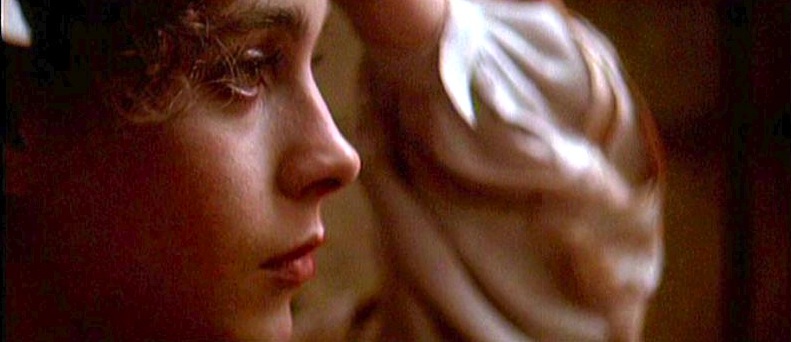
Flesh starts with Cushing returning to his lovely mansion with a gigantic prehistoric humanoid skeleton in tow and the need to win a big grant to keep exploring weighing on his mind. His virginal, locked-away daughter Penelope (Lorna Helibron) is excited to see him but of course Cushing's more excited to play with his big skeleton. For no real reason, he forbids her from looking in his laboratory or upstairs in her presumably-dead mommy's room or leaving the grounds, or doing frickin' anything. Turns out the mom recently died, in his half-brother Christopher Lee's asylum, but Cushing told Penelope she died when she was a baby, so as to not touch off her inherited madness, as if a whiff of scandal would awaken an Irina Dubrovna or Madeline Usher-style frenzy of murder and nymphomania. But his overprotective yet absentee fathering strategy merely brings it about all the more violently when it finally comes!

In his tearful flashback we see that, for all his patriarchal smothering, Cushing might have been right. His wife's descent into the nympho/schizo maelstrom is brilliantly rendered by director Freddie Francis as a splotch of Vaseline blurring a stack of teddy bears in the background in an otherwise clear bedroom shot. The blurry patch seems to grow larger and larger as the camera slowly zooms in on her, and there's grim echoes of Argento's Deep Red in her madness and coloring. Finally working up the nerve to invade mom's scarlet boudoir, Penelope's soon wandering the streets in mom's red dress, her hair wild, eyes alight and jaw clenched like she's on her first big coke high or really good acid. Her drug? Ancient Alien blood injected into her by Cushing to try and cure her of the madness which hasn't even yet manifested, like giving your kid electroshock therapy on the off chance they have mental problems later in life. Horrifying!
But this time, man is it worth it: as with most of the chaste wives and maidens of Hammer's vampire films, once she's 'turned', Penelope lets her hair down, tarts up her frock, and turns drop-dead gorgeous in her wild freedom from inhibitions. Seeing her crazy eyes as she goes running down the street after gashing a sailor with a broken bottle, her red dress like a gorgeous shimmering hallucination in the cobblestone puddles, may well be the highlight of my cinematic year!
Speaking of the 70s, I'd just caught Deep Red (1975) on El Rey earlier that evening, and was reeling from the idea that Argento's film was made just two years after Francis' film. One is like the post-Freud psychosexual shattered mirror reflection of the other's pre-hysteria. Each involves a paranoid schizophrenic mother's sins outing in the singing knife of the progeny, and the ultimate trauma of seeing your father killed on your birthday (in a truly bizarre flashback where the son is deliberately made to seem like an automaton of the sort one sees coming out of cuckoo clocks or Macy's Xmas windows). The epiphany of both is of course that 'we are the gods' own robots", thus subject to short-circuiting when presented with the unfathomable horror of our true ancestry. Is this not perhaps the root of our government's own fear of letting us know the full truth of our alien origins? All of human history would suddenly seem so naive, so outdated. We'd know the feeling of all those remote Polynesian islands where isolated natives are suddenly playing host to the American navy, dropping out of the sky in giant silver birds, landing on giant boats, and introducing them to canned peaches, radio dance music, and hard alcohol, then disappearing as suddenly as they came, never to return. The empty peach cans take on the totemic significance of the holy grail. or martyred saint's knucklebones kept under glass in a church rectory alcove. We would be forced to realize all our religious belief is just a more organized version of a uncharted Pacific island sky cult. Perhaps, in the end, it's better for our growth to not know these things - they tend to short circuit analog human development, the way it's hard to go back to the normal sober meditation after leaping ahead via mushrooms taken in conjunction with a light-sound machine and isolation tank.

But--to be fair-- Cushing's desire to protect his daughter from the truth is more than just his own projection, and it's also more than just a scientific awareness of the triggers that can activate latent paranoid schizophrenia-- it goes deep enough to connect them both, as if mental illness in women is indeed all men's faults. In Polanski's films of the same period, like Repulsion and Rosemary's Baby, people are genuinely paranoid and everyone really is out to get them - the line between the two is so blurred it's nonexistent.
The male of the species is, after all, ultimately an appendage. Woman's ovaries are the wellspring, connected directly to the divine. Man's member is merely the postman at the gates, dropping off a package and then racing back into irrelevance, He must high-five his buddies and pass out cigars to convince himself he's a key part in the birth process, like a guy who hits a slot machine jackpot trying to convince himself it took skill in how he pulled the handle. Perhaps it's only through such wool-pulled-over fictions that man can convince himself he 'took' something from woman (innocence, chastity), rather than vice versa (i.e. life essence).
There is only one way he can collaborate with woman and be the birth mother - via art. His feminine unconscious is the one who impregnates his fertile conscious imagination. He must figuratively unlock the foreboding attic and let Mrs. Rochester prowl the halls at night; he must unlock his sister from her coffin; his pen and ink left out on the coffee table, and his guitar tuned, like flowers luring bees with sweet perfumes. Keep her locked up, deny her the tools of expression, and you'll get mighty stung when her colony finally explodes from the floorboards.
This is basic Jungian 'anima' theory and applies equally well to film and ancient alien theory, whether in science fiction revamps of the Pygmalion myth about the creation (and then restriction) of artificial intelligence, or our own creation by a fussy dissatisfied (possible mechanized) God who still isn't pleased with us, his latest draft, so keeps us locked in a drawer while click-clacking out the DNA re-write of his next edition.
But mostly, the male-as-mother creation myth comes through as man trying to tame woman, to keep her docile and silent, resorting to the pulpy-but-true horrors of shock therapy, iron maidens, aerodynamic brassieres and other repressive devices to keep her hobbled if he fails.
If his repressive conscious projection scheme works, we don't hear about it; our illuminati masters smash the prince's found glass slipper in an 'accident' and then brainwash him into marrying into the 'right' family ("This is the girl"). For some of us, it's maybe just as well. Woman as a complete entity is hard for men to swallow in 'real life.' Only the Perseus mirror shield of fiction allows man to behold her true chthonic devouring gorgon nature, to confront his prehistoric-alien-insemination roots in ways he can't if he has to spend his time arguing with closed-minded skeptics. It's only through Jung's archetypal lexicon that we can grasp the truth that myth is "truer" than reality, that no amount of Jekyll tea-totaling denial can suppress the Hyde alcoholic; the glass slipper will automatically reset itself as sure as the carriage becomes a pumpkin at midnight. Either let the Hyde/madwoman out once in awhile or wind up in the lunatic asylum yourself, buried alive in a sterile post-modern tomb, furiously painting the same demonic face, with hungry ghost mouth agape, over and over. Ad rabidus infinitum.
And it will still be all her fault.

THE CREEPING FLESH
(1973) Dir. Freddie Francis
***1/2
 |
| actual photo (w/child) |
 |
| Cushing w/ Red Angel wife Emily (Catherine Finn) |

In his tearful flashback we see that, for all his patriarchal smothering, Cushing might have been right. His wife's descent into the nympho/schizo maelstrom is brilliantly rendered by director Freddie Francis as a splotch of Vaseline blurring a stack of teddy bears in the background in an otherwise clear bedroom shot. The blurry patch seems to grow larger and larger as the camera slowly zooms in on her, and there's grim echoes of Argento's Deep Red in her madness and coloring. Finally working up the nerve to invade mom's scarlet boudoir, Penelope's soon wandering the streets in mom's red dress, her hair wild, eyes alight and jaw clenched like she's on her first big coke high or really good acid. Her drug? Ancient Alien blood injected into her by Cushing to try and cure her of the madness which hasn't even yet manifested, like giving your kid electroshock therapy on the off chance they have mental problems later in life. Horrifying!
But this time, man is it worth it: as with most of the chaste wives and maidens of Hammer's vampire films, once she's 'turned', Penelope lets her hair down, tarts up her frock, and turns drop-dead gorgeous in her wild freedom from inhibitions. Seeing her crazy eyes as she goes running down the street after gashing a sailor with a broken bottle, her red dress like a gorgeous shimmering hallucination in the cobblestone puddles, may well be the highlight of my cinematic year!
 |
| Penelope (Lorna Helibron) after shooting up Nephilim blood |
Speaking of the 70s, I'd just caught Deep Red (1975) on El Rey earlier that evening, and was reeling from the idea that Argento's film was made just two years after Francis' film. One is like the post-Freud psychosexual shattered mirror reflection of the other's pre-hysteria. Each involves a paranoid schizophrenic mother's sins outing in the singing knife of the progeny, and the ultimate trauma of seeing your father killed on your birthday (in a truly bizarre flashback where the son is deliberately made to seem like an automaton of the sort one sees coming out of cuckoo clocks or Macy's Xmas windows). The epiphany of both is of course that 'we are the gods' own robots", thus subject to short-circuiting when presented with the unfathomable horror of our true ancestry. Is this not perhaps the root of our government's own fear of letting us know the full truth of our alien origins? All of human history would suddenly seem so naive, so outdated. We'd know the feeling of all those remote Polynesian islands where isolated natives are suddenly playing host to the American navy, dropping out of the sky in giant silver birds, landing on giant boats, and introducing them to canned peaches, radio dance music, and hard alcohol, then disappearing as suddenly as they came, never to return. The empty peach cans take on the totemic significance of the holy grail. or martyred saint's knucklebones kept under glass in a church rectory alcove. We would be forced to realize all our religious belief is just a more organized version of a uncharted Pacific island sky cult. Perhaps, in the end, it's better for our growth to not know these things - they tend to short circuit analog human development, the way it's hard to go back to the normal sober meditation after leaping ahead via mushrooms taken in conjunction with a light-sound machine and isolation tank.

For a contrast: If Weimar-era Germany was as repressed as England and Emil Jannings ran an insane asylum instead of working as an English professor, the ending of Blue Angel might have been very, very different. Dietrich's naughty Lola would be the one crowing then, after ze nice lobotomy!


Fussy, sterile, terminally hipster, and wearyingly inert, this story of a prototype AI named (what else?) Eva has been told better elsewhere, and I mean recently. There's the West-German Eva in Eva; there's Ava in The Machine from 2013 (which like Garland's film also has an earlier Asian model prototype--with the same punk haircut even); and the "Be Right Back" episode of Black Mirror features the same annoying ginger actor--Domhnall Gleeson---but as the robot instead of the 'human' he plays in Ex-Machina. Ugh. I liked The Machine but the rest can all go take an animatronic walk.
I mean, I get that the name is a futuristic riff on the name Eve, but jeeze, Garland, if you want to be intertextual, call her Pris.... or Ash... ley... and have her say "I want more life... fucker." In other words, don't rip off films made two years earlier that were even made in your same damned country, and if you must insist trawling the same old ground in the same old way, at least change the characters' names or get different actors!

There are original touches to be had in Ex-Machina but they're mostly dull and pretentious, unless you love-love-love uber-minimalist sterile boutique hotels. (Personally, I loathe them!) Most of the film's running time is spent in the company of awkward programmer ginger Caleb (Gleeson), an employee of a five minutes-into-the-future version of Google, selected to do some top secret tests at the house of his reclusive, burly, bald-but-bearded billionaire boss Nathan (the ubiquitous Oscar Isaac). Currently living in a big post-modern, sterile, TV-less, locked-down research mansion in the middle of the Norwegian fjords, visiting entails a helicopter ride with no easy point of exit from the endless Northern woods. With his sleek exercise equipment, fully-stocked bar, cadre of pleasure models and table full of experimental brains (but none of the equipment that would presumably go with them), Nathan is a bit like Dr. Coppelius from Tales of Hoffman crossed with Omni-publisher Bob Guccione if he hid out on an hipster Island of Lost Souls and had enough employees he could just fly over his choice of Mr. Parkers to try out his Lola the Panther Woman.
 Passive-aggressively bullying Caleb like a rat in a maze, Nathan challenges him to bully 'the woman' through an even smaller maze. With Eva, you see, Nathan thinks he's invented a genuine artificial intelligence, one that thinks for itself and works towards its own self-interest rather than merely following its creator's hack algorithms. Nathan wants Caleb to be the fresh meat that awakens her predatory lusts, the Parker.
Only in the female-male dichotomy--the Pygmalion/Trilby hybrid--does this Machina work, and even then it works anemically, especially compared to the exact same dichotomy in The Machine three years earlier. Give this "Eva" some Nephilim blood and set her loose into the Freddie Francis dawn rather than just rolling out a ribbon of trenchant faceless street corner reflection B-roll.
-----

EX-MACHINA
(2015) Dir. Alex Garland
**
Fussy, sterile, terminally hipster, and wearyingly inert, this story of a prototype AI named (what else?) Eva has been told better elsewhere, and I mean recently. There's the West-German Eva in Eva; there's Ava in The Machine from 2013 (which like Garland's film also has an earlier Asian model prototype--with the same punk haircut even); and the "Be Right Back" episode of Black Mirror features the same annoying ginger actor--Domhnall Gleeson---but as the robot instead of the 'human' he plays in Ex-Machina. Ugh. I liked The Machine but the rest can all go take an animatronic walk.
I mean, I get that the name is a futuristic riff on the name Eve, but jeeze, Garland, if you want to be intertextual, call her Pris.... or Ash... ley... and have her say "I want more life... fucker." In other words, don't rip off films made two years earlier that were even made in your same damned country, and if you must insist trawling the same old ground in the same old way, at least change the characters' names or get different actors!

Hey, it might have worked but unfortunately for us all, he picks super awkward programmer Caleb, who could handle the project a dozen better ways than his rote nerd bag of smarmy tics and poses, all no doubt gleaned by Garland from tech-noir coffee shop eavesdropping. As Ava, Swedish model-actress Alicia Vikander is beautiful and properly inexpressive, but that whole granny dress crew cut, petit Williamsburg hipster thing she rocks leaves me even colder than boutique hotels, smarmy passive aggressive gingers, and gym-muscled, nose-breathing bald CEOS pretending to be tech geniuses.
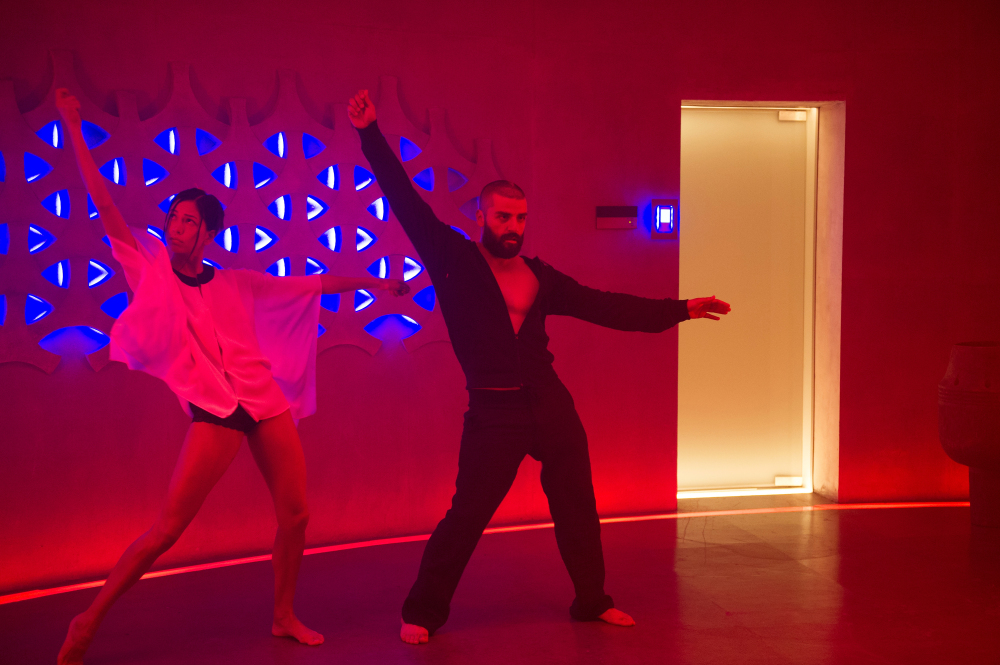
In interviews, writer-director Garland says that he wanted to convey how Nathan considers himself just a tool through which evolution and art coincide, but this idea of a superior man supplanting mankind with his own creation isn't as clearly or cleverly illustrated as Garland seems to think. Instead, filmed in a beautiful but depressingly posh designer Nordic scenery hotel, where every room is either locked or openable with a pass card (which can in an instant to trap you wherever your are), with no TV or stereo, it's too hung up on bourgeois minimalist surface to posit any question other than: when will this joyless, airless, suffocating, isolating, infuriating experience end?
To me, boutique hotels work only for COMD majors who enjoy having their personal comforts stripped to nonexistence by some post-modern minimalist interior decorator for $500 a night. For a would-be lodger with no love of "forms" over function it's like that overpriced spa where they expect you to relax and let it all hang in their high-tech chill-out environment out but sneer at you if your toenail accidentally scratches their glazed concrete floor.. When I'm in a boutique hotel, I feel like I'm sleeping in the middle of an overpriced posh shop, I imagine some unseen hotelier adding up my every breath of oxygenated air via remote sensors, all while rolling his eyes over my every uncool micro-gesture, lamenting how I'm not blending with the ambience, how plebeian of me that I'm not relaxing as fully as the designer intended. How can I relax in a room where I'm sleeping next to an array of candies and drinks that I can't touch unless I want to feel guilty and humiliated by paying $40 for a goddamned airplane bottle or $10 for a Snickers bar the next day at check-out?
Fuck those places, and fuck those small town bed and breakfasts too, where some gaseous old lady scolds you if you're not in bed by midnight and freaks out if you wear your shoes on her moldy antique carpet?
So... anyway, this wearingly austere locale is where we learn (slowly) that AI testing is apparently common in this near future, to the point that testing AIs is a whole craft unto itself (apparently we've come a long way since Voight-Kampff). Caleb therefore comes armed with a buttload of tiresome textbook questions, and won't even try to drink beer like a normal person (at first), or ask to borrow a pleasure model (at first). Naturally ere long we hate Caleb for being so uncool, and we hate Nathan for choosing him, apparently for no real reason other than apparently insecurity, making himself so much less dorky by comparison with this dweeby smarm merchant. The only good wrinkle with Caleb is a moment where he can't even tell if he's real (whatever that means) or artificial, which recalls a great, hilarious bit I'm sure Garland cribbed from Phillip K. Dick's Do Androids Dream of Electric Sheep (but Scott left out of Blade Runner).
The nicest thing I can say about Nathan is that he likes to get hammered but if you're just drinking with robots, ain't that drinking alone? That's kind of pathetic, bro, and I say this as someone who considers W.C. Fields or Nick Charles a legitimate person to drink with. Then again, even preserved in amber liquid and film stock, Fields and Charles are more alive on my stoner 1995 living room VCR than the preservative-based characters of Ex Machina within their own diegetic reality.
Or is it all a metaphor for a closed-off, ever-shrinking sense of public space, the death of the non-digital? Not with a bang or even a whimper but silent.... silent.... goes the world.
To me, boutique hotels work only for COMD majors who enjoy having their personal comforts stripped to nonexistence by some post-modern minimalist interior decorator for $500 a night. For a would-be lodger with no love of "forms" over function it's like that overpriced spa where they expect you to relax and let it all hang in their high-tech chill-out environment out but sneer at you if your toenail accidentally scratches their glazed concrete floor.. When I'm in a boutique hotel, I feel like I'm sleeping in the middle of an overpriced posh shop, I imagine some unseen hotelier adding up my every breath of oxygenated air via remote sensors, all while rolling his eyes over my every uncool micro-gesture, lamenting how I'm not blending with the ambience, how plebeian of me that I'm not relaxing as fully as the designer intended. How can I relax in a room where I'm sleeping next to an array of candies and drinks that I can't touch unless I want to feel guilty and humiliated by paying $40 for a goddamned airplane bottle or $10 for a Snickers bar the next day at check-out?
Fuck those places, and fuck those small town bed and breakfasts too, where some gaseous old lady scolds you if you're not in bed by midnight and freaks out if you wear your shoes on her moldy antique carpet?
So... anyway, this wearingly austere locale is where we learn (slowly) that AI testing is apparently common in this near future, to the point that testing AIs is a whole craft unto itself (apparently we've come a long way since Voight-Kampff). Caleb therefore comes armed with a buttload of tiresome textbook questions, and won't even try to drink beer like a normal person (at first), or ask to borrow a pleasure model (at first). Naturally ere long we hate Caleb for being so uncool, and we hate Nathan for choosing him, apparently for no real reason other than apparently insecurity, making himself so much less dorky by comparison with this dweeby smarm merchant. The only good wrinkle with Caleb is a moment where he can't even tell if he's real (whatever that means) or artificial, which recalls a great, hilarious bit I'm sure Garland cribbed from Phillip K. Dick's Do Androids Dream of Electric Sheep (but Scott left out of Blade Runner).
The nicest thing I can say about Nathan is that he likes to get hammered but if you're just drinking with robots, ain't that drinking alone? That's kind of pathetic, bro, and I say this as someone who considers W.C. Fields or Nick Charles a legitimate person to drink with. Then again, even preserved in amber liquid and film stock, Fields and Charles are more alive on my stoner 1995 living room VCR than the preservative-based characters of Ex Machina within their own diegetic reality.
Or is it all a metaphor for a closed-off, ever-shrinking sense of public space, the death of the non-digital? Not with a bang or even a whimper but silent.... silent.... goes the world.
It was only a moment for you. You took no notice?
Or is it just an example of a self-isolated rich and privileged over-praised auteur whose lack of contact with the real world has cut him off from knowing that his great 'fresh' ideas are already done a dozen times over (and no assistant ballsy enough to tell him). Is Garland someone who--like latter-day Malick or Kubrick--maybe got called a genius once too often and so stopped listening to the heartbeat of the world and presumed the world would just listen to his, irregardless of if it was beating last year's tune? Maybe, too in love with peace and quiet of boutique hotels in the middle of nowhere, too far away from contemporary cinema to stay relevant, even a talented writer is unable to realize his brain's 'new idea' is just a dimly received satellite signal from Netflix?

To belabor that last point: watching this film I was reminded of the first time I saw Kubrick's Full Metal Jacket the day it opened at a local Syracuse theater. My friends and I were thinking we were in for some real genius of the sock-blowing-out-of order, but we came out thinking Kubrick's legendary production slowness had resulted in him being about five years behind the curve. A Vietnam pop culture inhumanity satire choked up with jingoistic jargon, ridiculous pop songs ("The bird is the word") and doublespeak (M.O.U.S.E) had been done and re-done by that point. The only thing left that was new was perhaps the kind of self-aware misogyny where a man must size up and conquer/understand/destroy/mate with - an alien/unknown wild woman (the VC sniper, a robot, a madwoman), which is pure myth, rather than a style, so will never age.
That mythic duality--the unknowability of the feminine, and the inescapable objectification that often goes with copulation-- is all that's fresh in Ex Machina. It presumes it's asking tough questions about the future of artificial intelligence and what constitutes 'free thinking' but it the result feels like watching Hardcore Zen 'master' Brad Warner passive-aggressively bitch out a Starbucks barista. More drive-in friendly films like Android, Creation of the Humanoids, The Machine, Demon Seed, Terminator: Salvation, and The Matrix, might be gonzo nuts, but they go all the way around the track nuts--like a crazy hopped-up mechanical hare--before jumping the track, crashing into the dog race bleachers and bursting into flames. That's an AI film I'll give my steel pot to any day. Garland's film instead plods inexorably forward like a jewel-covered Huysmans tortoise --sure, it's pretty in the ambient light but only going 1/20 the speed of its less weighty competitors within the same slot of time. That's fine if you want to hang back and tune in to the nowness - but who wants to do that around smarmy hipsters like Caleb and Nathan?
Or is it just an example of a self-isolated rich and privileged over-praised auteur whose lack of contact with the real world has cut him off from knowing that his great 'fresh' ideas are already done a dozen times over (and no assistant ballsy enough to tell him). Is Garland someone who--like latter-day Malick or Kubrick--maybe got called a genius once too often and so stopped listening to the heartbeat of the world and presumed the world would just listen to his, irregardless of if it was beating last year's tune? Maybe, too in love with peace and quiet of boutique hotels in the middle of nowhere, too far away from contemporary cinema to stay relevant, even a talented writer is unable to realize his brain's 'new idea' is just a dimly received satellite signal from Netflix?

To belabor that last point: watching this film I was reminded of the first time I saw Kubrick's Full Metal Jacket the day it opened at a local Syracuse theater. My friends and I were thinking we were in for some real genius of the sock-blowing-out-of order, but we came out thinking Kubrick's legendary production slowness had resulted in him being about five years behind the curve. A Vietnam pop culture inhumanity satire choked up with jingoistic jargon, ridiculous pop songs ("The bird is the word") and doublespeak (M.O.U.S.E) had been done and re-done by that point. The only thing left that was new was perhaps the kind of self-aware misogyny where a man must size up and conquer/understand/destroy/mate with - an alien/unknown wild woman (the VC sniper, a robot, a madwoman), which is pure myth, rather than a style, so will never age.
That mythic duality--the unknowability of the feminine, and the inescapable objectification that often goes with copulation-- is all that's fresh in Ex Machina. It presumes it's asking tough questions about the future of artificial intelligence and what constitutes 'free thinking' but it the result feels like watching Hardcore Zen 'master' Brad Warner passive-aggressively bitch out a Starbucks barista. More drive-in friendly films like Android, Creation of the Humanoids, The Machine, Demon Seed, Terminator: Salvation, and The Matrix, might be gonzo nuts, but they go all the way around the track nuts--like a crazy hopped-up mechanical hare--before jumping the track, crashing into the dog race bleachers and bursting into flames. That's an AI film I'll give my steel pot to any day. Garland's film instead plods inexorably forward like a jewel-covered Huysmans tortoise --sure, it's pretty in the ambient light but only going 1/20 the speed of its less weighty competitors within the same slot of time. That's fine if you want to hang back and tune in to the nowness - but who wants to do that around smarmy hipsters like Caleb and Nathan?
Only in the female-male dichotomy--the Pygmalion/Trilby hybrid--does this Machina work, and even then it works anemically, especially compared to the exact same dichotomy in The Machine three years earlier. Give this "Eva" some Nephilim blood and set her loose into the Freddie Francis dawn rather than just rolling out a ribbon of trenchant faceless street corner reflection B-roll.
And if those vaginal dentatas should castrate you, well, at least you did something to deserve it. And at least she had to touch it first, right buddy?
If you did it to yourself, you might go blind, and miss all those views....
If you did it to yourself, you might go blind, and miss all those views....
 |
| For those who like their reptile houses without reptiles, and their airless tombs without any cable TV. |