

Maybe it's an age thing (I've never been this old before; I don't recommend it) but as I careen inexorably towards my half-century mile marker I'm blessed with a progressively terrible memory, a growing roster of nostalgic touchstones, and a love of old black and white mysteries. Mix 'em together and you have my #1 super power: I can watch old mystery movies over and over, forgetting 'who done it' almost before the credits roll, allowing for cycling through my entire collection every year with no loss of enjoyment. The number of titles I accrue further help me forget each one. I love mysteries where we don't know anything the detective doesn't, because I'd rather the detective be a few steps ahead of me so I don't groan with annoyance and impatience as he once again flubs an obvious clue. His sons may spazz out in eternal befuddled flummox, but Charlie Chan sees right through every ruse, so I can relax my angst when he's on the scene. The idiotic police chiefs of films based on Mignon G. Eberhart novels, though... hmmm.
And so, my mystery/old dark house binge starts with either The Black Camel or Charlie Chan in Egypt, two beautiful early 30s pics free of #1 or #2 comic relief sons, and laden with great art design and--in Egypt's case--my dream doorway divide (if I can ever afford an interior designer, this is the room entrance I want, left). And then I work my way down....
 First up on this list: three films from 1935 I got over Xmas on DVD-Rs from the WB Archive.
The first year when the code was all the way slammed down on freedom of expression in Hollywood, 1935 found a relatively chaste alternative in a configuration of hands coming out of walls, trapdoors, tossed knives, secret panels, wise guy reporters, murky red herring line-ups, windswept dark mansions, dimwit cops, and bits of string, stray buttons, and ingenious gas capsule killing devices. As long as the murderer was punished or caught at the end, the censors seem to say, go for it. They knew a built-in audience of mystery buffs already existed, well-versed, in the popularity of novels, old radio shows, pulp magazines and something 'The Clue Club.'
What I like about them, I think, is that they open--usually--with a very dislikable person getting murdered. We seem them being mean to as many people as possible but it doesn't phase us because we know this is the last few hours of this chump's life and every little detail might hold a key clue. Their death allows the young lovers to finally marry, the one decent girl in the family to inherit the millions, and the butler to be free of his master's indifference. And since there's absolutely no bearing to my own life, I don't feel disagreeable angst or collective guilt, or trauma (as I might watching something like ripped from today's headlines like Law and Order). When you're as sensitive as Roderick Usher, it helps your nerves to see the bad guy die in the library with the candlestick, and and to forget who dunnit as soon as the credits roll, and thus be able to bask in the proxy glow created by the evil one's sacrificial death anew with each passing solstice.
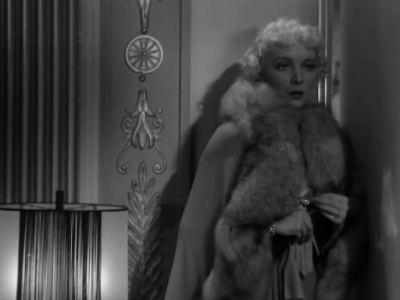
 As a strange but very cool mix of Ms. Haversham and Hildegaarde Withers, Constance Collier plays the reclusive wealthy aunt of Ricardo Cortez's silken voice talent agent. She's a recluse who built a movie theater in her attic and dresses all in black, like a rich dowager version of... me, or probably 60% of hardcore old dark house/mystery fans. She goes into action when nephew Cortez is fingered for the murder. Virginia Bruce is the girl he loves who Collier first thinks did it. Stepping out on the town, acting drunker than she is to set traps, she lures the killer to her mansion on a dark and stormy night so there can be an expressionistic shadowy chase through the back alleys and under-construction townhouses next door (allowing for a very cool collapsing staircase effect), Collier makes a grand heroine and it's too bad she didn't get her own series. Best, her actions are all hinged by a fine moral twilight, unusual for the post-code, quasi-fascist tone of the time: does she approve of her nephew or not, is she only joking or half-joking or serious? He certainly revels in her dubious affection, and they have a great rapport, a mix of loving indulgence, and constant witty jabs and parries, but it could just be she genuinely mistrusts him.
 And who doesn't? With his pencil thin mustache, droopy eyes, slick hair and silk shirt voice, Cortez is one of the great unsung character actors of the pre-code era. A fusion of Cesar Romero and Warren William, he's truly uncanny in that he can't be pigeonholed. His line readings always seem insincere and sincere at the same time. In other words, he's perfect as the enigmatic alleged good guy suspect who still might turn out to have done it.
For example, when he first jokes with the cops about having killed his sleazy rival it registers as very bad taste and unfunny --are we supposed to laugh or get a skeeve in our blood? Was Nicholas Ray thinking of this when Bogie did the same thing in In a Lonely Place? By contrast, the reasoning behind Virginia Bruce's grouchy impulsive decision to marry the sleazy abusive alcoholic filthy rich Haworth's (Bradley Page) Huensecker-meets-Stage Door Adolphe Menjou, is poorly etched out. Is she just hungover and vindictive, latching onto a guy with a terrible rep for beating up women out of a creepy almost Batailles (1) kind of masochism? Or is it just to really stick the knife in Cortez and twist it, making Cortez the Von Sternbergian masochist? Edward Brophy (Morelli from The Thin Man) is the cop, and he's smart and good-humored for a change, which--as a bit part actor usually regulated to dumb thugs--he clearly appreciates. Isabell Jewell is another girl in the case; Regis Toomey is he PR guy who fills in the missing story threads. Ivan Simpson is a butler good at keeping his mouth shut. Seitz makes sure the velvet ripples and purrs and there's no buzzkill fiancee in sight even if it is the product of MGM.
 THE WHITE COCKATOO

Despite the great gloomy windswept atmosphere I'm actually not a big fan of this one, partially due to my intense dislike of curly haired men with loud accents, and partially because I'd rather have a hero who doesn't lag reels behind the curve while heroines are endangered by networks of Wilkie Collins-esque villainy --it's too upsetting to my delicate constitution. Even worse is when said heroine lets him go to jail rather than supply his alibi just so they don't find out he was in her room after dark, not that they'd care in France, you ridiculous uptight stupid American! Luckily Muir's pale innocence is a feast for the eyes and there's Warner Brothers stock regular Ruth Donnelly as --what else?-- a persnickety tourist.

It's another dark and stormy night and a flock of greedy sinister spoiled relatives are clustering around an ill and aging banker at his gloomy mansion, waiting to get their chance to talk to him and prove they're worthy of --presumably--inheritance consideration. But then he gets a telegram from his absentee son--or one of them--and collapses while clutching a figure of an elephant! Mystery! Aline MacMahon--looking dowdy as hell (was she possibly pregnant, or padded?)--is the nurse sent to care for him round-the-clock, and --hopefully--to keep him from getting killed or bothered by nervous relatives eager to be seen by him as 'caring' the moment he wakes up.
That night there's another shot in the dark: Bang Bang! The elephant is dropped by the side of different dead man! Wasn't there a movie like this called... Miss Pinkerton? Mystery!
 There's only two pros: atmosphere, McMahon. Now the conns: Guy Kibbee's idiot homicide detective all but drools on himself and deputy Allen Jenkins shouts in people's faces so loudly he makes the Ritz Brothers seem like James Mason. I always wonder about actors who shout every line they speak. Did they get drunk and forget they're not in a play? It's alarming and--in this case--undoes the careful attention to atmosphere clearly paid by the art directors. It's hard to say whether the writer and director are just incompetent or think their audience are nothing but slack-jawed, slightly deaf hicks.
While you decide --everyone is to remain in the house until Kibbee can get to the bottom of this! Someone else screams in another room--so Kibee lopes and/or ambles in the direction of screams, allowing for evidence to be stolen, butlers to be murdered, nurses to be locked in secret passages, and killers to have plenty of room to scram back to their starting points long before the cops finally make it whatever corner of the mansion the scream and/or thump came from. While Jenkins all but shouts at a bookcase and tries to handcuff a coatrack, Aline is told to hold onto all the accumulated evidence like she's sneaking snacks into the movies for a birthday party of ten screaming snot-nosed brats. That ceramic elephant is placed in her hands a dozen times, allowing for c-c-c-creepy scenes of hands reaching out for it from behind a curtain to snatch it back while she looks everywhere but behind her. Meanwhile, a dog stays chained up in front of the house in the pouring rain, not even a house to stay dry in, all but begging for ASPCA rescue,
 The DV-R is handsome, and fans of these things won't mind the constant film pocks and damage (no visible splices) in order to get a clean image that brings out the old dark house atmosphere very nicely. The plot advances through the haphazard dumping of a plethora of suspects and clues through our porous laps, which we presume (this being an entry in Warner's "Clue Club" mystery series, whatever that means) we're supposed to be keeping straight in our heads, even though the cops sure don't. While the heirs tumble through routine cycles of evidence planting, red herring reversal, and petty squabbling, it becomes harder and harder to give a shit. Let that damn dog come inside!
If you can get past these elements, a tall order I know, the good-natured zingers that nurse Aline lobs constantly at Kibbee are pretty cute and, while a far cry from James Gleeson and Edna May Oliver in the Hildegarde Withers movies (on whom they're probably based), they show some potential. Based on yet another Mignon Eberhart novel, it tries to cram too many novelistic details into the fairly short running time and can barely make a single one land, but in general it's atmospheric, wry, and innocuous enough I can see folding it into my old dark house / mystery phase repertoire once I've run through the A-listers and gotten over the bad taste in my mouth about that dog.
If you're the weird type who resonates to the 1930s craze for rattling of sheet metal thunder, and old dark staircases, secret panels, shady lawyers and master sleuths (why else would you have read this if you weren't?) fold it in, brother, sister, fold it. Just don't fold it too often, or while hungover, for its stock is not sturdy.
The Vitaphone stock suspects include Lyle Talbot, Robert Barrat, Patricia Ellis (as the one good girl), Brandon Hurst as the butler with a rap sheet, and so forth.

 Caught here in the midst of a red herring butler/handyman era of his career by this point in his career (not unlike Patton's Pais de Calais phase), Lugosi was usually relegated to an occasional enigmatic glower, but for The Gorilla he also gets to thoroughly terrify Anita Louise with his coat (weirdly foreshadowing 1941's Invisible Ghost), and the camera lingers mightily whenever he's around, sensing a party might break out around him at any moment. It's a lingering Bela takes advantage of in order to make this one of his best bits of butlering - happily making the most of lines like "what a pity," when Patsy announces one of the brothers have disappeared. Atwill also relishes his chance to freak out about the impending stroke of midnight, and Anita Louise is as cute as ever, even with that unflattering war-era bob, her mistrust of Bela (how dare she!?) and typically forgettable fiancee.
Try to get the OOP Roan disc as it looks pretty great and has NABONGA! on side two --an old late night laugh favorite of mine when I taped it off Matinee at the Bijou - it's got Buster Krabbe being cockblocked by, I think, the same gorilla, in his attempt to woo castaway white goddess Julie London. Copious scenes of Buster rolling around in the direction of old Tarzan and Clyde Beatty stock footage has dated less well. Let's end imperialist aggression towards innocent croc and lion footage... tomorrow!

 BULLDOG JACK
 Luckily Fay Wray--seldom sexier--is light years beyond such trite familial nonsense and Bulldog himself isn't even in the film, instead there's the Leno-chinned Jack Hulburt, who dares to pose as his wounded friend and help her to rescue (a common thread in the Drummond movies) her kidnapped, tortured father. Thanks to the mighty Wray, and the atmospheric photography (lots of fog-enshrouded streets and tunnels), deft pacing (it all takes place in one wild night), and robust British 'chin-into-the-wind' stalwartness, this an edge-of-your seat but hilarious thriller all the way.
Ralph Richardson really lets loose as the florid villain (he played Drummond in an earlier very atypical entry that weirdly advocated quasi-fascism). His sewer lair includes trap doors and secret panels and there's an extended chase climax racing down the winding stairs of a closed Metro station, leading up into a dark elaborately statue and relic-filled British Museum (top)--allowing for much sneaking and relic smashing and boomerang tossing--and then onto an out of control speeding train finale. There was a gorgeous version up on Netflix streaming for awhile. Now... who knows? Nothing lasts forever --except Britannia, so we may as well hail the shit out of it.
NOTES:
"What does physical eroticism signify if not a violation of the very being of its practitioners? — a violation bordering on death, bordering on murder?" - Batailles, Eroticism
More Dark Capsules:
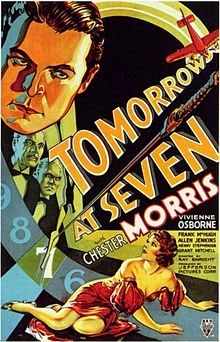
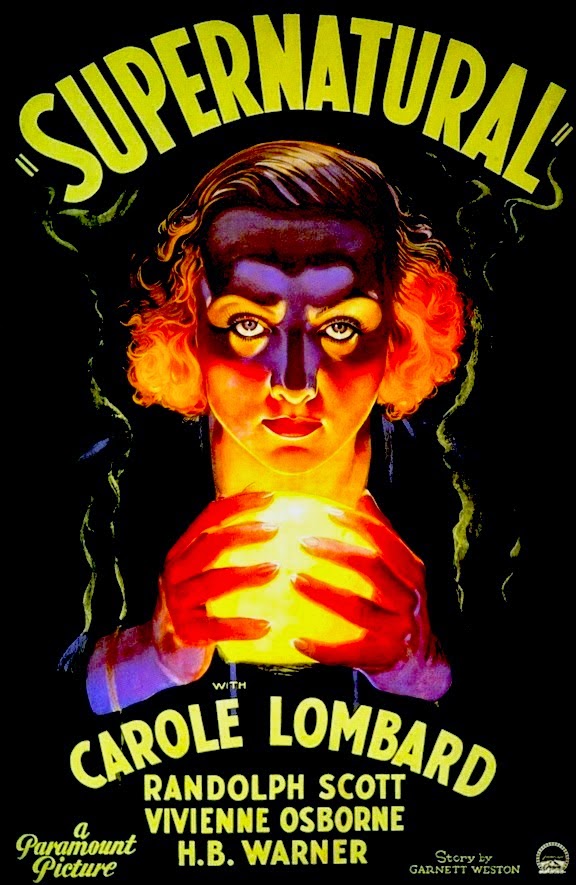
Grave Diggers of 1933: THE INTRUDER, SECRET OF THE BLUE ROOM, BEFORE DAWN, TOMORROW AT SEVEN, SUPERNATURAL
And so, my mystery/old dark house binge starts with either The Black Camel or Charlie Chan in Egypt, two beautiful early 30s pics free of #1 or #2 comic relief sons, and laden with great art design and--in Egypt's case--my dream doorway divide (if I can ever afford an interior designer, this is the room entrance I want, left). And then I work my way down....

The first year when the code was all the way slammed down on freedom of expression in Hollywood, 1935 found a relatively chaste alternative in a configuration of hands coming out of walls, trapdoors, tossed knives, secret panels, wise guy reporters, murky red herring line-ups, windswept dark mansions, dimwit cops, and bits of string, stray buttons, and ingenious gas capsule killing devices. As long as the murderer was punished or caught at the end, the censors seem to say, go for it. They knew a built-in audience of mystery buffs already existed, well-versed, in the popularity of novels, old radio shows, pulp magazines and something 'The Clue Club.'
What I like about them, I think, is that they open--usually--with a very dislikable person getting murdered. We seem them being mean to as many people as possible but it doesn't phase us because we know this is the last few hours of this chump's life and every little detail might hold a key clue. Their death allows the young lovers to finally marry, the one decent girl in the family to inherit the millions, and the butler to be free of his master's indifference. And since there's absolutely no bearing to my own life, I don't feel disagreeable angst or collective guilt, or trauma (as I might watching something like ripped from today's headlines like Law and Order). When you're as sensitive as Roderick Usher, it helps your nerves to see the bad guy die in the library with the candlestick, and and to forget who dunnit as soon as the credits roll, and thus be able to bask in the proxy glow created by the evil one's sacrificial death anew with each passing solstice.

SHADOW OF DOUBT
(1935) Dir. George B. Seitz
***
A kind of silver and velvet (and lovely lighting) post-code preparation for film noir, SHADOW (not to be confused with the 1943 Hitchcock movie, Shadow of a Doubt) is a spritely affair concerns murder mystery police procedural aspects, NYC's upper crust, nightclubs, press passes, Broadway revues, and gangster hobnobbing, punctuated by the occasional trip to the office or the rich dowager aunt's to borrow against the trust (in order to pay off gambling debts or a blackmailer). It's all set to a weird floating acting style that involves actors hesitantly remembering their lines through thick hungover atmosphere, quietly, as if mindful of guests asleep on the couch. As in mysteries solved by Perry Mason or Philo Vance, herein the murder victim is an odious wastrel, so everybody wins --only the guilty party goes to jail (instead of getting a medal), the moral of the story being, don't bother killing your blackmailer --sooner or later someone else will do it for you. As a strange but very cool mix of Ms. Haversham and Hildegaarde Withers, Constance Collier plays the reclusive wealthy aunt of Ricardo Cortez's silken voice talent agent. She's a recluse who built a movie theater in her attic and dresses all in black, like a rich dowager version of... me, or probably 60% of hardcore old dark house/mystery fans. She goes into action when nephew Cortez is fingered for the murder. Virginia Bruce is the girl he loves who Collier first thinks did it. Stepping out on the town, acting drunker than she is to set traps, she lures the killer to her mansion on a dark and stormy night so there can be an expressionistic shadowy chase through the back alleys and under-construction townhouses next door (allowing for a very cool collapsing staircase effect), Collier makes a grand heroine and it's too bad she didn't get her own series. Best, her actions are all hinged by a fine moral twilight, unusual for the post-code, quasi-fascist tone of the time: does she approve of her nephew or not, is she only joking or half-joking or serious? He certainly revels in her dubious affection, and they have a great rapport, a mix of loving indulgence, and constant witty jabs and parries, but it could just be she genuinely mistrusts him.
 And who doesn't? With his pencil thin mustache, droopy eyes, slick hair and silk shirt voice, Cortez is one of the great unsung character actors of the pre-code era. A fusion of Cesar Romero and Warren William, he's truly uncanny in that he can't be pigeonholed. His line readings always seem insincere and sincere at the same time. In other words, he's perfect as the enigmatic alleged good guy suspect who still might turn out to have done it.
For example, when he first jokes with the cops about having killed his sleazy rival it registers as very bad taste and unfunny --are we supposed to laugh or get a skeeve in our blood? Was Nicholas Ray thinking of this when Bogie did the same thing in In a Lonely Place? By contrast, the reasoning behind Virginia Bruce's grouchy impulsive decision to marry the sleazy abusive alcoholic filthy rich Haworth's (Bradley Page) Huensecker-meets-Stage Door Adolphe Menjou, is poorly etched out. Is she just hungover and vindictive, latching onto a guy with a terrible rep for beating up women out of a creepy almost Batailles (1) kind of masochism? Or is it just to really stick the knife in Cortez and twist it, making Cortez the Von Sternbergian masochist? Edward Brophy (Morelli from The Thin Man) is the cop, and he's smart and good-humored for a change, which--as a bit part actor usually regulated to dumb thugs--he clearly appreciates. Isabell Jewell is another girl in the case; Regis Toomey is he PR guy who fills in the missing story threads. Ivan Simpson is a butler good at keeping his mouth shut. Seitz makes sure the velvet ripples and purrs and there's no buzzkill fiancee in sight even if it is the product of MGM.

(1935) Dir Alan Crosland
**1/2
Based on a novel by mystery writin' dame Mignon G. Eberhart, this plays like a chapter serial mystery story, or even Tarantino's recent Hateful Eight, set at a windy hotel along the French coast (in the off-season) full of weird statues and secrets (and the titular cock), and no one is who they claim to be, and everyone is scheming to commit some nefarious inheritance fraud or prevent one. A bit like a 1930s predecessor to Donen's Charade, millions are at stake, and charm is no guarantee of identity or moral compass. The hotelier's pet white cockatoo squawks, the local gendarmes repeatedly accuse or arrest the wrong person, the coastal winds howl and lash, murderers get away in the whispering fields, Ricardo Cortez and Jean Muir fall in love, suspect each other of murder, and/or withhold truths for the lamest of reasons, the cops arrest just about everyone at one time or another.
Despite the great gloomy windswept atmosphere I'm actually not a big fan of this one, partially due to my intense dislike of curly haired men with loud accents, and partially because I'd rather have a hero who doesn't lag reels behind the curve while heroines are endangered by networks of Wilkie Collins-esque villainy --it's too upsetting to my delicate constitution. Even worse is when said heroine lets him go to jail rather than supply his alibi just so they don't find out he was in her room after dark, not that they'd care in France, you ridiculous uptight stupid American! Luckily Muir's pale innocence is a feast for the eyes and there's Warner Brothers stock regular Ruth Donnelly as --what else?-- a persnickety tourist.

WHILE THE PATIENT SLEPT
(1935) Dir. Ray Enright
**1/8
It's another dark and stormy night and a flock of greedy sinister spoiled relatives are clustering around an ill and aging banker at his gloomy mansion, waiting to get their chance to talk to him and prove they're worthy of --presumably--inheritance consideration. But then he gets a telegram from his absentee son--or one of them--and collapses while clutching a figure of an elephant! Mystery! Aline MacMahon--looking dowdy as hell (was she possibly pregnant, or padded?)--is the nurse sent to care for him round-the-clock, and --hopefully--to keep him from getting killed or bothered by nervous relatives eager to be seen by him as 'caring' the moment he wakes up.
That night there's another shot in the dark: Bang Bang! The elephant is dropped by the side of different dead man! Wasn't there a movie like this called... Miss Pinkerton? Mystery!

While you decide --everyone is to remain in the house until Kibbee can get to the bottom of this! Someone else screams in another room--so Kibee lopes and/or ambles in the direction of screams, allowing for evidence to be stolen, butlers to be murdered, nurses to be locked in secret passages, and killers to have plenty of room to scram back to their starting points long before the cops finally make it whatever corner of the mansion the scream and/or thump came from. While Jenkins all but shouts at a bookcase and tries to handcuff a coatrack, Aline is told to hold onto all the accumulated evidence like she's sneaking snacks into the movies for a birthday party of ten screaming snot-nosed brats. That ceramic elephant is placed in her hands a dozen times, allowing for c-c-c-creepy scenes of hands reaching out for it from behind a curtain to snatch it back while she looks everywhere but behind her. Meanwhile, a dog stays chained up in front of the house in the pouring rain, not even a house to stay dry in, all but begging for ASPCA rescue,
 The DV-R is handsome, and fans of these things won't mind the constant film pocks and damage (no visible splices) in order to get a clean image that brings out the old dark house atmosphere very nicely. The plot advances through the haphazard dumping of a plethora of suspects and clues through our porous laps, which we presume (this being an entry in Warner's "Clue Club" mystery series, whatever that means) we're supposed to be keeping straight in our heads, even though the cops sure don't. While the heirs tumble through routine cycles of evidence planting, red herring reversal, and petty squabbling, it becomes harder and harder to give a shit. Let that damn dog come inside!
If you can get past these elements, a tall order I know, the good-natured zingers that nurse Aline lobs constantly at Kibbee are pretty cute and, while a far cry from James Gleeson and Edna May Oliver in the Hildegarde Withers movies (on whom they're probably based), they show some potential. Based on yet another Mignon Eberhart novel, it tries to cram too many novelistic details into the fairly short running time and can barely make a single one land, but in general it's atmospheric, wry, and innocuous enough I can see folding it into my old dark house / mystery phase repertoire once I've run through the A-listers and gotten over the bad taste in my mouth about that dog.
If you're the weird type who resonates to the 1930s craze for rattling of sheet metal thunder, and old dark staircases, secret panels, shady lawyers and master sleuths (why else would you have read this if you weren't?) fold it in, brother, sister, fold it. Just don't fold it too often, or while hungover, for its stock is not sturdy.
The Vitaphone stock suspects include Lyle Talbot, Robert Barrat, Patricia Ellis (as the one good girl), Brandon Hurst as the butler with a rap sheet, and so forth.

THE GORILLA
(1939) Dir. Allan Dwan
***
It's built presumably as a comedy, so in this old dark house there's Patsy Kelly, howling loud enough for the cheap seats as a scared maid, and the Ritz Brothers (Brooklyn-born triplets) oscillating nervous escalating panic like a w-w-w-wave as detectives. Though each are pros at what they do, and the Ritzes do have a uniquely manic nervousness, like one freaked-out organism with six hands and legs --they lack, say, Bob Hope's or Wally Ford's eventual romantic centeredness, or Abbot and Costello's, the Three Stooges, or the Dead End Kid's 'conk on the head'-style moxy to counter their broadside hysteria. But hey, the 'straight' side of it all is loaded for bear: Bela Lugosi, in unusually 'rare' form as an "armed" butler; Lionel Atwill, the industrialist threatened with the old murder at the stroke of midnight; the ever-gamin Anita Louise as "the prodigal niece"; and Joseph Calleia (!) showing up halfway through the film before disappearing promptly into a secret panel and only emerging once in awhile to punch out a Ritz (but never enough of them). Add dark shadowy lighting and constant thunder, the creeping hairy arm of an escaped gorilla/or disguised killer, and the all-in-a-single-night time frame allowing for good, steady fun (what I refer to as tick-tock momentum). If you could clip 75% of the Ritz shenanigans (they're so stupid they could be looking at a quarter on the floor then blink and wonder where it went, even though it's still th-th-there) and 80% of Patsy Kelly's broad shrill business, there might be a damn good old dark house mystery rolling merrily along between the Cat and the Canary pinball bumpers. Caught here in the midst of a red herring butler/handyman era of his career by this point in his career (not unlike Patton's Pais de Calais phase), Lugosi was usually relegated to an occasional enigmatic glower, but for The Gorilla he also gets to thoroughly terrify Anita Louise with his coat (weirdly foreshadowing 1941's Invisible Ghost), and the camera lingers mightily whenever he's around, sensing a party might break out around him at any moment. It's a lingering Bela takes advantage of in order to make this one of his best bits of butlering - happily making the most of lines like "what a pity," when Patsy announces one of the brothers have disappeared. Atwill also relishes his chance to freak out about the impending stroke of midnight, and Anita Louise is as cute as ever, even with that unflattering war-era bob, her mistrust of Bela (how dare she!?) and typically forgettable fiancee.
Try to get the OOP Roan disc as it looks pretty great and has NABONGA! on side two --an old late night laugh favorite of mine when I taped it off Matinee at the Bijou - it's got Buster Krabbe being cockblocked by, I think, the same gorilla, in his attempt to woo castaway white goddess Julie London. Copious scenes of Buster rolling around in the direction of old Tarzan and Clyde Beatty stock footage has dated less well. Let's end imperialist aggression towards innocent croc and lion footage... tomorrow!

---

(1935) - Dir. Walter Forde
***1/2
The typical Bulldog Drummond movie is rather incessantly British--low on gun and knife violence (their censors don't mind blasphemy and saucy bits, but fainted at the sight of blood), offering proof Brit comic relief can be just as annoying and dated as our own. They're also burdened by an annoying fiancee always whining at Drummond to stop his adventures and settle down, as if anyone wants to see our hero enter the tea business with Uncle John, like the pouncey-flouncey colonel's daughter expects of Fairbanks in Gunga Din. It's the kind of buzzkillery that makes marriage associated with tedium and makes one long for Nora Charles. Luckily Fay Wray--seldom sexier--is light years beyond such trite familial nonsense and Bulldog himself isn't even in the film, instead there's the Leno-chinned Jack Hulburt, who dares to pose as his wounded friend and help her to rescue (a common thread in the Drummond movies) her kidnapped, tortured father. Thanks to the mighty Wray, and the atmospheric photography (lots of fog-enshrouded streets and tunnels), deft pacing (it all takes place in one wild night), and robust British 'chin-into-the-wind' stalwartness, this an edge-of-your seat but hilarious thriller all the way.
 Ralph Richardson really lets loose as the florid villain (he played Drummond in an earlier very atypical entry that weirdly advocated quasi-fascism). His sewer lair includes trap doors and secret panels and there's an extended chase climax racing down the winding stairs of a closed Metro station, leading up into a dark elaborately statue and relic-filled British Museum (top)--allowing for much sneaking and relic smashing and boomerang tossing--and then onto an out of control speeding train finale. There was a gorgeous version up on Netflix streaming for awhile. Now... who knows? Nothing lasts forever --except Britannia, so we may as well hail the shit out of it.
NOTES:
"What does physical eroticism signify if not a violation of the very being of its practitioners? — a violation bordering on death, bordering on murder?" - Batailles, Eroticism
More Dark Capsules:
Grave Diggers of 1933: THE INTRUDER, SECRET OF THE BLUE ROOM, BEFORE DAWN, TOMORROW AT SEVEN, SUPERNATURAL



_NRFPT_03S.jpg)