Tuesday, January 17, 2012

Kiss Me Del Rey

LtoR: Lana Del Rey, Gaby Rogers, Candace Hilligoss
Lana Del Rey's panned performance on SNL this past weekend wasn't all her fault -- the mixing was dreadful. I instantly imagined the sound tech guy had hit on her during rehearsal and decided to 'punish' her, as douche bags are wont to do, after she rebuffed his seedy offers. See how protective I am regarding Lana? I feel like she's someone I once loved but couldn't protect as douche bags circled her every step like Kenneth Cole-clad vultures. I cringed and hid behind my book as she stood paralyzed against a white spider web of lights on stage, her legs locked together in a vintage thrift store chanteuse evening dress; her lyrics stuck on the endless repeat of a melody that fades on close audience scrutiny, that only works with clips (she should have had rear projections) as in her "Video Games" video, wherein she was only there for scattered moments, half drunkenly falling over or singing alone-ish, half America's Next Top Model entrant selling the brand "haunted."

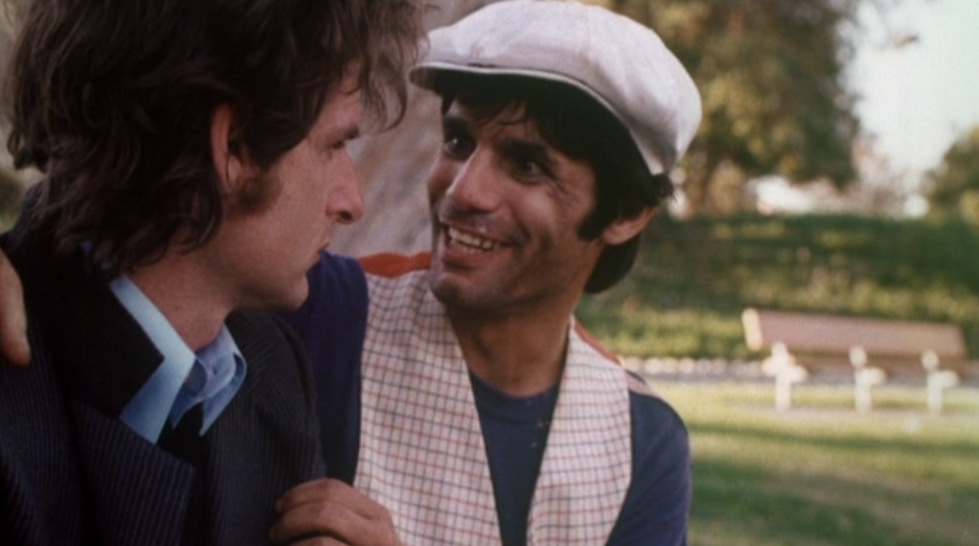
Once I heard how far down in the mix she sounded I was hoping for a  moment like the one in Road House (above) when Ida Lupino sings her first song at the lodge and the whole cast of regulars and staff eye her with concern as her frail voice, barely above a whisper and without a mic, clings like Grant on Lincoln's nose at the end of North by Northwest to the melody, a ghostly after-effect of pure will and brassy, nicotine-stained courage gradually cutting through even the staunchest of drunk background conversations. It didn't happen.


As I wrote earlier, I like Del Rey for her hand-crafted post-noir persona but that persona hinges on intimacy, which SNL lacks. Rey's a post-digital artist meant for late night headphones and tear-stained iPhone screens, not sound stages and fancy lighting rigs and an audience keyed up by comedy. Thus we're presented with the same conundrum that sinks Manhattan nightspots I visited in the 1990s, they're now prime real estate 'hot locations,' so the night spots elsewhere; the mainstream snaps at the lonesome artist gentrifier's heels, stealing our small good things and baking them into oversize crap. Well, you mainstream sycophants, some stuff can't just automatically make the jump. I've seen the best bands of my generation destroyed by bottom line AOR guys who brought them up too fast and dropped 'em twice as quick: from Nightingales to The Wetlands to Nassau Coliseum and then dropped from the Humpty Dumpty wall when their 15 minute egg timer clicked crack time. Yeah I mean the Spin Doctors.

In the end the mainstream wants all the things it takes from the fringe to be tailor-made for them, never considering whether or not we invited them to even try on a sample. Thus we make ourselves deliberately off-size to scare away customers, for success means having to be surrounded at all times by douche bag entourages and clingy fans and thus be unable to hone our craft in the isolated anguish cocoons and starving garrets that best nurture our wild gifts. So we let our sophomore album grow bloated, and the AOR guys throw us to the cut-out bins and now not even Nightingales wants us back. One two / princes who adore you / just go ahead now. Yaaaa badibidip Dip deepa doo do da.


Then there's the movies: I finally bought and saw Criterion's Kiss Me Deadly (1955) Blu-ray which lived beyond expectations; I've had the MGM DVD awhile and watched it many times but it's a whole different movie now, like a crisp 3D diorama --now Mike Hammer's jazzy bi-level apartment seems to stretch deep inside the back wall at odd, skewed angles, and the sexy girl bare feet seem bigger than life, the treacherous west coast hills down which flimsy stairs carry tumbling thugs now recede deep down into the apartment below me. The two blonde girls who bookend the film are now extra insane: you can see the thin layer of sweat over their faces; when Gaby Rogers gets all glazed-eyed lunatic at the climax, you can practically smell the laudanum coming out of her pores; before that you can smell the sexual heat and traces of sodium pentathol pouring off Cloris Leachman, and later the toe-tingling chlorine and perfume aura of Marian Karr as the gambling kingpin's nympho poolside sister.
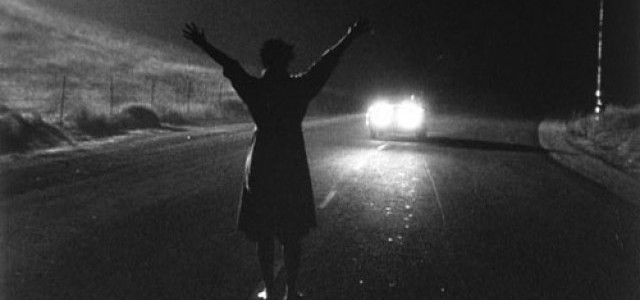

Spreading its influence out to post-nuclear Japan and films like Seijun Suzuki's Branded to Kill (1967), and into Altman and the Coens, from its backwards credits to its doomsday ending, Deadly enfolds rather than unfolds, in that sacred timeless backwards space occupied by Jimmy Stewart's Vertigo fingernails and the electric chair-bound flashbacks of Edward G. Robinson in Two Seconds, or Lee Marvin's mysterious resurrection in Point Blank or Naomi Watts remembering her own parallel reality as Samara's mother in The Ring, or those suddenly interminable songs Lana Del Rey sang on SNL Saturday. Nothing is by chance when Death is sucking us up through her rear view mirror.


In the beginning/end of Kiss Me Deadly, Hammer is drugged, beaten, and driven off a cliff with his first lost blonde (Leachman), and maybe he's still dead at the bottom of a sandy ravine and the girls around him the Carnival of Souls reverse gender equivalent of the weird white skinned zombie guy with the crazy hair who follows Candace Hilligoss around. And maybe the big whatzit in the box is an atomic Skynet variation of the Hitchcockian Mcguffin grown suddenly aware of its abstract unimportance to the mise en scene and so deciding to change the game, swallows the universe whole and runs it backwards only in its guilty 'I can't believe I ate the whole thing' nightmares.

Now it all finally makes sense: here it is 2012 and the film 2012 is coming to TNT (my take on it here). The snake, having swallowed its own tail first, continues unknowingly along, its radius tightening, and only as it speeds up to the infinite point does memory finally catch up to its 'this is where we came in' crux apocalypse. Death is from here on out more a dawning awareness than a traumatizing finale, and a parting word to those who will be forced to watch the black hole close around us seems prudent. Thus, Christina Rosetti's (left) poem "Remember:"


  And afterwards remember, do not grieve:
         For if the darkness and corruption leave
         A vestige of the thoughts that once I had,
Better by far you should forget and smile

If we feel the final darkness closing around us, is it at all possible that we're remembering it rather than experiencing it now, and thus are immortal after all? Maybe we who will die in the coming floods will not our deaths remember but rather still live in a landlocked world where no further burgee cords and yacht club burgees unfurl but for the brief cocktail steward span that bridges sleep and death--that fluttering spasm of alertness; the forgotten hand that clutches once and having clutched drops its eternal bong --and watch will we instead as the blackened water's through the carpet soaked and gone? Soaked...

... and gone? As Mike Hammer says when giving up the key to the whatszit, "I didn't know... I didn't know..."

He didn't know he's been dead all along and the same girl twice has died with him in a drag race (left). As J.J. put it in Sweet Smell of Success, "You're dead son, get yourself buried." Mike Hammer didn't know he really was pulling a Lazarus Scotty Hilligoss Parker shuffle.

Right. Thing is, no one ever does.

So remember to "forget and smile" when the waters are rising higher than any hit count and our apocalypse year begins endlessly over with one January after the other, never reaching the dreaded December 21, 2012, all time slowing down like a black hole's infinite approach, remember what the fortune teller said when Lisa Simpson asked if there was any way to avoid her grim future, "No, but try to act surprised." All else is... Silencio... and those picky, tourist conqueror worms that just won't give it up... for Lana Del Rey!

Thursday, January 12, 2012

In praise of Red Queens


It's not until a really vital and vibrant myth envelopes you in its wings that you see just how wingless so many other myths are, the myths that get the lion's share of pop culture usage. 
--
And after some close examination I now know why... there's not enough red queens. There aren't enough wild women archetypes either. The only female archetypes we get are 'the anima' - the male fantasy girl, the poor little princess, i.e. female ego, the mother - homogenized into a selfless breast. When a negative female archeytpe does show up, she's either a shrill devouring mother, sexless and narcissistic -- or a ballbusting femme fatale.

But the red queen runs counter to all of these/
----
Myths and fairy tales are all rich with archetypes -- the shadow, the anima /animus, the wise old man, the wild man, the dark father, the evil queen, etc. but if you look at the most popular mythic franchises in Hollywood- Harry Potter, Star Wars, Lord of the Rings, the Marvel-verse you find plenty of all the others but no evil or neutral queens. Only the Narnia and Twilight series have evil queens, and the latter especially is given raspberries by the fanboys who proclaim the Rings-Potter-Star Wars trifecta as the best sci-fi / fantasy in Hollywood and Narnia a bunch of kiddie--and Twilight a bunch of girly--crap. Man, that's sexist. 99.9% of the characters in those three franchises you and everyone else likes are male; there's only two women in the entire Star Wars universe, and they're both 'good' princesses. The same is true with LOTR. It's even worse. The bitches if anywhere are all secondary, objectified or desexed and immaterial aside from being love objects, and certainly not morally ambivalent, beyond good and evil, as royalty must be, perforce.

We need more queens beyond good and evil, for it is there--beyond good and evil--all putr archetypal energies--yhe backbone of enduring myth--can be found. And the fantasy industry shows its nerdy, unlaid, apron-strung girlophobia by ignoring this archetype. Things get stale until a great evil queen finally shows up; when she does she's like a breath of fresh, beyond good and evil air.

Below is a list of red queens divided by archetypal role:
--

The (Primary / Devouring) Red Queen: 
Queen of Hearts - Alice in Wonderland
Victoria - Twilight
Maleficent - Maleficent
The White Witch  -Chronicles of Narnia
Mrs. Iselin - The Manchurian Candidate
Catherine the Great - The Scarlet Empress
The Great Tyrant - Barbarella 

Imperious in her whims, the primary red queen represents the unfulfilled potential of adulthood, when wealth and rank allow spoiled girls to sidestep full maturity and any accompanying humility. They are generally childless, preferring animal familiar lackeys--doting subservient cats, trolls, crows, ravens, mice, owls, or steely-eyed hawks. They are vengeful and reserve special loathing for prettier, younger, naive, innocent girls and young virile men who spurn their own often unseemly advances.


The Secondary Variation: The Little (sadisto-nymphonic) Princess

Salome - King of Kings 
Fah Lo Suee - Mask of Fu Manchu
Princess Aura - Flash Gordon
Scarlett O'Hara - Gone with the Wind
Cleopatra- Caesar and Cleopatra
Carmen Sternwood - The Big Sleep
Bunny - The Big Lebowski
Marylee Hadley - Written on the Wind
Drucilla - Buffy the Vampire Slayer
Tollea / Naja - Cobra Woman

As her father notes to Marlowe, Carmen is "still a little girl who likes to pull the wings off flies." These are nubile young wantons grown up in wealth and power, and--with all the percs of being gorgeous and young to boot--become egotistical monsters, untamed by the empathic development that results from having limits, perceiving one's own faults, and equating one's negative actions towards others with others' negative actions towards oneself. Given too much free time and parental indulgence they become egocentric hedonistic sadists, obsessed by the few things left that they can't have, i.e, 'principled' men who are in love with someone else (or--as with John the Baptist--an ideal). So Scarlett pursues Ashley for decades, obsessed, until she gets him, at which point she realizes he sucks, and throws him away and runs back to manly Rhett, who's figured out by now the only way to win Scarlett's love is to spurn it. Aura loves Flash, but largely no doubt because he loves Dale. If he were to turn around and confess his love back to Aura, she'd lose all interest; thus he does her a favor by giving her something to chase. Fah Lo Suee is the most unrepentant sadist and therefore the hottest.

These girls may be immature, vain, and sadistic but they're super sexy --they're far from under the thumb of their rich and largely absentee fathers. The hero is always a little tempted by their charms but he rises above it, which always pisses us off a little watching the film, at first. But if he did give in and fool around with her he'd be undeserving of our respect (and there's often a kind of secondary hero who is in love with them, such as the Sternberg chauffeur (unseen) in The Big Sleep, Hank in Night of the Iguana, or Prince Barin in Flash Gordon). That doesn't mean we--snug in the morally anonymous darkness of the audience--can't desire her, like Herod lusting after step-daughter Salome, knowing we'll never have to risk actually running into her at a party or some other location where our attraction might well be our undoing, leading her to toy with us like "the type of girl who still likes to pull the wings off flies."

Salome, mid-dance, in King of Kings (1961)

And if we do meet her in the real world, maybe our experience with her here in myth will be enough warning to save our lives, wallets, self-respect, families, and social liberties. We can only hope she doesn't come along while we're verging on a midlife crisis. She's more dangerous than a dozen motorcycles. 


The Tertiary Variation: Trickster
Julie Newmar as Catwoman - Batman (TV)
Rita Hayworth - Gilda
The Derevko Sisters - Alias
Mystique - X-Men
Catherine Trammel - Basic Instinct
Marlene Dietrich -everything
Suzy Kendall - Fraulein Doktor

She promises sex and delivers debt. She's whisked away by fate or duty on the day of your marriage ceremony and the next time you see her she says she's her evil twin. She takes your money and somehow you can't get mad at her because you know she doesn't really care about it--she's doing it for you in some Kafka-esque way. She is the embodiment of the trickster: intelligent, beyond good and evil, using her sex appeal as a lure but more for fun than sadism. She's too intelligent for that, keeping the eternal dance of fire and persona alive, or, as in Irena Derevko, a deeply embedded plan to save the earth, or keep herself amused. Catwoman for example is evil, but Batman loves her (and vice versa) and so each self-sabotages their efforts to kill or catch each other, or even to keep each other trapped. The chase is the thing. The agreement is unspoken but biding - no killing, for now, just elaborate traps that one may, with luck and thought, escape, to keep the game alive, while buying the other some time for a head start before the next encounter.


The Quarternary Variation: The Ancient/Young Woman
Ursula - Little Mermaid
The Evil Queen - Snow White and the Seven Dwarfs
She - She
The Three Sisters - Suspiria, Inferno
Elizabeth Bathory - The Countess, I Vampiri, Countess Dracula, etc.
Jessica Lange and Maid  - American Horror Story Season 1
The Red Queen (hologram) - Resident Evil series

She can be both young and old: the evil queen with her apple basket; Ursula turned young, with Ariel's voice; She before she steps into the fountain of youth one time too many; the hottie who rises from the bath in room 237 but is old and decaying by the time she reaches the door. The 'swindle' behind youth and beauty, the bait-and-switch of the midway, the genetic con job that lets you slip a marital ring around your nose while you're too distracted by the shiny cape to bolt and buck. 

If you're a woman, the queen is your mother, desperate to sabotage your maturity and somehow drain off your youthful bloom for herself.

Or it can even be you--from the illusory safety of the mirror-mirror on the wall--realizing your own beauty was just a framed shadow doomed to slow fade with the dawn's rising. 
Snap thy faceted selfies whilst ye can--
the velvet dark your wobbly setting--
and adjust your glasses prescription ever stronger 
to match the shrinking screen of your sharpening cell.

CLOSING:
In short, wise up punk-ass mainstream Hollywood! Don't be scared of the red queens! Help revive true myth, and breathe the salty air of your own mortal huskiness.


Why is Hollywood so afraid of these women? The catch-22 is that the men who write and create and approve these things are afraid of them, and the men who aren't are too fucked up and iconoclastic to do too much about it. The women meanwhile, are often not the best choices to depict them as they, for all their strength, are archetypes more from the male unconscious than the female. Often liberated female directors have conflicted attitudes towards these archetypes. They're either bound up in the idea they have to represent Woman and not archetypes, i.e. to become a slave of message-heavy realism, or if they dare to bring in archetypes, choose their own animus forces, i.e. to make complex portraits of men in action only from a more sex object and unknowable form (ala Hurt Locker) than most. The question is what will the future minority and female directors and writers create once they are no longer willing slaves to either one of their animuses -- the controlling paternal animus --the buzzkill authority that the female is never convinced to question as far its 'rightness - and the wild artistic animus, which perforce is bound towards the destructive and impulsive. In each case the risk is a kind on non-classic. On the one side, inert social message films, on the other, abstract and often shrill 'art.' 

There are a few geniuses who feminine mythic energy to the screen, Angela Carter, whose fairy tale adaptations and revisions ("The Bloody Chamber") inspired works such as Helene Cattet's Bluebeard and Neil Jordan's In the Company of Wolves. And Linda Woolverton, writer of Disney revisionisms ala Maleficent. 

Tuesday, January 10, 2012

I dunno man, I took the BLUE SUNSHINE and I feel fine...


It doesn't really have all its marbles together but Blue Sunshine (1978) provides an interesting amalgam of low-rent mid-70s horror filmmaking that's roughly comparable to the slew of early 70s artsy gut-punch horror shows coming out of NYC, Toronto, and Pittsburgh--De Palma's Sisters, Romero's The Crazies, Cronenberg's Rabid, Cohen's God Told Me To. Like them it's touched by the conspiracy thriller with pharmacological implications, but this time mixing Hithcockian 'man on the run' action with a Big Chill-style alumni "what happened to the dream we all shared at Stanford ten years ago, when we all dropped this weird acid called Blue Sunshine made by our chemist friend who's now running for political office?" cross-section of compromised idealists. The answer, my friend, is that the dream is gone. All the friends start wigging out, all across the land, at the same time, more or less. And it turns out they've lost their hair and been wearing wigs and barely keeping it together - any little wig slip--figurative or literal--can send them over the homicidal edge, all right around the ten year-mark of their Blue Sunshine trip. Dude, that Blue Sunshine's flashback kick is prcises as a Quartz watch! Gimme some!

Perma-scowler Zalman King is at one of their reunions when one of them starts wigging out. He must have been the 'guide' of the bunch ten year ago, or the conscientious objector who didn't want to pollute his chromosomes, as he's the only one not turning homicidal and bald ten years after basking in the 'blue.' Sensing an opportunity, perhaps, to escape the boring party, he takes it on himself to run around stopping everyone, single-handed, before they hurt themselves or others. This means, naturally, looking guilty holding the knife he takes from his assailant before she falls to her death after he barged in on her and started yelling, etc. Rather than stick around and explain to the cops, King just presumes they won't believe him so runs off one to singlehandedly save the next acid casualty (and indirectly hasten their end). He didn't cook it up, or sell it, or even take it. He had nothing to do with it1 He's just a narcissist martyr who wouldn't share a chance to be the hunted Hitchcockian hero in a million years. To most temporarily sane viewers, no matter how much acid they've done, he's only slightly more irrational and wacko than the crazy baldheads he visits.

Oh Zalman King, your self-righteous scowl is so unrelenting you make Jason Patric seem like Harpo Marx!


Like its leading character, Sunshine can never figure out where it wants to go or how its hero can help (it's not like Zalman's got a bag of Thorazine with him), though fascinated by the power of LSD, the film lacks the nerve to take two tabs and go off the deep end like everyone else (i.e. to visualize the hallucinations), so it mopes on the sidelines and 'misses the party,' and it's the same party at which Hitchcockophiliac De Palma, STD clinician Cronenberg, downtown paranoiac Cohen and blue collar Swift Romero lost their minds - becoming lifetime master auteurs. So while those dudes broke new cinema ground and flew into cult immortality, and today have a body of work still trenchant and discussed, director Jeff Lieberman was left behind, the late arrival to the acid test, the kibbitzer,, preferring to dabble in a little bit of each of their areas, to finish the drinks they left behind and hang in the back, feigning interest in the bookshelf. And the movie is his justification for his cowardice: Turns out all that nonsense about mutating chromosomes was right! Nyah Nyah.

The only person you know for sure did some, in the whole film, is Leon the replicant (below) and the guy in the poster at top (the eyes never lie, Manolo). Star Zalman King on the far other end of the spectrum, is such a wearingly sober Sean Penn-ish scowler he makes 'experienced' viewers annoyed. Perhaps King annoyed Lieberman too, as the film seems to dryly mock his martyrish spotlight hog (he was probably directing all his own close-ups and milking lines for every last ounce of method interiority).

"wake up, time to fly!"
Meth, I hear you callin'
The plot is set in motion when--at a druggy all-night party--a guy is revealed to be bald and wearing a wig. When the wig comes off he gets mad and kills three women! He runs. He's hit by a car after King takes it on himself to chase after him, and then King takes it on himself to run like an outlaw rather than wait for the cops, presuming in his self-centered martyrdom that the cops will automatically suspect him of the murders. He never deigns to clarify why it's so important he finds out the names of everyone who took the blue acid ten years ago at Stanford. Apparently the guy who made was a kind of local Tim Leary, but he's now a Mitt Romney running for office, which is as unlikely a transformation as you're liable to find with a budget this low.

Luckily, the murderous freak-outs are pretty hilarious, with the killers apparently perfectly normal, if a little stressed and sleepless, until someone rips off their wig and exposes them as bald and they go apeshit with superhuman strength.

Winters looks just an ex-girlfriend I did a lot of acid with senior year, uh oh
As for the rest of the cast: Deborah Winters is cute and alert as the girlfriend who King uses for odd jobs and leaves in the dust of parking lots when he's going to go talk to a witness or whomever. She seems ready to be beamed up into a better film, and deserves a much cooler leading man. She's sassy, sweet, and able to manipulate big dudes into her sway. As one of the alums who took the sunshine, Adriana Shaw (above and below) gets the scariest scene when--in her blazing red bathrobe one morning--she finally snaps and attacks some neighbor's kids she's watching who are being too loud watching cartoons in her living room. The blocking is a little clumsy but it's great to see a director other than Spielberg or Lang dare to play the child murder card. To paraphrase William Carlos Williams: so much depends / on a bald lady in a red bathrobe / with a butcher knife / chasing small children.

My doctor added Abilify
While I expected more from a film named after a brand of blotter acid, there are various points where it almost all comes together, like it's a few feet shy of 39 Steps... let's say 22 Steps. It never, if you'll forgive the expression, gels. Still, I'm glad it's around, in the freezer, waiting for just the right time to blow the world's mind or at least divert it for a hair (if you'll forgive the expression). Just don't invite old sullen, sulky, self-righteous Zalman King to the party, at least not until he gets his Red Shoes laced. He's apt to come at you with some elaborate long-ago disproved factoid about the drugs you're doing, and then try to get you to go to rehab, or he won't let you drive home, even though you only had one drink, ten years ago.

May also induce scowlingitis


Saturday, January 07, 2012

Slaves to Unconvention: TINY FURNITURE, ANOTHER EARTH, The Sarah Silverman Show


A great scene comes through the otherwise trite Another Earth like a cyclone: A female TV journalist is broadcasting live from a radio control room, watched on TV by Britt Marling's family. The first person making contact with the recently arrived Earth 2, the journalist talks over the radio to someone she gradually realizes another version of herself from the new planet.  So that means there are now two of everyone. "Maybe the other me didn't make the same mistakes," she notes. Yes, but maybe her hair is lifeless and dull and not stunning like yours, Britt Marling!

She's beautiful, is Brit Marling, with golden hair which she hides under janitorial hood ala some kind of repentant nun, mopping floors and moping over the past. While a minor she killed the wife and kids of some dorky composer via a drunk driving accident (and hackneyed script workshops)-- and now she's out of kid jail and all grown up and wracked with guilt and oh-so obsessed with spying on this dopey composer and she doesn't have the guts to tell him who she is. So she pretends to be from a cleaning service giving out free samples and she continues to serve and worship him and clean his place and it's all rather creepy, like the fantasy of any mid-life crisis slacker, where some beautiful young girl gets rid of your wife for you and then comes and cleans your house for free and eventually falls in love with your sorry middle-aged ass. Like all film school screenplays, it smacks of misogyny that's so deep no amount of therapy or PC post-grad hand-wringing will remove it. You just know this dull, one-note mourner of guy would never get a hottie like Marling unless just this twisted scenario happened and in the end that's the only reason for it.

Rembrandt-ish darkness and sunlight impress in Another Earth far more than the characters as they clean and sulk in the dopey composer's artfully demolished farmhouse. The cliche'd two-character framing undermines the radio and TV broadcasts about the second earth, which would have the weird post-modern immediacy of the best parts of the first two Romero dead movies--where we're just watching TV news come apart at the seams--if everyone wasn't too busy underacting. Instead we're forced to endure the crisis of conscience Sundance screenwriting instructor-mandated 'human story.' Those Sundance mandaters should be asking why -- why bother visiting this alternate earth if it's exactly the same? Are y'all that narcissistic? Y'all that afraid to go somewhere new for a change?


Poetry journal conceits aside the moral here is that actors love roles that require lots of emoting and screen time but less memorization of dialogue and if you let your cellist boyfriend design your score for you don't be surprised if he drowns your every muted reaction shot in tired chamber sawing and wants to make a big production of serenading you by musical saw in an empty auditorium as you visualize old Sputnik photos. You're Britt Marling, damnit! You look gorgeous in front of a big blue Earth, and you're hip and been to some fancy school for math geeks and this is what you're going to let yourself be seduced by?

She does grant herself a really good monologue about learning to love the things that annoy you if there's no way to change them, and there's a Tarkovsky-esque moment playing Nintendo boxing and a great final shot. But in the end, why care about a guy so selfish he tries to talk his girlfriend out of going to space after she wins the essay contest and gets approval from a Richard Branson stand-in? Imagine if Charlie's uncle tried to talk him into giving up his golden ticket because his bunions hurt and he didn't want Charlie to go without him! A guy that self-absorbed deserves to lose his Marling. - **


So I've been watching the old Sarah Silverman Show a lot on Netflix. I love it since it provides all the elements Another Earth so dolefully lacks, namely mischief and a sense the goings-on aren't just cliched emotions being trod out to appease some hack screenwriting teacher.  There's a great animal cunning that comes over Sarah's face when she's stalking her prey or marching purposefully around her apartment; she can be insufferably coy but the gleefully amoral, post-apathetic sprite she plays on the show is at least alive and Nietzschean. I could do without the two hairy nerd slothful, poop-obsessed gay dude neighbors and the ham cop boyfriend, but Sarah's real life sister plays her sister and she really seems like someone I could talk to.

In order to grasp the Silverman revolutionary aesthetic, first see The Big Sleep (1946), Meet Me in Saint Louis (1939), and Animal Crackers (1930), and then think of Silverman as a cross between Carmen Sternwood, Tootie and Harpo.
***


Tiny Furniture (2011) explores life as an intelligent but negative body image-stricken recent graduate whose major was in film theory, though she never seems to make any trenchant Antonioni references. Instead she throws herself at self-absorbed moochers and druggie restaurant kitchen chefs (a notoriously slutty lot), and while the whole "I learned the truth at 17" motif is subtextualized it looms right out into the top text, and Lena Dunham refuses to even smile or hold up her chin, and eventually her inertia drags us down, especially in high-def.

Dunham, second from right.
Lena is the real-life daughter of a famous artist I've never heard of so its understandable she'd try to counterbalance her mom's extroversion and acclaim via a rejection of all aesthetic and social criteria, but why then punish the viewer? Her character's one claim to fame is a shoddy youtube bunch of exercises in a skimpy bathing suit and it seems like we're supposed to read this unappealing spectacle as a challenge to standards of feminine beauty. But more than that it's a misguided bid to belittle her artist mother; to essentially out-maneuver 'Art' itself via a primitive return to Willendorfery; to return the shock value and uncanny horror elements to nudity; to strip the bride bare for her gay bachelors, as it were. It's a good start, but it won't get you laid. This isn't Willendorf or a Dubuffet 1950"corps de dame" mixed media on canvas. This is the movies! In hi-def! Have a heart!

Jean Dubuffet, 1950
There's nothing to be ashamed of in being frumpy if you embrace it but don't expect us to do it before you do it yourself, am I right, Montel?! That just shows a contempt for the public that's probably founded in Dunham's deep ambivalence about what makes art successful. It's a hard thing to do, an artsy differentiation from your artist mom, made with her money, presumably. Talk about a stacked deck, it's a whole lot like Godard asking for money from his rich Swiss dad to finish his Parisian critique of the bourgeoisie.

And there's a reason flawless skin and beautiful cheekbones rule, especially in hi-def. With her frumpy demeanor, Fieldsian nose, and dead eyes, you feel (or at any rate, I feel) that after only an hour or so into Tiny Furniture, you can't wait to get home, take a Silkwood shower and close your online dating account. Is that too shallow? No. It's just shallow enough.

However, Lena's real life sister plays her sister and she really seems like someone I could talk to, and Jemima Kirke (left) as the posh Brit accented party girl Charlotte is cute, daft and completely mad. I kept wanting to whisk her away to another party, do ecstasy with her and live in her bedroom forever! Am I shallow? Why should I be expected to be less shallow than Dunham herself? She should cultivate an interest other than exposing herself to gross boys! Boys are gross. She should have hung out with Charlotte more and done lots of drugs. She would feel better and look good in no time.

Oh well, maybe she'll put that film theory degree to use yet and I have a feeling we'll see Kirke again. I hope so. To sum up, Kirke and Sarah Silverman are at least their own monsters. With gorgeous Marlin bound to dour indie convention and Dunham bound to dour rich kid myopia, we're left with the realization that film school is misleading our confused sensitive young artists, teaching them rules of story development and male conflict enhancement too well and self-realization too poorly for them to every make anything interesting, and the Kirkes must go home and sleep alone.

Escape the Sundance conventional box, girls, go ahead and tell rules of narrative and sacrifice to go the fuck themselves, and shiver in Silverman blue light of... Another Melancholia!

(POST SCRIPT - Dunham's series Girls is rocking HBO and proving everything I said wrong. Or maybe Lena read this post and took my suggestions to heart? Either way, it's hilarious that now some camps are giving her flak because her show isn't more cookie cutter banal! hahahah)
Related Posts Plugin for WordPress, Blogger...