Showing posts with label Sexual Assault. Show all posts

Friday, January 18, 2019

The cruel, cruel things we did to LAST SUMMER (1969)


There's ever so often I catch even a time out critic evincing he's not seen the movie he's capsulizing, as in the Time Out Britannia entry on LAST SUMMER (1969), which calls it "winsome," and notes 'typical lessons are learned"? Oopsy-daisy. Either he's one sick British puppy or he's hearing the title and painting a very different sort of beach idyll in his mind. Sure, there's lessons learned in Frank and Eleanor Perry's sneakily devastating adaptation of Evan Hunter's novel, but calling them typical is like calling Hitchcock's The Birds (which Hunter scripted), an 'ornithologist's bayside holiday.'

I don't blame that writer; he probably couldn't find a copy of the film when he was assigned it, and needs must when the devil drives. To my knowledge it's never been on any official DVD or tape, in fact I'm not even sure where Max got the copy I duped that we watched so religiously during one of our drunken LBI summers back in the early 90s. I may not have a copy today for reference, or have seen it once sober, but I can attest: there's nothing idyllic or remotely typical about Last Summer, unless Over the Edge and Don't Deliver us from Evil are just like landlocked versions of Gidget and Beach Party. Can you imagine? This critic might remark that Evil is the tale of two good Catholic BFFs and their summer journey of emotional maturity, leading up to an incendiary talent show poetry recital, and Edge is about a group of kid activists fighting to save their after-school arts program. Those descriptions are both true, in their way, but so misleading.

On the other hand, misleading surfaces and morality drifting astray on invisible currents, is what LAST SUMMER is all about. It turns out to be so easy to drift away on Where the Boys Are down rip currents, invisible to the naked eye, never giving the feeling you're moving down the beach at all, and finally wash ashore by the Last House on the Left. How the hell does that happen?

The tale of three (and then four) privileged youngsters left to their own devices on Fire Island (?) over the summer, Last Summer builds to its evil gradually, to the point where our own giddy love for Scorpio-Pisces mayhem is used against us. There's sexual assault, menage a trois cinema groping, evil-confessing, seagull sadism, the kind of things kids grow up to either regret, repress, forget, unless it turns them permanent sociopath. The story of two blonde beach bum rich kids who meet and bond with a bad influence girl, who manages to keep them both turned on and that sex drive sublimated into evil decadence, and the fourth wheel downer who comes to stay, like an annoying kid sister who always threatens to tell mom.

It stars Bruce Davison and Richard Thomas (a long way from John Boy, not that, thank god, my parents ever watched that show) as a pair of beach-loafing buddies (no parents in sight) who find a wounded sea gull and Barbara Hershey all in the same day. What a break! Together the three generate what Max's mom once said about us, down on those wasted LBI summers: "a bad influence on each other." As with Eric Rohmer's summer holiday idylls, sexual tension generates in real time over whole reels, until when it finally cracks open you feel weak in the knees. As with a more decadent European 'sexual idyll' swooner like Jean Rollin, a sense of impending doom, a naturalistic series of ambiguous omens, conspiratorial glances, and burst of random hostility amidst the hypnotic momentum, reminds us constantly that the ocean is a demonic bad influence friend itself. And I love that, unlike so many beach movies, it also rains some days. During a protracted, masterful sequence, the threesome stay indoors while it rains and wash each other's hair, smoke weed, and let the air of existential melancholy that a rainy afternoon on the beach can bring wash over them. Dude, so been there. A terrible time to take acid, let me tell you. 

Max and I, during those LBI summers, had a few different girl partners in crime but our serial monogamous hetero chastity was ironclad. Alcohol only made us even more gallant. But I was later lured into latent evil via a beautiful Scorpio woman in AA, so I know how intoxicating it can all be even without drinking. 

At any rate, in 1991 this movie was the perfect thing to watch on a rainy hungover Wednesday LBI morning, drinking gin and Strawberry SlimFast while recovering from the previous night's long iguana of a night. The lagoon-side of the island gently lapping our brains into something like a parasympathetic rhythm, we loved this movie because we well knew the way the right girl could ignite all sorts of ballsy courage and decadent mischief in the right pair of unemployed but well-stocked bandmates. You could alienate all your (real) girl friends and most everyone else over a single weekend. And you'd just laugh evilly, a kind of Cruel Intentions' ghosts of Vicomte Valmont and the Marquise de Merteuil possession you were too drunk to fight (or too sober to remember)

Taken together, the right threesome can melt the rest of the world clean away in a haze of cigarettes, highballs, the psychedelics always wearing off or about to kick in. In that lifestyle one is always either coasting on the fumes or anticipating the next refill, but one is never completely sober. When someone else enters into that unholy threesome, and they cannot or will not party? Pity them, lord, for they shall be doomed to rot in hell, unless of course they're even more decadent than we are. Chances are they're just putzes who totally don't get it. 

Pity them but not to the point of inviting them.

With its great naturalistic dialogue, the success of Last Summer lies largely with the tight small ensemble cast keeping the peripheral squares at bay. It starts innocently enough, trying to save a seagull with a fishhook caught in its mouth. Their shared empathy with the bird will gradually be inverted by the stunning ending, but for now, their good deed gives them a kind of holy trifecta aura that evokes among other similar triads, like the trio dancing the Madison in Godard's Band of Outsiders (1964).


 Just mentioning rabies (if the wounded gull bites one of them), Sandy says "oh rabies my ass." Today the boys' shared smirk over her using the word "ass" might seem odd, as if they're already plotting something at the mere mention of a body part, but in the context of its era, children using this word (or any 'bad' word) in public was the equivalent of what in the 80s would have been mentioning she had weed (the anti-drug hysteria of the time was so insane that lighting up became an act of political solidarity). (1) It ends, well, no spoilers, but lets just say it ain't the 60s anymore. 

Last Summer isn't a horror movie, or a ponderous piece of 'art' either, neither surrealistic or weighty. Like Over the Edge it fools you by slowly winning you over to its protagonist's perspective which, considering their youth and the absence of strong parental guidance, is a dangerous place to be. If you grew up watching 'After School Specials' and 'safety films' on 16mm (while in class), then you were accustomed to the feel of Last Summer--but it's a cautionary tale without a narrator, or a moral, or a parent, it trusts we don't need them. Like the girls doing their Baudelaire routine in Don't Deliver us from Evil, all the movies we've seen in the past make us blindsided by a whole new swerve. If you're like me, you are highly susceptible to the 'bad influence' of any intelligent, gorgeous young person who falls into your circle. Even just as a friend, they give you a kind of high-octane cache that can cause latent Mean Girls-cliquey kind of giddy moral blindness.

The cast is all set up for menaga-a-trouble, Design for Living-style. As Peter, Richard Thomas's sadistic demonic eyebrow arches convey a real, deep propensity for evil that runs deliciously counter to his Waltons good boy warmth. But it's more than stunt casting. He conveys a real sense of nurturing and natural leadership without ever seeming older than he is. But it's a warmth made all the more dangerous by the eerily self-confident sociopathy lurking below the surface smile. The sweeter he is, the more you feel there's a reverse action building. We watch the demonic glint wax and wane in his eyes like a sinister but enticing moon.

As the smirkier blonde beta male, Dan (Norton) on the other hand, keeps his guile exposed and ever a bit sophomoric. While Peter is the type of character who won't strike until he's got the girl all but naked in his bed already, Dan plays the numbers game, so used to rejection he's built up a tolerance, to the point he wouldn't know what to do if he got one.


Lighting the fire is the new girl Sandy (Hershey), ever eager to seem more mature than she is through expressive "language," relishing the combined attention of these two blonde troublemakers. The love she shows to them, mainly to Peter, while they both lay on her lap, for example, listening to sitar music and getting high, creates a seductive bubble; the sound mixing gamely captures her whispered sutbtle breathing almost in ASMR cocoon we can feel. We're smitten; we're there; there's no lumpen Catherine Burns to drag our locus of identification kicking and screaming back to the loser's table. Not yet. 

Together, their sublimated sexual energy is a force first of good (rescuing the gull from the hook) and then, through misuse, the sublimation wanes and the fermented passions bubbles up like oil seeps. Using a kind of loose cycle incorporation of tricks perhaps gleaned from Miriam Hopkins in Design for Living, she avoids breaking up their friendship by never picking one or the other ("no sex!" - though in this case pretty close, constantly) or risking her own ostracization by either choosing or rejecting either one, rather the cycle of move-busting runs from Peter to Sandy to Dan in a continuous loop that garners intense energy as it goes. Naturally it has to find an outlet, like Sandy luring a slightly older hispanic man via personal ad on a date, tricking him into his doom at the hands of some local racist toughs.

Everyone is excellent in their naughty conspiratorial whirlwind of sexual sublimation-amped mischief; but then Catherine Burns comes loping along the lonely beach, appointing herself the ugly duckling fourth wheel. It's only during that rainy afternoon after the three of them lost in pot and hair washing that they're ready to actually pay attention to her. With a single long monologue (that led to an Oscar-nomination), recounting the last hours of seeing her mom alive --at a cocktail party that's been raging at their house for days--Burns hypnotizes us and them so completely that by the time she's done you can smell the liquor on her mom's breath, the reek of sand, alcoholic pores, cologne, sexual heat, and ocean brine, the stale cigarettes, and--finally--a fatal misjudgment of impaired motor skills that led to mom's death. 

And it's this tale (notably of mom's decadence rather than her own), set to the melancholy ominousness of the rain outside, that's just enough to get her through the door into the threesome's evil club. But then they don't know any other way to either shake her off or get her to loosen up and stop cramping their style than what they inevitably, shamefully, do. Because even though they thought, after their dope-enhanced empathy with her plight, that they might turn her bad like them she just wont quit her glum whininess. 

you know if you're an alcoholic if the first thing you notice in this pic is the (upper left) Heineken

No matter how many jump cuts from the trio's galavanting around Fire Island, the slow simmer hypnotic Baudelaire-ian budding evil of Last Summer never skips ahead. That's one of the reasons I love it, and maybe why it confuses Time Out critic so much -- it pulls off the seduction into irrevocable evil better than any other film that comes to mind, yet without ever jumping the groove of its languid beach rhythm: you can hear the waves--or if not, the faint sound of rain--in every scene. The ocean becomes like "Trevor" in The Wild Boys)! a demonic possessor, and rather than point fingers, or spread feel-bad trauma, it points out we hold on to the 'magic' of childhood at our own peril. As long as we're too small to do any real damage, nature's sociopathy flows unchecked; carry it over into adulthood, and we're going to jail.

It all makes me wonder--as I wonder with other genuinely subversive films and TV shows--if that's the reason it's unavailable (there's not even a thumbnail of it on Amazon!). Rather than rant and fume against frat boys I am forced to examine my pwn past behavior that--at the time--seemed wholly justified and awesome--especially with a Cruel Intentions marquise in my corner urging me on--but which--of late, especially--hang in my conscience. A douche bag is a douche bag, regardless of mutual consent and vehemence of one's momentary delusion that it's ever "just" sex.

Wherever the licensing keeps it from being on Blu-ray, no matter how much it looks 'winsome' on the surface, it's a film every young punk should see, for the "lessons learned" are vital. The film itself lulls us into a rhythm we're seduced by, so that when the slow erratic buzzkillery of Burns enters, we're almost privy to the wild demon that drives us to try and make her wake up and walk with the fire so we can get back to our dirty little round robin thrills without a safety-first Clyde dragging the mood down.

At the end there's still no adult in sight to shame them, but it's clear they don't even need one. These
are 'good' people, usually. But they drank "truth serum" together - they fell in love as one person, and lost their connection to the consequence-ridden world. As the poster says, this summer was "too beautiful to forget... and to painful to remember." Like the first sudden gust of evening hitting your sunburned skin after a day on the beach, a sickly early fall chill runs through all concerned. The leaves can't cover their bodies fast enough to keep out the sudden, irreversible cold.


NOTES:
1.In the 60s and early 70s (I remember when the word 'suck' was first being used as a negative, i.e. 'you suck' - in fact I think I was in first grade with the girl who started it, referring to someone so immature they still sucked their thumb - in fact it was associated with the word "still" as in latency - ala "that girl Lisa, I bet she still sucks" It wasn't "you suck" but "you probably still suck" as in get the thumb out of your mouth. This was a time when 'bad words' were genuinely bad. We'd whisper them under our breath to shock each other, and then only with people who wouldn't tell on us. If you doubt, just watch Burt Reynolds movies from the mid-70s and listen for the pause (for audiences gasps and hoots and howls) at the end of every four-letter word. Just saying "Shit!" would bring the house down (one of the reasons people fainted at the Exorcist)

Monday, April 21, 2014

Antichrist in Translation: UNDER THE SKIN, HABIT

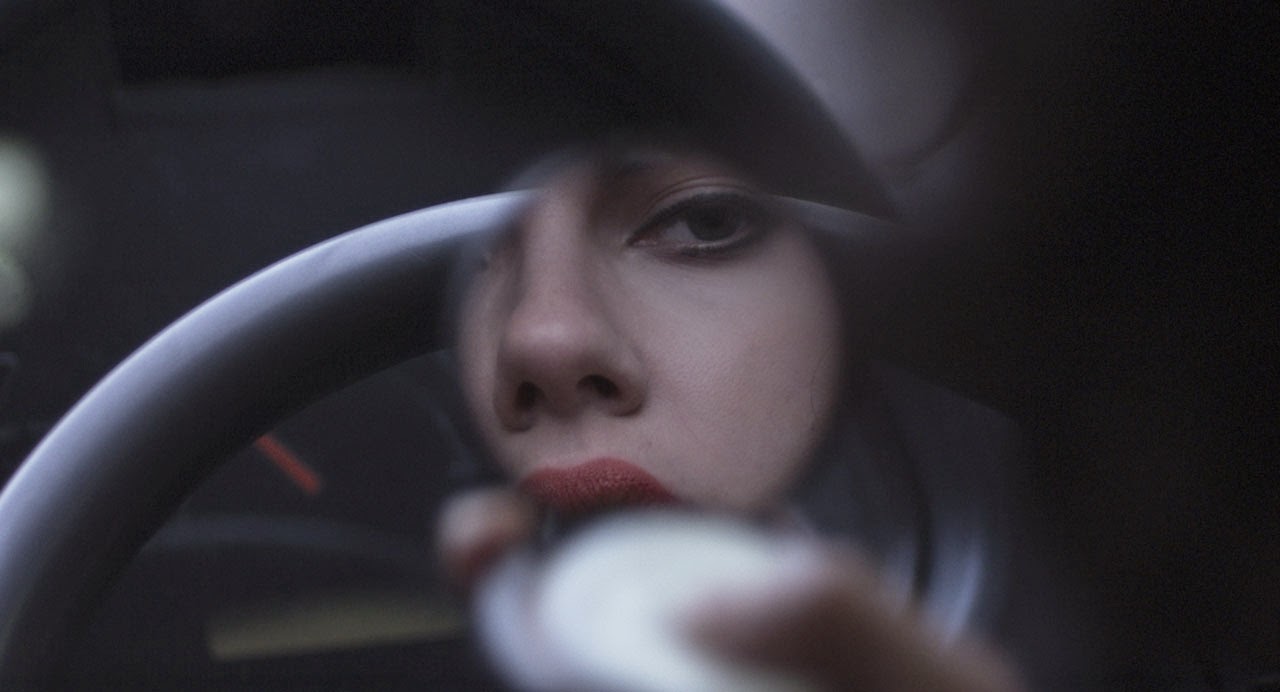
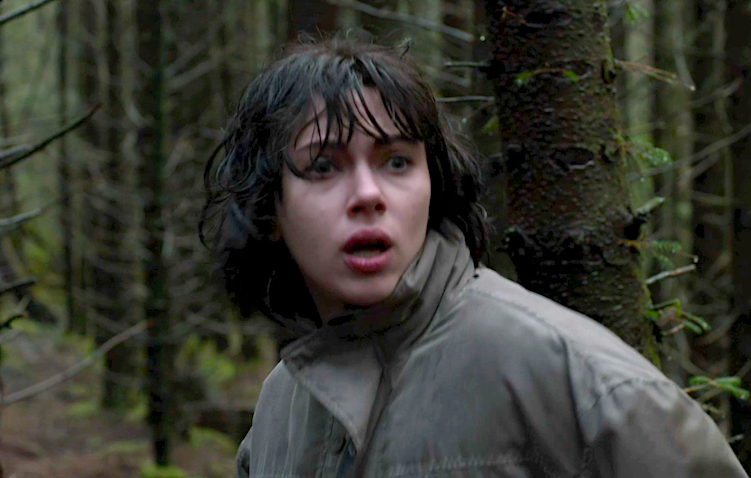
Showing off scars, from top: Under the Skin, Habit
Under the Skin (2014), the new slick dark green opus from Brian (Birth) Glazer, is a film that links up one's panic attacks before and after itself (as seen by you, the viewer) and signals the future of cinematic horror-science fiction as less about acting and thrills and more about the viewer's brain dissolving itself in a pool of black oil in the middle of a dark forlorn forest, wondering as it fades how it hears the rain and sizzle without ears. 2014's first official trans-humanist off-world 'chance to begin again' at that Crystal Peak moment of post-modern social decay, the screen on which it's showing as permeable as a jet black oil-filled swimming pool, Skin is not just mercury mirror from ye auld Cocteau Orphee, not just the menstrual matrix of Shauna Macdonald's Descent. It's the next step deeper. Just don't expect to climb out in the same skin you wore when you dove--or were sucked--in. You emerge as different from your old tar pit-stuck self as a tetrapod is from a placoderm.

I collaged this image/s together/m and are real prowed
I know how it is, bro. I began the weekend with a terrible panic attack. Friday crashed down around me in hailstorms of at-work red tape, hot potato bureaucratic quagmires, April allergies, allergy med-fed depression, and free-form anxiety--based on the need-- to take my girlfriend anywhere other than our couch in front of the TV for the weekend. She can take just so much of my trepidatious sloth and then the pressure is on to amuse her. She said she wanted to go out to the movies this time. My blood ran cold and I shook like the gallows pole was sliding up me arse at the thought. I came home, we looked at the times, and soon I trembling on the floor in a ball of anxiety.

Luckily, she had a stash for emergencies - and so took pity on me - and tossed a half-a Xanax down in front of me and like a good dog I went scrambling after it, ate it down like a good boy, and 20 minutes later was feeling sane enough that we caught the late show of Jonathan Glazer's Under the Skin down at the BAM with minimal hand tremors.

Wandering back home afterwards, up Flatbush towards Park Slope, it was around midnight. Usually busy as hell, the half-deserted and strangely-lit Good Friday-empty Brooklyn was a trash-strewn neon, rain-shined ghost town. Cutting through the uphill haze of alienated Flatbush Ave liquid street lamp and traffic light reflection on the droplets in the mist, stale popcorn nausea and lingering-half Xanax glow wobbliness pulsing through our hamstrings, we knew something weird had happened. I couldn't quite get past the feeling Glazer's film was more of a video art installation swerving towards a last minute And then the Darkness homage than an actual movie, but it was certainly art. Instead of a narrative flow there is--buried in mossy 'membrances of Basil Twist-y underwater shirt twirlings--the sense of drowning-in-place, the theater slowly being flooded with tar--like it would be, for example, at a Marble Index-era Nico concert--and that's all art can ever hope to convey. The darkness of the murky theater swallowed my soul right up, each block behind us falling into Blitz-era blackout, and even as we floated up to the smoky safe squalor of our flat, it was still there: the cord between the Twisty twirling and my body stretched G-sharp and Carpenter-ominous.

The paranoid terror red hot potato Poe-level paranoia was waiting, at home, arms crossed, for that X-half to wear off.

I felt half digested, like that Xanax-was. As it faded, so too my essence.


Then, I realized where my paranoid terror was coming from: it was coming from Mad Men.

It was related to re-watching all six seasons of in prep for the new and final season and realizing I'd mixed up Don Draper's forced hiatus from Sterling Cooper with my own at-work woes. So it's true, then. I'm already half-sunk into the black oil image. I can't always remember where I end and TV begins; since I live in NYC I get confused too and think people I know from TV or movies are people I know from work, and so I wave if I see them on the street (not helping matters, so many of the supporting actors live in my neighborhood - it's far weirder to recognize them and not remember from where).

But when things get too intense at home, by which I mean onscreen, I can move to the kitchen to fix a drink or go to the bathroom and repeat to myself, "it's only a movie, it's only a movie." To our cat we at home must look often like statues, frozen in seated positions on the couch, before the glowing square, awaiting our orders.... hours and weeks at a time pass in addled bemusement, while the cat waits for us to see her.


But does the cat know what we do? That away from the safety zone of our apartment, the world is cold, dark, harsh? The world Glazer lures us into is that zone, a dark and alien theater, built up on the power of Birth (Nicole Kidman enraptured at the concert) and the sexual allure of Scarlett Johansson- we see these ladies movie-size--and suddenly they see us-! Suddenly we're not even safe in our own simulacrum.

Set mostly in and around the dark shroud of Glasgow, Skin is rich with bleakly beautiful panoramas of: bowling alleys; cobblestone streets with sad pubs lined; panic attack-inflicting red-glazed strobe dance clubs; drenching rain over misty mountain moors and lashing surf rolling and crashing down in fast accelerations on a family, first at play and them sucking them all into their presumed deaths in a chain of failed rescues from a relentless riptide. Sans suspenseful music or any indication they've drowned, leaving only a screaming infant behind, it's such a harrowingly existential moment it kind of crawled inside my stomach like a nightmare I had as a child and had forgotten all these years. Suddenly the layers of assurance and support that nothing bad can happen to an infant onscreen are swept away with nary a sympathetic orchestral string to let us know that the filmmakers, too, are horrified rather than as mountain-level indifferent as the alien who only deigns to steal the clothes.

We're not given any indication Glazer cares about the fate of anyone in the film, even himself, his own reputation as a human being, and that kind of ambiguity is chilling, and even somewhat original. And there's also working class yobbos Scarlett hooks: their slang--as indecipherable as an alien tongue--contrasting with her (surprisingly good) posh Londoner accent--setting up a class divide, and... damn -- I can't let it go. How do you get back to talking about this film's familiar Devil Girl From Mars plot after seeing that poor bereft toddler screaming, abandoned to the incoming tide on a deserted stretch of beach as the sun sets down around him like an evil shroud? This poor kid's screams hang like a torture-tricked sucker punch cheap shot over the remainder of the film, until the sheer weirdness of the deformed lion boy pick-up throws us yet another Mickey.

Whole reels of Skin seem to have been carved out, though--based on our familiarity with films like La Femme Nikita and The Man Who Fell to Earth--we can deduce those missing pieces easy enough and patch in the cracks, but why should we have to if it's only so Scarlett can suddenly turn compassionate Ann Bancroft at the Lynchian epidermal symbolism carnival moment? I'm not an animal! See me! Touch me! I'm dreaming. Take the shot, Miss Moneypenny.  Glasgow is for drunks and junkie loo divers but too dangerous even for a black oil seductresses to engulf. Run forest-ward for safety! Wrong way! Take the shot, poured to double size for growing ladies shedding skins, melt into the forest couch so Robert Carlyle can't find ya. and carve his pound of flesh. AYe...

I'm no great lover of children, but to let that child get sucked off to its death purely to illustrate your hard ambivalence makes me not care that you suddenly care later on -- even if you are the divine Miss ScarJo.


That's the problem with this film, though I respect others who love it. Lourde knows I would have followed Miss Scarlett anywhere, even over to the commercial multiplex wherein she's seducing Captain America instead of playing Venus Flytrap to some juicy soccer hooligans. It's strange and scary but her alien here seems to have very little real power and decays in ways that make us hope Lars Von Trier is waiting in the wings to snatch her from the Kubrick coldness and douse her in the Charlotte Gainsbourg womb of old testament Griffith vengeance. Instead all we're left with is the unsettling and dispiriting idea that Scotland's working class might be collectively more dangerous than any carnivorous alien sexually hypnotic prowler.

Still, I saw some things I don't usually get to see at the movies - things so weird they're like the dark rural cousin to Matthew Barney's Cremaster. But I guess I'm on the fence (after one viewing) as to whether this is a real movie, a video artwork of staggering foresight and genius that will one day be regarded as the 2001 of our era, or just a long experimental hot mess like 2001 when you're not in the right mood for a pitch-shifted "Maisie."


The string of previews BAM showed before the film included something for Locke, which is set entirely inside Tom Hardy's car in real time as he talks on the Bluetooth. A whole hour and a half (no doubt) of artsy glistening street lamp reflections on rainy dark streets looking like luminous watercolors dripped on a black canvas whilst techno throbs hypnotically and family members and work acquaintances shout their panicked exposition at him via Siri's surreptitious signals and strings. Is this preview meant to prepare us for the endless driving shots and slow loop to nowhere repetitions of Under the Skin? It seemed an ill omen. If you want a real movie that does real things these days, you need to stay home and just imagine it. Movies are now about big screen compositions set within cars and the minds of predators --they don't expand your horizons but shrink them until they tighten around your neck like a dominatrix dog collar. If they don't tighten your aperture 'til you're gallows engorged, they're worried you won't feel anything at all - like we're a collective of grand theft autoerotic asphyxiation addicts.

The next stage will be where you spend your ten dollars just to sit in your car and think about what the movie you paid to see might look and sound like if it was ever made; while you drive around in parking lot circles, you grow furious that this hypothetical almost-movie would subject you to such violence, that are such awful people in the world. Dig, the movie is you, mate! Deep, man Ten dollars anyway!

Locke 
Another problem with UNDER THE SKIN: what's with the mean male "handler" (Jeremy McWilliams) with the motorcycle humpsuit? There's a kind of icky chauvinist undercurrent--like male filmmakers aren't comfortable with castrating Venusian bitches unless there's a man in charge of them (see my expose of cinema's pimps both before and behind the lens). Scarlett's voluptuous body, stripped to black bra and skintight black jeans, becomes the whole show--just her and the black box rooms with the wet floors --so we really don't give a shit about this handler with his smug countenance. Ain't right he should have such power over her. The first film of this ilk that transcends the pimp factor head on and smashes it? Daughters of Darkness -- the most recent -- Neil  Jordan's Byzantium!

Under the Skin tries hard to puncture some hidden and vital vein in our decaying culture, and it does get down to the way any sense of a dislocated universal all-seeing eye (locus of identification/camera) dissolves when one is alone in the dead of night in the middle of nowhere. When no one can hear you scream, you're not screaming. So Scarlett's web-mobile rolls slowly through Scotland, trying to snare the dusty bodies of hunched-over men, pummeling their way on foot through the darkness towards home from shopping or the bus or working long after normal people go to sleep. This Scotland seems as abandoned as some lifeless corner of the galaxy. She's all alone, and between the darkness of an experimental intro that's just drones and a pinpoint of light, and the rainy woodsy finish, it's hard to get a straight bead on anything. We're used to that pinpoint of light becoming a tunnel, but it's not going to be so easy this time. Aside from 'in Scotland' we never know where we are, except that we're treading the line between modernist ambiguity and hedging indecisiveness... Glazer indeed.

In his second feature, the Kubrickian Birth, Glazer gave us a real soul in Nicole Kidman, whose gamin innocence ruptured all his shady attempts to modernize her. Beautiful with her Rosemary buzz cut and with Anne Heche as a brassy Lady Macbeth that colored the painting of our fear that nothing was true, Birth was more Kubrick than Eyes Wide Shut, but still it lacked the feeling of being aware of Earth's planetary orbit. In The Shining and 2001 you can actually feel the world turning below the feet of the Steadicam operator, the orbit of the Earth spinning around the sun and the longer orbit of the sun around the lip of it's galaxy as the universe expands outwards, and how orbits meet and eclipse each other until both disappear, and with them, the sense that any kind of stasis or stillness is anything but illusion.


Under the Skin has only one decaying orbit, and lots of flashy editing tracks and scars are displayed out from under its sleeve, including an extended melange of overlapping images through which Johansson's strange and lovely face gradually appears, but when the spell's broken there's nowhere to go but towards macroscope finality. It's the kind of film that depends on Wikipedia and summations of the original source novel for its post-mortem autopsy translation. My GF read them to me afterwards but I was sick off too much stale popcorn, and was coming down off that half doggie Xanax, and the terrors of bureaucratic power mixed with Mad Men bleed-over finally besting me and my office fuckup DTs. My weekend was ruined... forever minus two hours. 

At any rate, I appreciate a film that needs a drive or walk to and from itself to cohere. But if even then there's no real coherence, except that which we give, out of our longing to not disappoint sweet Scarlett, then it's not even itself.


Before that, there was Larry Fessenden's 1995 low rent horror opus, Habit (Netflixed after admiring his friend Wingard's You're Next). As befits its post-Blank Generation style and Liquid Sky content, Fessenden wears all the hats and stars as Sam, a bartender and witty drunk from the era of the 90s. Hey I drank the same way, at the same time, in his same neighborhood (he bartends at the Hat, the great Mexican restaurant in the LES with the super strong take-out margaritas, though in parts it looks like Ludlow Bar, and Max Fish rolled together.) I think I've even used his great line about booze and cigarettes being a form committing suicide on the installment plan. Great minds, man. And, with his wild hair and missing front teeth, Fessenden is a great shaggy antihero, of the rare type where intellect and the ability to succinctly share one's inner feelings are not the marks of a square, nor missing teeth the mark of a townie scrub. He must have been really drinking 'cuz I think he's amazing here, and not as paunchy as he is now (drinking will do that), in things like The Innkeepers. And there's some really great drinking scenes, wherein chats with his friends, about his new girlfriend Anna (Meredith Snaider)'s habit of sucking his blood during sex, come out as organic and low-key as any normal conversation, neither forced, melodramatic or otherwise.... and she doesn't need a pimp to wave his wand and 'allow' her to feast like in The Vampire Lovers. Fuck that.


Fessenden also has a great gift for framing shots within the tight confines of small realistically dilapidated apartments. The Halloween party sequence wherein he first meets Anna is a masterpiece of tight economical framing. We've been to that same party before--20-40 people in the 20s all crammed happily into a long but thin railroad apartment set up with streamers and kegs--and the sustained conversational tone Fressenden captures is nothing short of a post-no-wave marvel. Sounding like an early Jack Nicholson but not trying to, Fessenden navigates his way through the start of a sexy relationship with Anna and into a rapidly downward spiraling series of options, as boozers often will. The hand job in Battery Park was one of the hotter punk rock sex scenes I've witnessed in some time, too, for being so sudden, realistic, intense, and out of left field, i.e. real. It left me bleeding psychic energy from out my limp imprisoned genital matrix in a way I've not been bled since Lydia Lunch in Kern's Submit to Me Now!


All that said, there's still the issue of the horror, the weakest element of this otherwise strong and moving film. The vamp fangs are clearly the two dollar plastic variety and while that could have worked --like if he was too drunk to tell if she's just joking or really trying to bite him -- plastic or real - etc., they play it straight and by then the film's run on kind of long. Still, there's still no denying this is a significant and impressive low budget work; if the climax is a let-down it's only because the rest of it is so much better than it has any right to be.


The main issue with both these films' femme fatales of course is the weird dichotomy they represent in a male auteur-verse: Scarlett rocks the posh accent but dresses like a waterfront Lars Von Trier prostitute, and why is her spaceship an SUV? And as vamp Anna, Meredith Snaider is too short to be scary; I would have liked to see her taller, or more mature, played by a real gravitas-bearing actress who somehow seemed separate from the murky twentysomething slacker low-key characters in the film, none of whom emerge to become any archetypal vampire types (the one kid tries to be a Van Helsing rescuer of sorts but it never pans out though he does get in a great stream-of-babblelogue about the real vampire being all around us in the choking overreach of popular culture). So if in the end it may not be effective as a scary horror film, it does work as an authentically booze-engulfed LES twentysomething denizen depiction, wherein the sense of world-weary isolation is so acute that the vampire metaphor is almost redundant.


The reverse is perhaps true for Under the Skin, which has a few striking visuals involving black goo (are the aliens merely tar babies drawn from this murk, as in they're all one giant amoeba that occasionally splits off and dons a pelt like a wolf in sheep clothing?) and in one climactic shot we're able to realize the way even the most horrifying sight can blend in perfectly with twisting sunless old growth forest. Critics have noted the way Earth becomes so easily alien and terrifying through Scarlett's eyes, and how inherently alien she looks to begin with, and the weird similarities between these alien seduction / immersions and the reality of reported alien abductions, and the similarity between these aliens and the weird eye thing in Liquid Sky. While I get all that I'm still not convinced. Were my expectations too high? I wasn't high at all... just poisoned by panic... was that it?

Days later I'm still thinking about it, and the film did help strangeify that long walk uphill from BAM to our Park Slope digs on a late night Good Friday, half the locals seemingly gone upstate to visit relatives for Easter, leaving the neighborhood feeling very abandoned and surreal. Maybe that's the best movies can do if they want to be both artsy and get us to not wait for video: to get us to trek out there into the dark foreboding night and pay over ten bucks to spend a couple hours parked next to strangers, our purse and coat pockets easily accessible to bed bugs and junkie fingers, the film has to seamlessly link up to all those things, to forge a doorway between our lives, where we are inside our own skins and their outer furs, wherein our seeing the film and the film itself merge. If a film can't make the walk home resonate through a different pair of eyes than the ones we came in with, then why did we ever leave the safety of our homes to begin with? Underground nuggets from the 90s like Habit, on the other hand, go the other way, to link up to our memories of being in our 20s in Manhattan in the 90s, a time when trekking to the neighborhood video store in the wearying sunshine of a hungover Sunday afternoon used to help create some kind of anticipatory context, some ceremony, even for old favorites. Both those trips -forward to theater and back to the rental place, are forgotten now in favor of Netflix, the delivery system that sluggens down to a slow-mo swim our escape path through the tar pit black quicksand stasis of reality. One day maybe soon we won't even need our own memories, our own darkness, our own seat, speakers, ears, ossicles, neurons. We'll be the viewer and the viewed in one looping orbital motion, the entirety of our senses transferred onto a stack of DVDs on a dusty shelf, and hopefully none of them, not ever, will be Transcendence. 

Friday, March 25, 2011

SUCKER PUNCH Capsules: ULTRAVIOLET, ELEKTRA, BLOODRAYNE, BITCH-SLAP, CIRCLE OF IRON, SO CLOSE, and AZUMI


Film is our ultimate escape, so when filmmakers decide they need to having characters dreaming alternate realities instead of living them, then it's as if they think being locked in a bathroom at the airport is the same as travelling to new destinations. Zak Snyder is to blame and SUCKER PUNCH to deliver its titular promise is his Waterloo. Dude, film already is an alternate reality! Are you anxious to cover up plot holes and suffering from the compulsive need to cram as much GGI into every frame as you can? Make it all the desperate allegedly feminist hallucination of a tortured girl in her underwear. What pleasures might be found amidst the steampunk trimmings here are too skeevy and dispiriting for words.

In the early days of horror there were producers, particularly at MGM, who felt the public wouldn't 'get' a horror film if you didn't bring it back down to logic at the end - the 'it was all a dream' or 'the vampire was a detective in disguise to catch a killer' or the monster is just a crook in an ape costume trying to frighten the next heir to the family fortune. Gradually they realized no one goes to the movies--or books for that matter--wanting to be anchored to the real--you can get weird, and we won't riot or have a nervous breakdown. Then again we also want our story to make logical sense within the context of itself, and to follow the adage: do not "show the monster in the first half-hour." If you want to have a giant samurai robot attack an orphanage, go ahead, we don't need it situated in a fantasy within a fantasy, but if you show it first thing in a movie, we'll assume we can keep talking and checking our cell phones while you get such nonsense out of your system.

THE WIZARD OF OZ (1939) knew how to do it right. Sure, there it was 'a dream' but there was an interconnection between Oz and Kansas and Dorothy's unconscious, so it's a potent myth. Oz is real because Dorothy sees it as real --it's more real than Kansas. Once you use 'the power of imagination' you run up against a vein of who gives a shit that takes genuine mythopoetic heft and Jungian savvy to transcend. Fail and you just bore us, and SUCKER does. As in Nick Shager's review from Slant below:
Sucker Punch follows Baby Doll as she's committed to a grimy mental institution by her stepfather (Gerard Plunkett). The old man has locked her away because she tried to prevent him from raping her younger sister (hey, he was mad about getting cut out of his dead wife's will!), and accidentally killed the young girl instead. Once inside the facility, skeezy supervisor Blue (Oscar Isaac) shows her a common area with a stage known as the Theater, which—when coupled with the intro sight of a curtain being pulled back to reveal the action proper—is Snyder's clumsy way of conveying how the locale of Baby Doll's adventure is really the theater of the mind. And as every other character seems to blurt out in one form or another, the mind affords people the power to shape their own destiny, and the world. It's a notion that also applies to a director and his films, though Snyder's self-reflexive instincts are blunt and lifeless, and his subsequent trip down the fantasies-within-fantasies rabbit hole, replete with a fem-rock cover of "White Rabbit" to boot, primarily speaks to his confusion over notions of actualization and empowerment. (cont.)

I was really hoping SUCKER would be awesome, but after I saw the extended preview during last night's Archer, I knew it was going to go the route of so much video game-based dreck that's come before--TOMB RAIDER, RESIDENT EVIL, BALLISTIC: ECKS VS. SERVER, MAX PAYNE: "To fulfill your destiny you must seek five items..." Why not get it over with and just show a bunch of girls playing Doom IV in their underwear?


The castrative/revengeful counter-misogynist avenger girl is one that's always been popular amongst sensitive comic book readers like me, who first found the gold vein of it in the early 1980s when Frank Miller rose to fame writing and penciling a Daredevil character named Elektra. The way she wore her scarf, the way she kicked Bullseye in the face, and slashed scores of ninja with her sai, and died... tragically... we fell hard, the way we did for the Bionic Woman as kids, prompting her to come back again and again in prequels and ghost tales.

Flash forward and lazy screenwriters are opening every single film with an elaborate break-in to a compound heavily guarded and usually presided over by a bald guy in an expensive suit and sunglasses, like Frank Miller cut five ways to Sunday with B-12 and talc and sold direct to cable.  Let's meet some of SUCKER's relatives, and a mangy bunch they are to be certain:

ULTRAVIOLET 
2006 - *
Milla Jovovich as a vampiric hottie out to protect a kid everyone wants to-- yawn--kill. Worse than watching mom learn to play Duke Nukem on her Dell PC.
"For the love of ALL that is holy, do NOT see it." - Batese -- Imdb:
ELEKTRA
2005 - ***
I actually paid full price for the director's cut on DVD and I'm glad I did. This picture grows on me, namely due to Garner's doe-eyed hotness as Elektra, who has to 'yawn' protect a child everyone wants to kill. Terence Stamp is 'Stick' - the stoic blind pool hall Zen master. Elektra's douchebag 'agent' (he call's her 'Lek' and keeps his cell phone and smarm ever at the ready) and a cliche'd 'likeable single dad next door' don't detract from the moody beauty of the Pacific Northwest imagery, Garner's amazing eyes and Garner's amazing bone structure. You'll laugh, you'll cry, you'll believe tattoos of animals can slither to life off an Asian assassin.
"This doesn't exactly set the world on fire, but I was charmed by its old-fashioned storytelling, which is refreshingly free of archness, self-consciousness, or Kill Bill-style wisecracks. Some of the effects recall vintage Ray Harryhausen, the villains all perish in puffs of green smoke, and Garner's sincere glumness suggests Buster Crabbe in Flash Gordon." -- Jonathan Rosenbaum
BLOODRAYNE 
2005 - *1/8
Uwe Boll's SPRINGTIME FOR HITLER (would he have gone to jail if this film ended up making money?) benefits from the presence of Michelle Rodriguez and Michael Madsen even though both are apparently hungover and in need of a script. Sir Ben Kingsley plays the head vampire, badly. With no one even noticing, the film is stolen by Billy Zane as a rival head vampire. Look at poor relation Kristanna Loken (above), basically wearing Elektra's hand-me-downs and dulled sai.
"The plot of "BloodRayne" is basically "Blade" with a white chick -- set just after the invention of gunpowder but long before the invention of humor. Kristanna Loken, who played the female cyborg in the last "Terminator" film, stars as a half-human, half-vampire who must avenge the death of her mother while stopping the evil vampire Lord Kagen (Ben Kingsley, slumming like few Oscar winners before him) from ruling the Earth." -- Peter Hartlaub - SF Gate
BITCH-SLAP
2009 - **
"More of an “Austin Powers” carnival of camp with YouTube production polish, “Bitch Slap” opens with a Joseph Conrad quote and ends in a hail of bullets, leaving the midsection fairly anticlimactic and insistently silly. It’s criminal to dismiss something so utterly consumed with ample feminine assets and cross-eyed ultraviolence, but the goofball pitch of this fluff grows tiresome early in the first round, rendering the picture a splendid 10-minute short film idea stretched intolerably to 100 minutes." -- Brian Orndorff
I only got ten minutes into BITCH-SLAP before I had a whopper headache and animosity towards every character, so I agree. Word to the wise: never show clips from better films in the opening credits. And I can only shudder at how bad SUCKER-PUNCH must be if Horror.com's Staci Layne sez: Let me put it this way: having seen Sucker Punch once, I'd rather watch Bitch Slap 10 times in a row.

CIRCLE OF IRON
1978 - **1/2
Basically a Zen video game "Nothing is real - and nothing to get hung over" movie before Zen video games and hangovers were invented. A wanderer on a mystic quest learns that's 'all in his mind' with the help of mystic guru David Carradine in multiple roles (just like Scott Glenn in SUCKER - the two actors even look alike). Based on a Bruce Lee storyline, with Christopher Lee merrily embodying the mystical guardian of the sacred book, Eli Wallach sleeping through his scenes in a cauldron (above), horses and Renaissance fair merriment, beaches, and wooden flutes all coax the film towards the pretty girl of meaning like friends of the shy boy at the dance. Does our shy kid film ever get up the nerve to traverse the nonsense distance of the floor to talk to her? Many questions, grasshopper!
The finished film sits about half way between the meaningful, but still sappy brand of 'Zen Buddhism' that Lee taught in life, and the daft, everything and the kitchen sink brand of martial arts films the United States put out after the master’s death. Like Lee’s unfinished Game of Death, Circle of Iron (aka The Silent Flute) anticipates fighting style video games, but also features the afterglow of the insistently pointed philosophical films of the late 1960s. On top of its ridiculous imagery, and shaky plotting, the film acts as an unintentional (or perhaps intentional?) parody of Confucianism and Taoism. It's even sub-Yoda at some points, but it's continuously charming and even intentionally funny on several occasions. - Gabriel Powers - DVD Active
SO CLOSE
2002 - ***
Surely Qi Shu is one of the most beautiful women in the world, and good with a gun.  She must avenge her sister's death! You die! Karen Mok (GOD OF COOKERY) is the cop rival with whom Qi forms a semi-lesbian grrl-power connection, all while they kick each other through expensive corporate building parking lots. Hizillarious, though the ending is weak... like all men!

AZUMI
2003 - ***1/2
She takes on so many guys in a big climactic sword fight it's insane--and she's cute as a lil' button! It's set in the rainy days of the shoguns so prepare for bulky stiff white robes, funny hats, and scrolls. Even with its video-ish tinge the film leaves one whirling and out of breath, though all the side plotting might confuse the very buzzed.
-----
There you go... if, like me, you were pumped for SUCKER PUNCH and then felt like you'd actually been sucker punched when you saw the 'it's all in your mind' previews and negative viewer comments, stay home and watch SO CLOSE, or DEATH-PROOF, or SIN CITY, or NAKED KILLER, or ELEKTRA and keep your expectations low to the ground. I mean low!! LOWER! You die!

Sunday, December 12, 2010

Beards of Bleak: THE ROAD, WINTER'S BONE


Look at these two fine, bearded gentlemen above: Viggo Mortenson (left), billed only as 'the man' -- a grizzled survivor of an unspecified global holocaust, traveling with his son (Kodi Smit-McPhee) in John Hilcoat's adaptation of Cormac McCarthy's 2009 THE ROAD; and John Hawkes (right) is 'Teardrop'--a grizzled meth head slightly of a mind to protect his niece (Jennifer Lawrence) as she travels into the heart of meth belt code-of-silence darkness in Debra Granik's 2010 WINTER'S BONE. The two films have much in common: ravaged rural starkness, paternal anxiety, and them man-oh-manly beards, pointing and twisting under hawk noses. Teardrop and the Man are the cinema's 2009-10 beard combo (1), the best such combo since Moss and Plainview in 2007's THERE WILL BE BLOOD and NO COUNTRY FOR OLD MEN (another Cormac adaptation), and this time, there's fewer words in the titles, even fewer in the scripts, which is hard to believe.

There's an awful responsibility that overtakes us, cinema do declare, when raising kids in a land rife with scorched earthiness, meth, limb-hacking, and squirrel skinning. Kids in horror and sci fi used to be possessed by demons. In the 1980s they hung around long-fingered aliens and quirky robots but were generally safe. Now kids have fallen from their endangered pedestal as beacons of Spielbergian light or position as 'other' to be feared, and become mere luggage, screaming cargo that must be protected from C.H.U.Ds, hillbilly paranoids, cannibalistic pedophile priests, and zombies if one is to avoid the agony of being branded a bad father and having to spend the rest of the film crying and staring at old family pictures. All one really wants to do is shoot, smoke, sniff, and sail away from life's burdens, but they have kids. In the 70s they could still do all that stuff, and just get a sitter. Now though, what if the sitter's a psycho or there's a fire? They can't relax even for a second. Gradually they go nuts from anxiety, the kind of nuts some meth or booze would handily cure.


BONE is the sleeper indie award winner this year, though first glances might make you sigh a BASTARD OUT OF GEORGIA RULE HOUNDDOG'S SWING BLADE RURAL JUROR poetic realism on the cheap kind of 'here we go faux-Faulknering' harmonicas and steel guitar-scored sigh. But, as I explained to my sentimentalism-wary lady friend when we watched it, even if all the signposts are the same that don't mean it's the same road. That's the mistake that made so many film scholars originally overlook Douglas Sirk! Underneath all that soap was a very dirty boy. But you had to scrub a little to uncover how deep that dirt went.


I'm sure by now you don't need me to tell you that WINTER'S BONE is beautifully photographed. Every image reminiscent of the lovely dust bowl portraits by Dorothea Lange, but in color and thrift shop winter couture, slow drip rainspouts, baleful-eyed horses, eerie drones and impeccable foley wind-swept periphery shrub rustling. The story itself is interesting, proving as did in DOMINO and JACKIE BROWN that bail bondsmanship is a fertile, relatively under-explored film subject. Dee (Lawence) has to forfeit her house to the bail bondsman if her meth cooker dad doesn't show in court so down the dirt hills trail she treads, asking tough questions of her hostile, meth-paraoid kinsfolk. As she's met by slammed doors and threats Dee begins to resemble the Phillip Marlowe of Tobacco Road, bravely digging where no one wants her to dig, taking a beating without flinching, hallucinating under quality pain killers, relentlessly traversing a mise en scene of desolate winter landscapes and druggy evasiveness. The men hide behind smoke and yellowed curtains, guns at the ready, hallucinating police cars in the thumbprints on the windows. Where male detectives in 40s noir found Venus flytrap perfumes overwhelming their war-torn senses, Lawrence finds tough, inscrutable men, all relatives to some degree or other, their brains half-fried, with violent tempers, coiled cottonmouth postures. If they have information she must suss it out but that takes time and their wives are listening in the next room with a shotgun under their aprons. Dee's knightly champion eventually emerges from Teardrop's twitchy shell, kinda... but drug users are notoriously slip-prone when it comes to metamorphoses.

'The Man' in THE ROAD, meanwhile, never doubts his princeliness, but he sure doubts the world's. He saves his last bullet to use on his son if they should ever fall into cannibal hands. Several times the kid has the gun pressed up against his head while danger looms, and one can't help but think of John Ford's STAGECOACH climax, with John Carradine's last shot aimed at the 'lady' as the Apaches draw closer. Fear for the virginity of your young 'uns and maidens can make you brave or make you weak and in the final bullet moment it's impossible to tell which is which. It's one thing to be courageous for yourself, another to be courageous with the life of a charge, a child. Viggo refuses to let his son risk his life in order to make friends, thus dragging the 'helicopter parent' principle into the post-apocalypse wasteland.

The main difference between Teardrop and the Man seems to lie in this approach. Still like a cobra, eyes cast low in a thousand yard stare, Teardrop's superiority lies in the cool uncle position. When he finds a stray strand of nurturing in his soul's muddy weave and a banjo is introduced you practically cry to see this man finally engage in something that's not potentially deadly or destructive. At that moment, you know Howard Hawks would have loved him.

So, without a reliable social order in place in either dirty outdoors film, the thematic question seems to be, when is life 'safe' for little children to frolic? Dee proves it never is, so fuck it, frolic anyhow. The Man thinks it will be safe 'later' - so 'the boy' gets carried hither and yon, like America getting the paranoid treatment from a stand-down military, like the boy is George Bush and Viggo is Dick Cheney, creating all sorts of problems with his paranoia and access to the inner ear of power. 

As trends in fathering in our modern society('s films) make clear, dads don't often feel the need to stick around --too much pressure. What makes Teardrop, in his deep sympathy with the shadows and evils of the world, a better dad than 'the Man'? Teardrop knows how to come at a room full of meth-addled hick gangsters; he knows when to shrink into the shadows and when to refuse to step out the car and put his hands on the hood. He's not afraid of dying and that's what enables him to better help out. Like most of the men in either film he can't wrap his head around a woman un-cowed by the threat of death and physical violence. He has no choice but to be impressed. Viggo's problem is that he doesn't respect bravery, since he has none, and so his son's fearlessness or his wife's (Theron, below, looking straight out of BONE), is dismissed by him as foolhardiness, while he cowers in the shrubs knowing only one thing, that he's right to do so.

I know I'm not alone in being grateful that WINTER'S BONE chooses to forgo the threat of sexual assault that seems to dominate most other hillbilly franchises. We don't get much of it in THE ROAD either, but the threat is always there (along with OS screaming), putting an uneasy Kung Fu grip on your throat. A similar heavy threat hangs all over BONE, but the whole sexual assault as worse than death thing doesn't factor, and I'm glad. As I've written on BL, I think we're reaching an ugly saturation point in that regard: it's become cheap shorthand to get the audience deeply disturbed and emotionally involved, but at what cost?

Another thing I'm glad BONE forgoes is sentimentalizing childhood innocence. Funny how the two things go hand in hand, as if innocence itself was a side effect of corruption rather than vice versa.  Both films examine the nature of emotional involvement, and of parenting and responsibility, and while both films tug at issues of bare life survival vs. the sweet joy of giving up, only BONE knows how to harness the beard, the wild man energy of the masculine.  THE ROAD paves the way, perhaps, in subtextually condemning the conservative 'my family uber alles' ethos, but only BONE takes that message all the way to the bottom of the family swamp, where the wild man lies, and dredges that deep man up.


As Robert Bly wrote in IRON JOHN:
"... going down through the water to touch the wild man at the bottom of the pond is quite a different matter. The being who stands up is frightening, and he seems even more so now, when corporations do so much work to produce the sanitized, hairless shallow man." (2)
That's poor Viggo in THE ROAD, a sanitized man, re-bearded, trying to be wild in a wild land, learning the role of the deep, dark masculine and getting it incorrect. No reflection on Viggo, of course, who showed he can bring that shit hardcore in the RINGS trilogy and HISTORY OF VIOLENCE. What I don't like is the head-on craftsmanshippy approach to the McCarthy novel --it gets it too right, maybe, to work. Teardrop on the other hand is the truly untamed wild man, the kind of guy that creeps you out at first but then somewhere along the way, not sure when, you start to admire him.

Isn't that so much better, children, than the other way around? 

NOTES
1. Yeah, THE ROAD came out in 2009, but I didn't see it til last week, so what?
2. Vintage Books, NY, 1990 - Page 6
Related Posts Plugin for WordPress, Blogger...