Friday, August 05, 2011

The Incredible Melting Marlon (REFLECTION IN A GOLDEN EYE)

"It just occurred to me, you don't believe I want to repent, is that it? Did it ever occur to you that some people might be all repentance and no sin? I may start a mission to help your kind. Come all ye repentants and let us bring a little sin into your lives." -- Sky Masterson (Guys and Dolls)

It's hard to believe the same actor who played Sky Masterson so nimbly in the film version of GUY AND DOLLS would want to suffer through something so repressed as the role of Major Pendleton in REFLECTIONS IN A GOLDEN EYE (1967). Psychosexually Freudian in the extremis, it's from a time (McCullers wrote it in the 1940s) when there was no 'out' of the closet without beatings and jail time. Repression cooked our great American literature in its egg. The sorrows of life are the joys of art, as Oscar Jaffe would say, and now that we're a lot more socially evolved as a nation, are there really any authors who can crack it wide open like Carson and Tennessee? 

I'd love to love the GOLDEN EYE, as I love most of John Huston's work and it has so many things going for it, but not all Southern Gothic Freudian hothouse pulp has aged as well as as others. The difference between Carson McCullers and her roster of closeted social misfits vs. those of her friend, the great Tennessee Williams, is as sweaty summer when it's too hot to move vs. a cool evening with mint julep and minimal mosquitoes. I'd rather watch Richard Burton swill his way through the scenery in NIGHT OF THE IGUANA for the 37th time than watch Brando soak up the masochistic vapors while his wild stallion wife Liz Taylor (her best line, whispered into Marlon's ear: "Son, were you ever taken out in the street and thrashed by a naked woman?") cavorts with (an equally-unhappily) married (to a bonkers Julie Harris) Lt. Colonel (Brian Keith). Meanwhile a doe-eyed private (Robert Forster) rides naked on her horse and breaks into her room to smell to paw through her underwear while she sleeps. Brando is (of course) in a separate bedroom but he's noticed Forster, and--in his repressed, isolated, sexually frustrated funk, Brando's Major Pendleton mistakes the stalker private's attentions as queer signals towards his own sweaty, obsessive self. Tragedy, of course, ensues. 

There's lots of flustered, coded triangles with old McCullers and her tales of sweaty misbegotten love-starved obsessives, yet for all its litany of perversions and Baby's First Freud symbolism, GOLDEN EYE all rawther airless. The title refers to an idol, unmoving, dead, but all-seeing. Such is the major, or maybe the sun, or, well, you know how dirty double entendres are the very core and existence of the South. Maybe I just don't like it because I was forced to read The Heart is a Lonely Hunter in high school and it skeeved, depressed, and annoyed me throughout. I felt a great thirst, as if all my senses had dulled so everything tasted like sulfur-vinegar and there was no air conditioning, and maybe I was depressed and skeeved by my English teacher's weird teeth as she made us all read. But maybe aside from that Pavlovian association, I dislike McCullers because there's never an ecstatic, crazy release-- no urinating on Ms. Fellowe's luggage or iguanas, or cathartic moments where all the masks come off, ala Williams' work.

I guess that's probably my bias because I lurve lurve lurve Tennessee Williams, He would have flushed out the mythic connections for Huston, made the thing a wee clearer, so that the mythic dimension vibrant, relevant, alive with cognizance of mortality and archetypal forces kick down a door and let in in a kind of truth beyond reality. For GOLDEN, the mythic 'eye' component seems like an afterthought, something already dead and only briefly unburied before paraded listlessly around the pasture. The story seems to be content with a through-line of horsey-riding sex symbolism that's almost as overwrought and existentially nauseating as EQUUS. 

Any similarity to the hindquarters of a horse is strictly intentional.

It behooves us to remember how the whole Freud analysis thing had swelled to super hugeness in the 50s,  thanks to the the dawn of suburbia, the space race, and the Kinsey Report. Thanks to freedom from their old world parents, the soldiers and wives in the burbs experienced a robust sexual unbridling, as if a field of horses were un-broken and kicked out the fence to run free and trample any cowboy in the way (or so it seems, I wasn't there). Huston embodied that unbridling in real life before but he loved literature and as a director, depended on the kind of writers (like Williams) who had, as he himself had done, faced oblivion via a war, or bullfighting, or whaling, hunting tigers, or guzzling booze, with a careless shrug. Huston needed a soul able to write the kind of gutsy harpoon-in-the-eye-of-god prose for his own wings to come out. McCullers may have suffered terrible illnesses and a lavender marriage but--if you're all closeted and repressed and horny and sober and sweaty in your little Filipino houseboy-molesting, nipple-mutilating, cocktails-and-hysteria fashion--why even bother setting your mess in a military school at all? And if it's not going to heat to a boil and runneth over into lurid murders and mob violence, why stage it in the deep South? Even Lillian Hellman knew to include those touchstones. For EYE, there's not much to suggest more than a low simmer of surface kinkiness, and-- immediately upon boiling--the film concludes with a weird camera movement and the last lines of the novel (I guess?) plastered over everything. 

And why put Marlon Brando in a role that wastes his talents? Where be his thunderous Marc Antony monologue moment? If you go to the Preakness, do you want to see the best horse just stand still and stare longingly at a carrot? Not that Brando's sad little bits of business at the big 'finally, some gay sex' climax aren't brilliantly underplayed, deeply sad, and bitterly hilarious, but they come too late. And then it ends abruptly with a ghastly bit of repetitive panning camera and onscreen text from the book that tries to be horrific and ironic but is just clumsy.

The eye offends thee, no?

The side cast tries their best to humanize these lurid stock types: Julie Harris, a constant scenery-nibbler, plays the wife who cut off her nipples with garden shears (awhile before the film begins), and who engages in god knows what with her weird Filipino houseboy; together they have turned against her cuckolding military husband (but which came first, the infidelity or the reason?). Brian Keith does okay as the indulgent witness and victim of the conspiratorial bond between this female Prospero and her gay Filipino Ariel (he's fine with it as it allows him to scamper off to rendezvous in the hay with Liz). Forster is appropriately inscrutable and smokin' hot as the underwear-sniffing (straight) bareback rider. 

Brando does have one great termite moment: when he's about to give a lecture on Patton to his gathered cavalry cadets. Suddenly the romance and resonance attached to a great cavalryman like Patton sinks into him and he almost cries, right there in class. For a minute it looks like his whole head is melting down like golden psychedelic spiral sludge. His eyes and lips spread out in a horizontal puddle of darkness and his lips pour over the sides like Donald Duck through a very gradual...  steam....   roller.


Oh Sky, if only you opened that mission....

Monday, August 01, 2011

Without a Slur: STAR OF MIDNIGHT (1935)


For any true classic alcoholic movie lover, Nick Charles, as played by William Powell, embodies the dream of being able to drink heroically while always remaining competent, coherent, and witty. Sadly, few of us have managed it in real life: sooner or later the drinks catch up to us, and forget about murders, we're lucky if we can solve the mystery of where our pants are or whose couch we're waking up on and what time it is. But Powell's Nick Charles, no matter howmennydrinksh he has, stays lucid, in control. Even if he slurs on occasion he can still spot even the tiniest slip-ups of well-concealed murderers. And Myrna Loy as Mrs. Charles doesn't bat an eye when her husband pops open the bedroom bar in the wee hours of the night. She merely raises a bemused eyebrow when he shoots out a window on Christmas morning with his toy gun present. She finds out he's already had five martinis, so orders five of her own instead of browbeating him. What a gal!

Bu the chemistry of Powell and Loy / Nick and Nora was something strictly from the land of genius drunk Dashiell Hammett. They were the happily ever-after of all the cool detectives who fall in love with their rich client's sexy 'good' daughters, thus eventually inheriting the family fortune. It helped their high-functioning, co-dependent cause that they started the series already married. In the post-code world, girls cared only about getting that ring on their finger, and if their man liked to drink, the 'comedy' came from making him stop before the bitchy mother-in-law moved in with her rolling pin and stern glowers.


And the success of the THIN MAN movies was something anyone who could afford to rent William Powell from MGM wanted to duplicate, even if they couldn't get Myrna Loy for his co-star. Of one example, STAR OF MIDNIGHT, Classic Movie Ramblings' Dfordoom notes "The plot is fiendishly complicated, perhaps even too complicated, but these sorts of 30s mysteries rely mostly on style, witty dialogue and classy acting so it doesn’t do to get too stressed out about following every one of the countless plot twists." And I'm glad he notes that because I used to use to go to sleep watching this film on a blurry VHS back in the 1990s, when my drinking was at its most Wagnerian. With its rambling, dull plot, the film knocked me out like a feather with a Harpo crowbar behind it. Only now, after 35 viewings, can I actually follow most of it. As for rapport, I even prefer even the breezy B-movie bonding between Tom Conway and his various lady taxi drivers in the Falcon films to Powell's futile attempts to be scintillating with Rogers' clothes horse post-code buzzkill.

As a point of conversation, however, STAR OF MIDNIGHT is an invaluable window into an alternate cinema universe that imagines a sadder-than-Pottersville alternate cine-reality, wherein Nick and Nora had never met, and Nick had instead become a lawyer and hung out with a post-code Ginger Rogers, i.e. vivacious, gorgeous, stylish, yet hammered into the common post-code frilly mold of a suffocatingly nurturing, marriage-minded champion of moral sobriety. In fact, her attitude and acting seem to bitchily satirize Powell's true cinematic love, Loy, as the Ludivico technique's Chase Kahn points out: "(Rogers) mocks the gaudy glamor and comedic timing of Myrna Loy, even scrunching her face at a sly comment... Well, Ginger, that kind of mocking only works if you're superior to the thing you're mocking! If not, it just scans as bitter jealousy.

And worse, she's incompetent even as a harridan micro-manager: when she finds out Powell's been shot (just grazed), she freaks out to the point where he has to snap at her: "Hey, it's my wound!" You can't imagine Nora ever being so overbearing, no matter how many humiliating situations and castration-symbolizing hats and hairdos she was forced into by the post-code Better Home and Gardens gestapo. In THE THIN MAN, when Nick was similarly shot (just grazed), Myrna Loy's response was touching --she was really scared for a moment--and her womanly concern was understandable; "I'm just... used to you, that's all." She gives him a drink; Rogers tries to give him a hot bath--a terrible idea for a flesh wound--and Powell is more or less forced to kick her out just to drink in peace. And when Rogers does finally pour him a drink, she measures it out with an eye dropper. Is that supposed to be funny, you bitch? Bitch, I'll KILL YOU!!

In short, without Loy, this MIDNIGHT can only remind us of the lonely feeling of being stuck in a relationship with someone who desperately wants us for a life partner but only after they've changed us to their and their mothers' liking, and we have no better offers at the moment, no pressing engagements, and we're too drunk and/or lazy and/or weak-willed to resist except in token increments.

This is certainly borne out in the late night presence of murder suspect Vivien Oakland (left) as one of Powell's former lovers, who bursts in to get information, stays to flirt, and forces Powell to give the old "what's done is done, lets just be friends" speech (later it turns out she's slept with half the other suspects). Oakland's matronly carriage offers subtle insight into this beaten-down Powell's weakness for low-hanging-fruit, as she clearly didn't seduce him with her lithesome beauty, sporting instead a Margaret Dumont-ish height and imperiousness (she was in a lot of Laurel and Hardy films, pie-faced, no doubt).


And that's the thing.... poor William Powell seems so lost and sad in this RKO alternate reality (he was on loan from MGM), it's as if he had no one to eat lunch with between takes and was afraid to ask even where the commissary was. Jean Paul Belmondo seemed similarly alone and adrift in PIERROT LE FOU, knowing he could never compete with the camera for Anna Karina's affections, so too Powell seems alone and adrift in STAR. Ginger nags about his lack of interest in marriage--answering her own question via her incessant hammering-- but he's too sorrowful and bewildered to resist much longer. He needs to cheat or something, or get a crowbar to pry her off him. Or hop on an outgoing freighter, suddenly and without leaving a forwarding address.

Meanwhile at least two people in the murder mystery are never even seen and a lot of the action takes place off camera. What we get instead are those suffocating post-code 'domesticities.' We come to know in great detail every domestic breakfast in Powell's chambers and where Rogers slept that night (in the butler's room) so the censors can relax. There's lot of virginal white bouquets around and if someone's going to get semi-naked and take a shower under a police grilling it's going to have to be Powell and not Ginger. In fact Powell's so pussywhipped the butler has to practically prod him into drinking with any kind of heroic gusto. STAR OF MIDNIGHT indeed! Rogers all but enforces a nine o'clock curfew.

The big eerie possibility might be, and I dread saying it, that this mismatched pair are truly in love, and that's why they put up with this draggy repulsion. Sometimes the only way your friends know you've finally found love is when you seem happy in your despair and by contrast your old joviality and free-wheeling bachelorhood seems, in hindsight, forced and a little desperate, as if you had to keep the drinks and murder clues going full throttle lest your shaking hands, slurred speech and total loss of coordination drag you down to that same old ledge, like VERTIGO's Jimmy Stewart, fighting against the tediously life-affirming gravity vortex that is marriage... to Midge. Good old...

Saturday, July 30, 2011

The Blossoming of Judy Jones: FOUR FRIGHTENED PEOPLE (1934)


A cherished lump of stocking coal for Cecil B. DeMille devotees, FOUR FRIGHTENED PEOPLE (1934) is remarkably lapse on realism for being such jungle-set escapade: no one seems to actually move through the jungle, or deal with any real danger, i.e. dehydration, tigers, or malaria. The frightened four's trusty guide whips up a camp with ladders and tree houses latched from vines and trees every night and the next day the men are free to mope after the 'blossoming' Claudette Colbert. A chimp (in Malaysia!) steals Claudette Collbert's clothes while she showers in a waterfall--the big DeMille money shot of 'did we or didn't we see something' prurience--and her emergence in a costume made of leaves, like an amazon queen, is greeted with slack-jawed approval by the now lusty journalist and irritated Englishman. It's fine, but it's not TARZAN, or RED DUST, or even art. So what is it? A portrait of a beat-down librarian who finds her groove in the jungles of Malaysia? You betcha.


Even in the days of the pre-code, nudity was a very rare commodity. One needed an excuse for the censors, and enough doubt and blur to cover all 'ahem' bases; the best excuse was 'naturalism' - i.e if you want to show naked women, go to remote locales where scanty (or no) clothing are the norm.  D.W. Griffith's THE LOVE FLOWER and THE IDOL DANCER (both 1920) starring Griffith's then love, Carol Dempster, are prime examples. The legitimate stage meanwhile was dank with productions like Rain and West of Zanzibar. And into this mess comes Four Frightened People. It was originally a novel, but was then adapted by Bartlett Cormack (writer of plays like The Painted Veil and The Racket) and Lenore J. Coffee, turning into something far more like a play, which suited DeMille's silent film-bred ambitions. Old Cecil liked to lens elaborate tableaux as opposed to kinetic action so we move from a scene of the lovers tied to a tree and surrounded on all sides by shadowy black figures moving closer--the lovers romantic and enraptured as they face certain deathn-- to being back with our island matron who's enlisted the entire female population of some remote Malay village in a proto-Planned Parenthood. No one actually ever moves anywhere, except off or onscreen.

So while not officially an adaptation of a play, FOUR FRIGHTENED PEOPLE makes sense when you imagine it in this context. We must read the palm of this film like a reverse fortune teller: one went to the theater in the 1920s to see what silent cinema couldn't give them, a story wherein people actually speak, and to see hot live girls in sarongs so the menfolk in the audience could lust after them via opera glasses. Jungle films allowed, nay enforced, a strict dissolution of the then extreme moral code. One simply couldn't sleep in separate bedrooms when on the jungle floor with snakes and tiger and lusty skulking natives all around. It was too hot to wear a corset, and good luck trying to keep your full-body swimsuit intact should you stumble on a swimming pool or waterfall.


Now you get the picture, and it's one that's been clouded in the misty waterfall of modern society. Who cares about waterfalls and chimps swiping your threads these days? Now you can be gay and interracial in public; now you can sleep with a girl in a hotel room and not need a marriage certificate or have to worry about the hotel detective barging in; you don't have shotgun-toting fathers dragging you to the all-night justice of the peace; you don't need to be lost in the jungle or stranded in a remote corner of the tropics to be 'free' to let your hair down, take your glasses off, or fall in love with... gasp... a poesy-spouting Herbert Marshall.


There's a great gag where the rich old matron is taken hostage for a sack of rice equivalent to her weight (which is why they chose her instead of Colbert's Judy Jones, with her skinny but shapely arms) to be delivered in a month (or they eat her) - and the matron might give you the impression she's a pushover, but she's a saint! I've never agreed with a crazy old society committee type before, but I'm all for planned parenthood, and it's a nice bit of inverted morality (going against the code by implying the need to use protection if you're going to be tumbling in the jungle rather than just lecturing against it). The matron also gives Judy her makeup bag before she departs (with her little dog too) and as the remaining three move closer and closer to Edenic savagery, Judy Jones stumbles on lipstick, eyeliner, facials, and, one imagines, contact lenses. Out of nowhere come wooden cups and things that might take one some little time to make if they didn't have a massive crew of technicians just out of frame.


So while the BLUE LAGOON / CASTAWAY fantasia has been forgotten in the last 20 years thanks to loose morals, it may in the future re-emerge as our fantasy of life without cell phones  Now that we've so overrun the globe that 'getting away from it all' isn't an option even in fantasy, the only way to imagine getting out from under the suffocating flag of debt and demand is to bring the whole edifice down in an apocalyptic crash, so you might be free to roam, hunt, and take whatever junk you can find without worrying if you can afford it, living debt-free, and most of all, shooting back and shooting often, fishing without a license, and drinking and driving, all without guilt or anxiety.


Until all that happens, we still have these relics, these outstretched palms ready to predict the past, this breadcrumb trail down through the years to an era when fantasy was attainable merely by escaping from a plague-stricken ocean liner in the dead of night. The funky aroma of the jazz age lingers all over FOUR FRIGHTENED PEOPLE, and if it seems static, just imagine you're watching it on Broadway, and the close-ups are seen through your trusty opera glasses. Now maybe you understand the appeal that silly waterfall scene might have onstage. Now that's a blossoming, am I right, bud?

Thursday, July 28, 2011

Casey Anthony and the Hollywood Stoners


In THEY WONT FORGET (1937) a frenzied mob takes the law into their own hands after the hottest girl in town is murdered and the ambitious local D.A. (Claude Rains) spurs it all on the with the help of an unscrupulous journalist. The murdered girl Lana Turner in her film debut and the camera catches her every tight sweater bounce as she struts through the blindly celebratory Memorial day crowd before her death. Audiences remembered that bouncing sweater, not so much the grisly murder, just as it is forgotten within the film as lynching fever takes hold and right there one must shudder at America's cold, lusty, lethal gaze. How implicated are we in the audience via the fact Lana's sweater bounce won her fame and fortune via the ultimate in sacrificial volcano virgin unwilling martyrdom?


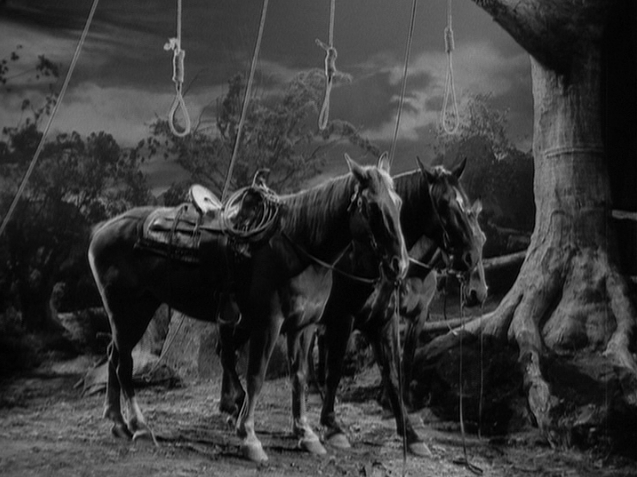
FURY (1936), THE OX-BOW INCIDENT (1943), and THEY WON'T FORGET (1937) were recently shown back-to-back on TCM, a lynch mob triple feature; it may be some wise old programmer's subliminal nod to the crazy mobs outside Casey Anthony's trial. Just as in the stacked deck of rube eggin' in OX-BOW, with Fonda in his pious 12 ANGRY MEN lecture mode:  "Hangin's any man's business that's around," in Casey's case it's everyone's business regardless of being around. Old Henry delivers his OX-BOW recitations well, but I actually preferred old Ma Joad (here the bad guy) to the blubbering lynch victim: "Keep yer chin up. You only die once, son."  Yeah, don't we wish?


Did people outside of the liberal media elite (Oscar voters) ever want to see these films? What's the hook in lynch mob message pictures? Even the media elite shouldn't want to actually pay money to sit down in a theater and learn how skeezy and easily led the throngs around them in the audience are. If there is a fire in the theater you begin to suspect you would surely get trampled on your way to the exit. But at the same time, they are riveting, compelling viewing, and that's the answer: nothing gets us feeling personally involved, gives us the feeling something is at stake, than an abused, missing, or murdered child. Hollywood films aren't crammed with revenge against sleazy pedophiles and ruthless kidnappers for nothing. When films like THEY WON'T FORGET come around they're like Hollywood's chance to preach against what the studios themselves practice, the anti-liberal backlash mob action they both cause with their rabid headlines and tut tut with their sober message movies.

Lynch mobs seem less abundant in an age where we don't need a marriage license to check into a hotel room and are allowed to marry people of other races, but the repressed, frustrated ugly main street populace still haven't fought for the right to party, and still get mad at those who do. Now, instead of Claude Rains' fame-hungry D.A. we have Nancy Grace, tireless in her hounding the accused mom, Casey Anthony. When a child's involved it's the business of any accusatory hysteric that's around, and when it's a dead blonde girl child and the mom looks good even in the harsh overhead lighting of the courtroom; and--something even more shocking for the strictly sober Christian wives out there--you can show pictures of her orgymongering, that's where careers like Grace's are made. 


The three anti-vigilante violence films TCM screened all get a royal four stars from the obedient Leonard Maltin, which is not surprising. They're all well done enough to be solidly entertaining despite the sermons but the liberals of the Hollywood media aren't necessarily right just because they can make a movie about people being wrong. The liberal media has never hid its contempt for the red state working man. Just show an American flag, some jeans, a cowboy hat, an endangered toddler, a sixer of beer and, as far as New York's advertising elite are concerned, the suckers are hooked.  The game is just as fixed in FURY as it is on Fox News, as fixed in Stanley Kramer's films as it is at a carnival pitch game.


Still, my rage at these cretins FURY director Fritz Lang depicts is so blazing it threatens to engulf me, even though I know it's a fixed game, even though I know that Lang hates them more than I ever could, and if my rage is so easily inflamed, how much better am I than the mob? Just because I am more 'educated' and 'debauched' I may feel I am free to join Fritz Lang in his cosmopolitan revulsion towards the provincial reactionaries of these films, whom he considers little better than the Nazis he left behind in Vienna, whom he considers as sheepdogs for whom the law is like a leash, roping them by the neck to a master they hate and fear. With the leash comes off they only answer to the general consensus of the rumor mill which is by nature predisposed towards exaggeration and a common enemy, and which has no sense of future responsibility.

And nothing blinds oneself to one's own faults quite like rage, awareness of one's own inner struggle is the only way to survive it. How many of our evil transgressions were done to impress someone, even if they only spoke to us through radio or TV? How much are we owed, we think, for the stress we feel assuming responsibility for events that have nothing whatever to do with us? Next time, let us think of Claude Rains in THEY WONT FORGET, a man smart enough to know that mobs don't want truth, they want blood, and who gives it to them. Let us try, in the heat of the moment, to never cast even the second stone... without first stoning... ourselves... let us not condemn drugs until we have tried them. Let us not condemn the mob without first knowing the terrifying thrill of bloodlust belonging.

Related Posts Plugin for WordPress, Blogger...